
Table of Contents >> Show >> Hide
- What Is an Evaporative Cooler?
- How We Chose the Best Evaporative Coolers of 2025
- Quick Comparison: Best Evaporative Coolers of 2025
- 1. Hessaire MC18M – Best Overall Evaporative Cooler
- 2. Hessaire MC37M – Best Value for Patios and Garages
- 3. Hessaire MC61M – Best Evaporative Cooler for Large Spaces
- 4. Honeywell TC09PEU – Best Compact Indoor Evaporative Cooler
- 5. Big Ass Fans Cool-Space 350 – Best Heavy-Duty Evaporative Cooler
- Buying Guide: How to Choose the Best Evaporative Cooler
- Evaporative Cooler vs. Portable Air Conditioner
- Maintenance Tips for Evaporative Coolers
- Real-World Experiences: What It Is Like Using an Evaporative Cooler
- Final Verdict
- SEO Tags
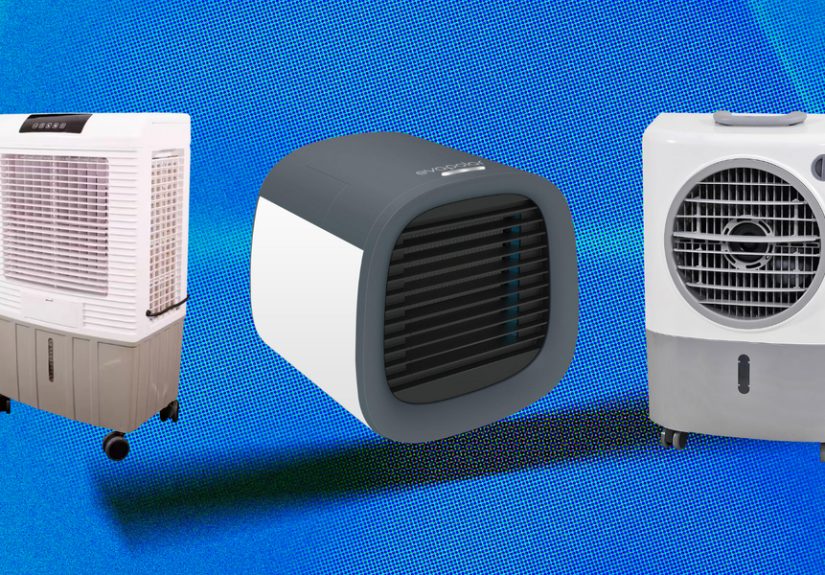
Looking for cooler air without inviting your electric bill to do parkour? The best evaporative coolers of 2025 offer a smart middle ground between a basic fan and a full-blown air conditioner. They are portable, relatively energy-efficient, and surprisingly effective when used in the right climate. The catch? They are not magic boxes. They work best in hot, dry air, with proper ventilation, and with enough airflow for the space.
In this guide, we break down five standout evaporative coolers for 2025, including compact indoor units, patio-friendly workhorses, and heavy-duty models for garages, workshops, and large open areas. The goal is simple: help you choose the right swamp cooler before summer starts treating your home like a toaster oven.
What Is an Evaporative Cooler?
An evaporative cooler, often called a swamp cooler, uses water evaporation to cool moving air. Warm air passes through wet cooling media, water evaporates, and the air coming out feels cooler and slightly more humid. Unlike traditional air conditioners, evaporative coolers do not use compressors or refrigerants. That usually means lower power consumption, easier portability, and simpler maintenance.
However, there is one important rule: humidity matters. In dry states such as Arizona, Nevada, New Mexico, Utah, Colorado, and parts of California or Texas, a good evaporative air cooler can feel fantastic. In muggy areas, such as Florida or much of the Gulf Coast, it may feel more like a fan politely misting your bad decisions. If your local humidity regularly sits above 60%, a portable air conditioner or dehumidifier-friendly cooling setup is usually a better choice.
How We Chose the Best Evaporative Coolers of 2025
To select these models, we compared expert recommendations, manufacturer specifications, airflow ratings, cooling coverage, water tank capacity, portability, ease of use, maintenance needs, and value for money. We also considered whether each cooler fits real-life use cases: bedrooms, patios, workshops, garages, studios, and open-air spaces.
Our priority was not simply finding the biggest CFM number. A 5,000 CFM beast may sound impressive, but if you only need to cool a small bedroom, that is like bringing a leaf blower to dry one sock. The best evaporative cooler is the one matched to your space, climate, and patience for refilling water tanks.
Quick Comparison: Best Evaporative Coolers of 2025
| Rank | Model | Best For | Approx. Airflow | Approx. Coverage |
|---|---|---|---|---|
| 1 | Hessaire MC18M | Best overall portable cooler | 1,300 CFM | Up to 500 sq. ft. |
| 2 | Hessaire MC37M | Best value for patios and garages | 3,100 CFM | Up to 950 sq. ft. |
| 3 | Hessaire MC61M | Best large-space cooler | 5,300 CFM | Up to 1,600 sq. ft. |
| 4 | Honeywell TC09PEU | Best compact indoor cooler | About 200 CFM | Small rooms and spot cooling |
| 5 | Big Ass Fans Cool-Space 350 | Best heavy-duty commercial option | 3,400 CFM | Up to 2,300 sq. ft. |
1. Hessaire MC18M – Best Overall Evaporative Cooler
The Hessaire MC18M earns the top spot because it strikes the best balance between power, portability, price, and simplicity. It delivers around 1,300 CFM of airflow and is designed for spaces up to about 500 square feet. That makes it a strong pick for garages, small patios, workshops, studio apartments, and hobby spaces where traditional AC is impractical.
One of the MC18M’s biggest advantages is its size. At about 16 pounds, it is much easier to move than larger swamp coolers. The built-in handle and rolling casters make it practical for people who want one unit that can move from the garage to the patio to the workbench without turning into an upper-body workout.
Why It Stands Out
The MC18M uses a 4.8-gallon water tank and supports both manual filling and continuous hose connection. Manual filling is fine for shorter cooling sessions, while the hose option is useful if you plan to run the unit for hours. Its controls are basic, which is a compliment here. No confusing app, no dramatic touchscreen, no “smart” feature that needs a firmware update during a heat wave. Just fill it, plug it in, and enjoy cooler airflow.
Best For
This is the best evaporative cooler for homeowners who want a reliable all-around unit for moderate spaces. It is especially useful for dry garages, shaded patios, small workshops, and open rooms with good cross-ventilation.
Potential Drawbacks
The MC18M is not designed for very large rooms or humid climates. If you are trying to cool a big warehouse, it will wave a tiny white flag. Also, like most hose-connected coolers, the continuous-fill setup should be checked for leaks during first use.
2. Hessaire MC37M – Best Value for Patios and Garages
The Hessaire MC37M is the “I need more muscle, but I do not want to sell a kidney” pick. With about 3,100 CFM of airflow and coverage up to roughly 950 square feet, it is a strong choice for larger garages, covered patios, outdoor work areas, and open indoor spaces in dry climates.
Compared with the MC18M, the MC37M gives you a noticeable boost in airflow. It also comes with a larger 10.3-gallon tank, three-speed control, and a continuous-fill option. If the MC18M is a friendly desk fan that started lifting weights, the MC37M is its older sibling who owns a truck and helps people move couches.
Why It Stands Out
The MC37M offers one of the best performance-per-dollar ratios in the portable evaporative cooler category. It is powerful enough for bigger spaces but still manageable for residential users. Its polypropylene body is designed for outdoor-friendly use, and the rolling casters help offset its heavier build.
Best For
Choose the MC37M if you need cooling for a two-car garage, woodworking area, covered deck, outdoor dining zone, or open workspace. It is a practical pick for people who spend long hours in semi-open spaces during dry summer heat.
Potential Drawbacks
At around 40 pounds, this cooler is portable but not exactly feather-light. You can roll it around, but you probably will not want to carry it up stairs unless you enjoy questioning your life choices.
3. Hessaire MC61M – Best Evaporative Cooler for Large Spaces
The Hessaire MC61M is built for people who looked at smaller coolers and said, “Cute.” This model produces around 5,300 CFM of airflow and is rated for spaces up to about 1,600 square feet. It is a serious option for large garages, barns, workshops, warehouses, outdoor events, and commercial-style spaces.
With a 14.6-gallon water tank, manual and continuous-fill options, and a large fan system, the MC61M is made for extended use. It is not the kind of cooler you tuck behind a plant and pretend is décor. It is big, obvious, and very much there to do a job.
Why It Stands Out
The MC61M is powerful without becoming overly complicated. It uses replaceable cooling media, straightforward controls, and a rugged body designed for demanding environments. In dry conditions, it can move a large amount of air and make hot workspaces much more tolerable.
Best For
This is the best evaporative cooler for large open areas where a small indoor unit simply will not keep up. Think warehouse corners, home gyms in detached garages, agricultural spaces, event setups, or big covered patios.
Potential Drawbacks
The MC61M is bulky and weighs more than smaller portable coolers. It is best treated as semi-portable: easy enough to roll into place, but not something you casually reposition every fifteen minutes. It also needs strong ventilation to avoid humidity buildup indoors.
4. Honeywell TC09PEU – Best Compact Indoor Evaporative Cooler
The Honeywell TC09PEU is a compact indoor evaporative cooler designed for spot cooling and small spaces. It has a slim footprint, a 2.4-gallon water tank, low power consumption, three fan speeds, and a lightweight build. For bedrooms, home offices, dorm-style rooms, and small dry spaces, it can be a practical alternative to running a larger cooling system all day.
This is not a garage monster. It is more of a personal comfort machine. Place it near your desk, reading chair, or bedside area, and it can make the immediate zone feel more comfortable. It is especially useful when you want a cooler breeze without the noise, installation, and energy use of a portable AC unit.
Why It Stands Out
Honeywell has a strong reputation in the air-comfort category, and the TC09PEU keeps things simple. It is easy to fill, easy to move, and easy to maintain. The washable cooling media and compact body make it appealing for users who do not want a large machine taking over the room like an appliance with landlord energy.
Best For
This model is best for small rooms, personal cooling, dry bedrooms, compact offices, and users who value quiet convenience over raw airflow. It is also a smart pick for renters who cannot install window units.
Potential Drawbacks
The TC09PEU has limited coverage compared with larger evaporative coolers. If you expect it to cool an entire open-plan living area, disappointment may enter the room before the breeze does.
5. Big Ass Fans Cool-Space 350 – Best Heavy-Duty Evaporative Cooler
The Big Ass Fans Cool-Space 350 is the premium, heavy-duty pick for large spaces that need serious airflow. It offers about 3,400 CFM, a massive 50-gallon reservoir, variable speed control, and coverage up to approximately 2,300 square feet in well-ventilated spaces. It is designed for warehouses, patios, commercial areas, gyms, studios, and demanding work environments.
This is not the budget pick. It is the “we need to cool a real workspace and keep people comfortable” pick. The large tank can support long runtime without constant refilling, and the continuous hose connection makes it practical for extended operation.
Why It Stands Out
The Cool-Space 350 combines industrial build quality with user-friendly controls. Its reservoir is much larger than typical residential portable coolers, and its variable-speed design gives users more control than basic three-speed models. It also rolls on casters, which is impressive considering its size.
Best For
Choose this cooler for commercial patios, workshops, production areas, event spaces, large studios, and open garages where comfort affects productivity. It is especially useful in dry climates where traditional AC would be expensive or impractical.
Potential Drawbacks
The price is the obvious downside. The Cool-Space 350 is overkill for bedrooms, apartments, and casual backyard use. Unless your patio has its own zip code, most homeowners will be better served by a Hessaire model.
Buying Guide: How to Choose the Best Evaporative Cooler
1. Match CFM to Your Space
CFM stands for cubic feet per minute, and it tells you how much air the cooler can move. Small rooms may only need a few hundred CFM. Garages and patios often need 1,000 to 3,000 CFM. Large workshops may require 5,000 CFM or more. Bigger is not always better; oversized units can be noisy, bulky, and unnecessarily expensive.
2. Check Your Humidity
Evaporative coolers perform best in low humidity. If you live in a hot, dry climate, you are in the sweet spot. If you live somewhere humid, choose carefully. In high humidity, the air cannot absorb much more moisture, so the cooling effect drops sharply.
3. Plan for Ventilation
Unlike air conditioners, evaporative coolers need fresh air and an escape route for humid air. Crack a window, open a garage door, or use the cooler in a semi-open space. Cross-ventilation is the secret sauce. Without it, the room may start to feel damp instead of comfortable.
4. Consider Tank Size
A bigger tank means longer runtime between refills. If you plan to use the cooler outdoors or in a garage, a continuous hose connection is extremely convenient. For indoor spot cooling, a smaller tank may be fine.
5. Think About Portability
Weight, wheels, handles, and dimensions matter. A 16-pound cooler is easy to move. A 57-pound cooler is portable in the same way a small refrigerator is portable: technically yes, emotionally no.
Evaporative Cooler vs. Portable Air Conditioner
An evaporative cooler is best for dry climates, open spaces, and lower energy use. A portable air conditioner is better for humid climates, sealed rooms, and stronger temperature control. The difference is not just price; it is the way each machine works.
A portable AC removes heat and humidity from indoor air and usually requires a window vent. An evaporative cooler adds moisture while cooling through evaporation and works best when air can flow in and out. If you want crisp, refrigerated air in a humid bedroom, buy an AC. If you want affordable cooling in a dry garage or patio, an evaporative cooler may be the smarter move.
Maintenance Tips for Evaporative Coolers
Evaporative coolers are easier to maintain than many AC units, but they are not maintenance-free. Empty the tank when the unit is not in use, especially if it will sit for several days. Stale water is nobody’s friend, and your cooler should not smell like a forgotten aquarium.
Clean the water tank regularly with mild soap or a vinegar-water solution, depending on the manufacturer’s instructions. Inspect the cooling media for mineral buildup, dust, or odor. Replace pads when airflow drops or the media looks worn. If you use hard water, maintenance becomes even more important because mineral deposits can build up faster.
At the end of the cooling season, drain the unit completely, let the media dry, wipe the housing, and store it in a protected area. A few minutes of care can extend the cooler’s life and keep next summer from greeting you with a mildew-flavored breeze.
Real-World Experiences: What It Is Like Using an Evaporative Cooler
Using an evaporative cooler in real life is a little different from reading a spec sheet. On paper, everything looks clean: CFM, square footage, tank size, watts, fan speeds. In practice, the experience depends heavily on where you place the unit, how dry the air is, and whether you give it enough ventilation. The first time someone uses a swamp cooler in the right conditions, the reaction is often, “Wait, that actually works?” The first time someone uses one in a humid room with closed windows, the reaction is usually less printable.
For garage work, an evaporative cooler can be a game changer. Imagine sanding wood, organizing tools, repairing bikes, or doing weekend projects in a garage that usually feels like a pizza oven with shelves. A model like the Hessaire MC37M or MC61M can move enough air to make the space feel livable. The key is to place the cooler near a source of dry air, such as a partially open garage door, then create an exit path on the other side. Once the airflow pattern is right, the cooler does not just blow air at you; it refreshes the space.
For patios, evaporative coolers can make outdoor dining much more pleasant. They will not turn August into October, but they can reduce the harsh edge of dry heat. A cooler near a seating area works best when aimed across people rather than directly into plates, napkins, and one unlucky bowl of chips. For larger patios, airflow matters more than tiny convenience features. This is where bigger portable models shine.
Indoor use requires more judgment. A compact cooler like the Honeywell TC09PEU can be helpful in a dry bedroom or office, especially when placed close to the person using it. But it should not be treated like central air. Keep a window cracked, avoid overfilling the room with moisture, and monitor how the air feels after an hour. If the room starts to feel clammy, switch to fan mode or improve ventilation.
Another real-world lesson: tank size changes behavior. Small tanks are fine for short sessions, but if you plan to run the cooler through a long afternoon, a continuous hose hookup is wonderfully convenient. Nobody wants to refill a tank every time the sun looks at the roof funny. On the other hand, continuous-fill connections should be tested carefully. A small drip may not matter on a patio, but indoors it can become a tiny indoor lake with emotional consequences.
Noise is also worth considering. Evaporative coolers are generally less mechanically intense than compressor-based air conditioners, but large fans still make sound. For workshops, that is rarely a problem. For bedrooms, it matters. Smaller indoor models are better for sleep, while high-CFM garage units are better for daytime use. In other words, do not put an industrial cooler next to your bed unless your dream is to sleep beside a polite wind tunnel.
The most satisfying part of owning an evaporative cooler is the operating cost. Because these units typically use far less electricity than compressor AC systems, they can be run for long periods without the same budget panic. That makes them especially appealing for secondary spaces where installing AC would be expensive or silly: sheds, workshops, screened porches, barns, and outdoor prep areas.
The biggest disappointment usually comes from unrealistic expectations. An evaporative cooler is not a portable air conditioner. It will not seal a room, remove humidity, and drop the temperature with refrigerated precision. It is a climate-specific comfort tool. Use it in dry heat with moving air, and it can feel brilliant. Use it in a sealed humid room, and it becomes a fan with a water hobby.
For most buyers in 2025, the smart approach is to choose based on use case. Pick the Hessaire MC18M for flexible everyday cooling, the MC37M for stronger patio and garage performance, the MC61M for large open areas, the Honeywell TC09PEU for compact indoor spot cooling, and the Cool-Space 350 for commercial-grade needs. Match the tool to the job, keep the pads clean, give the air somewhere to go, and your summer may become a little less dramatic.
Final Verdict
The best evaporative cooler of 2025 for most people is the Hessaire MC18M. It is portable, powerful enough for common home spaces, simple to use, and affordable compared with larger models. For bigger garages and patios, the Hessaire MC37M offers excellent value. For large workshops and open areas, the Hessaire MC61M brings serious airflow. For small indoor spaces, the Honeywell TC09PEU is compact and practical. For commercial or heavy-duty cooling, the Big Ass Fans Cool-Space 350 is the premium pick.
Before buying, remember the golden rule: evaporative coolers love dry air and ventilation. Give them both, and they can make summer feel much more civilized. Deny them both, and they will still try their best, which is admirable but not always comfortable.






 Close
Close