
Table of Contents >> Show >> Hide
- Why the “Childfree” Conversation Feels Louder Lately
- The Biggest Reasons People Decide to Never Have Kids
- 1) “I just don’t want to” (and that’s a complete sentence)
- 2) Financial reality: “Love doesn’t pay daycare”
- 3) Careers, ambition, and the reality of time
- 4) Mental health, neurodiversity, and emotional bandwidth
- 5) Family history and the choice to break the cycle
- 6) Health concerns: pregnancy, birth, chronic illness, and risk
- 7) Relationships, dating, and the “two yeses” rule
- 8) The state of the world: climate, politics, safety, and uncertainty
- What People Gain (and What They Still Grieve) in a Childfree Life
- How to Handle the Awkward Questions Without Starting a Family Feud
- Not Sure Yet? A Practical Way to Think It Through
- Conclusion: The Most Responsible “No” Can Be a Loving Choice
- Extra : Real-World Experiences That Show Up in Childfree Stories
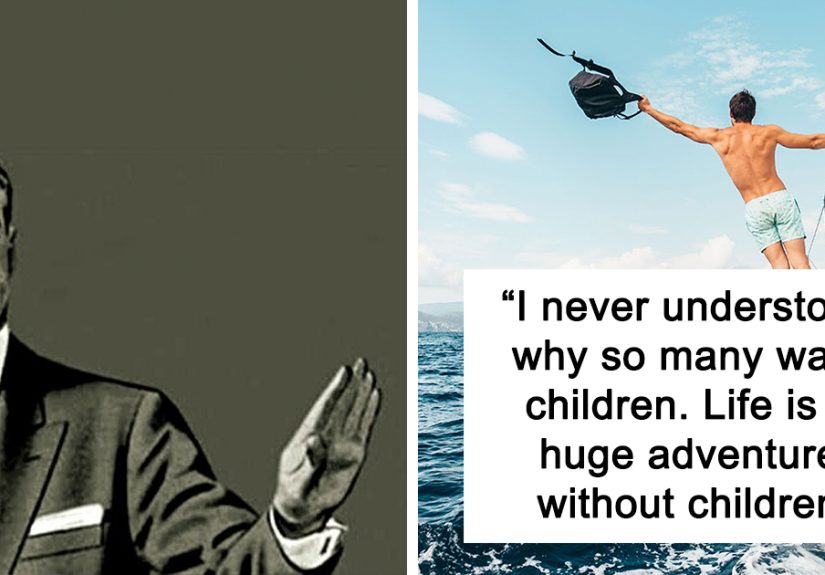
Scroll a post like Bored Panda’s “50 People Reveal What Made Them Decide To Never Have Kids,” and you’ll notice something
interesting: the reasons are wildly different, but the vibe is weirdly consistent. It’s not “kids are bad.” It’s more like,
“I know myself… and I’m choosing a life that fits.”
Some people sound joyful. Some sound exhausted just imagining parenthood. Some are practical (money, time, childcare).
Some are deeply personal (family history, health, trauma, mental load). And many land on the simplest, most underappreciated
reason of all: they just don’t want to.
This article breaks down the big themes behind the “never have kids” decisionwithout judging parents or the childfree.
Think of it as a translation guide for the comments section… with fewer arguments and more actual context.
Why the “Childfree” Conversation Feels Louder Lately
Bored Panda’s thread format works because it’s a mirror: short, direct, sometimes funny, sometimes heavy, and often
brutally self-aware. And it’s landing at a time when a lot of Americans are rethinking big life milestones.
People are comparing “default life” to “designed life”
For decades, the cultural script was: grow up, partner up, have kids. Now more people treat parenthood like any other
high-impact decision: a “yes” requires real desire and real resources, not just momentum.
Costs and logistics aren’t background noise anymore
When childcare can cost as much as a second rent payment, and parental leave is often unpaid, the question becomes less
“Do you like kids?” and more “Can you realistically support a child and still function?”
The Biggest Reasons People Decide to Never Have Kids
The Bored Panda post collects dozens of individual answers, but the themes tend to cluster. Here are the most common
categories that show up across personal stories, surveys, and economic data.
1) “I just don’t want to” (and that’s a complete sentence)
This is the reason that’s both simplest and hardest for some people to accept. Many adults describe a clear internal
“no”not hatred, not fear, just absence of desire. They may enjoy kids in their family, work with children, or love being
the fun aunt/uncle/friend… but still not want the permanent role of parent.
In real life, this can look like:
- Feeling relief (not regret) when imagining a future without parenting responsibilities.
- Wanting a partnership that stays centered on the couple, not the family unit.
- Preferring freedom in schedule, identity, and long-term planning.
2) Financial reality: “Love doesn’t pay daycare”
Plenty of people love the idea of nurturing a childuntil they spreadsheet it. And honestly? The spreadsheet has a point.
Estimates vary by location and family situation, but the costs are undeniably big: housing, food, healthcare, childcare,
education, transportation, and the “surprise, your kid grew again” clothing budget.
People often describe a breaking point like:
- Realizing childcare alone could rival a mortgage payment.
- Doing the math on one income versus two, then factoring in unpaid leave.
- Choosing to prioritize paying off debt, saving for retirement, or supporting aging parents.
3) Careers, ambition, and the reality of time
Some people aren’t “choosing work over kids” in a cold, villain-in-a-corporate-movie way. They’re choosing the life they’ve
built: a demanding career, entrepreneurship, creative work, travel-based jobs, or simply a desire to invest time in goals
that don’t fit well with parenting.
A recurring theme: people don’t fear hard workthey fear never getting a true off-switch.
4) Mental health, neurodiversity, and emotional bandwidth
In many “never kids” stories, you’ll see surprising honesty: “I struggle to care for myself sometimes. It wouldn’t be fair
to add a child.” For some, it’s anxiety, depression, bipolar disorder, ADHD, PTSD, or sensory overload. For others, it’s
a history of burnout, caregiving fatigue, or simply knowing their stress tolerance has limits.
The key word that comes up over and over: responsibility. People aren’t saying “I’d be a bad person.”
They’re saying “I don’t want to gamble with someone else’s childhood.”
5) Family history and the choice to break the cycle
Bored Panda-style answers often include blunt reflections like “my childhood wasn’t safe” or “I’m still unlearning what I
grew up with.” For some, the decision isn’t anti-childrenit’s anti-repeating patterns.
Examples people commonly describe:
- Growing up with instability, addiction, violence, or chronic conflict.
- Being “parentified” earlyraising siblings, managing adult emotions, becoming the household fixer.
- Wanting to heal without adding the pressure of being someone else’s primary support system.
6) Health concerns: pregnancy, birth, chronic illness, and risk
Another honest category: people who want to avoid pregnancy or parenting due to medical reasons. This can mean chronic
illness, genetic conditions, disability, infertility, or fear of pregnancy complications. Some people say they’d consider
adoption but not pregnancy; others decide that any path to parenthood isn’t right for them.
And even when pregnancy goes smoothly, healthcare costs can be significantsomething that influences planning and, for some,
the decision to opt out entirely.
7) Relationships, dating, and the “two yeses” rule
A practical truth: parenthood is one of those decisions where compromise can quietly become misery. Many childfree adults
adopt a “two enthusiastic yeses” rule. If one partner doesn’t want kids, forcing the issue risks resentment on both sides:
the reluctant parent feels trapped, and the eager parent feels deprived.
In the wild, this looks like:
- Ending otherwise loving relationships because the life plans don’t match.
- Choosing to date only people who are clearly childfree or already aligned.
- Staying single (happily or neutrally) rather than building a life around negotiation.
8) The state of the world: climate, politics, safety, and uncertainty
Many people cite broad uncertainty: climate anxiety, political instability, economic volatility, housing affordability,
or concerns about violence and safety. Whether you agree with the conclusion or not, the reasoning is usually the same:
“If I’m not confident about what the future looks like, I don’t want to recruit a child into it.”
What People Gain (and What They Still Grieve) in a Childfree Life
Childfree isn’t a single lifestyle. It’s a category that contains many different lives. But across stories, there are a few
common “upsides” people mentionplus a few complicated emotions they don’t always expect.
Common benefits people describe
- Autonomy: more control over time, sleep, travel, hobbies, and daily rhythm.
- Financial flexibility: saving, investing, pursuing education, moving more easily, or supporting other family needs.
- Energy and health: more bandwidth for mental health management, chronic illness care, or stress reduction.
- Identity: being “a person who does many things,” not primarily a parent.
Common tradeoffs and grief (yes, both can be true)
- Social pressure: being questioned, judged, or treated like you’ll “change your mind.”
- Loneliness at milestones: when friends’ lives revolve around school schedules and kid activities.
- Family expectations: conflict with parents who want grandchildren, or cultural norms that assume parenthood.
- Future uncertainty: worries about aging, caregiving, and community support later in life.
The healthiest childfree stories usually include one extra ingredient: intention. Building a meaningful life
doesn’t happen automaticallyit’s designed through friendships, community, purpose, and plans for the long-term.
How to Handle the Awkward Questions Without Starting a Family Feud
If you’re childfree (or leaning that way), you’ve probably met the greatest villain of all: the casual question that feels
like an interrogation. Here are some responses that keep your boundaries intact while keeping Thanksgiving survivable.
Short and calm
- “That’s not part of my plan.”
- “I’m happy with my life as it is.”
- “It’s a personal decision, and I’m confident in it.”
Warm but firm
- “I love kids in my life, but I don’t want to be a parent.”
- “I’ve thought about it a lot, and this is right for me.”
- “I’d rather not debate it, but thanks for caring.”
Humor (use carefully, but it works)
- “My plants already ignore me when I talk. I’m not ready for a human to do it too.”
- “I can barely keep my phone charged. A whole child feels ambitious.”
- “I’m on a strict sleep-only diet.”
Not Sure Yet? A Practical Way to Think It Through
Some people know from the start. Others don’t. If you’re in the “I’m not sure” camp, consider separating the decision into
smaller questions:
- Desire: Do you want parenthood itself, or the idea of what it represents (belonging, adulthood, legacy)?
- Capacity: Do you have support, stability, and emotional bandwidthor are you already stretched thin?
- Values: Does parenthood match your priorities, or would it push you away from the life you want?
- Choice versus default: If nobody expected anything of you, what would you choose?
And if you’re making this decision with a partner, talk early and honestly. It’s kinder to be clear now than resentful later.
Conclusion: The Most Responsible “No” Can Be a Loving Choice
The Bored Panda thread works because it reveals a truth we don’t say out loud enough: choosing to never have kids is often
a thoughtful, values-based decisionnot a phase, not a failure, and not a personal attack on parents.
Some people choose parenthood and build beautiful families. Some people choose a childfree life and build beautiful communities.
The common goal isn’t “kids” or “no kids.” It’s a life that’s sustainable, meaningful, and honest.
Extra : Real-World Experiences That Show Up in Childfree Stories
The most revealing part of childfree conversations isn’t the abstract reasonsit’s the tiny everyday moments that make
people think, “Yep, this is still right for me.” These experiences don’t show up in a single statistic, but they appear
again and again in personal posts, friend conversations, and threads like the one on Bored Panda.
The “Sunday night calm” moment
One common experience is noticing how restorative silence can be. Someone describes cleaning their apartment, meal-prepping,
reading for an hour, then going to bed early with zero chaos. The point isn’t that kids are “chaos” (kids can be wonderful).
The point is that certain people feel most alive when their life has spaciousnesstime to recover, think, create, and rest.
For them, parenthood isn’t a challenge to “rise to.” It’s a lifestyle that would erase the conditions they need to be well.
The “I’ve already done my parenting” flashback
Another repeating experience comes from people who grew up as the responsible oneraising siblings, mediating adult conflict,
or acting as the emotional caretaker in the home. As adults, they don’t romanticize the workload. They remember what it felt
like to always be “on.” When they imagine having kids, they don’t picture cute holiday photosthey picture the constant
vigilance. Their childfree decision often sounds like relief: “I did my time early. I want the rest of my life to be mine.”
The “budget reality check” in one grocery trip
Many childfree adults describe moments where inflation hits in a mundane way: a grocery bill that suddenly looks like a small
car payment, rent climbing, a medical expense popping up, or a job market wobbling. They’re not saying parents are irresponsible.
They’re saying they personally don’t want to operate life on “financial hard mode.” They want marginmoney for emergencies,
for retirement, for helping loved ones, and for enjoying life now rather than betting everything on “later.”
The “I love kids… for two hours” truth
A surprisingly wholesome experience: genuinely enjoying children in limited doses. People talk about being the best aunt,
uncle, godparent, coach, mentor, or neighbor. They show up for birthdays, help with homework, and support friends who are
parents. And then they go home to their own quiet. For them, childfree isn’t about isolation. It’s about choosing a role that
fits their temperament while still contributing care to the wider community.
The “pressure doesn’t equal destiny” boundary practice
Finally, there’s the experience of learning to disappoint people. It can be uncomfortableespecially when parents, relatives,
or cultural expectations insist that parenthood is the “real” adulthood. Many childfree adults describe a slow shift:
answering fewer invasive questions, sharing less personal detail, and protecting their peace. Over time, the decision stops
being an argument and becomes a settled fact. They don’t need permission. They need alignment with their own values.
Put together, these experiences explain why so many “never kids” stories feel grounded. The decision isn’t always dramatic.
Sometimes it’s just a person paying attention to what makes them healthy, stable, and genuinely happyand choosing that on purpose.






 Close
Close