
Table of Contents >> Show >> Hide
- Why Fall Mums Need Companion Plants
- 1. Ornamental Kale and Cabbage
- 2. Asters
- 3. Sedum
- 4. Coral Bells
- 5. Ornamental Grasses
- 6. Swiss Chard
- 7. Black-Eyed Susan
- 8. Marigolds
- How to Design a Better Fall Mum Display
- Mistakes to Avoid
- What These Pairings Feel Like in Real Life: A Gardener’s Experience
- Final Thoughts
- SEO Tags
Fall mums are the pumpkin-spice lattes of the garden world: beloved, everywhere, and honestly pretty fabulous when used well. But a pot of mums all by itself can sometimes look like it was panic-bought on a Saturday morning between errands. Pair those cheerful blooms with the right companion plants, though, and suddenly your porch, patio, or flower bed looks intentional, layered, and magazine-worthy.
The trick is not just choosing plants that look good together. The best companions for fall mums also share similar growing conditions, extend color deeper into autumn, and bring in the textures mums don’t naturally have. Mums are rounded and flower-heavy, so they benefit from partners that add spiky height, ruffled foliage, broad leaves, or contrasting color. Think of it as casting the perfect ensemble around your garden’s autumn star.
Before we get to the lineup, here’s the short version of what mums like: plenty of sun, well-drained soil, and steady moisture without soggy roots. Garden mums generally do best with at least six hours of sun a day, and they’re much happier in soil that drains well than in a spot that stays wet after rain. They also appreciate space for air circulation, which helps keep fall displays looking healthier and less like a botanical traffic jam.
If you keep those basics in mind, the following eight companion plants can help you build a layered, colorful autumn garden display that looks lush instead of lumpy. Some are foliage stars, some are bloom machines, and a few pull double duty by being ornamental and edible. Because apparently fall can be overachieving like that.
Why Fall Mums Need Companion Plants
Mums bring big color, but they tend to form tidy domes. That rounded shape is gorgeous, yet it can read a little repetitive if every plant in the display has the same silhouette. Companion plants solve that problem by adding height, movement, leaf contrast, and extra seasonal staying power.
They also help you design more effectively. In containers, think in terms of the classic “thriller, filler, and spiller” approach. Mums are often the filler or middle layer. Add a taller grass or upright marigold as the thriller, then tuck in lower foliage plants like coral bells or ornamental kale around the base. In garden beds, use the same idea on a larger scale: tall plants in back, rounded mums in the middle, and lower edging plants in front.
There’s one more practical reason to mix things up: some companions stay attractive even after mums begin to fade. Ornamental kale, grasses, and coral bells can keep the show going after the first hard frost turns your mums from dazzling to deeply philosophical.
1. Ornamental Kale and Cabbage
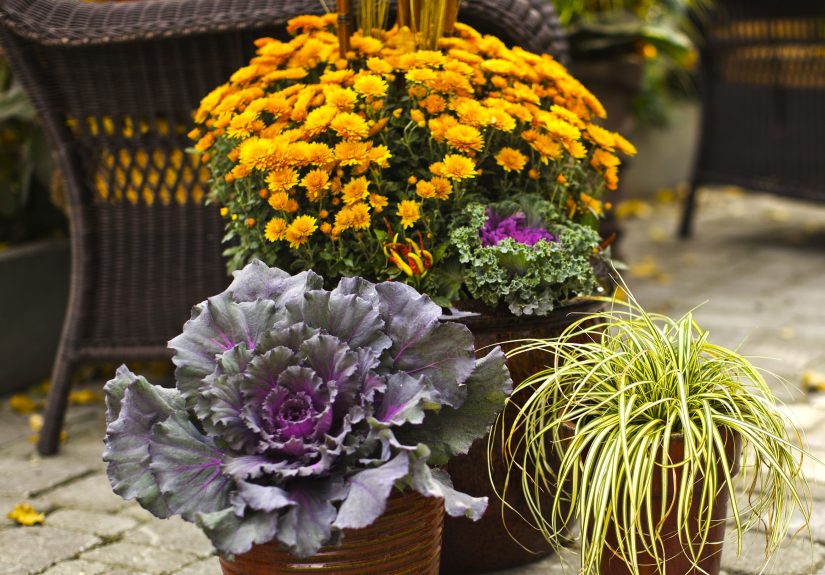
If fall had an official foliage mascot, ornamental kale and cabbage would be leading the parade. Their rosettes come in rich shades of purple, cream, pink, blue-green, and white, which makes them a natural fit with bronze, yellow, burgundy, or white mums.
What makes them especially useful is their cold tolerance. While many summer flowers take one look at a chilly forecast and give up, ornamental kale and cabbage actually get better as the weather cools. Their colors intensify as nights turn colder, so they often peak right when the rest of the garden is winding down.
Best way to use them
Plant them at the front of a container or around the base of a mum in a bed. Their broad, layered leaves contrast beautifully with mum flowers, which creates that “I hired a designer” look without the designer invoice.
2. Asters
Asters are one of the most classic companions for mums, and for good reason. They bloom from late summer into fall, often right up to frost, and their purple, pink, lavender, and white flowers add a lighter, airier texture next to the fuller blooms of chrysanthemums.
Because asters also like full sun and good drainage, they make sense beyond the color palette. This is not a high-maintenance friendship. They want many of the same things mums want, which makes them easier to grow together in both borders and containers.
Best way to use them
Pair deep purple asters with gold or bronze mums for a classic autumn look, or combine white asters with burgundy mums for something a little more elegant. In mixed beds, asters help bridge the gap between summer flowers and the deeper tones of fall.
3. Sedum
Sedum, especially upright stonecrop types, is one of the most reliable late-season performers in the garden. It blooms from late summer into fall and often keeps going until frost, all while bringing pollinators to the party. Some varieties also have dark foliage, which looks excellent next to bright yellow, orange, or pink mums.
Another reason sedum works so well is its structure. The flower heads are flatter and more architectural than the rounded blooms of mums, so you get contrast without visual chaos. That’s a sweet spot in garden design.
Best way to use them
Use sedum in the same bed as mums for a long-lasting perennial combination. If you love bold contrast, choose a dark-leaved sedum and set a golden mum nearby. It’s dramatic, but not in the reality-show sense.
4. Coral Bells
Coral bells are proof that flowers are not the only way to make a fall display look expensive. Heuchera varieties come in foliage shades like burgundy, caramel, lime, plum, bronze, and silver-green, which makes them perfect for adding depth around mums.
They are especially handy in spots that don’t get blazing sun all day. While mums prefer a sunnier setup, coral bells can handle partial shade better, so they’re a smart option for bright porches, patio corners, or beds with morning sun and afternoon relief.
Best way to use them
Tuck coral bells around the edges of a display to soften the transition between hardscape and flowers. Their leaves stay attractive even when blooms elsewhere begin to fade, so they add lasting polish to autumn plantings.
5. Ornamental Grasses
Every gorgeous fall display needs something that moves. Ornamental grasses bring height, softness, and a little breeze-powered magic to arrangements that might otherwise feel too static. Their seed heads and blades echo the season beautifully, especially when they shift to buff, tan, gold, or reddish tones in fall.
Grasses are particularly useful because mums are naturally rounded. Add a vertical grass behind them, and the whole composition feels more layered and intentional. It is the garden equivalent of putting on earrings before leaving the house: not strictly necessary, but definitely an improvement.
Best way to use them
Choose a taller grass, like switchgrass or feather reed grass, for the back of a border, or use compact grasses in containers as the “thriller” element. Pink muhly grass, little bluestem, and upright switchgrass cultivars can all play this role beautifully.
6. Swiss Chard
Swiss chard may be edible, but in a fall display it absolutely earns ornamental status. Varieties like ‘Bright Lights’ have stems in red, yellow, orange, pink, and white, paired with glossy green leaves that hold up nicely in cool weather.
This is a particularly clever plant if you want your containers or raised beds to do more than one job. Swiss chard adds color and texture while also being harvestable, which is wonderfully efficient. It’s like getting décor and dinner from the same square foot of soil.
Best way to use them
Pair rainbow-stemmed chard with white or burgundy mums for a bright, cheerful look. Use it as a mid-height plant in containers or along the front of a sunny fall bed where its colorful stems can really show off.
7. Black-Eyed Susan
Black-eyed Susan brings the warm side of the autumn palette: golden yellow, amber, orange, bronze, and even mahogany tones in some cultivars. Those colors blend naturally with fall mums, especially if you want a display that feels earthy and abundant rather than fussy.
Many rudbeckias also handle full sun and well-drained soil well, which makes them practical partners. Plus, their daisy-like blooms contrast nicely with the denser form of chrysanthemum flowers.
Best way to use them
Use black-eyed Susan in mixed borders with mums and asters for a classic cottage-meets-fall-festival vibe. If you want a simple recurring display, plant rudbeckia and sedum as anchor perennials, then drop in fresh mums each autumn for instant impact.
8. Marigolds
Marigolds are often underestimated because people mentally file them under “cute summer annuals” and move on. But taller African marigolds can be spectacular in fall displays. They bring saturated gold, orange, rust, and burgundy tones, and they often keep blooming until frost if you keep deadheading.
They also add a slightly looser form next to mums, which helps break up the visual density of a planting. And if you choose taller varieties, they can even step in as the upright accent in a porch pot or sunny garden bed.
Best way to use them
Mix marigolds with orange or yellow mums for a fiery look, or contrast them with purple-toned mums for more drama. Just avoid crowding everything too tightly. Good spacing keeps the display healthier and the plants easier to enjoy.
How to Design a Better Fall Mum Display
The prettiest autumn displays don’t happen by accident. Start with one dominant mum color, then support it with two or three companion plants that vary in height, leaf shape, and texture. Too many colors can work, but they can also tip into “garden center exploded in my yard.” A little restraint goes a long way.
For a classic look, try yellow mums with purple asters and ornamental kale. For something moodier, combine burgundy mums with coral bells and dark sedum. For a porch display that feels festive and welcoming, pair bronze mums with rainbow chard and a tufted ornamental grass.
Also pay attention to the site. Since mums want sun and drainage, avoid parking them in a dark, soggy spot and expecting a miracle. If you’re planting in the ground, work in compost to improve soil texture. If you’re using containers, make sure they drain well and don’t leave plants sitting in water after rain.
Mistakes to Avoid
Crowding the plants: Airflow matters. Jam everything shoulder to shoulder and you increase the odds of disease and general crankiness.
Ignoring light needs: Coral bells can tolerate less sun than mums, but most of these companions still perform best with plenty of light. Don’t build a “sun-loving” display in deep shade and act surprised.
Buying fully blown mums too late: If you want a display to last, choose healthy plants with lots of buds and some open flowers, not just the floral equivalent of a grand finale.
Expecting every fall-planted mum to overwinter: In colder regions, spring planting usually gives hardy garden mums a better chance to establish. Fall mums are often best treated as seasonal stars unless planted early and given excellent conditions.
What These Pairings Feel Like in Real Life: A Gardener’s Experience
If you’ve ever set one lonely pot of mums by the front door and thought, “Why does this look more supermarket than storybook?” you are absolutely not alone. I’ve seen this happen over and over in real gardens. The mum itself is not the problem. The problem is expecting one rounded burst of flowers to carry the whole show.
The first time a fall display really clicked for me, it wasn’t because I found a fancier mum. It was because I stopped treating mums like the entire display and started treating them like the centerpiece. That one shift changed everything. A burgundy mum next to a tuft of ornamental grass suddenly looked elegant. A yellow mum ringed with ornamental kale looked deliberate instead of random. A white mum with plum coral bells looked like it belonged in a photo shoot for a cozy fall issue of a home magazine.
What surprised me most was how much texture matters in autumn. In summer, bright flower color can do a lot of the heavy lifting. In fall, texture becomes the secret weapon. The ruffles of kale, the fine plumes of grasses, the broad leaves of chard, and the flatter flower heads of sedum all help mums look fuller and more dramatic without making the display feel crowded.
I’ve also learned that autumn gardens look better when they feel slightly grounded and seasonal rather than overly polished. Fall is not the time for stiff perfection. It’s the time for rich tones, layered foliage, and combinations that look a little abundant. Black-eyed Susans leaning toward mums, asters softening the edge of a border, and marigolds glowing at golden hour all give a display that easy, lived-in beauty people respond to.
One practical lesson that comes up every year is that containers dry out faster than most people expect, especially when the weather swings between cool nights and sunny afternoons. Mums may be the stars, but the entire combo depends on consistent moisture and good drainage. Too dry, and the flowers fade fast. Too wet, and roots sulk. Fall gardening is basically a negotiation with the weather, and the weather rarely signs the contract.
Another real-world truth: shoppers often buy mums late, after the best companion plants have already been picked over. When that happens, focus less on finding the “perfect” list and more on finding contrast. One upright plant, one rounded plant, and one foliage plant can go a long way. Even a simple trio of mums, ornamental kale, and a compact grass can look fantastic if the colors work together and the plants are scaled well to the container.
The displays that people remember are usually the ones that feel layered and natural, not necessarily the ones with the most expensive plants. That’s why companion planting with fall mums is so satisfying. It gives you a chance to build something that feels seasonal, personal, and just a little bit theatrical in the best way. It says autumn has arrived, and yes, the garden still has a few good scenes left before winter takes over the stage.
Final Thoughts
Fall mums are already beautiful, but they become far more memorable when paired with plants that bring contrast, structure, and staying power. Ornamental kale and cabbage add frost-friendly foliage. Asters and sedum extend bloom season. Coral bells and Swiss chard offer vivid leaves. Grasses create movement. Black-eyed Susan and marigolds bring warm, glowing color.
The best autumn garden displays balance beauty with practicality. Choose companions that enjoy similar conditions, give everything enough room, and build your arrangement with a mix of height, shape, and texture. Do that, and your fall mums won’t just sit there looking pretty. They’ll headline a full autumn performance.






 Close
Close