
Table of Contents >> Show >> Hide
- What You’ll See in This Article
- Quick Refresher: What “Counts” as Evolution in Action?
- 1) Antibiotic Resistance in Bacteria
- 2) Insecticide-Resistant Bed Bugs (Yes, They’re Speed-Running Natural Selection)
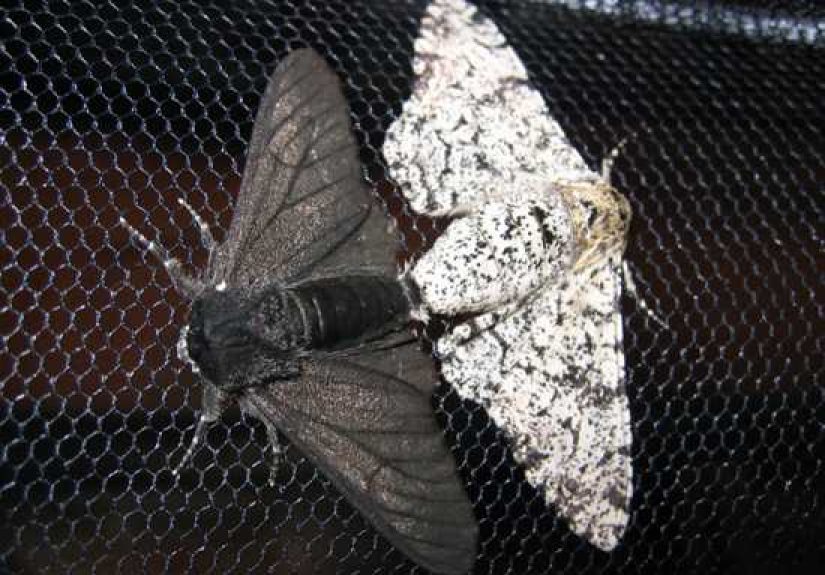
- 3) Peppered Moths Changing Color as Pollution Rises (and Falls)
- 4) Finch Beaks Shifting After a Drought
- 5) E. coli Evolving New Abilities in the Long-Term Evolution Experiment (LTEE)
- 6) Stickleback Fish Repeatedly Losing Pelvis Structures in Freshwater
- 7) Guppies Evolving When Predators Disappear
- 8) Urban Lizards Adapting to City Life
- Wrap-Up: What These Eight Examples Have in Common
- of Everyday Experiences Related to “Evolution in Action”
Evolution can sound like a slow-motion documentary narrated by a soothing voice while ferns politely unfurl for 40 million years. But “evolution in action”
is the opposite vibe: it’s change you can measure on a human timescalesometimes within a few years, a few dozen generations, or a single long-running
experiment that refuses to retire.
Below are eight real-world, well-studied examples of evolution in action, from city lizards to lab bacteria. They’re united by the same
basic plot: variation shows up, the environment plays favorites, and the next generation looks a little different. (Nature is not subtle. Nature is a
relentless performance reviewer.)
Quick Refresher: What “Counts” as Evolution in Action?
In biology, evolution is a change in inherited traits in a population across generations. That doesn’t have to mean a brand-new species
popping into existence with a dramatic theme song. Small changeslike average beak depth in a bird population shifting after a droughtstill qualify.
The most “watchable” kind is usually natural selection: individuals with certain heritable traits survive or reproduce more in a given
environment, so those traits become more common. If the environment changes, the advantage can flip. Evolution is basically a scoreboard that updates
every generation.
1) Antibiotic Resistance in Bacteria
Antibiotics are one of humanity’s best ideasright up there with indoor plumbing and not having to churn butter. But they create intense selection pressure.
When antibiotics kill susceptible bacteria, any bacteria with resistance traits are more likely to survive, multiply, and spread those traits.
What changes (and why it’s evolution)
Resistance can come from mutations or from swapping genes (bacteria are surprisingly social about sharing survival tips). Over time, the population shifts:
resistant strains become more common because they’re the ones still standing after the antibiotic “storm” passes.
Why it matters in real life
Antibiotic resistance isn’t just a textbook exampleit changes medical outcomes. It’s why clinicians emphasize using antibiotics appropriately and why public
health agencies track resistant infections. In short: bacteria don’t “try” to evolve; selection just rewards the variants that already can survive.
2) Insecticide-Resistant Bed Bugs (Yes, They’re Speed-Running Natural Selection)
Bed bugs have staged an unfortunate comeback, and resistance is part of the reason. When a population gets repeatedly exposed to the same class of
insecticides (like pyrethroids), individuals with traits that help them survive are more likely to leave descendants. Rinse, repeatexcept please don’t
rinse your mattress with pesticides.
What the evidence looks like
Researchers have documented bed bug populations with reduced susceptibility to common insecticides and identified biological mechanisms associated with
resistance. Public health reports have also noted pyrethroid-resistant bed bugs in multiple U.S. states, which is about as “evolution in action” as you can
get without a lab coat.
The bigger lesson
This is natural selection with a very cranky punchline: heavy reliance on one control method favors survivors. It’s why integrated pest management (using
multiple strategies, not just one chemical) is often recommended.
3) Peppered Moths Changing Color as Pollution Rises (and Falls)
The peppered moth is famous for a reason: it’s a clear, data-rich example of selection changing trait frequencies in a natural population. When industrial
pollution darkened tree bark and reduced light lichens, darker moths were better camouflaged from predators in polluted areas. When air quality improved,
the selective advantage shifted again.
What’s evolving?
The key point isn’t “a moth decided to dress goth.” It’s that the frequency of color variants changed over time in ways that match the
environment’s selective pressures.
Why it’s still a great example
It demonstrates a core idea: selection depends on context. The “best” trait isn’t universally bestit’s best right now, in this
environment, with these predators.
4) Finch Beaks Shifting After a Drought
On the Galápagos island of Daphne Major, a drought reduced available seeds and changed which seeds were most common. That altered which finches were most
likely to survive and reproduceespecially among birds that relied on seeds as a main food source.
The measurable shift
After the drought, survivors tended to have different beak measurements than the pre-drought population. That’s the signature of selection: the trait
distribution in the population moves because survival and reproduction weren’t random with respect to that trait.
Why this is “evolution in action” (not just “a hard year”)
If beak traits are heritable, then the next generation will, on average, resemble the survivors more than the original population. A climate event becomes
an evolutionary event because it changes who leaves more offspring.
5) E. coli Evolving New Abilities in the Long-Term Evolution Experiment (LTEE)
If you want evolution with a time-lapse button, the Long-Term Evolution Experiment is legendary. Starting in 1988, researchers propagated
multiple E. coli populations for tens of thousands of generations, freezing samples along the waybasically creating a living “fossil record” you can thaw.
What changed?
Over time, the populations evolved higher fitness in that environment, along with a variety of genetic and trait changes. One especially famous outcome:
a lineage evolved the ability to grow aerobically on citrate under the experiment’s conditionsan innovation that appeared after many generations of prior
evolution in that same environment.
Why scientists love this example
It shows how evolution can be both predictable (some improvements happen repeatedly) and surprising (rare innovations can appear given enough time and the
right preconditions).
6) Stickleback Fish Repeatedly Losing Pelvis Structures in Freshwater
Marine sticklebacks colonized freshwater habitats many times. In multiple freshwater populations, researchers have found reduced or missing pelvic
structuressuggesting repeated evolution under similar pressures.
What selection might be doing
In some freshwater environments, having prominent spines or pelvis structures may be less beneficialor even costlydepending on predators and available
resources (like calcium). If a structure is expensive to build and doesn’t help survival, selection can favor variants that reduce it.
A genetic “how” that makes this extra convincing
Studies have identified genetic changes affecting how developmental genes are regulated (not necessarily breaking the gene everywhere, but changing where it
gets turned on). Multiple populations can arrive at a similar outcome via changes in regulatory regionsone reason parallel evolution is possible.
7) Guppies Evolving When Predators Disappear
Guppies in Trinidad have become a classic system for studying rapid evolution because predation pressure can differ dramaticallysometimes separated by a
waterfall. Researchers have also moved guppies from high-predation areas into predator-poor habitats to see what happens next.
What shifts under lower predation?
When predation is intense, selection tends to favor strategies that reproduce earlier or differently because tomorrow is not guaranteed. When predators are
mostly absent, the “best strategy” can changeoften toward traits associated with delayed maturity or different investment in growth and reproduction.
Why this is a powerful example
It’s a real-world demonstration that changing one ecological factor (predators) can reshape the selective landscape and drive measurable evolutionary change
over relatively short timescales.
8) Urban Lizards Adapting to City Life
Cities create new habitats: smoother surfaces, hotter microclimates, different predators, different food, and a lot more concrete. For some animals, that’s
a deal-breaker. For others, it’s an invitation to evolve.
What changed in urban populations?
In Puerto Rican crested anoles, researchers have reported consistent differences between city and forest lizards, including trait differences that make sense
for urban living (think: moving and clinging on human-made surfaces). Genetic analyses have identified parallel genomic markers associated with urban
populations across different citiessuggesting repeated evolution, not just random noise.
Why it’s a modern “evolution in action” headline
This example highlights that evolution isn’t only ancient history. As humans rapidly reshape environments, we also reshape selection pressuresand some
species respond on surprisingly short timelines.
Wrap-Up: What These Eight Examples Have in Common
Whether it’s bacteria dodging antibiotics or lizards mastering the art of not slipping off a wall, the logic is the same: populations contain variation, and
environments filter that variation through survival and reproduction. Over generations, the population changes. That’s evolution in actionless “mystical
transformation,” more “statistics with teeth.”
of Everyday Experiences Related to “Evolution in Action”
You don’t need a jungle expedition to bump into evolution. You run into it in pharmacies, kitchens, airports, andunfortunatelyhotel rooms. Start with the
moment a doctor says, “Take the full course exactly as directed.” That advice isn’t just about being thorough. It’s also about selection. When antibiotics
hit a bacterial population, the most susceptible bacteria die quickly. If treatment is misused (like stopping early or using antibiotics when they aren’t
needed), it can increase the odds that hardier variants survive and spread. The “experience” on the patient side is simple: infections become tougher to
treat. Under the hood, that’s evolution updating the roster.
Then there’s the travel storyline. Someone returns from a trip with mysteriously itchy bites, and suddenly the group chat becomes an entomology conference.
People swap tips, buy sprays, and learn the hard way that some bed bug populations don’t respond well to common products. That frustration“Why won’t this
work?!”is often what resistance looks like from the outside. A chemical that once knocked pests down effectively can become less reliable when survivors
pass on resistant traits. Evolution isn’t trying to ruin your week; it’s just doing math with offspring.
You can even meet evolution at dinner. Many people notice that dairy “agrees” with some friends and not others, or that lactose-free options are a staple
in certain households. That day-to-day difference connects to human variation shaped by history and environment. Traits tied to digesting milk in adulthood
became more common in some populations where dairy consumption provided a nutritional advantage. The experience is familiarchoosing milk, yogurt, or
alternativesbut it reflects evolutionary biology written into everyday choices.
Or consider the nature documentary happening on your commute. City animalspigeons, insects, lizards in warmer regionslive in environments full of new
surfaces, temperatures, and hazards. When researchers find consistent trait and genetic differences between urban and nearby non-urban populations, it
mirrors what you might casually observe: some creatures look unusually “built for the city.” The point isn’t that every city critter is evolving at warp
speed; it’s that the conditions for selection are everywhere, and when heritable variation meets strong pressures, evolution can show up quickly enough to
measure.
Put all these experiences together and the topic stops feeling abstract. Evolution isn’t only about the distant pastit’s a living process that can shape
what medicines work, which pests thrive, and how animals (including us) fit into the worlds we keep building and rebuilding.




 Close
Close