
Table of Contents >> Show >> Hide
- Table of Contents
- Before the 8 types: what “psoriasis symptoms” usually have in common
- 1) Plaque Psoriasis (the most common)
- 2) Guttate Psoriasis (the “drop-shaped” one)
- 3) Inverse Psoriasis (skin folds, smooth patches)
- 4) Pustular Psoriasis (pustules that aren’t an infection)
- 5) Erythrodermic Psoriasis (rare, can be life-threatening)
- 6) Nail Psoriasis (tiny changes with big consequences)
- 7) Scalp Psoriasis (more than “bad dandruff”)
- 8) Palmoplantar Psoriasis (hands and feet: small area, huge impact)
- How clinicians figure out the type (and why that’s helpful)
- Common triggers that can worsen psoriasis
- Short, practical treatment overview (not a one-size-fits-all plan)
- When to see a dermatologist (or other clinician)
- Experiences Living With Psoriasis (Real-World “What It’s Like” Themes) ~
- Conclusion
Psoriasis is what happens when your immune system gets a little too enthusiastic and tells skin cells to grow way faster than they should. The result: patches of inflamed skin that can itch, burn, crack, or flakesometimes all in one dramatic performance.
Here’s the tricky part: psoriasis isn’t one “look.” It shows up in several forms, and it can also pop up in high-impact places (like your scalp, nails, palms, and soles) where even a small patch can feel like a big deal. This guide breaks down 8 common psoriasis types/locationswhat they tend to look like in photos, typical symptoms, and when it’s time to call in a dermatologist.
Quick note: This is educational content, not a diagnosis. If you’re unsure whether you’re seeing psoriasis, eczema, a fungal rash, or something else entirely, a clinician can confirm it and help you avoid “trial-and-error roulette.”
Table of Contents
- Plaque Psoriasis
- Guttate Psoriasis
- Inverse Psoriasis
- Pustular Psoriasis
- Erythrodermic Psoriasis
- Nail Psoriasis
- Scalp Psoriasis
- Palmoplantar Psoriasis
Before the 8 types: what “psoriasis symptoms” usually have in common
Even though psoriasis can look different depending on the type and your skin tone, there are a few patterns that show up again and again:
- Red, pink, purple, brown, or grayish patches (color varies a lot by skin tone).
- Scale that looks silvery-white or flaky.
- Itching, soreness, burning, or a “tight” feeling.
- Cracking that can sting or bleed, especially on thick skin (hands/feet).
- Flares and calm periodspsoriasis often comes and goes.
Can you have more than one type?
Yes. Plenty of people have a “main” type (often plaque) and also deal with another form or location-based psoriasis (like nails or scalp). Psoriasis can also change over time, especially with triggers like infection, stress, skin injury, or certain medications.
When psoriasis is an “urgent” situation
Most psoriasis is not an emergencybut two forms can be serious fast: erythrodermic psoriasis and some cases of generalized pustular psoriasis. If you have widespread redness, peeling, fever, chills, dehydration, rapid heartbeat, or feel very ill, seek urgent medical care.
1) Plaque Psoriasis (the most common)
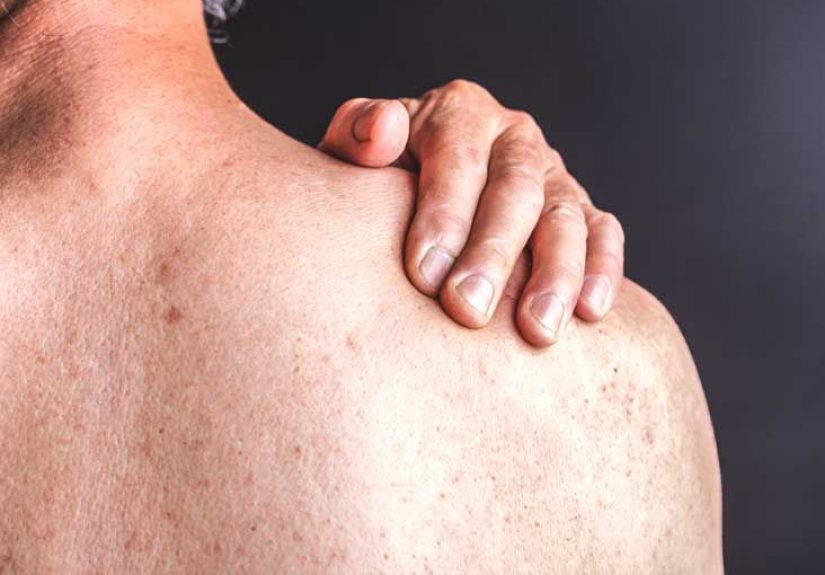
Plaque psoriasis is the “classic” version most people picture. It creates raised patches called plaquesthickened areas of skin covered with scale.
What it looks like in photos
- Well-defined plaques with a noticeable border.
- Dry, silvery or white scale on top.
- On lighter skin, plaques often look pink to red. On darker skin tones, plaques may appear violet, brown, or deep gray and the redness can be subtler.
Common symptoms
- Itching (mild to intense)
- Burning or soreness
- Cracking that may bleed
- Thickened skin over time in frequent flare areas
Common locations
Elbows, knees, lower back, and scalp are frequent targets. But plaques can appear almost anywhereincluding hands, feet, and genitals.
A practical example
You might notice a stubborn “dry patch” on your elbow that doesn’t respond to basic lotion, keeps returning, and slowly becomes thicker with more scaleespecially in colder weather or during stressful weeks.
2) Guttate Psoriasis (the “drop-shaped” one)
Guttate psoriasis often shows up suddenly, sometimes after an infectionclassically strep throat. It’s more common in children and young adults, but it can happen at any age.
What it looks like in photos
- Many small, round or teardrop-shaped spots
- Often scattered across the trunk, arms, and legs
- Usually a finer scale than plaque psoriasis
Common symptoms
- Sudden outbreak of dozens (sometimes hundreds) of spots
- Itch that can range from “meh” to “why is my shirt made of sandpaper?”
Common triggers
Upper respiratory infections (including strep), stress, and sometimes skin injury. If guttate appears after a sore throat, it’s worth mentioning to your cliniciantreating a bacterial infection may matter for overall management.
3) Inverse Psoriasis (skin folds, smooth patches)
Inverse psoriasis shows up in skin folds where there’s friction and moisturethink armpits, under breasts, groin, between buttocks, and around the genitals.
What it looks like in photos
- Smooth, shiny patches (often less scaly than plaque psoriasis)
- Redness or discoloration that can look bright on lighter skin and more purple/brown on deeper tones
- Sometimes looks “raw” because folds are warm and irritated
Common symptoms
- Burning, stinging, or intense discomfort from friction
- Itch that worsens with sweating
- Skin may feel tender, especially during movement
Why it gets confused with other rashes
Inverse psoriasis can resemble yeast or fungal infections (which also love skin folds). Sometimes both happen together, which is unfair but not rare. If a rash in folds keeps returning despite antifungals, psoriasis becomes a stronger suspect.
4) Pustular Psoriasis (pustules that aren’t an infection)
Pustular psoriasis involves white, pus-filled bumps (pustules) on inflamed skin. Important detail: the “pus” is typically not from a bacterial infectionit’s part of the inflammatory process.
What it looks like in photos
- Clusters of white pustules on red/discolored skin
- Can be localized (often hands/feet) or widespread
Common symptoms
- Painful or tender areas
- Severe itch or burning
- In more severe cases: fever, chills, fatigue (get medical help fast)
Potential triggers
Certain medications, infections, stress, and sometimes abrupt changes in systemic steroids can play a role. Because widespread pustular flares can be serious, it’s not a “wait it out and see” situation if you feel sick or the eruption is extensive.
5) Erythrodermic Psoriasis (rare, can be life-threatening)
Erythrodermic psoriasis is uncommon but critical to recognize. It can cover most of the body with intense redness/discoloration and peeling. Think “skin barrier emergency.”
What it looks like in photos
- Widespread redness/discoloration across large areas
- Sheet-like peeling or shedding
- Skin can look shiny, inflamed, and severely irritated
Common symptoms
- Severe itch, pain, or burning
- Feeling very unwell: fever, chills, dehydration
- Rapid heartbeat or temperature regulation problems
What to do
If you suspect erythrodermic psoriasis, seek urgent medical care. This form can affect fluid balance, temperature control, and overall health.
6) Nail Psoriasis (tiny changes with big consequences)
Nail psoriasis can affect fingernails, toenails, or both. It often shows up alongside plaque psoriasis, but it can also appear when skin symptoms are mild.
What it looks like in photos
- Pitting (small dents in the nail)
- Discoloration (yellow-brown changes sometimes described as an “oil drop” look)
- Thickening or crumbling
- Onycholysis (nail lifting away from the nail bed)
Common symptoms
- Nails catching on fabric, splitting, or feeling fragile
- Tenderness, especially with toenails in tight shoes
- Embarrassment or self-consciousness (a very real quality-of-life factor)
Why nail psoriasis matters clinically
Nail changes can overlap with fungal infections, and they can also be a clue to psoriatic arthritis risk in some people. If you have nail changes plus joint pain or morning stiffness, mention both.
7) Scalp Psoriasis (more than “bad dandruff”)
Scalp psoriasis is common and can be intensely annoyingbecause hair makes it harder to treat, and because flakes love dark shirts.
What it looks like in photos
- Thick scale on the scalp (white/silvery or grayish flakes)
- Well-defined patches that may extend beyond the hairline onto the forehead, neck, or behind ears
- Redness/discoloration beneath the scale
Common symptoms
- Itching that can disrupt sleep
- Soreness or burning
- Temporary hair shedding from scratching or heavy scale (hair typically regrows once inflammation calms)
Scalp psoriasis vs. dandruff (seborrheic dermatitis)
Dandruff is often more diffuse and greasy-looking; scalp psoriasis tends to be thicker, more sharply bordered, and may extend past the hairline. Sometimes people have both, because life loves plot twists.
8) Palmoplantar Psoriasis (hands and feet: small area, huge impact)
Palmoplantar psoriasis affects the palms and/or soles. Even if the total area is small, it can seriously disrupt daily lifebecause you use these parts for, well, everything.
What it looks like in photos
- Thick, scaly plaques on palms or soles
- Deep cracks (fissures) that can be painful
- Sometimes overlaps with pustules on hands/feet (palmoplantar pustulosis)
Common symptoms
- Pain with walking, gripping, typing, or using tools
- Burning, itching, and tenderness
- Flares that make ordinary tasks feel like extreme sports
What it can be mistaken for
Hand eczema, contact dermatitis, fungal infections, and thick calluses can look similar. Location, pattern, and response to treatments help clinicians sort it out.
How clinicians figure out the type (and why that’s helpful)
Diagnosis often starts with a skin exam and history: where the rash appears, what it looks like, what triggers flares, and whether you have nail changes or joint symptoms. Sometimes a clinician may do a skin scraping (to rule out fungus) or a biopsy if the presentation is unusual.
Why type and location matter
- Treatment selection: A thin, sensitive fold rash (inverse) needs a different approach than thick plaques on elbows.
- Safety: Erythrodermic and severe pustular forms can require urgent care.
- Quality of life: Nails, scalp, palms/soles, and genitals are “high-impact” sites that deserve serious treatment even if the body surface area is small.
Common triggers that can worsen psoriasis
Not everyone has obvious triggers, but many people notice patterns. Common ones include:
- Infections (especially strep-related triggers for guttate flares)
- Stress (your immune system hears stress and says, “Cool, let’s make this a whole thing.”)
- Skin injury (scratches, sunburn, frictionsome people flare at the injury site)
- Cold, dry weather
- Smoking and heavy alcohol use (often linked with worse disease)
- Certain medications (talk with a clinician before stopping anything)
Short, practical treatment overview (not a one-size-fits-all plan)
Psoriasis treatment usually aims to calm inflammation, slow skin cell overgrowth, and reduce scale. Options may include:
- Topicals: corticosteroids, vitamin D analogs, retinoids, calcineurin inhibitors (often for sensitive areas), and moisturizers.
- Phototherapy: controlled UV light under medical supervision.
- Systemic medications: oral agents or injectable therapies for moderate-to-severe disease.
- Biologics: targeted immune therapies used for certain cases.
Self-care matters too: consistent moisturizing, gentle skin care, trigger tracking, and stress management can help many people reduce flare frequency or intensity. (No, lotion doesn’t “cure” psoriasisbut it can make your skin feel less like it’s wearing an itchy sweater.)
When to see a dermatologist (or other clinician)
- You have a new rash that’s persistent, scaly, painful, or spreading.
- Over-the-counter products aren’t helping after a few weeks.
- Your psoriasis is on high-impact sites (scalp, nails, face, genitals, hands, feet).
- You have joint pain, swelling, heel pain, or morning stiffness (possible psoriatic arthritis).
- You have symptoms that suggest erythrodermic or severe pustular psoriasis (seek urgent care).
Experiences Living With Psoriasis (Real-World “What It’s Like” Themes) ~
Psoriasis isn’t just a skin condition; it’s a life condition. People often describe it as something they manage in seasonssometimes quiet, sometimes loud. While everyone’s story is different, a few shared experiences come up again and again in clinics, support groups, and everyday conversations.
1) The “It’s not contagious” conversation gets old fast
One of the most common frustrations is having to explain that psoriasis can’t be “caught.” Flaking on a gym mat, leaving a little trail of scalp scale on a black hoodie, or having visible plaques on elbows can trigger awkward looks. Over time, many people develop a script: “It’s psoriasisan immune thing, not contagious.” Not fun, but effective.
2) Symptoms don’t always match what you see
Photos can be misleading. A patch that looks “small” in a picture might itch like crazy or crack painfully. Inverse psoriasis, for example, might look smooth and less scaly, but friction can make it burn with every step. Palmoplantar psoriasis can be “only” on the hands and feet yet impact nearly everything: walking, cooking, shaking hands, typing, even opening a soda can without wincing.
3) People become accidental experts in fabrics, weather, and routines
Many people learn what their skin tolerates. Dry winter air? Often a flare. Tight waistbands or scratchy tags? A fast track to irritation. Some keep “rescue routines”: quick showers, fragrance-free moisturizers, gentle shampoos, and careful exfoliation habits (when recommended by a clinician). Others keep a flare diary like it’s a detective noveltracking stress, sleep, infections, and even travel.
4) The emotional side is realand valid
Psoriasis can be visible, unpredictable, and stubborn, which is a triple threat to confidence. People describe planning outfits around plaques, skipping events during flares, or feeling anxious about haircuts because scalp scale might show. Nail psoriasis can feel especially unfair: hands are always “on display,” and nail changes are easy for others to notice. Recognizing the emotional burden isn’t being dramaticit’s acknowledging reality.
5) The “right treatment” is often a journey, not a single moment
Many people go through trial and adjustmentfinding the right topical, learning how to use it consistently, adding light therapy, or discussing systemic options if the disease is more severe or impacts daily life. Progress often looks like fewer flares, less itch, thinner plaques, and better sleepnot necessarily perfection. A lot of patients say the turning point is working with a clinician who takes symptoms seriously even when the affected area is small.
If you’re dealing with psoriasis, the most practical takeaway is this: you don’t have to “earn” care by being severe enough. High-impact locations, pain, sleep disruption, and emotional stress all countand they’re all worth treating.
Conclusion
Psoriasis comes in multiple formssome defined by the pattern (like plaque or guttate), others by where it shows up (like scalp, nails, and palms/soles). Knowing the type can make treatment smarter, safer, and a lot less frustrating. If you’re seeing persistent scaly patches, nail changes, fold rashes that won’t quit, or painful cracks on hands and feet, it’s worth getting an accurate diagnosis and a plan that matches your lifenot just your skin.






 Close
Close