
Table of Contents >> Show >> Hide
- Ryan Seacrest’s First Day Had Big “First Day of School” Energy
- How Seacrest Prepared to Replace a TV Legend
- Vanna White Was the Bridge Between Eras
- The New Set Looks Updated, Not Unrecognizable
- What Seacrest’s Debut Revealed About His Hosting Style
- Why Fans Were So Eager to See Him Backstage
- Extra: What the Experience of Stepping Onto the ‘Wheel of Fortune’ Set Probably Feels Like
- Final Take
Note: This article is based on publicly reported, real-world coverage of Ryan Seacrest’s transition into Wheel of Fortune, including behind-the-scenes interviews, set reveals, and debut coverage from major U.S. entertainment and news outlets.
There are TV gigs, and then there are TV institutions. Hosting Wheel of Fortune falls firmly into the second category. When Ryan Seacrest stepped onto the set as the show’s new host, he wasn’t just taking a new job. He was walking into one of the most recognizable stages in American television, inheriting a franchise built over decades, and trying to look calm while millions of viewers silently wondered, “Okay, but can he really do this?”
The answer, at least from the first wave of behind-the-scenes footage and early interviews, is that Seacrest understood the assignment. He did not arrive like a guy trying to reinvent the wheelpun fully intended. Instead, he showed up like someone who knew the wheel already had a fan club, a history, a sound effect people could identify from another room, and a loyal audience that values comfort as much as excitement.
That is exactly why the backstage glimpses of Seacrest on set landed so well. Fans were not just curious about the new host. They wanted to know how he would behave inside a format so associated with Pat Sajak and Vanna White. Would he be stiff? Too polished? Too “Ryan Seacrest hosting Ryan Seacrest”? Or would he settle into the rhythm of the game and let Wheel of Fortune remain what it has always been: a strangely soothing nightly ritual involving word puzzles, applause, and the possibility of someone winning a trip to Italy after shouting one vowel too early?
Ryan Seacrest’s First Day Had Big “First Day of School” Energy
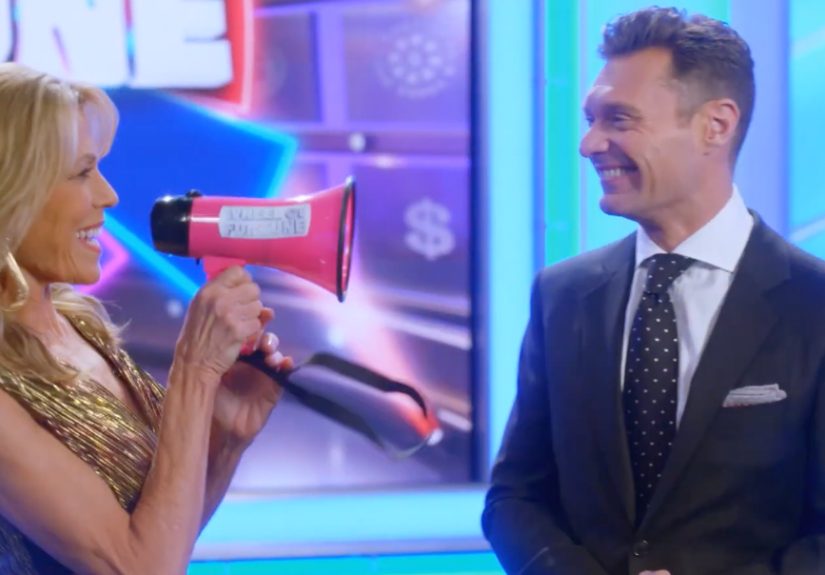
The best behind-the-scenes material from Seacrest’s early days on set worked because it did not feel overproduced. It felt excited, slightly nervous, and refreshingly human. In the footage he shared from his first day at Sony Pictures Studios, Seacrest looked like a guy who had just been handed the keys to a very famous car and was still checking whether this was a prank.
He spun the iconic wheel, listened to its familiar clicking sound like a lifelong fan standing too close to a museum exhibit, and admitted he had been so excited that he could barely sleep the night before. That detail mattered. It made the moment feel less like a corporate handoff and more like a genuine fan finally getting backstage access to a show he grew up watching.
He also joked that the wheel was smaller than people might think, then later noted in another interview that it was heavier than expected. That combination is wonderfully on-brand for television magic. On screen, everything looks larger than life. On set, some of it is surprisingly compact, some of it is more physically imposing than it appears, and all of it carries a kind of mythological weight when viewers have spent years watching from home.
The Set Tour Was More Than a Photo Op
What made Seacrest’s backstage footage interesting was not just that he was standing near the wheel. It was that he clearly understood the emotional architecture of the set. He walked through the studio, admired the memorabilia, checked out the show’s hall-of-fame-style displays, and reacted to the stage with a mix of respect and awe. It was the behavior of someone entering a television landmark, not just clocking in for another hosting shift.
That tone matters for viewers. Wheel of Fortune is not a blank-slate reboot. It is a legacy show with a long memory. The behind-the-scenes tour helped communicate that Seacrest knew exactly where he was and why the job means so much to the audience.
How Seacrest Prepared to Replace a TV Legend
If you are replacing Pat Sajak, there are two obvious bad strategies. Strategy one: pretend the past never happened. Strategy two: imitate Pat so closely that the whole thing starts to feel like a tribute act. Seacrest seems to have avoided both.
According to interviews he gave around the launch of the new season, he studied the show closely, watched endless episodes of Pat and Vanna, and rehearsed mock games in multiple cities while traveling for work. That is the kind of detail fans love because it suggests craft, not just confidence. He was reportedly practicing timing, pacing, and gameplay mechanics with makeshift wheels and makeshift contestants in conference rooms and meeting spaces. Somewhere out there is a hotel boardroom that briefly became fake Wheel of Fortune, and honestly, that deserves its own documentary.
That preparation tells you a lot about Seacrest’s hosting instincts. He did not treat the job like it would run on autopilot just because he has decades of live TV experience. He treated the format like a discipline. Wheel of Fortune looks breezy when it is working, but the host has to guide contestants, keep the pace moving, manage awkward pauses, build suspense, react naturally, and avoid becoming the center of gravity in a game that should belong to the players.
A Full-Circle Moment for a Veteran Host
Seacrest also framed the move as something of a full-circle moment in his career, noting that one of his earliest hosting jobs involved a Merv Griffin project years ago. That bit of history gave the transition a little extra narrative polish. It was not just “famous TV host gets another famous TV job.” It was “career broadcaster returns to a format adjacent to where he first learned the ropes.”
And that helps explain why the behind-the-scenes footage felt so loose and enthusiastic. Seacrest did not look intimidated in a paralyzing way. He looked energized, like someone who understood the size of the moment and was still having fun with it.
Vanna White Was the Bridge Between Eras
Any story about Seacrest joining Wheel of Fortune without centering Vanna White would be like writing about peanut butter and forgetting jelly. The backstage story was never only about the new guy. It was also about continuity, chemistry, and whether the show’s emotional center would hold during a major transition.
White’s presence appears to have made that transition far smoother. In interviews, Seacrest emphasized how important she is to the identity of the show, and White praised him as a professional, kind, and hardworking choice for the role. The two had known each other for years before he officially joined the series, which likely helped strip away some of the forced “let’s all pretend we instantly bonded” energy that can haunt television transitions.
One of the most revealing details to emerge after Seacrest’s debut was the advice White reportedly gave him before his first show: have fun and be yourself. That may sound simple, but it is exactly the right advice for Wheel of Fortune. The format is structured, but it works best when the host does not feel trapped inside the structure. The show needs warmth, rhythm, and the occasional human moment that reminds viewers they are watching real contestants with real nerves and very real excitement over cash and prizes.
Why Vanna’s Role Still Matters So Much
White is more than a co-host or a symbol of continuity. She is part of the show’s internal temperature control. Her calm presence, familiar timing, and deep knowledge of the set help keep Wheel of Fortune feeling like itself even when the scenery changes. Behind the scenes, that kind of stability is priceless. On camera, it makes the handoff feel less like a reset and more like an evolution.
The New Set Looks Updated, Not Unrecognizable
One of the most talked-about behind-the-scenes elements of Seacrest’s arrival was the refreshed Wheel of Fortune set. That was smart. If viewers were already processing a new host, the set had to signal freshness without shouting, “We renovated the whole house and also moved the mailbox.”
Early looks at the redesigned stage suggested exactly that balance. The set kept the familiar anchorsthe wheel, the puzzle board, the contestant areawhile polishing the overall visual package. Seacrest himself described it as a big, shiny game-show floor for a new era, and images from the set showed a sleeker, more contemporary look with brighter surfaces and updated framing around the board.
The redesign matters because game shows are rituals. People do not tune in only for competition. They tune in for visual familiarity. The spin of the wheel, the board lighting up, the stage layout, and the easy host banter all work together like nightly comfort food. The refreshed set seems to understand that viewers wanted something new enough to mark Seacrest’s arrival, but not so different that longtime fans would feel like they had accidentally wandered into another show.
Modernizing Without Breaking the Spell
That may be the smartest thing about the whole transition. The behind-the-scenes material consistently suggested restraint. Seacrest was not presented as a flashy disruptor. The set was not sold as an extreme makeover. Everything about the rollout said: yes, this is a new chapter, but no, no one has thrown the alphabet into a blender.
In television, that kind of discipline is harder than it looks. Plenty of legacy brands panic during transitions and overcorrect. Wheel of Fortune instead leaned into continuity, nostalgia, and polish. It trusted viewers to accept change more easily if the show still felt like home.
What Seacrest’s Debut Revealed About His Hosting Style
By the time Seacrest officially debuted in September 2024, the backstage footage had already done some useful narrative work. It had shown him as excited, respectful, prepared, and slightly awestruck. His on-air presence then built on that image rather than contradicting it.
Seacrest opened his first episode with gratitude, acknowledged Sajak’s legacy, and made it clear he understood the scale of what he was stepping into. But perhaps the most important thing is what he did not do: he did not try to dominate the show. He let the contestants matter. He let the game breathe. He acted like someone who knows that the host’s job on Wheel of Fortune is not to steal the spotlight but to hold it steady.
That approach also lines up with comments he made about the show’s looseness and humanity. In his view, Wheel of Fortune works because it leaves room for real reactions. Contestants do not just win money; they react to what can be genuinely life-changing sums. That realization seems to have clicked for him in a deeper way once he was physically on set and watching those moments unfold in person.
The Contestants Are the Real Stars
That may be the biggest behind-the-scenes lesson of Seacrest’s early run. The job is not only about replacing Pat Sajak. It is about making contestants feel comfortable enough to be themselves on camera while keeping the show moving at a brisk, welcoming pace. From all available footage and interviews, Seacrest seems to understand that. His role is to guide the game, not sit on top of it like a hood ornament.
Why Fans Were So Eager to See Him Backstage
There is a reason this kind of behind-the-scenes content performs so well during major TV transitions. Viewers want proof of tone. They want to know whether the new person “gets it.” Before a debut airs, a backstage clip can answer that question faster than any press release ever could.
In Seacrest’s case, the footage told fans a reassuring story. He was not bored. He was not casual about the legacy. He was not acting like the brand would simply mold itself around him. He looked thrilled, prepared, and aware that he was joining something bigger than himself. That is exactly the energy longtime Wheel of Fortune fans were hoping to see.
And to be fair, Seacrest has spent years mastering polished live television. He knows how to hit marks, keep segments moving, and make highly structured TV feel conversational. What the backstage material revealed was that he also understood the emotional side of this specific job: the nostalgia, the ritual, the pressure, and the need to respect what viewers already loved.
Extra: What the Experience of Stepping Onto the ‘Wheel of Fortune’ Set Probably Feels Like
From Seacrest’s comments and the footage released around his first days, you can piece together what this experience likely felt like in real time. First comes the arrival: not glamorous in a movie-star way, but buzzing with the energy of knowing that one familiar studio door leads into a place people have watched from their couches for decades. The set is not just a workplace. It is a physical version of TV memory.
Then comes the sound. Nearly every memorable backstage moment from Seacrest’s first-day clips revolves around sensory recognition. The wheel clicks. The board glows. The stage reflects light with that unmistakable game-show shine. For viewers, those are nostalgic details. For a new host standing there in person, they are confirmation that the thing really exists outside the screen. It is one thing to say you are hosting Wheel of Fortune. It is another to grab the wheel, feel its actual weight, and hear the sound that generations of viewers associate with suspense, luck, and someone absolutely refusing to buy a vowel.
There is also the pressure of scale. Wheel of Fortune is deceptively simple. It looks relaxed, even cozy, but backstage that simplicity probably makes the pressure worse. The format is so familiar that every little beat matters. How you greet contestants matters. How long you pause matters. Where you stand matters. Even your smile has to land somewhere between “I’m thrilled to be here” and “please trust me, I won’t wreck your weeknight routine.”
At the same time, the set does not appear to operate like a shrine. Later behind-the-scenes details have suggested there is lively music during breaks and an upbeat atmosphere when cameras are not actively rolling. That makes sense. The magic of a successful game show is that it has to feel both precise and loose, disciplined and playful. Contestants are nervous. Audience members are excited. Crew members are keeping a hundred moving parts aligned. The host has to sit in the center of all that motion and make it feel easy.
For Seacrest specifically, the experience was probably intensified by the fact that he was not entering an empty space. He was entering a room full of echoes: Pat Sajak’s decades of rhythm, Vanna White’s steady presence, and the expectations of viewers who know exactly how Wheel of Fortune is supposed to feel. That is why his visible enthusiasm mattered so much. It suggested that instead of shrinking from the weight of the moment, he was energized by it.
And maybe that is the most interesting part of all this. The behind-the-scenes clips did not just show Ryan Seacrest on a set. They showed a veteran host having a genuinely fan-like reaction to one of television’s most enduring institutions. In an era when many entertainment transitions are rolled out with glossy detachment, that kind of visible excitement felt refreshingly real. It reminded fans that sometimes the best way to inherit a legendary show is not to swagger in like you own it. It is to walk in wide-eyed, grateful, well-prepared, and just a little amazed that you get to spin the wheel at all.
Final Take
If the early behind-the-scenes look at Ryan Seacrest on the Wheel of Fortune set proved anything, it is this: the show knew exactly what kind of transition it needed. Not a dramatic reinvention. Not a nostalgia cosplay act. Just a thoughtful handoff built on respect for the brand, affection for the format, and enough fresh energy to make a new era feel exciting instead of forced.
Seacrest’s backstage footage, set tour, prep stories, and early chemistry with Vanna White all pointed in the same direction. He understands that hosting Wheel of Fortune is less about grabbing attention and more about guiding a familiar experience with confidence, warmth, and a little personality. For longtime fans, that is probably the best possible outcome. The wheel still spins, the board still lights up, the audience still cheers, and the new host looks genuinely happy to be there. In TV, that is not just a smooth transition. That is a solved puzzle.




 Close
Close