
Table of Contents >> Show >> Hide
- What Authorities Say Happened
- Why Fake-Cancer Fundraisers Work So Well (And So Fast)
- When “Faking Illness” Overlaps With Child Harm
- The Legal Side: What “Theft by Deception” Means in Ohio
- What This Does to a Community (Besides Empty Wallets)
- How to Donate Without Becoming a Full-Time Skeptic
- Zooming Out: This Isn’t the Only Fake-Cancer Case
- Conclusion: Protect Generosity, Protect Kids, Protect Reality
- Experiences Related to the Ohio Fake-Leukemia Scam (What People Often Go Through After Cases Like This)
If you’ve ever donated to a “my kid is sick” fundraiser, you probably did it for one simple reason: you’re not a monster.
Most people see a photo of a child in a hospital bed and their hearts sprint ahead of their brains. And usually that’s finebecause usually, the story is real.
But every so often, a case comes along that makes everyone collectively squint at the internet and whisper, “Wait… what?”
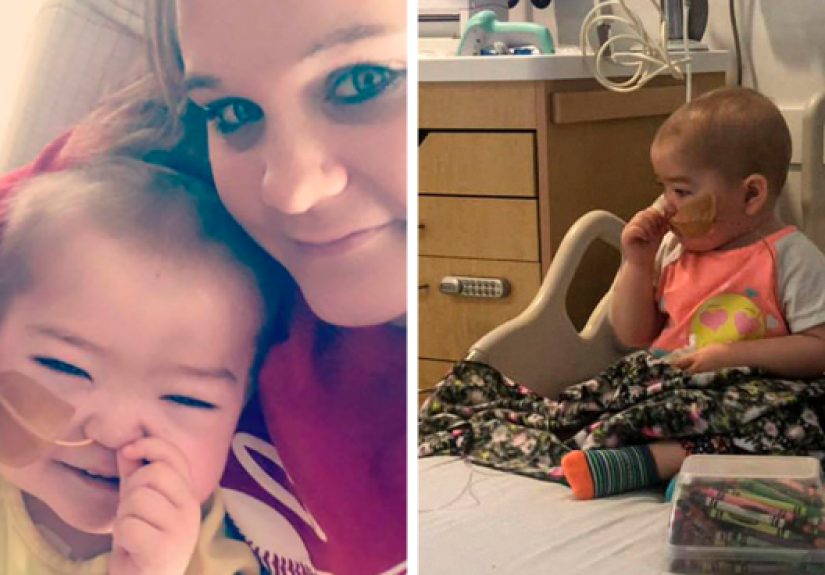
That’s what happened in eastern Ohio, where authorities say a mother spent years telling the community her young daughter had leukemia,
collecting donations and support along the wayuntil investigators determined the child did not have cancer.
The allegations are unsettling not only because money is involved, but because the most valuable “prop” in the story wasn’t a fake document or a social media post.
It was a child.
This article breaks down what’s been reported about the case, why fake-illness fundraisers can be so effective, what the legal system tends to do with situations like this,
and how communities can protect generosity without turning into cynics who demand a doctor’s note before sending a casserole.
What Authorities Say Happened
According to reporting and public statements from law enforcement and local news outlets, an Ohio woman was arrested after investigators concluded she had
falsely portrayed her daughter as having leukemia and other serious medical issues for years.
The story circulated through social media updates and fundraising efforts, drawing donations from individuals and organizations who believed they were helping cover medical costs.
In early January 2024, investigators received information about a possible scam involving claims that a child was fighting cancer.
After looking into the allegations, authorities said they confirmed the child did not have cancer.
One local organization was reported to have donated about $8,000 to assist with treatment expenses. Later reporting said investigators believed the total amount taken
was far larger over time.
A “medical storyline” that kept evolving
A key reason this story grabbed attention is the way fake-illness narratives often unfold: they don’t stay still.
They evolve. They develop cliffhangers. They acquire new symptoms, new tests, new treatments, and new reasons help is urgently needed “right now.”
In this case, reporting described online posts and claims that the child needed treatments and medical procedures, including references to chemotherapy and other serious interventions.
Authorities also described the daughter missing significant time from school, which became part of the broader concern.
When a child is repeatedly absent for alleged medical reasons, schools are often put in a difficult position: they want to support the family while also fulfilling
legal obligations to protect the child’s welfare and educational access.
The arrest, charges, and later indictment
News coverage in January 2024 reported that the mother was arrested and initially faced a felony theft-by-deception charge, with bond set at $50,000.
Subsequent reporting said a grand jury later indicted her on multiple counts, including forgery, endangering children, grand theft, and telecommunications fraud.
Local reporting also stated investigators believed the total theft amount could exceed $100,000.
It’s important to keep two ideas in your head at once:
(1) the allegations are severe and specific, and (2) charging documents and news reports are not the same thing as a final conviction.
The legal process is designed to test evidence, not vibeseven very angry ones.
Why Fake-Cancer Fundraisers Work So Well (And So Fast)
Fake medical fundraising is, unfortunately, an efficient type of scam because it targets the “help now” part of our brains.
When people believe a child is sick, they feel urgency, empathy, and a desire to do something tangible.
That’s not a weakness. That’s the best part of humans. Scammers just treat it like a coupon code.
Three forces that supercharge these scams
-
Social proof: If others are donating, commenting, sharing, and praying publicly, it feels safer to join in.
The fundraiser looks “validated,” even when no one has actually verified anything. -
Emotional storytelling: Medical updates (tests, setbacks, “good days and bad days”) read like a diary.
They create a relationship between donors and the story, so giving feels personal. -
Fear of being “that person”: Nobody wants to be the skeptic who questions a sick child’s needs.
Scammers know this and lean into it.
Add the frictionless nature of online givingtap, donate, share, doneand it becomes easy for a false narrative to spread widely before anyone asks a hard question.
When “Faking Illness” Overlaps With Child Harm
Many people hear “fake illness” and immediately picture a straightforward money scam.
But cases involving a child can be more complicated because the child may be harmed even if no physical injury is obvious.
Missing school, being placed in stressful situations, or being used repeatedly as evidence for a lie can be damaging on its own.
Factitious disorder imposed on another: what it is (and what it isn’t)
Some high-profile cases involving caregivers and fabricated illness resemble a condition sometimes called
“factitious disorder imposed on another” (formerly known as Munchausen syndrome by proxy).
Medical sources describe it as a situation in which a caregiver fabricates, exaggerates, or induces symptoms in someone in their care,
typically to gain attention, sympathy, or other benefits.
But here’s the crucial point: you cannot diagnose that from the outside, and you shouldn’t try.
Investigators focus on evidencedocuments, statements, money trails, and child welfare indicators.
Mental health explanations, if relevant, are evaluated by qualified clinicians within the legal and protective-services process.
The Legal Side: What “Theft by Deception” Means in Ohio
In Ohio, theft law includes obtaining property or services “by deception,” which generally involves knowingly misleading someone to obtain something of value.
In a donation context, the core allegation is typically: people gave money because they believed a claim that wasn’t true.
In the Ohio case reported in January 2024, the initial charge discussed in coverage was theft by deception, and later reporting described an indictment that included
additional charges such as forgery and telecommunications fraud.
The broad theme behind these charges is the same: authorities allege false statements and/or documents were used to obtain money or support.
Why forgery and telecommunications fraud show up in these cases
Fake-illness schemes often rely on more than emotional posts.
They may involve allegedly altered records, falsified letters, or communications that create the appearance of legitimate medical care.
If prosecutors believe documents were forged or communications systems were used to execute a fraud, that can expand charges beyond basic theft.
And when a child is involved, prosecutors may also explore child endangerment allegations if they believe the caregiver’s actions put the child’s safety,
health, or welfare at riskphysically, emotionally, or educationally.
What This Does to a Community (Besides Empty Wallets)
The financial damage is obvious: people donate hard-earned money believing they’re helping a child survive.
But the social damage is sneakier and can linger longer.
1) Compassion fatigue becomes real
After a scandal, communities can swing from “help everyone” to “trust no one.”
That’s understandablebut it hurts families who actually need support, because genuine fundraisers may face suspicion or lower turnout.
2) Local organizations become cautious (and slower)
Churches, civic groups, PTOs, small nonprofits, and local businesses often rally around sick children quickly.
A high-profile fraud can force them to add verification steps, paperwork, and rules that slow the response time for real emergencies.
3) The child becomes part of the fallout
In cases like the one reported in Ohio, the child’s life can change abruptlypublic scrutiny, school disruption, protective-services involvement,
and the emotional aftermath of having their identity wrapped up in a medical story they didn’t create.
Even if the child never understood the full situation, they often feel the consequences.
How to Donate Without Becoming a Full-Time Skeptic
No one wants a world where the default response to “my kid is sick” is “prove it.”
At the same time, smart giving protects not only your money, but also the credibility of community support systems.
The goal isn’t to stop helping; it’s to help in ways that are harder to exploit.
Practical ways to verify without being cruel
-
Prefer direct-to-provider support: When possible, offer to pay a bill directly to a hospital foundation, pharmacy, landlord, or utility company.
Many legitimate families welcome this because it reduces stress and boosts trust. -
Look for transparent budgeting: A credible fundraiser usually explains what costs exist (travel, lodging, medications, lost wages) and how funds will be used.
Vague claims like “the bills are insane” might be true, but clarity helps. -
Ask who manages the money: Is it the caregiver? A verified friend? A local organization?
The more accountable the structure, the safer the donation. -
Use platform tools: If you see red flags on a crowdfunding platform, report the fundraiser through the platform’s trust and safety process.
Platforms may place funds on hold or investigate if they suspect fraud. -
Don’t let urgency bulldoze you: Scammers love “we need this by tonight.”
Real medical needs can be urgent, but legitimate organizers can usually answer basic questions calmly.
If you want a simple rule that doesn’t ruin your day: donate in ways that would still help if the story is true,
but limit how easily the money can become untraceable cash if the story isn’t.
Zooming Out: This Isn’t the Only Fake-Cancer Case
Unfortunately, fabricated illness scams aren’t limited to any one state or platform.
In recent years, multiple U.S. cases have involved people allegedly claiming cancer diagnoses online to solicit donations,
sometimes accompanied by staged photos, elaborate updates, and emotional appeals.
The details vary, but the pattern is consistent: a compelling story, fast fundraising, and eventual unraveling when someone notices inconsistencies
(sometimes medical professionals, sometimes community members, sometimes the platforms themselves).
Courts have handled these cases with outcomes ranging from restitution orders and probation to incarceration, depending on the evidence and applicable charges.
Conclusion: Protect Generosity, Protect Kids, Protect Reality
The allegations in this Ohio case hit a nerve because they collide with something sacred: the instinct to protect children.
When that instinct is used as a lever for money or attention, it doesn’t just drain bank accountsit drains trust.
The good news (yes, there is some) is that communities can recover.
Verification doesn’t have to be cold-hearted. Accountability doesn’t have to be cynical.
If anything, smart giving is a way to defend kindness from the people who try to weaponize it.
If you’re a donor, give thoughtfully and use platforms and organizations that can help verify and document need.
If you’re a community leader, build a simple, repeatable process for fundraising support.
And if you’re a family truly facing a medical crisis, know this: most people still want to help.
The scams make us cautious, but they don’t erase compassionthey just force it to grow up a little.
Experiences Related to the Ohio Fake-Leukemia Scam (What People Often Go Through After Cases Like This)
When a community learns that a widely shared childhood-cancer story may have been fabricated, the emotional whiplash is intense.
People don’t just feel “duped.” They feel embarrassed for caringand that’s a uniquely painful kind of regret.
Below are common experiences communities describe in the wake of fake-illness fundraising cases like the one reported in Ohio.
These aren’t claims about any one person’s private thoughts; they’re patterns that show up again and again when trust gets broken publicly.
1) Donors replay every detail (and blame themselves)
A lot of donors remember the exact moment they clicked “donate.”
Some recall scrolling past photos, reading updates, seeing supportive comments, and thinking, “Okay, this is real.”
After the allegations surface, donors often go back and reread posts like they’re studying film footagesearching for the clue they “should have noticed.”
The problem is that most scams don’t look like scams at first. They look like a community doing what communities do: showing up.
And here’s the weird twist: donors sometimes feel guilty for wanting refunds, even though their money was given under false pretenses.
They worry that asking for money back makes them look cold. In reality, requesting accountability is part of keeping giving sustainable.
When donors quietly swallow losses, scammers win twice: they get money and they get silence.
2) Schools and teachers get stuck in the middle
Educators are often among the first to see when a story and reality don’t line upbecause schools track attendance, nurse visits,
behavior changes, and daily patterns that don’t show up in social media posts.
When a parent says a child is in treatment, staff may adjust expectations, offer accommodations, and communicate with compassion.
If concerns arise, schools have to balance empathy with mandatory reporting obligations.
Teachers may feel torn: they don’t want to accuse a struggling parent unfairly, but they also can’t ignore patterns that suggest something is wrong.
In many communities, educators describe this as one of the most emotionally exhausting partsbecause the child is right there, and the stakes are real
whether or not the medical claim is.
3) Local businesses and civic groups rethink how they help
Small towns and tight-knit counties often have a “pitch in” reflex: a spaghetti dinner, a hog roast, a raffle basket, a tip jar on the counter.
These grassroots fundraisers are fast, personal, and powerfulexactly the kind of support families in crisis need.
After a fraud allegation, those same groups may pull back.
You’ll hear things like, “We can’t risk it,” or “We need paperwork now,” or “We’ll only donate to big charities.”
That shift can unintentionally harm families facing legitimate emergencies, especially those without the time, energy, or knowledge to navigate formal systems.
The best organizations don’t stop helping; they build a simple checklistsomething like “confirm beneficiary, confirm need, confirm payment path”and then keep the compassion flowing.
4) Families facing real cancer feel collateral damage
One of the saddest ripple effects is what real patients and caregivers experience when fake stories go viral.
Families dealing with leukemia or other cancers already feel exposed: they’re sharing personal medical details to survive financially.
When a scam becomes public, they worry people will assume their fundraiser is also questionable.
Some families respond by becoming extra transparent: posting hospital foundation contacts, sharing general treatment schedules without violating privacy,
and providing receipts or updates that focus on costs rather than drama.
That transparency can be helpfulbut it can also be exhausting. No parent should have to “prove” their child is ill to earn compassion.
Yet many do it anyway because they know trust is fragile after cases like the Ohio allegations.
5) The community’s “new normal” can still be kind
The healthiest outcome after a scandal isn’t permanent suspicionit’s wiser generosity.
People learn to donate through verifiable channels when possible, to support vetted local organizations, and to ask calm, practical questions.
The community still rallies, but it rallies with seatbelts on.
In other words: you can keep your heart soft and your wallet smart.
Kindness doesn’t have to be gullible to be real.





 Close
Close