
Table of Contents >> Show >> Hide
- Before the romance, there were two very different careers
- The first almost-meeting on Butch Cassidy
- The real beginning came with The Legacy
- Why their timing may have been exactly right
- Marriage, family, and a surprisingly un-Hollywood rhythm
- Working together without making it weird
- The secret sauce: not magic, but effort
- Why fans remain fascinated by them
- The deeper experience behind their love story
Hollywood is not exactly famous for calm, steady romance. It is more famous for whirlwind weddings, dramatic breakups, and headlines that age like warm milk. And yet, somehow, Sam Elliott and Katharine Ross built the kind of relationship that feels almost suspiciously sturdy. Not boring-sturdy. Not beige-sturdy. More like old-leather-jacket-and-perfect-denim sturdy. The kind of love story that looks better with time.
That is part of what makes their story so appealing. Sam Elliott has the voice of a weathered campfire and the face of a classic American Western. Katharine Ross has long carried that rare old-Hollywood blend of intelligence, elegance, and mystery. Put them together and the result feels less like a celebrity pairing and more like a movie the studio accidentally got right on the first take. But their relationship did not begin with a grand cinematic kiss. It began, as many lasting relationships do, with bad timing, separate lives, and a second chance that arrived years later.
Before the romance, there were two very different careers
To understand why Sam Elliott and Katharine Ross became such a compelling couple, it helps to remember that they did not arrive in Hollywood from the same place. Ross hit major acclaim first. By the late 1960s, she had already become one of the most memorable faces of her generation, thanks in large part to The Graduate. Her performance as Elaine Robinson gave her the kind of recognition actors chase for years and rarely catch. She was not just another ingenue in a pretty dress. She had presence. She felt modern, emotionally alert, and impossible to ignore.
Ross followed that with another iconic role in Butch Cassidy and the Sundance Kid, playing Etta Place opposite Paul Newman and Robert Redford. She also left her mark on The Stepford Wives, proving that she could move between romance, drama, and eerie social satire without breaking a sweat. Long before “screen presence” became a phrase everyone used to describe anyone with a jawline, Ross actually had it.
Elliott, meanwhile, took the scenic route. He was never an overnight sensation, which may be one reason audiences trust him. His career was built the old-fashioned way: one role at a time, one impression at a time, one mustache at a time. He spent years working in television and film, developing the persona that would eventually make him unforgettable. He looked like the kind of man who might teach you how to saddle a horse, fix a fence, and quietly judge your handshake.
That slow-burn quality became one of Elliott’s greatest strengths. He was never too slick. Never overpolished. Even when he became famous, he still felt like someone who had dirt on his boots and common sense in his back pocket. In an industry that often rewards flash, Elliott made a career out of gravity.
The first almost-meeting on Butch Cassidy
Their story technically begins in the late 1960s on the set of Butch Cassidy and the Sundance Kid. Technically is doing some heavy lifting there, because this was not the moment violins started playing. Ross was already the film’s leading lady. Elliott was a minor player, so minor that he later described himself as little more than a “glorified extra” in a bar scene. Not exactly the setup for a sweeping studio romance.
Still, the image is irresistible: young Sam Elliott on the set, already noticing Katharine Ross, already impressed, but not bold enough to walk over and strike up a conversation. And honestly, can you blame him? Ross was already a star. Elliott was still climbing the ladder, one rung and one side job at a time. If this were a screenplay, a producer probably would have asked for a more dramatic first encounter. Real life, fortunately, is not always interested in producer notes.
So they went their separate ways. No instant romance. No stolen scene. No dramatic “we were meant to be” moment. Just a near miss.
The real beginning came with The Legacy
The actual turning point came nearly a decade later, when both actors appeared in the 1978 film The Legacy. The movie itself is not usually listed among the greatest cinematic achievements of the modern age. No one is building a shrine to it in their living room. But for Sam Elliott and Katharine Ross, it turned out to be the film that mattered most.
This time they did more than pass each other between setups. They worked together. They interacted. They had time to see one another as people rather than as names on a call sheet. And that is the detail that gives their love story its charm. It was not instant chemistry under a spotlight. It was recognition. Timing. Proximity. A relationship that had room to become real before it became public.
There is something oddly reassuring about that. So many celebrity love stories are packaged like fireworks: loud, bright, over in twelve seconds. Elliott and Ross feel more like a match that finally caught after several tries. A little patience, a little timing, and suddenly there was a flame.
Why their timing may have been exactly right
One reason their relationship seems to have lasted is that they did not fall in love at the very beginning of their adult lives. By the time they truly connected, both had already built careers, lived through disappointments, and figured out at least a few hard truths about the business and themselves. That matters. Young romance can be glorious, but mature romance often has better survival skills.
Ross, by then, was not a wide-eyed newcomer dazzled by attention. Elliott was not trying to invent himself in someone else’s reflection. They met as adults with histories, habits, and working lives. That kind of timing does not guarantee success, of course, but it can create something deeper than infatuation. It can create choice. And their relationship has always felt chosen.
That may be the least flashy and most impressive thing about them. They do not project the energy of a couple trapped inside a legend. They project the energy of two people who kept deciding, year after year, that the other one was still the person they wanted to come home to.
Marriage, family, and a surprisingly un-Hollywood rhythm
Sam Elliott and Katharine Ross married in 1984, and later that same year they welcomed their daughter, Cleo Rose Elliott. That detail matters because it helps explain the tone of their life together. Their relationship was not just about two admired actors finding love in the middle of glamorous careers. It became a family story too.
And unlike some celebrity families who seem to live under a permanent stadium spotlight, Elliott and Ross kept much of their home life relatively private. They have never felt desperate to turn their relationship into a brand. There were no endless public declarations, no performative oversharing, no sense that the marriage needed to be marketed in order to exist. They let it breathe.
That privacy probably helped. Fame has a way of turning regular human tension into public theater. A bad week becomes a tabloid narrative. A rough patch becomes “trouble in paradise.” Elliott and Ross, by contrast, seemed to protect the ordinary space a marriage needs. Not secrecy. Just boundaries. In Hollywood, boundaries can be sexier than matching tattoos.
Working together without making it weird
Another fascinating part of their story is that they did not stop collaborating once they became a couple. In fact, they continued to work together over the years in projects including Travis McGee, Houston: The Legend of Texas, and Conagher. That last title matters especially because it shows the depth of their creative partnership. They were not merely standing in front of cameras and cashing checks. They were building something together.
Conagher in particular fits them perfectly. A Western, yes, but also a story built on endurance, loneliness, decency, and emotional restraint. In other words, it lives in the exact neighborhood where both actors do some of their best work. Elliott later spoke about the project as one of the most rewarding creative experiences of his life, and it is easy to understand why. He and Ross were not just married by then; they were artistic allies.
Years later, they appeared together again in The Hero, with Ross playing the ex-wife of Elliott’s aging Western star. That casting worked because audiences already carried the history of their real relationship into the film. They did not have to fake familiarity. They had decades of it. You cannot manufacture that kind of emotional shorthand with a few rehearsals and a good lighting plan.
The secret sauce: not magic, but effort
If there is one thing that separates Sam Elliott and Katharine Ross from the standard celebrity-couple mythology, it is that Elliott has never tried to pretend the marriage lasted on charm alone. He has spoken about love, yes, but also about effort. About working at it. About not walking away the second life gets messy. That may not sound as romantic as “soul mates under the stars,” but in practice it is much more useful.
That honesty is part of the appeal. Their marriage does not look indestructible because it never faced trouble. It looks durable because both people treated it like something worth maintaining. Elliott has made the point that long marriages require wanting to be married. That sounds obvious until you realize how many people love the performance of commitment more than the daily labor of it.
And daily labor is exactly what a long partnership is made of. Shared routines. Private jokes. The ability to survive disappointment without turning every argument into a declaration of doom. The humility to apologize. The wisdom to stay through seasons that are less exciting than the beginning. That is where most Hollywood love stories lose the plot. Elliott and Ross seem to have understood that the plot is the staying.
Why fans remain fascinated by them
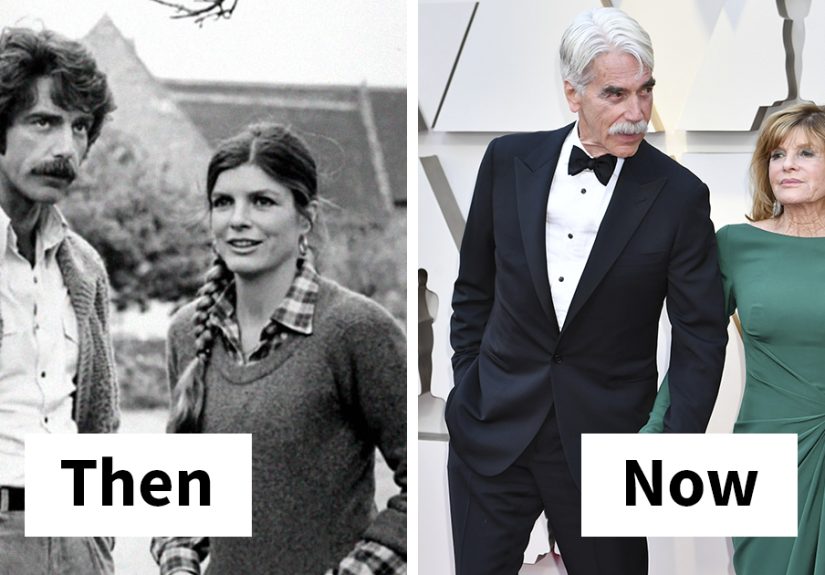
People love Sam Elliott and Katharine Ross not just because they are famous, but because they represent a version of romance that feels increasingly rare. They are glamorous without seeming manufactured. Stylish without looking styled within an inch of their lives. Even when they step onto a red carpet, they do not feel like an ad campaign. They feel like a couple.
There is also the matter of texture. Elliott and Ross have it. His weathered masculinity, her cool intelligence, their shared history in Westerns and American screen classics, the sense that both of them belong to a slightly more grounded version of Hollywood. Together, they suggest a kind of grown-up love story, one built less on spectacle and more on character.
That may be why every new public appearance still gets attention. When they show up together, people are not merely admiring two stars. They are seeing evidence that not every long relationship in the entertainment business is a fairy tale, but not every one is a cautionary tale either. Some are simply real. And real, these days, can feel downright radical.
The deeper experience behind their love story
What makes the story of Sam Elliott and Katharine Ross resonate so strongly is that it mirrors experiences many ordinary people understand, even if their lives do not include film sets, award shows, or photographers yelling for one more shot. Plenty of people meet the right person at the wrong time. Plenty of people pass by someone once, think nothing will come of it, and then reconnect years later when life has finally made room for something serious. That part of their story feels wonderfully human.
There is also a lesson here about maturity. A lot of modern romance is sold as instant certainty: one magical moment, one all-consuming spark, one algorithm-approved soulmate. Elliott and Ross offer a different picture. Their relationship suggests that love can arrive after experience has done some sanding around the edges. It can show up after disappointment. After ambition. After life has taught you what matters and what definitely does not. That kind of love may look quieter from the outside, but it often has deeper roots.
Then there is the experience of watching two people age without trying to outrun time. That may be one of the most moving parts of their story. They did not build their image around pretending to be eternally twenty-seven. They let the years accumulate. They kept showing up as themselves. In a culture obsessed with constant reinvention, there is something almost rebellious about consistency. Their appeal grew not because they resisted age, but because they carried it well.
For fans, following their story can feel oddly comforting. It reminds people that romance does not have to be loud to be meaningful. It does not have to be public to be true. It does not need a dramatic social media caption every three weeks to prove it is alive. Sometimes love is just two people choosing each other over and over, while careers rise, fall, evolve, and surprise them. Sometimes it is helping your spouse get back in the room for an audition, reading a script together, sharing the same values, and understanding that admiration is not enough unless it grows into reliability.
Their story also taps into the experience of partnership as collaboration. Many couples love each other but struggle to work together. Elliott and Ross seem to have found a rhythm in doing both. That is no small achievement. It requires respect. It requires enough security to let the other person shine. It requires the confidence to say, “We are on the same team,” even in competitive environments. That kind of partnership is attractive because it looks sturdy in all the places that count.
In the end, the enduring appeal of Sam Elliott and Katharine Ross is not just that they stayed married for decades in Hollywood, though that alone is enough to raise an eyebrow and a glass. It is that their relationship feels lived in. Earned. Weathered in the best way. Their love story is romantic, yes, but not because it floats above ordinary life. It is romantic because it survives inside ordinary life: work, compromise, timing, family, patience, and the choice to remain tender even after the honeymoon stories stop being news. That is what makes their story feel less like a fantasy and more like a model. Not perfect. Not polished into unreality. Just enduring. And that may be even better.







 Close
Close