
Table of Contents >> Show >> Hide
- The Backstory: How a Prison Riddle Ended Up in a Math Magazine
- The Riddle
- First Move: Turn It Into a Classic (Pell’s Equation)
- Why 1729 Makes This Problem Extra Sneaky
- The Secret Weapon: Continued Fractions
- So… What’s the Answer?
- Why Pell-Equation Answers Can Explode in Size
- What Makes This a Great Riddle (Not Just a Great Equation)
- If You Wanted to Solve It Yourself (Without a Time Machine)
- Why This Story Resonates Beyond the Math
- FAQ: Common Questions People Ask After Seeing This Riddle
- Experiences That Come With Chasing a Monster Riddle ()
- Conclusion
Some riddles feel like a cute little brain-stretch before breakfast. This one feels like you tried to stretch
a rubber band… and it turned out to be made of steel.
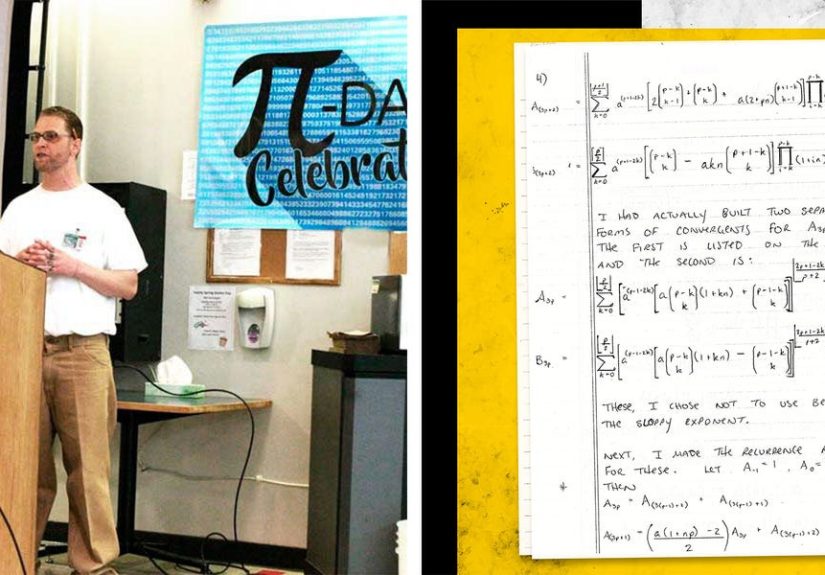
The setup is real: an incarcerated, self-taught math enthusiast submitted a number-theory problem to a
college-level math magazine. The prompt looks simple enough to fit on a sticky note. The answer, however,
is the kind of number that makes your calculator quietly excuse itself and leave the room.
The Backstory: How a Prison Riddle Ended Up in a Math Magazine
Math has a reputation for being locked behind fancy classrooms, expensive textbooks, and that one friend who
“just sees” the solution. But number theorymath’s obsession with whole numbers and patternshas a long
tradition of being explored by people outside formal systems. Sometimes it happens at kitchen tables. Sometimes
it happens in libraries. And sometimes, surprisingly, it happens behind bars.
In this case, a self-taught problem poser found inspiration in the “problems” culture of undergraduate math:
short prompts that look innocent, then reveal deep structure when you tug on the right thread. The result was a
riddle that nods to one of the most famous integers in pop-math history: 1729.
That number is legendary because it’s the smallest integer that can be written as the sum of two cubes in two
different ways: 1³ + 12³ and 9³ + 10³. It’s often called “Ramanujan’s taxi-cab number,” and it’s
basically the celebrity cameo of number theoryshowing up whenever math wants to be charming and slightly smug.
The Riddle
Here it is, clean and deceptively polite:
What is the smallest positive integer y such that 1729y² + 1 is a perfect square?
If your first instinct is “try a few values,” you are absolutely correct… for about 90 seconds. After that,
you’ll start running out of “a few.”
First Move: Turn It Into a Classic (Pell’s Equation)
Let’s say 1729y² + 1 is a square. That means there exists an integer x such that:
x² = 1729y² + 1
Rearrange it:
x² − 1729y² = 1
Congratulations: you’ve walked into a famous house of math called a Pell equation. These are equations of the form:
x² − Dy² = 1
where D is a positive integer that is not a perfect square. Pell equations are a greatest-hits album in number theory:
simple statement, endless depth, and solutions that can balloon into enormous numbers without warning.
Why This Matters
The “try a few values” approach works for tiny Pell equations. For example, if D = 2:
x² − 2y² = 1
A small solution is x = 3, y = 2 (because 9 − 8 = 1). Nice. Friendly. Very “I can do this in my head.”
But with D = 1729, the smallest positive solution is not the kind of number you stumble upon accidentally while doodling.
You need a method that’s built for the job.
Why 1729 Makes This Problem Extra Sneaky
1729 is famous for the taxi-cab story, but it’s also a composite number with prime factors that interact in complicated
ways with square roots and approximations. That matters because Pell equations are tightly connected to how well
rational numbers can approximate √D.
Here’s the big idea: if x² − Dy² = 1, then:
x² = Dy² + 1
Divide both sides by y² (y ≠ 0):
(x/y)² = D + 1/y²
So x/y is extremely close to √D. In other words, solving the equation is basically the same as finding a
spectacularly good rational approximation to √1729.
The Secret Weapon: Continued Fractions
When mathematicians say “continued fractions,” some people hear “Victorian-era math punishment.” In reality,
continued fractions are one of the most powerful, elegant tools for finding the best possible rational approximations
to irrational numbers like √1729.
Continued Fractions in One Breath (No Panic)
A continued fraction writes a number like this:
a₀ + 1/(a₁ + 1/(a₂ + 1/(a₃ + … )))
If that looks like a staircase made of fractions, that’s because it is. And every time you cut the staircase off at a
certain step, you get a rational approximation called a convergent.
For square roots of non-square integers (like √1729), the continued fraction is periodicit eventually repeats.
That repeating pattern is the key that unlocks Pell equations.
How the Method Connects to the Riddle
There’s a well-known theorem: the convergents of √D produce candidates for x/y that often satisfy
x² − Dy² = ±1. When you find the first convergent that makes the equation equal to +1, you’ve found the smallest
positive solution (the “fundamental solution”)and from that, every other solution can be generated.
So… What’s the Answer?
For this particular riddle, the first convergent that works leads to a solution where the smallest positive integer y is:
y = 1,072,885,712,316
Yes, that’s “a little over a trillion,” which is math’s way of saying, “hope you weren’t planning to brute-force this.”
The matching x (so that x² = 1729y² + 1) is:
x = 44,611,924,489,705
A Quick Reality Check (Because We All Need One)
If you plug these into the rearranged equation x² − 1729y² = 1, it works exactly. That means:
- 1729y² + 1 is a perfect square, and
- there is no smaller positive y that makes it happen.
This is a classic Pell-equation phenomenon: a coefficient that looks modest (1729 is famous, sure, but it’s not “astronomical”)
can still produce a smallest solution that’s enormous.
Why Pell-Equation Answers Can Explode in Size
Pell equations always have infinitely many solutions when D is not a perfect square. That’s not the weird part. The weird part is
how the first nontrivial solution can be small for some D and gigantic for others.
The size is strongly influenced by the length and structure of the repeating period in the continued fraction of √D.
Longer periods often correlate with larger fundamental solutionsthough “often” in number theory is a polite way of saying
“brace yourself.”
In human terms: √1729 doesn’t give up its best rational approximation easily. The riddle is engineered so that the first “perfect”
hit happens late in the convergent sequence.
What Makes This a Great Riddle (Not Just a Great Equation)
This problem has the best personality type for a puzzle:
- It’s easy to understand. You don’t need advanced vocabulary to read it.
- It rewards curiosity. Trying small y values teaches you something quickly: this won’t be small.
- It opens a door. Once you learn it’s a Pell equation, you’ve just met a major character in number theory.
And the use of 1729 is more than a cute reference. It’s a thematic wink: Ramanujan was famous for surprising insights into integers,
and this riddle is an integer-pattern ambush disguised as a simple question.
If You Wanted to Solve It Yourself (Without a Time Machine)
Here’s what the “serious” approach looks like, in plain English:
- Compute the continued fraction expansion of √1729 (it will eventually repeat).
- Generate convergents p/q from that expansion.
- Check p² − 1729q². When it equals 1, you found x = p and y = q.
A computer makes the arithmetic painless, but the math idea is the real hero: continued fractions systematically produce the best
approximations, and Pell equations are exactly the moments when those approximations “click” into an integer identity.
Why This Story Resonates Beyond the Math
It’s hard not to notice the contrast: a place associated with limits and confinement producing a puzzle that leads straight into
one of the most expansive areas of mathematics. Whether you view math as art, logic, or a survival tool for boredom,
it’s a reminder that deep focus can grow in unlikely places.
Educational programs and mentorship effortsespecially those that bring challenging, meaningful materialcan create genuine
intellectual agency. Number theory, with its low entry barrier and high ceiling, is particularly well-suited for that:
you can start with a question about squares and end up learning about infinite solution families, approximation theory,
and mathematical history.
FAQ: Common Questions People Ask After Seeing This Riddle
Is this really “just” a riddle?
It’s a riddle in the sense that it’s short and playful. But mathematically, it’s a doorway into a serious topic:
a Diophantine equation (an equation where you seek integer solutions).
Could there be another smaller y that works?
Not if we’re asking for the smallest positive y. Pell-equation theory guarantees that the first solution found via the
continued-fraction method is the fundamental (smallest) one, and all other solutions have larger y values.
Why not just take a square root and solve it like algebra?
Because the “square root” step doesn’t preserve integer-ness. The whole challenge is that x and y must both be integers.
That’s why number theory methods matter.
Experiences That Come With Chasing a Monster Riddle ()
If you’ve ever tried to solve a riddle like thisone that looks like a warm-up but turns into a full-on expeditionyou’ll recognize
the emotional arc almost immediately. It starts with confidence. You plug in y = 1, y = 2, y = 3. Nothing works, but that’s fine.
Plenty of puzzles make you earn it. Then you hit y = 10, y = 50, y = 100, and the “fine” begins to wobble. Somewhere around that
point, you realize the puzzle isn’t asking for persistence. It’s asking for a new idea.
That momentwhen you stop doing more of the same and start looking for structureis the real educational value. People who learn
math outside traditional classrooms often describe this as a turning point: you can’t rely on memorized steps, so you build a habit
of asking better questions. “What does ‘perfect square’ imply?” “Can I rewrite this?” “What kind of equation is hiding here?”
It’s less like marching and more like detective work.
There’s also a unique satisfaction in puzzles that refuse to be rushed. They force you to slow down, take notes, test patterns,
and tolerate uncertainty. That’s not just “math stamina”it’s a life skill. The same mindset shows up when you debug a computer program,
learn a language, fix a stubborn appliance, or try to improve at a sport: you experiment, collect feedback, adjust, and repeat.
Big riddles train you to treat confusion as a normal phase instead of a personal failure.
Another common experience: the delayed “aha.” With a Pell equation, the breakthrough may not come from a clever trick; it might come
from finally recognizing the category of the problem. The instant you identify x² − Dy² = 1, the puzzle stops being a pile of random
arithmetic and becomes part of a larger map. Many self-taught learners talk about how empowering that feelslike discovering that a
maze has a name, and the name comes with a set of tools.
And then there’s the humor of the final answer. When you learn that the smallest y is 1,072,885,712,316, you don’t just feel impressed
you laugh. It’s the classic punchline of deep math: “You wanted the smallest? Sure. Here’s a trillion.” That laugh matters because it
turns intimidation into curiosity. It’s easier to stay engaged when you can admit, with a grin, that the problem is delightfully unreasonable.
Finally, puzzles like this remind many people why math communities matter. Even if you’re working alone, you’re rarely working in isolation
from the broader tradition: someone discovered continued fractions, someone proved why they repeat for square roots, someone connected that
repetition to Pell equations, and now a short riddle can carry all of that history in its pocket. Solving becomes a conversation across time
and that experience can be motivating in any environment, especially in places where intellectual connection is hard to come by.
Conclusion
The riddle “find the smallest y such that 1729y² + 1 is a square” looks like a quick test of patience. In reality, it’s a guided tour
through Pell equations, continued fractions, and the strange truth that simple-looking integer questions can hide enormous answers.
And if you solved it (or even just followed the logic), you didn’t merely find a number. You learned a reusable strategy:
when brute force fails, look for the pattern familyand let the math do what it does best: turn chaos into structure.







 Close
Close