
Table of Contents >> Show >> Hide
- A Writer's Retreat That Refuses to Act Fancy
- The Genius of Two Pavilions
- Architecture Designed for Breeze, Shade, and Rain
- Local Hardwood, Corrugated Metal, and a Library That Becomes Structure
- Why Casa Kike Still Feels Fresh
- The Experience of Moving Through the House
- Design Lessons for Homeowners, Writers, and Architects
- Casa Kike and the Romance of the Private Library
- Why This Architect Visit Matters
- Additional Experiences and Reflections: Living With the Idea of Casa Kike
- Conclusion
- SEO Tags
Casa Kike Writer’s Retreat by Gianni Botsford is the kind of small building that makes a large argument: great architecture does not need marble staircases, heroic budgets, or a lobby big enough to echo. Sometimes it needs books, breeze, local timber, a sharp idea, and an architect willing to let the site do half the talking.
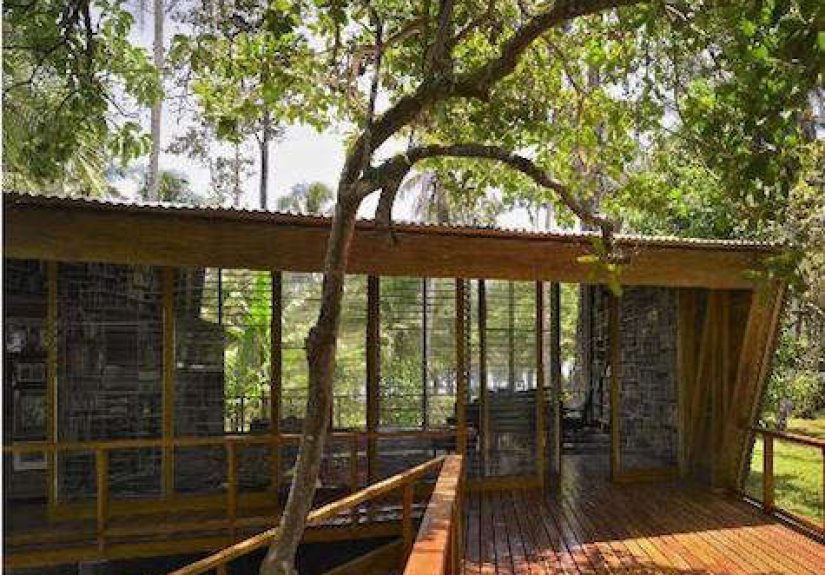
Set in Cahuita on Costa Rica’s Caribbean coast, Casa Kike is a private house and writing studio designed by London-based Gianni Botsford Architects for Keith Botsford, the architect’s father, a writer whose library was less a hobby and more a weather system. The retreat is famous for its two compact timber pavilions, raised above the ground and linked by a walkway, with the main pavilion serving as a writing studio, library, and music room, while the smaller volume holds sleeping and bathing spaces.
A Writer’s Retreat That Refuses to Act Fancy
Many writer’s retreats try too hard. They arrive with big windows, big metaphors, and the faint smell of a design magazine photo shoot. Casa Kike is different. It is intelligent without showing off, tropical without becoming a postcard, and modern without pretending the Caribbean context is merely background scenery.
The project responds to a wonderfully specific brief: create a retreat for a writer, protect a serious book collection, provide a place for thinking, reading, music, and rest, and do it in a hot, humid coastal environment where air movement matters as much as square footage. In other words, this is not a generic vacation cabin. It is a working house for the mind.
The result is a compact architectural composition with two parallelogram-shaped pavilions. One is for daytime life: books, desk, piano, and long hours of concentration. The other is for night: a bedroom, bathroom, and quieter retreat. Between them is a raised timber walkway that turns circulation into ritual. You do not merely go to bed; you cross a garden, listen to insects, and let the day loosen its grip.
The Genius of Two Pavilions
The decision to split Casa Kike into two pavilions is one of the project’s smartest moves. A single box could have been easier, but it would not have been better. By separating work and sleep, Botsford creates a rhythm that any writer, artist, or remote worker can understand: focus needs a room of its own, and rest should not sleep next to the inbox.
The main studio pavilion contains the emotional center of the retreat. It holds the library, writing desk, and grand piano, making it part study, part salon, part tropical observatory. The second pavilion is smaller, more private, and oriented toward the forest. Together, they form a tiny campus of thought.
This arrangement also respects the site. Rather than clearing the land into submission, the pavilions sit lightly among trees and planting. The walkway becomes an outdoor room, not an afterthought. In many houses, the garden is something seen through glass. At Casa Kike, the garden is part of the floor plan.
Architecture Designed for Breeze, Shade, and Rain
Casa Kike is often described as a modern tropical house, but that phrase only matters if the building actually behaves well in the tropics. Here, the design is not just visually tropical; it is climatically smart. The pavilions are raised above the ground, helping with air circulation, dampness, and the practical realities of heavy rain. Their glazed ends and louvered panels allow cross-ventilation, inviting sea breezes to move through the spaces instead of forcing the building to depend on sealed interiors.
The roof geometry also matters. The mono-pitched roofs lift toward important views and help manage sun and rain. The angled pavilion forms are not decorative gymnastics; they respond to boundaries, breezes, shade, and the movement of air. This is architecture with a compass in one hand and a notebook in the other.
The lesson is simple but often ignored: sustainable design starts before technology is added. Before solar panels, smart thermostats, or complicated mechanical systems, there is orientation. There is shade. There is ventilation. There is the humble question, “Where does the wind come from?” Casa Kike answers that question with elegance.
Local Hardwood, Corrugated Metal, and a Library That Becomes Structure
The material palette is practical, warm, and deeply connected to place. Casa Kike uses locally sourced hardwoods for structure, interior surfaces, cladding, and decking. The timber gives the retreat its richness, but it is not merely decorative. Diagonal supports, beams, shelves, and wall elements create a layered interior where the building and the library seem to grow into each other.
The bookshelves are one of the project’s most memorable features. They are not polite furniture pushed against a wall after construction. They are integrated into the architectural order, working visually with the diagonal timber structure. For a writer’s retreat, this is more than convenient storage. It makes the house feel as though it was built around reading as a physical act.
Outside, the use of corrugated metal adds toughness and economy. It also connects the building to ordinary rural construction traditions. This mix of refined geometry and familiar material gives Casa Kike its personality. It is sophisticated, yes, but not precious. It knows how to handle rain, heat, and the occasional tropical mood swing.
Why Casa Kike Still Feels Fresh
Although Casa Kike was completed in the 2000s, it continues to feel relevant because it addresses design questions that have only become more urgent. How can a house use fewer resources? How can it sit lightly on land? How can architecture support creative work without becoming a productivity machine? How can a small home feel generous without becoming oversized?
Its answer is not minimalism in the chilly sense. There is no sterile white box here. Instead, Casa Kike offers warm restraint. It has enough space for books, music, sleep, and thought, but not enough room for cluttered ambition. It is modest in size and bold in intelligence.
The retreat also challenges a common misunderstanding about modern architecture. Modern does not have to mean universal, anonymous, or detached from culture. At Casa Kike, modern design is filtered through local climate, local materials, and local building knowledge. The result is neither nostalgic nor rootless. It feels like a conversation between a contemporary architect and a Caribbean site that knows exactly what it is doing.
The Experience of Moving Through the House
Imagine arriving at Casa Kike in the morning. The air is warm, the garden is alive, and the house appears less like an object dropped onto the site than a pair of quiet instruments tuned to it. The pavilions are raised, so the first impression is lightness. The building does not squat heavily on the ground; it hovers just enough to suggest air passing below.
Inside the studio, the eye moves upward along timber members and across shelves of books. The diagonal structure gives the room energy, like a sentence with excellent rhythm. The writing desk anchors the space, but the room is not all work. The grand piano adds another form of composition. Words and music share the same atmosphere.
The louvered glazing gives the interior a breathing quality. Light enters in a filtered, shifting way, and air can move through the pavilion. This matters because a good writing room should not feel sealed off from the world. It should create enough distance for concentration while still allowing weather, sound, and light to remind the writer that life is happening nearby.
Crossing the walkway to the sleeping pavilion changes the pace. The transition is small, but psychologically powerful. You leave the library behind. You pass through the garden. You arrive at a more private volume where rest becomes the priority. That simple separation may be one of the most luxurious details in the entire project.
Design Lessons for Homeowners, Writers, and Architects
1. Separate activities when space allows
Casa Kike shows that zoning does not require a huge house. Even a small retreat can separate work from rest. For anyone designing a home office, studio, or creative space, the principle is useful: give focused work a clear boundary. A door, a garden path, or even a change in floor material can help the brain switch modes.
2. Let climate shape the plan
The house uses orientation, louvers, raised floors, and roof form to respond to heat, rain, and breeze. This is a reminder that comfort should be designed into the bones of a building. Mechanical systems can help, but they should not be asked to fix lazy planning.
3. Make storage architectural
Books are not hidden at Casa Kike. They define the space. In a smaller home, storage often becomes a problem to conceal. Here, storage becomes identity. Built-in shelves, wall systems, and structural storage can make a room more useful and more beautiful at the same time.
4. Use modest materials with care
Corrugated metal and timber are not rare luxury materials, but in Casa Kike they are handled with precision. This is where good architecture earns its keep. It proves that budget-conscious materials can become elegant when proportion, detail, and purpose are taken seriously.
5. Design transitions, not just rooms
The walkway between the two pavilions is not wasted space. It is a pause, a breath, and a small outdoor experience. Homes often become better when transitions are treated as meaningful moments rather than leftover circulation.
Casa Kike and the Romance of the Private Library
There is something irresistible about a house designed around books. Not books as decoration, not books arranged by spine color for social media, but books as a living archive. Casa Kike understands the private library as a working landscape. The books are close to the desk, close to the chair, close to daily life.
For writers, this matters. A library is not simply a collection of finished ideas. It is a forest of possible sentences. It can distract, comfort, challenge, and rescue. In Casa Kike, the architecture seems to accept that writing is not a neat process. It requires wandering, rereading, staring out the window, and occasionally pretending that reorganizing a shelf counts as progress. Spoiler: sometimes it does.
The retreat’s beauty comes from the fact that it takes intellectual life seriously without making it pompous. The studio is generous but not grandiose. The shelves are dramatic but useful. The setting is lush but not indulgent. It is a place where a writer can work, procrastinate productively, and then work again.
Why This Architect Visit Matters
An architect visit to Casa Kike is not just a tour of a famous small house. It is a study in priorities. The project asks what a person truly needs in order to think, read, sleep, and live well in a particular climate. Its answers are refreshingly direct: shade, air, books, a desk, a bed, a bathroom, a garden, and a structure that does not fight the place.
In a world where homes are often marketed by square footage, Casa Kike argues for intensity of use instead. Every part of the retreat has a job. The studio supports concentration. The bedroom supports rest. The walkway supports transition. The materials support climate and atmosphere. The building is small, but its ideas travel well.
That is why Casa Kike remains such a strong reference for tropical architecture, sustainable residential design, and creative retreats. It is not merely photogenic. It is thoughtful. And thoughtful buildings have a habit of aging better than fashionable ones.
Additional Experiences and Reflections: Living With the Idea of Casa Kike
The most useful way to experience Casa Kike, even from afar, is to treat it as a design exercise for your own life. You do not need a Caribbean site, a grand piano, or a legendary book collection to learn from it. What you need is the willingness to ask sharper questions about space. Where do you think best? What kind of light keeps you awake but calm? What sounds help you focus? What should be near your desk, and what should be far enough away that it stops bothering you?
For anyone who writes, studies, draws, codes, edits, researches, or creates, Casa Kike offers a refreshing counterpoint to the modern obsession with all-in-one living. Many people now work from bedrooms, kitchen tables, sofas, and corners that were never designed to carry the emotional weight of a deadline. Casa Kike says: give work a place. Give rest another place. Even if the separation is symbolic, it matters.
One practical experience inspired by the retreat is the idea of a daily threshold. In Casa Kike, that threshold is the raised walkway between pavilions. In an ordinary home, it might be shutting a laptop, changing a lamp setting, stepping onto a balcony, walking around the block, or moving from a work chair to a reading chair. The goal is not drama. The goal is to help the body understand that one mode has ended and another has begun.
The retreat also encourages a better relationship with materials. A desk does not need to be expensive to be meaningful. Shelves do not need to be decorative to be beautiful. A room becomes memorable when the things inside it support the way a person actually lives. Casa Kike’s built-in library feels powerful because it belongs to the life of the owner. That is the difference between styling and design. Styling asks, “How will this look?” Design asks, “How will this be used at 7 a.m. on a humid Tuesday?” The second question usually leads to better architecture.
There is also an emotional lesson in the building’s modesty. Casa Kike is not trying to impress the jungle. It is not competing with the sea. It does not announce that a genius has arrived with a ruler and a dramatic haircut. Instead, it listens. That listening quality is something homeowners can borrow. Before renovating, decorating, or building, spend time noticing where the sun lands, which window brings the best breeze, where noise gathers, and which corner naturally attracts people. The site often gives hints before the designer gives solutions.
Finally, Casa Kike reminds us that a retreat is not an escape from life. It is a structure that helps life become clearer. The best retreats do not isolate us from the world entirely; they edit the world just enough for us to hear our own thoughts. That is the enduring charm of Gianni Botsford’s writer’s retreat. It is a house for concentration, but it is also a house for breeze, trees, books, music, and the quiet comedy of trying to finish a sentence while surrounded by 17,000 other ones.
Conclusion
Casa Kike Writer’s Retreat by Gianni Botsford is a masterclass in small-scale architectural intelligence. Its two raised timber pavilions, passive ventilation strategy, integrated library, and sensitive use of local materials create a retreat that feels both modern and deeply rooted in its Caribbean setting. It proves that a writer’s house does not need to be large to feel expansive. It needs clarity, climate awareness, and a little respect for the mysterious power of books.
For architects, Casa Kike is a study in restraint and environmental response. For homeowners, it is a reminder that thoughtful design can make modest materials sing. For writers, it is practically a love letter: a place where the desk, the breeze, the garden, and the shelves all agree that thinking deserves a room of its own.






 Close
Close