
Table of Contents >> Show >> Hide
- What Is the “Bat Quarter,” Exactly?
- National Park & Historic Site Quarters: The Big Program Behind the Bat
- The Story in the Design: Why American Samoa? Why a Bat?
- Coin Specs: The Stuff That Never Changes (But Collectors Always Ask Anyway)
- Mint Marks & Versions: Where “Rare Coins” Actually Enter the Chat
- So… How Much Is a Bat Quarter Worth?
- What Makes a Modern Quarter “Rare,” Anyway?
- Don’t “Improve” Your Coin: Handling and Preservation That Protect Value
- Error Coins and Varieties: The Treasure-Hunt Bonus Round
- How to Collect National Park & Historic Site Quarters (Without Going Broke)
- Buying and Selling Tips: Keep It Fun, Keep It Smart
- Collector Experiences: of Bat Quarter Adventures
- Wrap-Up: The Bat Quarter in One Sentence
A bat… on a quarter? Yep. And before your wallet starts squeaking in fear, relax: this “Bat Quarter” isn’t a Halloween prank.
It’s a real U.S. quarter that kicked off a lot of excitement in modern coin collectingbecause it’s charming, a little unusual,
and (in certain versions) legitimately tough to find.
This guide breaks down what the Bat Quarter is, why it exists, which versions are common vs. collectible, and how to tell the
“neat design” coins apart from the “hey, this one might actually be worth more than face value” coinswithout turning into the
person who yells “RARE!” at every pocketful of change.
What Is the “Bat Quarter,” Exactly?
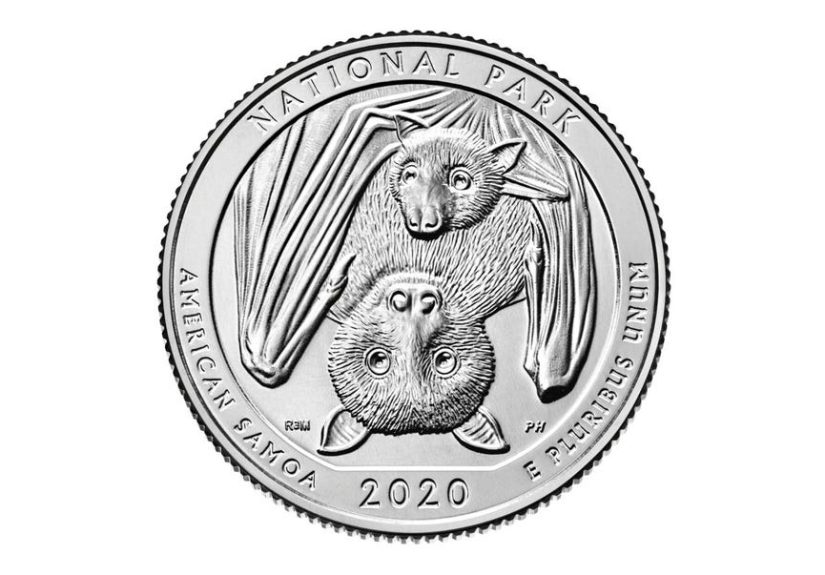
The nickname “Bat Quarter” almost always refers to the 2020 National Park of American Samoa quarter from the
America the Beautiful Quarters program. The reverse design shows a Samoan fruit bat mother hanging in a tree
with her pupan image meant to highlight the species and encourage awareness about conservation concerns.
In other words: it’s not a Batman collectible. It’s a national-park quarter with a bat that looks like it’s posing for a family portrait.
Coin people (affectionately) lost their minds.
National Park & Historic Site Quarters: The Big Program Behind the Bat
The Bat Quarter didn’t appear out of nowhere. It’s part of the America the Beautiful Quarters Program, which ran
from 2010 through 2021 and produced 56 different quarter designs honoring national parks
and other nationally significant placesincluding national historic sites.
That matters for collectors because “National Park Historic Site Quarters” isn’t just a phraseit’s basically a collecting lane:
you can build sets by year, by place type (parks vs. historic sites), by state/territory, or by mint mark. The Bat Quarter is a gateway coin:
you come for the bat, then suddenly you’re alphabetizing coin flips at 2 a.m. (No judgment. It happens.)
The Story in the Design: Why American Samoa? Why a Bat?
The National Park of American Samoa is one of the most remote units in the U.S. National Park System, with land and marine areas across
multiple islands. It protects tropical rainforest, coral reefs, and cultural heritageplus wildlife that many Americans don’t associate with
“a U.S. national park.”
Bats are a big deal there. In fact, bats are among the most distinctive native mammals on the islands, and the park provides habitat for multiple
bat species (including large fruit bats). The quarter’s bat-and-pup scene is intentionally tender: it’s a quick visual lesson in ecology and
caretakingpackaged as legal tender.
Coin Specs: The Stuff That Never Changes (But Collectors Always Ask Anyway)
For the standard quarter-dollar versions (circulating, uncirculated, and proof), the specs follow the modern U.S. quarter format:
- Composition: Copper-nickel clad (with copper core)
- Weight: 5.670 grams
- Diameter: 24.26 mm
- Edge: Reeded
There’s also a separate collector world tied to this design: the U.S. Mint produced a five-ounce silver coin with the same
reverse design (in uncirculated and bullion formats). That’s not a quarter you “find in change,” unless your cashier is a wizard.
Mint Marks & Versions: Where “Rare Coins” Actually Enter the Chat
Most Bat Quarters you’ll see are normal business-strike coins. The collectible conversation starts when you break the issue into its different
mint marks and finishes.
Philadelphia (P) and Denver (D): The Everyday Bat
These are the standard circulation strikes. They’re fun, they’re widely available, and most examples in circulated condition are worthbrace yourself25 cents.
Their value comes from completeness (filling a folder), high-grade condition, or standout errors.
San Francisco (S): Collector Strikes, Not Released for Circulation
San Francisco issues are where many newer collectors get tripped up. For this quarter, “S” mint mark coins were produced for collectors
and not released into circulation in the same way “P” and “D” coins were. That makes “S” coins naturally scarcer in the wild.
“S” versions typically show up in official rolls/bags sold as collectibles or in proof setsnot in your normal grocery-store change.
West Point (W) + V75 Privy Mark: The Bat Quarter’s Most Famous “Chase” Version
If you’ve heard someone say, “The Bat Quarter can be worth real money,” they’re often talking about the 2020-W version with the
V75 privy mark on the obverse. In 2020, West Point struck special quarters with a V75 mark to recognize the 75th anniversary of the end
of World War II. These were then mixed into circulationmeaning your bank roll could have one, but most won’t.
How to spot it quickly:
- Mint mark “W” (West Point)
- Small “V75” privy mark on the obverse near Washington’s portrait area
- Date: 2020
In modern collecting terms, this is the Bat Quarter “rare coin” headline: a low-mintage, circulation-distributed variant that people can still theoretically find
without buying it outright.
So… How Much Is a Bat Quarter Worth?
Let’s keep it honest (and wallet-friendly): most Bat Quarters are not rare. In circulated condition, they commonly trade very close to face value.
Some pricing guides note that circulated 2020 national-park quarters can hover only slightly above face value.
Where value can climb:
- West Point “W” V75 coins (collector demand + lower availability)
- Proof coins (especially silver proofs) kept in original condition
- High-grade certified coins (top-pop modern grades can bring strong premiums)
- Major mint errors (dramatic off-centers, notable doubled dies, etc.)
A quick reality check that saves you time: condition is everything. A coin that looks like it rode through a washing machine and a road trip
is probably not the one paying for your next vacation. But a crisp, lustrous, well-struck exampleor a “W” with the privy markcan be genuinely collectible.
What Makes a Modern Quarter “Rare,” Anyway?
“Rare” is an overloaded word in coin collecting. A better way to think about rarity is in layers:
- Availability: Was it released into normal circulation, or mostly sold to collectors?
- Survival in top condition: How many exist with strong luster and minimal marks?
- Collector demand: Is it a key date, a famous variety, or part of a popular set?
- Recognizable “hook”: A bat on a quarter is… memorable. That matters more than you’d think.
That last point is why the Bat Quarter has staying power. A lot of modern quarters are beautifulbut not all of them become “the one everyone talks about.”
Don’t “Improve” Your Coin: Handling and Preservation That Protect Value
If you want your Bat Quarter to remain collectible, treat it like a tiny metal museum piece:
- Hold it by the edge (fingerprints can permanently dull surfaces)
- Skip cleaning (cleaning commonly reduces value because it changes original surfaces)
- Use safe storage like non-PVC flips, capsules, or reputable coin albums
- Label what you have (mint mark, finish, where you found itfuture you will be grateful)
The best-looking coins usually look that way because somebody did less, not more.
Error Coins and Varieties: The Treasure-Hunt Bonus Round
If you enjoy the “hunt” part of collecting, Bat Quarters are fun because they’re recent enough that searching rolls is realistic. While many minor quirks are just
normal wear or machine doubling, legitimate errors do happen. Examples to watch for:
- Off-center strikes: Part of the design missing, blank crescent showing
- Broadstrikes: Coin struck outside the collar, often wider with distorted rim
- Die cracks/cuds: Raised lines or blobs from a damaged die
- Doubled dies: True doubled design elements (rarer; requires careful comparison)
A practical tip: use modest magnification (around 5x–7x) and good lighting. If you need a microscope to convince yourself it’s special, the market usually won’t be convinced either.
How to Collect National Park & Historic Site Quarters (Without Going Broke)
If the Bat Quarter sparked your interest, here are smart ways to build a meaningful set:
1) Collect by Place Type
Make a “National Parks” set, a “National Historic Sites” set, or a “U.S. Territories” set. This keeps the project focused and satisfyingand it’s a great way to learn history and geography.
2) Collect by Mint Mark
Many collectors start with P and D, then add:
- S (proof or collector strikes)
- W (especially the 2020 V75 issues)
3) Coin-Roll Hunting (CRH)
Ask your bank for quarter rolls, search them, keep what you need, and return the rest. It’s low-cost, surprisingly calming, and occasionally thrillinglike fishing, but shinier.
4) Buy the Right Products for the Right Goal
If your goal is proofs or pristine “S” coins, buying official sets can be more efficient than hoping one appears in change (because it probably won’t).
If your goal is a “W” V75, rolls and change hunting are part of the gamebut buying one from a reputable dealer may be simpler.
Buying and Selling Tips: Keep It Fun, Keep It Smart
- Use multiple reference points: Price guides, recent auction results, and dealer offers can differ.
- Be skeptical of hype words: “Rare!” “One of a kind!” and “error” are often used loosely online.
- Consider local dealers for selling: It’s straightforward, though offers may be below retail because dealers need margin.
- Know what you’re paying for: Grade, authenticity, and eye appealespecially with modern certified coins.
Most importantly: collect what you like. The best collection is the one that makes you grin when you flip the page or open the box.
Collector Experiences: of Bat Quarter Adventures
Ask a group of modern collectors about the Bat Quarter and you’ll hear the same story arc: curiosity, obsession, then a sudden shortage of empty coin tubes.
It often starts innocentlysomeone spots the bat-and-baby design in change and does a double take, because U.S. coins don’t usually go full wildlife-documentary.
The bat looks expressive, the pup looks cozy, and the whole scene feels surprisingly personal for something worth twenty-five cents. That’s when the googling begins.
Next comes the “roll phase.” Many collectors describe walking into a bank and asking for a few rolls of quarters “just to look,” as if they’re browsing a bookstore
and not about to carry home ten pounds of clad coinage. At a kitchen table, the ritual begins: crack a roll, fan out coins, rotate each one to check the reverse,
then flip to the obverse to hunt for mint marks. The Bat Quarter is easy to spot, which makes it satisfyingno squinting required to tell whether you’re holding
the right design. But the real adrenaline spike comes from the tiny details: is there a “W”? Is there a V75?
People who find a West Point V75 quarter in the wild talk about it like a small miracle. Not because it’s ancient treasure, but because it feels earned.
The coin was mixed into circulation on purpose, so the hunt is fairbut the odds are still slim enough that success feels like a win. And then there’s the
collector’s internal debate: do you keep it raw in a flip because it’s a “found coin,” or do you send it for grading and immortalize the moment in plastic?
Either choice is valid. The coin doesn’t care. The bat just hangs there, unbothered, like it’s above your drama.
Another common experience is the “design rabbit hole.” Once the Bat Quarter gets your attention, you start reading about the park itselfhow remote it is, how it
protects rainforest and coral ecosystems, and how bats play a bigger role in island ecology than most people realize. Some collectors build a mini learning project:
one coin, one park, one evening of reading. It turns coin collecting into a weirdly wholesome travel substituteyour album becomes a map, and every new quarter is
a new stop on the route.
Then come the social moments. The Bat Quarter is a great “show-and-tell” coin because even non-collectors react to it. Kids think it’s cool. Adults ask if it’s real.
Someone inevitably says, “Wait, why is there a bat on money?” and suddenly you’re explaining the America the Beautiful program like you’re giving a TED Talk at brunch.
The coin becomes a conversation starter, a small piece of art people actually handle, and a reminder that everyday objects can still surprise you.
In the end, the most relatable Bat Quarter experience isn’t striking it richit’s discovering that a common coin can feel special when you understand the story behind it.
That’s the real collectible magic: the value isn’t only in price guides. It’s in the hunt, the learning, and the goofy joy of finding a bat in your pocket and thinking,
“Okay, that’s objectively adorable.”
Wrap-Up: The Bat Quarter in One Sentence
The Bat Quarter is a modern U.S. quarter with a standout design that’s usually common in circulationbut becomes truly collectible when you’re looking at special mint marks
(especially the West Point V75) or high-grade/proof versions.




 Close
Close