
Table of Contents >> Show >> Hide
- What makes a Brooklyn loft kitchen feel authentic?
- The design ingredients that make a Brooklyn loft kitchen work
- Best layouts for a Brooklyn loft kitchen
- How to warm up the industrial look
- Mistakes to avoid in a loft apartment kitchen
- How to build a Brooklyn loft kitchen that lasts
- Brooklyn loft kitchen: the lived experience
A Brooklyn loft kitchen has a very specific kind of charisma. It is equal parts hardworking and photogenic, like a person who wears paint-splattered coveralls but somehow still looks ready for a magazine shoot. The appeal comes from contrast: rough brick against smooth stone, old timber beside sleek cabinets, industrial bones softened by warm wood, layered lighting, and the smell of coffee drifting across a big open room that refuses to apologize for having character.
That is why the best Brooklyn loft kitchen is never just a place to boil pasta and lose spatulas. It is the social headquarters, the visual anchor, the late-night snack lab, and the unofficial party magnet where every guest suddenly develops a strong opinion about pendant lights. In a true loft, the kitchen is almost always on display, which means it has to do two jobs at once: work like a serious cooking space and look good enough to live in full-time.
If you are designing, renovating, or simply daydreaming about a loft apartment kitchen with exposed brick, open shelving, and that cool industrial kitchen design energy, the trick is not copying a stereotype. The trick is balance. A great Brooklyn loft kitchen respects the building’s history, uses the open concept wisely, and adds enough comfort that the room feels like a home instead of a very stylish loading dock.
What makes a Brooklyn loft kitchen feel authentic?
The bones do a lot of the heavy lifting
The classic Brooklyn loft kitchen starts with architectural features that already tell a story. Think exposed brick, original beams, steel columns, oversized windows, high ceilings, or the slightly imperfect geometry that reminds you the building had a life before anyone started arguing about quartz finishes. These original details are a huge part of the appeal because they create texture before you even add a single stool, sconce, or bowl of lemons that absolutely no one will eat.
Instead of covering those features, smart loft design works with them. A brick wall can become the backdrop for pale cabinetry. Old beams can frame pendant lighting. Concrete, plaster, stone, and metal can live together without looking chaotic if the palette stays controlled. The goal is to let the loft keep its industrial edge while making the kitchen feel intentional rather than improvised.
Open layout is not optional; it is the whole point
A Brooklyn loft kitchen usually lives in an open floor plan, which changes everything. In a closed kitchen, you can hide visual chaos behind a wall and pretend your counter is not hosting six spice jars, two mail piles, and a charging cable that may or may not belong to anyone in the apartment. In a loft, the kitchen is part of the living room conversation. It needs clean sight lines, smart traffic flow, and enough visual calm to coexist with dining, lounging, working, and entertaining.
That is why layout matters more than trendy finishes. A good open concept kitchen connects naturally to the rest of the loft. It should make movement easy, define zones without building hard barriers, and keep the cook involved instead of stranded in a culinary corner like a forgotten extra in a sitcom. Islands, peninsulas, mobile worktables, pantry walls, and subtle material repetition all help a loft kitchen feel connected instead of awkwardly dropped into the room.
The design ingredients that make a Brooklyn loft kitchen work
1. A material palette with grit and grace
The best industrial kitchen design does not lean on one material until it becomes a parody. Stainless steel, concrete, blackened metal, and exposed brick all bring loft energy, but they need balance. Add natural wood to warm up the space. Introduce honed stone instead of ultra-glossy surfaces if you want sophistication without the showroom vibe. Mix matte and reflective finishes so the room catches light without turning into a disco ball.
One of the strongest approaches is pairing raw elements with refined details. For example, a rustic ceiling beam looks even better above streamlined lower cabinets. A brick backsplash becomes easier to live with when the surrounding counters are durable and easy to wipe. A marble shelf or backsplash can elevate the room without erasing its industrial soul. This tension between rough and polished is where the Brooklyn loft kitchen earns its personality.
2. Storage that disappears when it needs to
Lofts are famous for feeling big and acting small. Yes, the ceiling is soaring. No, that does not mean your pots have learned to levitate. Storage is one of the most important parts of a loft apartment kitchen because open layouts expose clutter immediately. Tall cabinetry is a smart move, especially when it climbs upward and uses every inch. Full-height pantry walls, soft-close drawers, hidden appliance garages, and custom cabinet runs can make a kitchen feel calm even when real life is happening inside it.
Open shelving works beautifully in a Brooklyn loft kitchen, but only when used with restraint. A few shelves for daily ceramics, glassware, cookbooks, or beautiful pantry jars can keep the room airy. An entire wall of exposed storage, on the other hand, can start to look like your kitchen got audited by chaos. Use open shelves as a visual break, not as an excuse to avoid cabinets.
3. Lighting that does more than look cute in photos
Lighting in a loft kitchen should be layered. Pendant lights above an island or worktable bring style and task lighting. Under-cabinet lighting helps countertops earn their paycheck. Accent lights can highlight brick, shelving, or art. General overhead lighting fills in the rest. The point is to avoid a room that looks dramatic at 7 p.m. but becomes unusable the second you try to chop an onion safely.
Because loft ceilings are often high, scale matters. Tiny fixtures can look timid in a large volume of space. Bigger pendants, linear fixtures, or sculptural lights often feel more appropriate. At the same time, choose forms that respect the loft’s architecture. Clear glass, black metal, aged brass, or simple matte shades tend to play nicely with industrial elements.
4. Ventilation that saves your sofa from smelling like dinner forever
In an open kitchen, ventilation is not glamorous, but it is essential. A Brooklyn loft kitchen that opens directly to living and dining areas needs a vent hood that actually performs, not one that merely poses for Instagram. If you cook often, especially on gas or with high heat, proper ventilation protects air quality, reduces grease and moisture, and keeps the rest of the loft from smelling like heroic salmon experiments for three days.
A range hood can also be a design feature. In some lofts, a bold metal hood reinforces the industrial aesthetic. In others, a quieter plaster or cabinet-integrated hood keeps the room visually softer. Either way, function has to win. Beauty is wonderful. Smoke alarms are louder.
Best layouts for a Brooklyn loft kitchen
Wall kitchen plus island
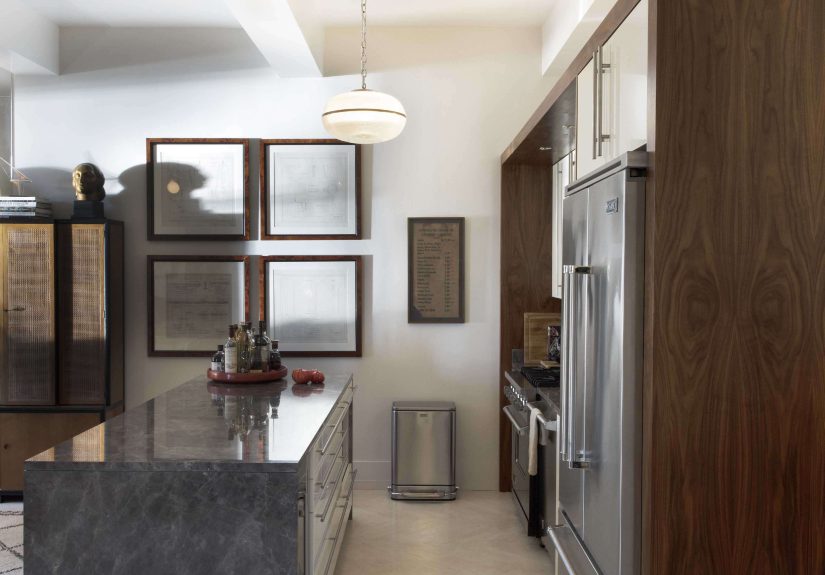
This is probably the signature layout. Cabinets and appliances line one wall, while an island or furniture-like worktable defines the kitchen zone. It works especially well in rectangular lofts because it preserves openness and gives you a social center. Seating on one side lets the island become breakfast bar, prep station, homework desk, laptop perch, and cheese-board runway depending on the hour.
A furniture-style island is especially effective in lofts because it feels lighter than a bulky block of cabinetry. It also nods to the live-work spirit of a loft: part kitchen, part studio, part gathering place.
L-shaped kitchen
An L-shaped layout is ideal when the kitchen occupies a corner of the loft. It makes efficient use of wall space and can still open toward dining or living areas. Add a compact island or rolling cart and the space becomes much more flexible. This layout works well in smaller Brooklyn lofts where every square foot needs a job description.
The advantage here is flow. An L-shaped kitchen can feel tucked in without feeling cut off. It also leaves room for art, windows, or a dining table, which matters in a home where the kitchen shares visual territory with everything else.
Single-wall kitchen
For compact lofts, a single-wall kitchen can look incredibly elegant. When done well, it reads almost like built-in furniture. Matching finishes, integrated appliances, and concealed storage help it blend into the broader room. This approach lines up nicely with the newer “quiet” or “invisible” kitchen direction, where the room feels less like a utility zone and more like part of the loft’s architecture.
The catch is that a single-wall kitchen must be ruthlessly organized. With less spread-out workspace, every drawer, shelf, and inch of counter matters. Add a movable island if possible, and suddenly the room becomes far more functional without sacrificing the loft’s openness.
How to warm up the industrial look
Use wood generously, but strategically
Wood is the peacemaker in a Brooklyn loft kitchen. It softens metal, calms concrete, and keeps exposed brick from feeling too hard. White oak, walnut, reclaimed timber, and thick butcher-block accents all add warmth. Even one wood element, such as stools, shelving, or a dining table close to the kitchen, can make the room feel more human.
Add color in a grown-up way
Not every loft kitchen needs to be black, white, and moody. Deep green, muted blue, rust, oxblood, clay, and warm cream all work beautifully with industrial architecture. Even a neutral kitchen benefits from one or two richer tones in bar stools, art, rugs, or painted cabinetry. The point is not to decorate the room into submission. The point is to keep it from feeling emotionally unavailable.
Bring in softness
Lofts can echo. Hard surfaces dominate. That is why texture matters. A runner, upholstered dining chairs, Roman shades, vintage art, ceramics, linen tea towels, and a few plants can take the edge off the industrial shell. You want contrast, not conflict. A beautiful loft kitchen should still feel like a place where someone lives, cooks, lingers, and occasionally burns toast with confidence.
Mistakes to avoid in a loft apartment kitchen
Too much open shelving
Open shelving is charming until you realize you now own a dust museum. Keep only what is useful or attractive on display. The rest can enjoy cabinet privacy.
Ignoring the traffic flow
A giant island looks impressive until everyone has to shimmy sideways to get past it. In an open kitchen, circulation matters as much as storage or style.
Forgetting acoustics
Hard floors, tall ceilings, and open rooms bounce sound around like they are training for a concert hall. Add texture where you can, especially if the kitchen opens directly to seating areas.
Choosing style over performance
A gorgeous faucet, dramatic light fixture, or trendy finish will not rescue a kitchen with weak ventilation, bad storage, or poor task lighting. In a Brooklyn loft kitchen, practical choices create the luxury. The cool factor comes after the kitchen actually works.
How to build a Brooklyn loft kitchen that lasts
If you want timeless results, start with the architecture, then make selective statement choices. Preserve what gives the loft its history. Improve what affects daily life. Use durable counters, generous drawers, strong lighting, and a layout that supports real movement. Think about what the kitchen looks like from the sofa. Think about what it sounds like when six people are talking. Think about where the blender lives when guests arrive. That is where good design stops being theoretical and starts becoming useful.
The most successful Brooklyn loft kitchen is not the one that screams the loudest. It is the one that feels effortless. It lets the building stay honest, lets the kitchen stay functional, and lets the people living there enjoy the room without constantly fighting it. In other words, it looks cool, cooks well, and does not require an emotional support basket for countertop clutter. That is a win.
Brooklyn loft kitchen: the lived experience
Living with a Brooklyn loft kitchen is its own kind of daily theater, and that is part of the charm. Morning begins with light. In many loft spaces, the windows are tall enough and wide enough to make the kitchen feel awake before you are. Sun moves across brick, glances off glassware, catches the edge of a stone countertop, and suddenly even making plain toast feels cinematic. The room does not hide. It stages your routines. Coffee brewing at the island, a pan warming on the range, a laptop open at one stool, groceries waiting by the door like they are auditioning for a still-life painting: this is the ordinary magic of the loft kitchen.
It is also deeply social. In a traditional home, whoever cooks can disappear into a separate room and return later with food and mild resentment. In a loft, that separation evaporates. The kitchen is where conversations stretch out, where friends lean on the counter even though they promised not to be in the way, and where dinner prep turns into a group activity whether you planned it or not. Someone pours wine. Someone slices bread badly. Someone claims to be “helping” while mostly sampling olives. The kitchen becomes a stage set for real life, and the open layout lets everything overlap in a way that feels relaxed instead of formal.
There is a practical side to that openness, too. You start to appreciate storage not as a luxury, but as an act of self-defense. When the kitchen is visible from nearly every corner of the loft, clutter becomes part of the decor whether you invited it or not. A well-designed pantry wall, deep drawers, and cabinets that reach upward can feel almost heroic. Good storage gives the room breathing space. It lets the beautiful elements, the brick, the beams, the pendants, the shelves with your favorite bowls, stay visible without competing with a blender, paper towels, and a suspicious collection of reusable shopping bags.
Then there is the texture of the room itself. A Brooklyn loft kitchen often feels substantial. You touch wood that has grain. You see brick that has age. You notice metal, stone, plaster, and glass all doing their own thing in one shared composition. That material honesty changes the mood of the space. It feels grounded, a little imperfect, and much more interesting than a kitchen that looks assembled from a single glossy catalog page. Even the flaws can be lovable. A slightly uneven wall, an old column, a beam in an inconvenient place; these details force the design to get smarter and keep the room from feeling generic.
Of course, a loft kitchen also teaches humility. If your ventilation is weak, the entire apartment will know exactly what you cooked and how enthusiastically you cooked it. If your lighting is dramatic but not useful, chopping herbs after sunset becomes a trust exercise. And if you go wild with open shelving, you may eventually discover that dust has been quietly curating its own collection on your prettiest plates. But when the layout is right, the lighting is layered, the storage is thoughtful, and the materials strike that sweet spot between raw and refined, the experience is hard to beat.
A great Brooklyn loft kitchen does not just photograph well. It supports the way people actually live: casually, socially, creatively, and a little messily. It can host breakfast for one, dinner for six, a midnight snack, a work call, a birthday cake situation, and a long Sunday of cooking while music bounces off the high ceiling. It is the kind of room that earns its keep every day. And that, more than any trend, is what makes it unforgettable.







 Close
Close