
Table of Contents >> Show >> Hide
- Why This Combo Works (When It Works)
- Plan Before You Cut Anything
- Design Details That Make Built-Ins Look Truly Custom
- Hidden TV Nook: The Practical Checklist
- Three Build Approaches (From DIY-Friendly to Full Custom)
- Styling the Shelves Without Making Them a Garage Sale
- Specific Examples to Spark Your Layout
- FAQ
- Conclusion
- Experience Notes From the Built-In Trenches (What People Usually Learn the Hard Way)
A fireplace wall is supposed to feel cozy, timeless, and a little bit magical. A TV, on the other hand, is a large black rectangle that politely asks you to reorganize your entire living room around it. The good news? You can have bothwithout turning your “feature wall” into a “tech shrine.”
A built-in fireplace surround with shelving (plus a hidden TV nook) is one of the smartest ways to combine warmth, storage, and entertainment in a single, beautiful focal point. Done well, it looks like it came with the house. Done poorly… it looks like the house is wearing a fake mustache. Let’s make sure yours lands in the first category.
Why This Combo Works (When It Works)
One wall, three jobs: architecture, storage, and media
Built-ins add “structure” to a roomreal visual weight and symmetryespecially in open-concept spaces where the living room can feel like it’s floating in a sea of drywall. Shelves and cabinets give you a home for books, games, baskets, and all the “temporary” items that have lived on your coffee table since 2021.
A hidden TV nook solves the daily tug-of-war between design and reality: you want a calm, styled fireplace wall, but you also want to watch the game, stream a show, or put on a movie without dragging a TV stand into the room like a reluctant guest.
The common pain points this project solves
- Cord chaos: built-ins create routes for power and low-voltage cables (and places to hide them).
- Awkward TV placement: a dedicated nook or concealment plan prevents “TV hovering over mantel” syndrome.
- Storage shortages: closed base cabinets reduce visual clutter while open shelves keep the room feeling light.
- Resale appeal: a well-proportioned fireplace wall reads as high-end millwork, not a temporary furniture solution.
Plan Before You Cut Anything
Step 1: Start with the fireplace type and heat path
Whether you have a wood-burning fireplace, gas insert, or an electric unit, heat management is the “boring” part that determines whether your TV and electronics live long, happy lives. Heat rises, and electronics prefer not to be slow-roasted.
Your plan should begin with two documents: the fireplace installation manual and the TV mounting guidance (or warranty notes). Clearances, mantel requirements, and venting paths are not decorationthey’re physics with paperwork.
If you’re installing a new fireplace unit, consider models or configurations that offer heat management options (like directing heat out the front or through designed pathways). The right fireplace choice can expand your layout options for a TV nook.
Step 2: Get the TV height right (your neck will thank you)
The classic debate: “TV over fireplaceyes or no?” The real answer is: “It depends, but your cervical spine has opinions.” TVs are generally most comfortable when the center of the screen is near seated eye level. Over-fireplace installations often end up too high, leading to neck strain over time.
If your TV must live on the fireplace wall, design the hidden nook to allow a more ergonomic heighteither by shifting the TV slightly lower (in a recessed section), using a pull-down mount, or placing the TV in a side nook while the fireplace remains centered.
Step 3: Choose your “hide the TV” method
A hidden TV nook can mean several things. Pick the strategy that matches how you actually live (not how you live in your imagination where no one owns remotes).
- Flush cabinet doors: The TV sits recessed; doors swing, pocket, or lift to conceal it. Best for a clean, built-in look.
- Sliding panels or artwork: A track-mounted panel (or hinged art) covers the screen when not in use. Great for shallow spaces.
- TV lift cabinet: The TV rises from a base cabinet or behind a panel. Perfect if you want the screen completely gone when off.
- Disguise mode: A “frame-style” display or ambient art mode reduces the black-rectangle effect without moving parts.
- Side niche: Put the TV in a built-in section beside the fireplace so the fire stays the emotional center of the wall.
The best choice is the one you’ll actually use daily. If doors are annoying, they’ll stay open. If the panel blocks the soundbar, you’ll resent it. If the lift is slow, someone will complain (probably loudly, during a dramatic scene).
Step 4: Lock in proportions and rough dimensions
Custom millwork looks “right” when the proportions are intentional. Here are practical starting points used often in built-in designs:
- Base cabinet depth: typically 12–18 inches (deeper if housing AV gear).
- Open shelf depth: often 10–12 inches for books and decor (deeper if you’re storing albums or large objects).
- TV nook depth: enough for the mount, cable bends, and airflowplan for extra room behind and around the TV.
- Symmetry: matching towers on both sides feel classic; asymmetry can feel modern if balanced with shape and negative space.
Design Details That Make Built-Ins Look Truly Custom
Closed bottoms, open tops: the best of both worlds
One of the most reliable formulas is closed base cabinets (to hide clutter) paired with open shelving above (to display curated items). This keeps the wall from feeling heavy while still giving you real storage capacity.
Face-frame finesse and consistent reveals
Built-ins look expensive when gaps and lines are consistent. That means aligning cabinet doors, keeping reveals even, and planning how trim meets the wall. If you’re combining stock cabinets with custom framing, use face frames, fillers, and scribed trim to make everything appear seamless.
Trim strategy: make it look like it grew there
Trim is the optical illusion department. Baseboards should die into the built-ins cleanly. Crown molding should wrap continuously or terminate intentionally. If your ceiling is wavy (it is), plan for scribing and caulk lines that disappear after paint.
Finish choices: paint, stain, plaster, or mixed materials
Painted built-ins are forgiving and classic. Stained wood can feel warmer and more modern but demands cleaner joinery. A plaster or microcement-style surround can create a monolithic, architectural lookespecially if your hidden TV solution is flush and minimal.
Lighting: the secret weapon for “designer” shelves
Consider low-profile LED puck lights or strip lighting in the shelves (especially in tall towers). Lighting makes the shelving feel intentional and helps the wall read as architectural millwork instead of “book storage I installed on a weekend.”
Hidden TV Nook: The Practical Checklist
Ventilation and access (because electronics are not houseplants)
TVs, streaming boxes, receivers, and game consoles generate heat. If you enclose them behind doors, you need airflow. Plan for vents, breathable backs, or an open equipment bay in the cabinet. Also plan access: you will need to reach cables and power without becoming a contortionist.
Power and low-voltage: do it safely and cleanly
Build a cable pathway early: power outlet placement, in-wall rated cable routing, and a structured channel for HDMI/ethernet. A clean install is not just prettyit’s functional when you upgrade equipment later. Consider a recessed media box behind the TV to keep plugs from pushing the screen forward.
Sound matters more than you think
Hidden TV setups often forget audio. If you use a soundbar, plan a dedicated spot that doesn’t get blocked by doors or panels. If you’re routing audio to in-wall speakers, allocate cabinet space for the receiver and plan for ventilation and remote-control signals (IR repeaters can help if everything is behind closed doors).
Heat clearance: the non-negotiable part
If your TV is near a heat source, follow the fireplace manufacturer’s clearance guidelines and any heat-management recommendations. Some fireplace designs and heat systems allow tighter clearances than others, but it’s always model-specific. When in doubt, increase separation, add a mantel or deflector, or shift the TV to a side nook.
Three Build Approaches (From DIY-Friendly to Full Custom)
Option A: DIY-friendly hybrid (stock cabinets + custom face frame)
This is the sweet spot for many homeowners: use ready-made base cabinets, build open shelf boxes above, then unify everything with a face frame, crown, and base trim. The result can look fully custom if you align lines and use consistent materials.
Option B: Modular hacks (bookcases turned built-ins)
Converting bookcases into built-ins can be cost-effective. The key is treating the makeover like real millwork: anchor properly, add a toe-kick platform, close gaps with fillers, and finish with high-quality trim and paint. Done right, guests won’t ask, “Is that an IKEA hack?” They’ll ask, “Who did your built-ins?”
Option C: Full custom millwork (best fit, highest complexity)
Full custom means everything is designed around your exact fireplace, ceiling height, and storage needsplus your hidden TV method. It’s also where you can build in truly clean details: flush doors, integrated pulls, continuous plaster-like surrounds, and perfectly aligned shelf lighting.
Styling the Shelves Without Making Them a Garage Sale
Use a simple formula: tall, medium, small
Group items in threes and vary height and texture. Mix books (some vertical, some stacked), a few sculptural pieces, and soft elements like baskets. Save the most visually “busy” decor for lower shelves and keep the area around the hidden TV calmer so the wall doesn’t feel chaotic.
Leave negative space on purpose
Empty space is not failure; it’s design. Let shelves breathe. You want “curated,” not “I own objects.”
Specific Examples to Spark Your Layout
Example 1: Traditional symmetry with a hidden TV above the mantel
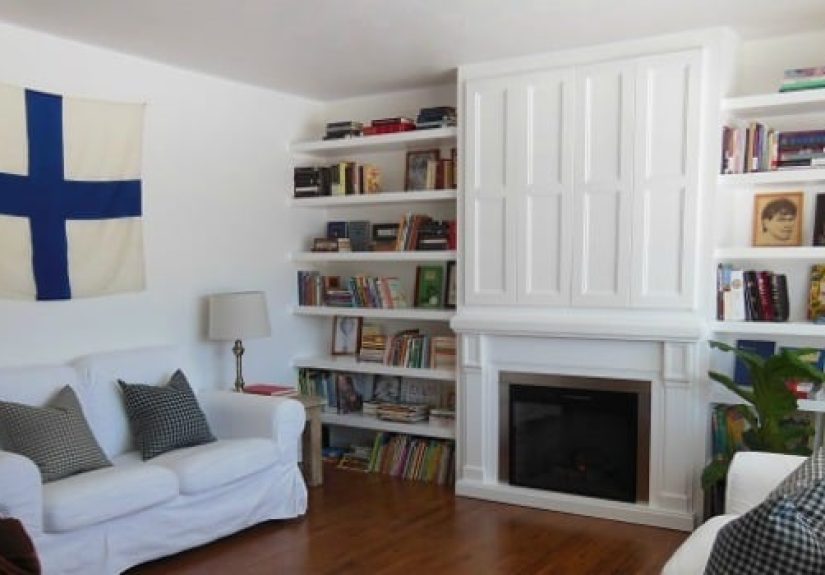
Two matching built-in towers flank a centered fireplace. Above the mantel, a recessed TV sits behind a pair of flat-panel doors that blend into the surround. When open, the doors pocket back (or swing wide) so sightlines stay clean. Base cabinets hold games, blankets, and the “miscellaneous cables” you’ll swear you’re organizing next weekend.
Example 2: Modern side-nook TV to keep the fireplace as the star
The fireplace remains centered with a sleek surround and a chunky mantel (or a floating shelf). The TV lives in the right-side built-in bay at a comfortable viewing height, with a sliding panel that can cover the screen. This layout reduces neck strain and avoids the “TV hovering over flame” look.
Example 3: Electric fireplace + flush “disappearing” TV wall
A linear electric fireplace anchors the bottom half. Above it, the wall is finished in a continuous material (paneling, plaster, or painted MDF) with a flush opening for the TV. When off, the screen blends using art mode; when on, it’s a crisp media wallno fussy trim required.
FAQ
Is a hidden TV nook worth it?
If you care about a calm, intentional living room and you use the fireplace wall as your main focal point, yes. Hiding the TV reduces visual clutter and makes the room feel more like a living space and less like an electronics showroom.
Should I put the TV above the fireplace?
Only if you can manage heat and height. If the TV ends up too high, consider a pull-down mount, a recessed nook that places it lower, or a side-nook layout that keeps viewing comfortable.
How deep should fireplace built-ins be?
Many built-ins use 12-inch-deep shelving and 12–18-inch base cabinets. If you’re housing AV equipment, plan deeper or designate a bay with extra depth and ventilation.
What’s the easiest way to make built-ins look custom?
Consistent trim lines, tight reveals, scribed fillers, and a unified paint finish. Also: match your existing baseboards/crown so the built-ins feel integrated rather than “added on.”
Conclusion
A built-in fireplace surround with shelving and a hidden TV nook is where function meets “wow.” The trick is treating it like an architectural feature, not a furniture arrangement. Start with heat and viewing comfort, choose a concealment strategy you’ll actually use, then build the millwork around clean proportions, cable planning, and real storage.
Do it right and you’ll get the best of both worlds: cozy firelight and movie nightwithout sacrificing style or your neck.
Experience Notes From the Built-In Trenches (What People Usually Learn the Hard Way)
Homeowners and DIYers who tackle a fireplace wall build almost always report the same “surprises”and knowing them upfront can save you time, money, and a small amount of emotional damage.
First: the room will tell you what it wants, but only after you measure. Many people start with a pretty inspiration photo, then realize their wall outlets are inconveniently placed, their fireplace isn’t centered, or the ceiling line dips like it’s trying to be dramatic. The best builds begin when you accept reality and design around itmoving an outlet, planning a chase for cables, or adjusting symmetry so it looks intentional instead of “almost.”
Second: “hidden TV” solutions are only magical if they’re easy. Doors that swing out and block a walkway become annoying fast. Sliding panels that scrape or rattle won’t stay “charming.” TV lifts are fantasticuntil you realize you need a plan for where the soundbar lives, or you forgot that game consoles and cable boxes also need a home (and ventilation). People who love their setups usually chose the simplest mechanism that matched their habits: if the TV is on daily, they opt for art mode or a subtle panel; if it’s occasional, they go full concealment.
Third: built-ins are a finishing project disguised as a carpentry project. The boxes go up quickly. Then come the “why doesn’t this line up?” moments: uneven walls, out-of-square corners, and trim transitions that look fine until you paintwhen every tiny shadow line becomes visible. Most successful DIY stories mention using shims patiently, scribing fillers, and doing more caulk touch-ups than they expected. Paint-grade built-ins especially reward slow prep: sand, prime properly, and don’t rush the finish coat. The final 10% is what makes it look like a pro install.
Fourth: storage planning is the difference between “beautiful” and “beautiful and livable.” People often underestimate how much closed storage they want. Open shelves are gorgeous, but daily life creates clutter (remotes, controllers, chargers, kids’ stuff, dog toys, candles, mailwhy is there always mail?). The happiest owners typically have closed base cabinets sized for real items: baskets that fit, shelves adjustable enough for board games, and at least one “utility” section for routers, streaming devices, and cords.
Finally: the fireplace-and-TV relationship is a long-term commitment, not a first date. If you’re using heat regularly, people say they worry less when they planned generous clearance and airflow from the start. Those who tried to “make it work” with tight spacing often end up adding a mantel deflector, swapping mounts, or moving the TV later. It’s not that the project becomes a regretmore like it becomes a sequel you didn’t ask for. Designing with heat, comfort, and serviceability in mind up front is what turns the wall into something you love for years instead of something you keep tweaking.







 Close
Close