
Table of Contents >> Show >> Hide
- Stuffing vs. Dressing (And Why People Get So Passionate)
- What Makes It “Old-Fashioned”?
- Best Bread for Old-Fashioned Stuffing
- Old-Fashioned Bread Stuffing Recipe (Classic, But Better)
- Make It Taste Like the House Special (Simple Upgrades)
- Make-Ahead, Storage, and Reheating (Because Holiday Timing Is Chaos)
- Food Safety: The One Part That Isn’t “Just a Vibe”
- Serving Ideas (Beyond Thanksgiving)
- of “Been There, Stirred That” Experiences
- Conclusion
There are two kinds of holiday people: the ones who politely take a spoonful of stuffing, and the ones who
“accidentally” take the corner piece with the crispy top. This article is for bothbecause an
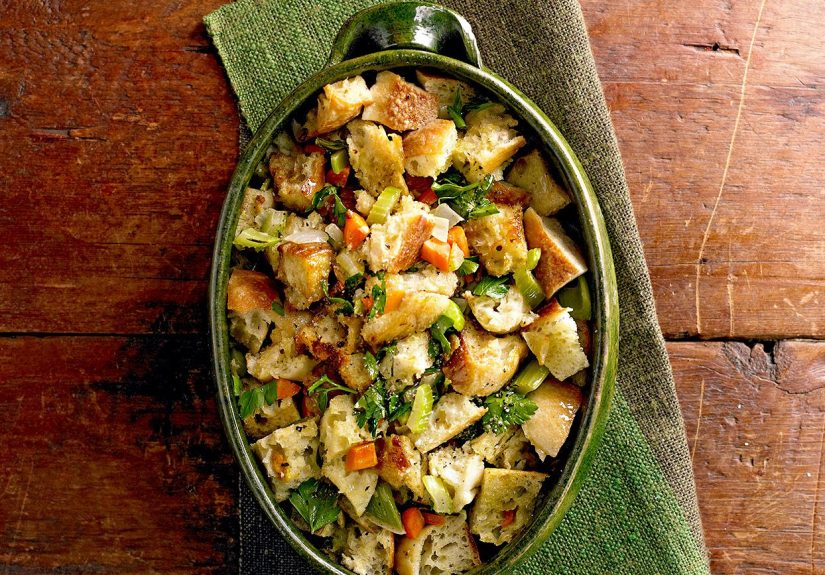
old-fashioned bread stuffing can be soft and savory in the middle, golden and crunchy on top,
and somehow still disappear faster than the gravy.
The classic formula hasn’t changed much in generations: dried bread, buttery
celery and onion, a cozy handful of sage (and friends), and enough broth to
make everything tender without turning it into bread soup. The trick is understanding the “why” behind each
stepso your stuffing tastes like tradition, not like guesswork.
Stuffing vs. Dressing (And Why People Get So Passionate)
Technically, “stuffing” goes inside the bird; “dressing” is baked in a dish. In real life, families
call it whatever they’ve always called it, and nobody changes their vocabulary just because a food scientist
walked into the room. For simplicity, we’ll say “stuffing,” and we’ll bake it in a casserole dishbecause it’s
easier to control texture, browning, and food safety.
What Makes It “Old-Fashioned”?
Old-fashioned bread stuffing is built on pantry-friendly basics and familiar flavors. No foam. No smoke gun.
No tiny tweezers. Just the kind of hearty, herby side dish that makes your kitchen smell like a holiday movie
montage.
The classic flavor profile
- Butter for richness and that “grandma knew what she was doing” taste
- Celery + onion for sweetness, bite, and aroma
- Sage as the signature stuffing herb (plus thyme and parsley for backup vocals)
- Broth for moisture and savoriness
- Eggs (optional) to lightly bind the mixture so it scoops neatly
The texture goal
The best stuffing is a study in contrast: moist, tender cubes underneath, with a top that turns golden and
lightly crisp. If it’s all crunchy, it feels like croutons having a midlife crisis. If it’s all mush, it feels
like the bread lost the will to live. We’re aiming for balance.
Best Bread for Old-Fashioned Stuffing
If you want stuffing that tastes like the holidays you remember, choose a simple, sturdy loaf. Classic white
sandwich bread works beautifully, and so do mild country loaves. You can also mix white and wheat bread for a
more “church potluck in the best way” vibe.
Why the bread must be dry
Dry bread is like a sponge with boundaries: it absorbs broth and butter without collapsing into paste. Fresh
bread tends to gum up and clump, while dried cubes keep their shape and create those distinct, spoonable bites.
How to dry bread (three reliable options)
-
Air-dry: Cube the bread and leave it out (loosely covered) overnight.
Great if you’re planning ahead and want the lowest-effort option. -
Oven-dry: Spread cubes on baking sheets and bake at a low temperature until dry.
This is the “I forgot” method that still gets A+ results. -
Buy dried cubes: Totally fine. Old-fashioned is about flavor and comfortnot about proving
you milled your own wheat with a hand-crank.
Old-Fashioned Bread Stuffing Recipe (Classic, But Better)
This recipe is designed to taste traditional while using a few smart moves for consistent texture and flavor.
It makes enough for a crowd, scales well, and works as a Thanksgiving stuffing, a Sunday roast side, or a
“because it’s Tuesday” comfort dish.
Ingredients (Serves 10–12)
- 12 cups dried bread cubes (about 1 to 1¼ pounds bread, depending on loaf)
- 1 cup unsalted butter (2 sticks)
- 2 cups diced yellow onion (about 2 medium)
- 2 cups diced celery (about 4 ribs), plus a few celery leaves if you have them
- 3–4 cloves garlic, minced (optional but welcome)
- 1½ tablespoons chopped fresh sage or 1½ teaspoons dried sage
- 1 tablespoon chopped fresh thyme or 1 teaspoon dried thyme
- ½ cup chopped fresh parsley
- 2½ to 3½ cups warm chicken broth (or turkey/vegetable broth)
- 2 eggs, lightly beaten (optional, for a cohesive scoop)
- 1½ teaspoons kosher salt (start with less if broth is salty)
- ½ to 1 teaspoon black pepper
Step-by-step instructions
-
Preheat and prep. Heat oven to 350°F. Butter a 9×13-inch baking dish.
Put dried bread cubes in a very large mixing bowl (bigger than you thinkstuffing expands socially). -
Sauté the “holy trinity” (plus herbs). Melt butter in a large skillet over medium heat.
Add onion and celery with a pinch of salt. Cook until softened and sweet-smelling, about 8–10 minutes.
Add garlic (if using) for the last 30–60 seconds so it doesn’t burn. -
Bloom the herbs. Stir in sage and thyme and cook 30 seconds to 1 minute.
This quick step wakes up the herbs and makes the whole dish taste more like itself. -
Combine with bread. Scrape the buttery vegetable mixture over the bread cubes.
Add parsley, salt, and pepper. Toss gently. -
Add broth gradually. Drizzle in 2½ cups warm broth, tossing as you go.
Let it sit for 1 minute, then assess. The cubes should be moist and pliable but not swimming.
Add more broth a splash at a time until you reach that “moist but structured” point. -
Optional: add eggs. If you like stuffing that slices or scoops neatly, stir in beaten eggs.
(Skip eggs if you prefer a looser, more rustic texture.) -
Bake for texture. Spoon into the prepared dish and cover tightly with foil.
Bake 25 minutes, then uncover and bake 20–25 minutes more, until hot throughout
and golden on top. -
Rest and serve. Let it sit 10 minutes before serving. This helps the moisture settle,
making each spoonful taste intentional (even if you’re serving it in pajamas).
How to tell when it’s “right”
- Too dry? Drizzle on a little warm broth, cover with foil, and rewarm 10 minutes.
- Too wet? Uncover and bake a bit longer to evaporate moisture and crisp the top.
- Bland? Salt matters. Taste the mixture before baking (especially if you didn’t use eggs),
and adjust seasoning confidently.
Make It Taste Like the House Special (Simple Upgrades)
Old-fashioned doesn’t mean one-note. These additions keep the soul of classic bread stuffing but add a little
personalitylike putting on a nicer sweater while still being cozy.
Flavor add-ins (pick 1–3)
- Sausage: Brown 1 pound and mix it in (and reduce butter slightly if you want).
- Apple: Dice 1–2 tart apples and sauté with the onions for gentle sweetness.
- Giblets: Finely chop cooked giblets for a deeply traditional, savory boost.
- Mushrooms: Sauté until browned for extra umami (and a more grown-up vibe).
- Dried cranberries: Add a handful for tang and color.
- Pecans or walnuts: Toast and fold in for crunch that isn’t just “more crust.”
Herb options
Sage is the headliner, but a little rosemary or marjoram can be great in small amounts. If you’re using dried
herbs, remember: they’re concentrated. Start modestly; you can always add more.
Make-Ahead, Storage, and Reheating (Because Holiday Timing Is Chaos)
Make ahead (best methods)
- Dry the bread early: Oven-dry or air-dry cubes up to a few days ahead and store in an airtight container.
- Prep the vegetables: Sauté onion/celery mixture a day ahead. Refrigerate, then rewarm before mixing.
-
Assemble the night before: Mix everything except broth and eggs; add liquids shortly before baking for best texture.
If you must fully assemble, keep it chilled and add a few extra minutes to baking time.
Leftovers
Refrigerate within a reasonable time after serving, then store in an airtight container for about 3–4 days.
Reheat covered at 325–350°F until hot, then uncover briefly to re-crisp the top. A splash of broth helps bring it back to life.
Freezing
Stuffing freezes surprisingly well. Freeze baked portions for easy reheating, or freeze the assembled (unbaked) mixture in a freezer-safe dish.
Thaw overnight in the fridge when possible for the most even reheat.
Food Safety: The One Part That Isn’t “Just a Vibe”
Stuffing is cozy, but it’s also a moisture-rich mixturemeaning food safety matters. Whether you bake it in a dish
or cook it inside poultry, the goal is the same: it needs to reach a safe internal temperature.
- Cook to 165°F: Use a food thermometer and check the center.
-
If stuffing a bird: Stuff immediately before roasting, pack loosely, and confirm the stuffing itself hits 165°F.
(This is one reason many cooks prefer baking stuffing separately.) - Don’t pre-stuff and hold: Mixing wet ingredients with bread and letting it sit warm is a recipe for trouble.
Serving Ideas (Beyond Thanksgiving)
Old-fashioned bread stuffing is a holiday celebrity, but it deserves more gigs.
- With roast chicken on a Sunday, plus a simple salad to make everyone feel virtuous.
- As a casserole base under roasted vegetables for a hearty vegetarian main.
- Stuffing waffles (yes): press leftovers in a waffle iron, top with gravy, and accept your crown.
- Breakfast hash upgrade: crisp stuffing in a skillet, add an egg on top, and call it “brunch.”
of “Been There, Stirred That” Experiences
If you’ve ever made old-fashioned bread stuffing, you know there’s a moment when the kitchen
stops being a room and turns into a memory factory. The butter hits the pan, the onions start to soften, and
suddenly the air smells like every holiday you’ve ever attendedeven the ones where somebody insisted on
carving the turkey with a serrated bread knife. (It happens. We survive. We eat stuffing.)
The most classic “stuffing experience” usually starts long before the oven preheats: tearing or cubing bread.
In a lot of families, that job goes to whoever’s hovering near the counter anywaykids, cousins, the friend who
arrived early and now regrets being helpful. There’s always at least one person who “samples” a cube, then
mysteriously samples ten more, and suddenly you’re short a cup of bread. No one admits anything. The bread just…
vanishes. Like socks in the dryer, but tastier.
Then comes the part that feels almost ceremonial: pouring that buttery celery-onion mixture over the dried bread.
The sound is small, but the effect is dramaticlike the stuffing is waking up. And if you add broth slowly (as
you should), you get to watch the transformation in real time: stiff cubes relax, edges soften, and everything
starts to look like it belongs together. It’s oddly satisfying, like organizing a junk drawer and finding a pen
that actually works.
Of course, every kitchen has its stuffing personalities. There’s the “more sage!” crowdpeople who want it to
taste like a walk through an herb garden in November. Then there are the “please don’t make it weird” folks who
prefer the gentle, familiar flavor that pairs with turkey and gravy without competing. The beauty of classic
stuffing is that it can do both: you can keep it traditional, or you can slide in a little apple, sausage, or
mushrooms and still have everyone call it “the real kind.”
And let’s talk about the great holiday debate: the crispy top vs. the soft middle. The crispy-top
people treat those browned edges like treasure. The soft-middle people want the spoon to glide through like
it’s skiing downhill. A well-made pan gives both sides something to brag about, which is crucialbecause the
only thing more inevitable than stuffing is someone announcing they “don’t usually like stuffing” right before
they go back for seconds.
Leftovers create their own chapter of experiences. Some households reheat stuffing faithfully, like a reunion.
Others turn it into new comfort-food inventions: skillet-crisped stuffing with an egg, stuffing-stuffed
peppers, or the legendary “midnight spoonful straight from the fridge” that somehow tastes even better when
nobody’s watching. The common thread is this: stuffing doesn’t just fill the plate; it fills the room with that
warm, familiar feeling that people keep trying to recreate every year. And honestly? With dried bread, butter,
herbs, and a little patience, you can recreate it on purpose.







 Close
Close