
Table of Contents >> Show >> Hide
- Why This Office Fight Feels So Familiar
- Private Office vs. Cubicle: What’s Actually At Stake?
- Why HR Gets Pulled Into These Ridiculous-But-Not-Ridiculous Battles
- So, Who Was Right?
- How Companies Can Avoid This Exact Meltdown
- What Employees Can Do If They End Up In This Fight
- Additional Experiences Related To This Kind Of Workplace Drama
- Conclusion
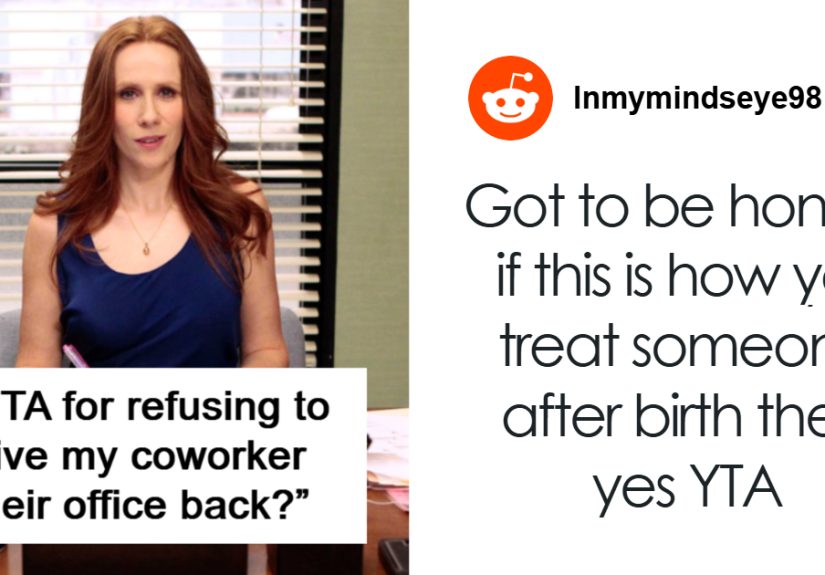
Every office has that one conflict that starts small, sounds ridiculous, and then somehow grows legs, files paperwork, and ends up sitting in HR’s inbox like a raccoon in a break room trash can. In this case, the fight is over a private office. One employee has been using it. A returning work-from-home employee apparently wants it. Someone says, “Consider her feelings.” Someone else looks at a beige cubicle and thinks, “Absolutely not.” And just like that, a square room with a door becomes the battleground for fairness, status, productivity, and the emotional wellness of everyone within earshot of the printer.
As dramatic as that sounds, the conflict is extremely relatable. Return-to-office policies have revived an old workplace problem: who gets what space, why they get it, and whether the rules make any sense. For years, many employees proved they could work well from home. Then companies started calling people back, promising collaboration, culture, and the magical power of spontaneous hallway conversations. What they often forgot to do was explain how office space would be assigned in a way that felt reasonable. That is how you end up with people arguing over walls, windows, and whether a cubicle is a workstation or a punishment with fluorescent lighting.
The funny part is that both sides usually think they are the reasonable one. The person already in the office thinks, “I earned this space and I use it to do my job.” The returning worker thinks, “I came back, so why am I being shoved into the sad little box near the copier?” Management thinks, “Why is this my life now?” HR thinks, “Please let this not become a legal issue.” Unfortunately, office-space fights are rarely about furniture alone. They are really about control, trust, comfort, privacy, and whether employees believe leadership is making decisions with actual logic rather than vibes.
Why This Office Fight Feels So Familiar
One reason this story hits a nerve is that return-to-office tension has changed how employees interpret fairness. Before the pandemic, many people accepted office hierarchies without much public debate. Corner office for the boss. Cubicle for the rest of humanity. Maybe a plant if the budget was strong. But after years of remote and hybrid work, employees became far more sensitive to what the office is for and what it should offer in exchange for the commute, the wardrobe, and the suspiciously expensive salad near headquarters.
That matters because employees do not just want to be physically present; they want a workplace that helps them do their jobs. If the office is louder, more distracting, less private, and more stressful than home, people notice. Fast. And when the office is presented as a productivity booster but feels like a downgrade, resentment tends to bubble up like bad coffee in an overworked machine.
So when someone refuses to surrender a private office for a cubicle, the reaction is not always simple selfishness. Sometimes it is a protest against a larger workplace contradiction. Companies say they want people back for better work, but then give them less privacy, more interruptions, and a desk location that practically requires noise-canceling headphones, meditation training, and a minor spiritual awakening.
Private Office vs. Cubicle: What’s Actually At Stake?
Privacy Is Not Vanity
Plenty of leaders treat requests for private space like an employee is asking for a throne and a velvet rope. But privacy at work is not automatically a luxury. It can be a practical tool. People handling confidential calls, sensitive documents, hiring conversations, performance discussions, finance tasks, or intense focus work often genuinely perform better with fewer interruptions. Even employees who do not need total silence still benefit from environments where they are not forced to overhear every snack review, fantasy football update, and loud personal phone call within a 20-foot radius.
That is one reason open-office and cubicle backlash never fully disappears. Workers often report that noise and lack of privacy make concentration harder, not easier. So if a private office supports focus, calm, and better work, giving it up may feel less like a seating change and more like being asked to perform brain surgery at a food court.
Space Signals Status
Office assignments are symbolic whether companies admit it or not. A private office can suggest seniority, trust, permanence, or respect. A cubicle can feel perfectly fine in one workplace and like a public demotion in another. That symbolic layer is why these disputes become emotional so quickly. People are not just defending square footage. They are defending what that space says about their role.
And once status enters the chat, feelings get loud. The returning employee may believe the office should go to the person who needs to be on-site most often. The current occupant may believe it belongs to the person who has been consistently using it. Management may believe nobody should care so much. That last group is usually wrong.
One-Size-Fits-All Space Usually Fails
The deeper issue is that many workplaces still act like every task requires the same setting. It does not. Some work needs quiet. Some needs collaboration. Some needs privacy. Some needs a quick team huddle and then a merciful retreat from other humans. The best offices support a mix of those needs. The worst offices basically say, “Good luck out there,” and hand you a badge.
When organizations fail to create enough focus space, every private room becomes politically radioactive. Suddenly employees are guarding offices like dragons protecting gold, because the alternative is doing detail-heavy work under fluorescent lights while Karen from sales reheats fish two aisles away.
Why HR Gets Pulled Into These Ridiculous-But-Not-Ridiculous Battles
HR tends to enter the picture when the conflict moves from personal irritation to organizational risk. That can happen quickly. If a manager made a promise about office assignments and then reversed it without explanation, employees may see favoritism. If one employee is told to be empathetic while another gets the better setup without a transparent process, people may view the system as arbitrary. And if a worker’s need for a quieter or more private workspace touches health, disability, concentration, hearing, sensory, or confidentiality issues, the matter can shift from annoying to sensitive in a hurry.
This is where smart HR teams stop treating the disagreement like a kindergarten squabble over who gets the shiny chair. They ask better questions. Is there a written policy for space allocation? Is there a job-related reason this person needs a private room? Was flexibility offered? Are there accommodation issues? Was the conflict handled respectfully? Could the communication itself create a fairness or discrimination complaint? In other words, HR is not really mediating an office fight. HR is trying to prevent an office fight from becoming a culture problem, a retention problem, or a legal one.
That is also why phrases like “consider her feelings” can backfire. Empathy matters. Of course it does. But empathy without a policy is just chaos in business casual. If leaders rely on emotion alone, employees start interpreting every decision as personal preference. Once that happens, trust begins packing its bags.
So, Who Was Right?
The honest answer is: maybe nobody handled it perfectly, but the person refusing to give up the office is not automatically wrong. If that office was assigned legitimately, used consistently, and tied to the employee’s work needs, management cannot simply frame the demand as an act of kindness and expect compliance. Employees are not selfish for wanting a workspace that helps them perform. That is especially true if the replacement option is a cubicle that obviously makes their day harder.
At the same time, the returning employee is not necessarily wrong either. If workers were called back after years of remote work and promised a meaningful on-site setup, they may reasonably expect more than a generic desk farm. From that perspective, frustration makes sense. Nobody wants to return to the office only to discover the grand collaboration strategy is just “please sit somewhere bleak and be grateful.”
The real failure often sits higher up the org chart. When leaders do not define space rules before reopening or expanding in-office attendance, they create a predictable mess. Employees fill the vacuum with assumptions. Tenure becomes one rule. Need becomes another. Visibility becomes another. And suddenly people are litigating office geography like it is a Supreme Court case, except with more sticky notes.
What HR Should Ask Before Making a Decision
- What is the business reason? Office assignments should tie to job function, privacy needs, schedule, or documented policy, not office politics.
- What was communicated before? If managers made informal promises, those still shape employee expectations.
- Are there accessibility or accommodation concerns? Noise, visual distractions, confidentiality, and sensory issues can matter.
- Can the problem be solved creatively? Shared offices, reservable quiet rooms, improved cubicle privacy, or redesigned seating may work better than a winner-takes-all fight.
How Companies Can Avoid This Exact Meltdown
1. Explain What the Office Is For
If the office is meant for collaboration, say so. If it is meant for focus, build for that too. If it is meant to support both, design accordingly. Employees are much more likely to accept space decisions when leadership can explain the purpose behind them instead of acting like real estate allocation emerged from a sacred mountain tablet.
2. Create Transparent Space Rules
Private offices, quiet rooms, hoteling desks, assigned seating, and hybrid schedules should not be governed by mystery. Publish the criteria. Define who gets dedicated space and why. Review it consistently. Transparency may not make everyone happy, but it does make it harder for people to claim the system is rigged by whoever had the strongest hallway friendships.
3. Protect Quiet Work As Much As Group Work
One of the biggest mistakes in modern office design is assuming collaboration is the only thing worth optimizing. It is not. Many employees come to the office wanting to meet, yes, but also to focus. Companies that invest only in lounge areas, social zones, and trendy open seating can accidentally create beautiful spaces where nobody can think. That is less a workplace strategy and more an architectural prank.
4. Train Managers To Handle Conflict Without Amateur Theater
Managers should not guilt employees into accepting a worse setup by invoking compassion selectively. They also should not dismiss the returning employee’s frustration as whining. Good managers gather facts, identify legitimate needs, explain trade-offs, and work through options without turning the whole thing into a morality play. The goal is not to find the nicest person. The goal is to create a workable system.
5. Remember That Fairness Often Matters As Much As The Outcome
Employees can accept disappointing decisions when the process feels clear and respectful. What they hate is randomness. Or favoritism. Or suddenly learning that “company culture” means one person gets a door and another person gets a cubicle facing the emergency exit. A fair process does not eliminate conflict, but it keeps conflict from becoming corrosive.
What Employees Can Do If They End Up In This Fight
If you are the employee being asked to trade a private office for a cubicle, avoid making the argument sound territorial. Do not say, “It’s mine and I like it.” Say, “This workspace supports confidential calls, focus-heavy work, and fewer interruptions, which helps me perform my role effectively.” That is stronger, calmer, and much harder to dismiss as simple office hoarding.
If you are the returning employee who feels shoved into a lesser space, frame the issue around productivity and expectations. Ask what the office-use policy is. Ask whether quieter spaces are available for focus work. Ask how on-site employees are being supported. That keeps the discussion professional instead of personal.
And if you are management, please do not announce a major return-to-office shift before deciding where people will sit. That is like hosting a wedding before checking whether the venue has chairs. Technically possible, emotionally reckless.
Additional Experiences Related To This Kind Of Workplace Drama
One experience that comes up again and again is the employee who does deeply focused work all day and is suddenly relocated to a high-traffic cubicle because someone more visible wants the private room. This person may not be the loudest in meetings, but they are the one writing reports, reviewing numbers, handling contracts, or cleaning up mistakes nobody else noticed. Once moved, their day fills with interruptions. People stop by. Noise rises. Their work takes longer. Then management wonders why output slipped, as if concentration can survive a parade route.
Another common experience involves employees who accepted hybrid or return-to-office arrangements because they believed the office would actually help them work. Then they return and find too few meeting rooms, no reliable quiet zones, and an atmosphere where every private call feels like a public performance. These workers are not always demanding luxury. Often they just want a setup that is at least as functional as the one they built at home with a laptop stand, decent lighting, and the blessed silence of not hearing someone unwrap hard candy at full volume every 14 minutes.
Then there is the status shock. Some employees say the most upsetting part is not losing a room; it is what the change appears to mean. People read office moves as signals. Being shifted from an office to a cubicle can feel like losing influence, credibility, or standing, even when leadership insists the decision was purely logistical. Humans are not robots. We notice symbols. We notice who gets windows, who gets doors, who gets flexibility, and who gets told to demonstrate teamwork by accepting the worse option with a smile that looks increasingly haunted.
There are also employees with needs they do not announce to everyone. Maybe they have sensory sensitivities, concentration issues, migraines, hearing challenges, or work that requires confidentiality. From the outside, it can look like they are just unusually attached to a private space. In reality, that environment may be what allows them to work without exhaustion or distress. This is one reason blanket space decisions can go sideways so fast. A seating chart may look equal on paper while feeling wildly unequal in practice.
Finally, many workers have experienced the emotional whiplash of being told to care about company culture while feeling that leadership is not equally considerate of their time, needs, or work style. That is the hidden engine behind stories like this one. People are often willing to compromise when they believe compromise goes both ways. They become much less flexible when they feel they are being asked to absorb every inconvenience for the sake of someone else’s comfort, management’s indecision, or an office plan that was clearly designed by people who never have to sit in the noisiest corner.
Conclusion
The private-office-versus-cubicle fight may sound petty on the surface, but it exposes a very modern workplace truth: space decisions are culture decisions. When companies bring employees back from remote work without clear rules, enough quiet space, or a fair process, even a simple office swap can feel like a referendum on respect. The employee refusing to move is not necessarily difficult. The returning worker is not necessarily entitled. Most often, both are reacting to a system that failed to define what the office is supposed to do and who it is supposed to serve.
That is why HR gets involved. Not because walls are magical, but because unclear policies, inconsistent treatment, and poor communication can wreck morale faster than any outdated cubicle ever could. The smartest organizations will stop treating office space like a reward to distribute emotionally and start treating it like a tool to allocate intentionally. Because if you want people back in the building, the building should actually help them work. Radical concept, I know.





 Close
Close