
Table of Contents >> Show >> Hide
- So What Is American Cuisine, Really?
- Indigenous Foundations: America’s First Pantry
- Waves of Influence: Immigration as the Main Ingredient
- Regional American Food: Many Countries in One Borders
- New England and the Northeast: Sea, Dairy, and Old-School Comfort
- The South: Barbecue, Stews, and Community Cooking
- The Midwest: Grains, Meat, and the Art of the Potluck
- The Southwest and Borderlands: Chiles, Smoke, and Cross-Cultural Genius
- California and the West: Produce, Innovation, and “Yes, You Can Put That On That”
- Hawaiʻi: Island Traditions and Ocean-to-Plate Culture
- Signature Dishes That Tell the “Melting Pot” Story
- Modern American Food Culture: From Diners to Food Trucks to Fine Dining
- How to Taste American Cuisine Without Getting a Second Mortgage
- Experience the Melting Pot: A 500-Word Food Journey You Can Actually Feel
- Conclusion: The Definition That Actually Holds
Ask ten people to define American cuisine and you’ll get twelve answers, one passionate rant,
and at least one person who insists it’s “just burgers and fries” while holding a taco the size of a small pillow.
That’s the point. American food isn’t one thingit’s a habit: borrowing, adapting, remixing, and then
serving the results with confidence (and sometimes ranch).
In the United States, the most “authentic” culinary tradition might be reinvention. Ingredients shift by region,
techniques arrive through migration, and recipes evolve with every generation. That’s why defining American cuisine
is less like listing dishes and more like describing a playlist where jazz, hip-hop, bluegrass, and K-pop all make
sense togetherbecause the country’s history made it that way.
So What Is American Cuisine, Really?
A useful definition is this: American cuisine is the collection of regional foodways shaped by Indigenous
roots, immigrant influence, local ingredients, and constant cultural exchange. The “melting pot” metaphor
fits because flavors mix, merge, and sometimes become something entirely newlike when a traditional technique meets
a new ingredient and produces a dish that feels inevitable in hindsight.
It’s also worth noting: America isn’t a single kitchen. It’s thousands of kitchenstribal, farm, church, diner,
street cart, food truck, fine-dining passeach adding to the definition. If you’re looking for one national dish,
you’re going to be disappointed. If you’re looking for a national theme, you’re in luck.
The Core “Rules” of American Food
- Regional identity matters. A barbecue debate can start a family feud faster than a will reading.
- Ingredients tell geography. Seafood coasts, wheat plains, citrus belts, cattle country, and island fisheries all show up on the plate.
- Immigration is a recipe engine. Dishes don’t just arrivethey adapt to new markets, tools, and tastes.
- Fusion is normal. In the U.S., “fusion” is often just “Tuesday.”
Indigenous Foundations: America’s First Pantry
Before “American” was a political identity, it was a food landscape: corn, beans, squash, wild rice, berries, game,
fish, and techniques for preserving and cooking that were deeply tied to place. One iconic Indigenous approach is
the “Three Sisters” methodcorn, beans, and squash grown together in a mutually supportive system. It’s agriculture
as teamwork, and it produced a nutritious base that influenced what would become American eating for centuries.
Many foods Americans consider “traditional” have Indigenous DNA: corn-based breads and porridges, bean stews,
succotash-style combinations, and chili-like preparations rooted in regional ingredients and long culinary history.
Even the modern obsession with “local” and “seasonal” is, in many ways, a return to Indigenous food logic: eat what
your land provides, and learn to honor it.
Waves of Influence: Immigration as the Main Ingredient
If American cuisine had a family tree, it would look less like a tree and more like a subway map drawn by a caffeinated
cartographer. The country’s food changed dramatically with forced migration (especially the transatlantic slave trade),
voluntary immigration, and internal movementeach wave bringing ingredients, techniques, and new “default” flavors.
African and African American Foodways
Enslaved Africans and their descendants shaped foundational parts of American cooking, especially in the South:
rice cultivation knowledge, cooking methods, seasoning traditions, and dishes that became cultural anchors. Many
beloved “Southern classics” reflect this historyfoods built from ingenuity, endurance, and deep culinary skill.
To talk about American comfort food without acknowledging this influence is like describing jazz while ignoring rhythm.
European Arrivals and the Myth of “One Original”
European settlers and later immigrant communities added breads, cheeses, cured meats, pastries, and restaurant cultures.
But the American twist is what happened next: recipes adapted to new ingredients, industrialization, and new audiences.
Pizza is a perfect examplebrought by Italian immigrants, then transformed into region-specific styles that now feel
as “American” as a road trip playlist.
Asian, Middle Eastern, and Latin American Threads
Chinese, Japanese, Korean, Filipino, Vietnamese, Thai, Indian, and other Asian diasporas changed American eating
from early community restaurants to modern food scenes where “fusion” often reflects real family histories. Meanwhile,
Mexican and broader Latin American influences are inseparable from American cuisine, particularly in the Southwest and
border states, where the line between “American” and “Mexican” food is often the width of a tortilla.
Take Tex-Mex: it’s not “fake” Mexican food; it’s a regional cuisine born from lived experience, available ingredients,
and cultural overlap. Dishes like fajitas grew from specific traditions and became widely popular through restaurants
that brought them into the mainstreamone example of how local foodways can scale nationally without losing their roots.
Regional American Food: Many Countries in One Borders
The fastest way to understand regional American food is to stop treating the U.S. like a single dining room.
Climate, agriculture, migration patterns, and economics created distinct culinary regionseach with signature dishes and
strong opinions about how those dishes should be made.
New England and the Northeast: Sea, Dairy, and Old-School Comfort
Think clam chowders (yes, plural), lobster rolls with arguments attached, and a deep relationship with dairy and baked goods.
The Northeast also nurtured deli culture, Italian-American red-sauce institutions, and iconic city foods that became national
symbolsbagels, slices, and sandwiches stacked like edible architecture.
The South: Barbecue, Stews, and Community Cooking
Southern cuisine is not one cuisineit’s a constellation. Barbecue varies by state, county, and sometimes backyard.
You’ll find smoked meats, vinegar tangs, tomato sweetness, mustard punch, and dry rubs that people defend like sports teams.
Beyond barbecue: gumbo and jambalaya in Louisiana, biscuits and gravy, greens and cornbread, and countless dishes shaped by
African American traditions, Indigenous ingredients, and immigrant exchanges.
The Midwest: Grains, Meat, and the Art of the Potluck
The Midwest is often stereotyped as “simple,” but it’s better described as practical, seasonal, and proudly communal:
casseroles, sausages, smoked fish near the Great Lakes, and a strong tradition of immigrant baking. It’s also where diner
culture and “comfort food” shinefood that says, “You look tired. Have some potatoes.”
The Southwest and Borderlands: Chiles, Smoke, and Cross-Cultural Genius
The Southwest cooks with chiles the way some people use punctuation: frequently and with meaning. Here you’ll find a blend of
Indigenous, Mexican, and American influences that shows up in everything from green chile stews to flour tortillas, smoky salsas,
and Tex-Mex staples that traveled nationwide.
California and the West: Produce, Innovation, and “Yes, You Can Put That On That”
The West Coastespecially Californiahelped popularize fresh produce-forward cooking, farm-to-table values, and global mashups
that reflect the region’s migration patterns. It’s also home to food scenes where you can eat Korean tacos for lunch and consider
it completely normal, because in many cities, it is normal.
Hawaiʻi: Island Traditions and Ocean-to-Plate Culture
Hawaiʻi’s food is often mislabeled as a trend when it’s actually a deep culinary world. Poke, for instance, has roots in Native
Hawaiian practices and evolved over time, incorporating new seasonings and ingredients as communities and trade patterns changed.
The result is a dish that can be both traditional and modernan edible example of a living cuisine.
Signature Dishes That Tell the “Melting Pot” Story
American cuisine is full of dishes that act like historical documentsonly tastier and less likely to assign homework.
Here are a few examples that show how “American” often means “adapted and shared.”
Barbecue
Barbecue is technique, tradition, and social ritual. It’s also a reminder that food travels through communities: Indigenous
approaches to smoking and cooking, African American expertise and labor, immigrant influences, and regional ingredient availability
all shaped what “barbecue” means today. If someone tells you there’s only one correct style, they’re either joking or recruiting for a sauce-based cult.
Gumbo
Gumbo is Louisiana in a bowl: layers of French, Spanish, African, and Indigenous influencesthickened, seasoned, and adapted over time.
Even historical cookbooks describe gumbo as flexible and practical, meant to feed many with what you have. In a country built on reinvention,
gumbo feels like a thesis statement you can eat with a spoon.
Pizza (American-Style)
Pizza arrived with Italian immigrants, then expanded far beyond immigrant neighborhoods as Americans adopted it, personalized it,
and created new regional styles. From coal-fired city pies to deep-dish debates, American pizza is less about copying Naples and more about
what happens when a great idea meets a new place and a lot of hungry people.
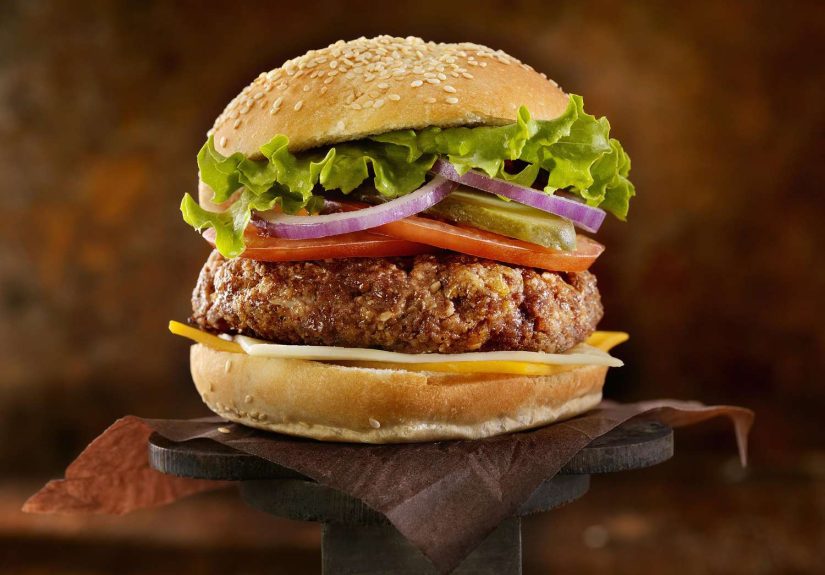
The Hamburger
The hamburger’s origin story is famously messy (like a backyard cookout after it rains). What matters culturally is the arc:
European influences, American industrial food systems, roadside diners, and fast-food standardizationfollowed by a modern return to
craft burgers with regional beef, house pickles, and buns that cost more than your first car payment. Progress!
Tex-Mex and the Borderland Plate
Tex-Mex is proof that American cuisine doesn’t just “borrow” from other culturesit grows in the spaces where cultures meet.
It’s regional, historical, and tied to identity. Dishes like fajitas became popular through restaurants that celebrated familiar flavors
while making them accessible to broader audiences, turning local foodways into national cravings.
Poke
Poke shows another American pattern: a dish rooted in place becomes widely popular, then evolves in new markets. Understanding its history
mattersnot to freeze it in time, but to respect where it came from and how it changed as communities and ingredients changed.
Modern American Food Culture: From Diners to Food Trucks to Fine Dining
Today, American cuisine is shaped by both tradition and acceleration. Social media makes regional specialties travel faster than ever.
Immigration continues to transform restaurant scenes. And chefs increasingly tell stories through foodabout family, diaspora, local farms,
and cultural pride.
You’ll also see an ongoing tug-of-war: ultra-processed convenience vs. a renewed interest in scratch cooking, local sourcing, and heritage
ingredients. Meanwhile, museums, archives, and food history projects keep documenting the country’s “foodways,” reminding us that what we eat
is inseparable from who we areand who we’ve been.
How to Taste American Cuisine Without Getting a Second Mortgage
1) Follow the region, not the hype
Want to understand American cuisine? Don’t start with “most viral.” Start with “most local.” Eat seafood near the water, barbecue where smoke
is a civic perfume, and chile dishes where people argue about heat the way others argue about politics.
2) Look for community institutions
Diners, neighborhood bakeries, taco stands, fish markets, and family-run restaurants are often better culinary textbooks than trendy openings.
They carry recipes through timesometimes quietly, sometimes loudly, always deliciously.
3) Order the dish that scares you (a little)
If you’re always choosing what you already know, you’re missing the “melting pot” part. American cuisine rewards curiosity. Be brave. Eat the thing
with the unfamiliar name. Worst case: you learn something. Best case: you find your new obsession.
Experience the Melting Pot: A 500-Word Food Journey You Can Actually Feel
To really understand Defining American Cuisine: The World’s Melting Pot, imagine tasting the country like a moving postcardone bite per stop,
each one shaped by geography and migration. You start in the Northeast on a crisp morning where the air feels like it has opinions. A corner shop hands you a
warm bagel with a chew that makes sense the second your teeth meet it. You taste salt, barley malt sweetness, and the comforting logic of a food built for busy
city mornings. Nearby, you grab a slice of pizzathin, hot, and foldedbecause in some places, pizza isn’t “Italian food” or “American food.” It’s just
“food,” the way weather is just weather.
Then you head south, where “barbecue” isn’t a menu category; it’s an event. You smell smoke before you see the restaurant. Inside, the line moves slowly,
because patience is part of the recipe. When you finally get your tray, the first bite is tender, peppery, and sweet in a way that feels earned. People around
you talk about sauce like they’re discussing family historybecause, honestly, they are. A few miles away, you hit a community potluck where the table looks
like a quilt: baked dishes, greens, cornbread, stews, and desserts that taste like someone’s aunt has been perfecting them for decades. You don’t just eat; you
participate.
The Southwest hits differently. Here, chiles aren’t decorationthey’re identity. You try a bowl of green chile stew and feel warmth spread from your mouth to
your forehead like a friendly warning. A plate of Tex-Mex arrives: sizzling meat, warm tortillas, and bright salsa that tastes like sunlight and knife skills.
You understand, in real time, how borderland cuisines aren’t “in between” anythingthey’re whole worlds of their own, built from overlap, improvisation, and
pride.
On the West Coast, the produce looks unreal, like it’s been edited. You bite into a strawberry that tastes like someone turned up the saturation. Lunch might be
a food-truck mashupsomething like smoky carne asada tucked into a format borrowed from somewhere elsebecause modern American food loves a remix. Nobody acts like
it’s weird; that’s the beauty. In many cities, “fusion” isn’t a trendit’s a reflection of neighborhoods living side by side, sharing markets, schools, and
cravings.
Finally, picture Hawaiʻi: ocean air, fish markets, and poke that tastes clean, salty, and deeply grounded. You notice how different it feels when a dish is
connected to placenot just as flavor, but as history. Across this entire imagined trip, the common thread isn’t one ingredient. It’s the experience of food as
a living story: carried, changed, shared, and endlessly redefined. That’s American cuisineless a single recipe, more a national appetite for becoming.
Conclusion: The Definition That Actually Holds
American cuisine is the world’s melting pot not because it lacks identity, but because its identity is built on movement, exchange, and regional pride.
From Indigenous foundations to immigrant innovation, from barbecue pits to bustling city bakeries, the “American” part is the ongoing act of adaptation.
The cuisine isn’t finishedand that’s exactly why it’s worth defining.






 Close
Close