
Table of Contents >> Show >> Hide
- Who Is Mademoiselle Y?
- The Paris Setting: Where Old Objects Refuse to Retire
- A Design Philosophy Built on Memory, Humor, and Displacement
- Lighting as Character, Not Background
- Paris Interior Design Lessons from Mademoiselle Y
- Why Her Work Feels Modern Now
- The Emotional Power of Object-Based Design
- Experience: Visiting a Mademoiselle Y-Inspired Paris
- Conclusion: The Beauty of Second Chances
- SEO Tags
Paris has never been short on beautiful things, but Mademoiselle Y has a special talent for making forgotten things beautiful again. In a city where a cracked mirror can look romantic, a chipped stool can feel philosophical, and a flea-market lamp can suddenly develop main-character energy, Paris-based designer Rie Yagura has built a world where discarded objects receive second lives with wit, poetry, and a little electrical wiring.
Who Is Mademoiselle Y?
Mademoiselle Y is the working name of Rie Yagura, an Osaka-born designer who moved to Paris as a young adult and developed a design language shaped by two very different worlds: Japan and Europe. Her work is hard to squeeze into one tidy category. She is part lighting designer, part interior stylist, part object poet, and part professional rescuer of things most people would politely walk past on the sidewalk.
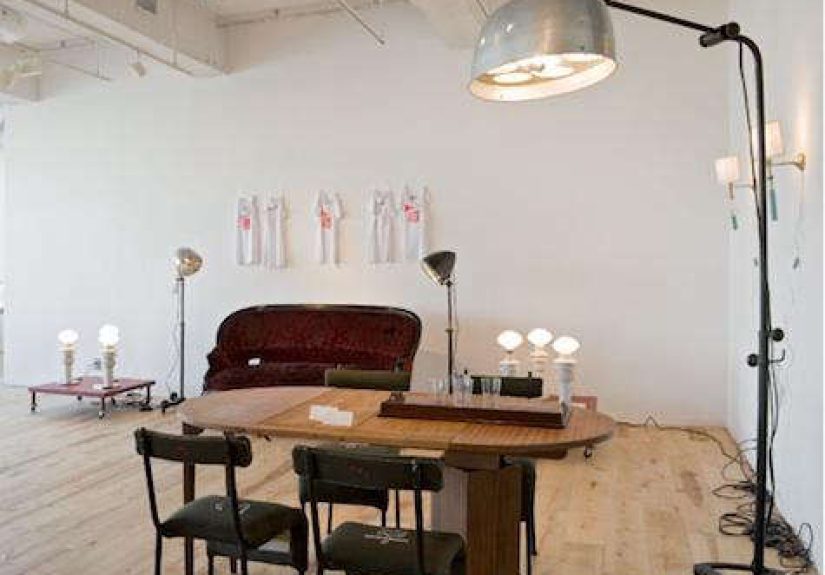
Her creative signature comes from transformation. Old car headlights, vintage glass globes, surveyor tripods, hair-salon stands, industrial parts, and anonymous market finds are not “junk” in her hands. They become lamps, installations, interiors, and strange little design characters with posture and attitude. If ordinary lighting says, “Here is some brightness,” Mademoiselle Y’s lighting says, “I have lived several lives, and now I would like to illuminate your dinner party.”
That sense of biography is central to her appeal. She does not simply reuse materials because reuse is trendy. She approaches objects as containers of memory. A dent, patina, curve, or awkward shape becomes a clue. Her pieces often look as if they were assembled from a secret conversation between a Paris flea market, a Japanese memory, and a machine that once had a very serious job.
The Paris Setting: Where Old Objects Refuse to Retire
Paris is an ideal stage for Mademoiselle Y’s work because the city treats age differently than many modern cities do. In Paris, old things are not automatically pushed aside for shiny replacements. A 19th-century staircase, a worn café chair, a bronze doorknob, or a cloudy glass globe can still hold authority. The city understands that surfaces collect stories.
That atmosphere matters. Mademoiselle Y’s work feels especially Parisian because it respects the imperfect. Her pieces do not chase showroom perfection. Instead, they celebrate tension: rough and refined, elegant and odd, fragile and industrial, Asian restraint and European looseness. This is not minimalism in the cold, empty sense. It is selective abundance. Every object has to earn its place, preferably by being a little weird.
Why the Flea Market Matters
The Paris flea-market tradition is more than a shopping habit; it is a design education. The legendary Saint-Ouen market, near Porte de Clignancourt, has long been a destination for antiques, vintage furniture, lighting, textiles, and eccentric pieces that do not belong in predictable catalogs. For designers, it offers something more valuable than inventory: surprise.
Mademoiselle Y’s practice fits this culture perfectly. Her work depends on the ability to see possibility before anyone else does. A bicycle light can become sculpture. A tripod can become a base. A plastic bottle, with enough imagination and labor, can become part of a luminous object. The magic is not in finding expensive antiques; it is in spotting emotional potential in items that have been overlooked.
A Design Philosophy Built on Memory, Humor, and Displacement
One of the most interesting aspects of Mademoiselle Y’s design is the role of displacement. Yagura has described her life between Japan and Europe as a source of creative freedom. When you live outside your first culture, objects can become slightly unfamiliar. A street lamp, a household tool, or an industrial part may not come with the same fixed meaning it has for someone who grew up around it. That looseness opens the door to reinvention.
This is where her work becomes more than upcycling. Upcycling often focuses on the practical question: “What can this become?” Mademoiselle Y asks a more poetic question: “What hidden personality has this object been waiting to reveal?” That is why her lamps rarely feel like clever DIY projects. They feel composed. They have mood, proportion, and a sense of theater.
The “Luxury Raglady” Idea
The phrase “luxury raglady” captures the contradiction at the heart of her style. “Rag” suggests leftovers, scraps, castoffs, and the informal economy of objects. “Luxury” suggests refinement, care, rarity, and desire. Put them together, and you get a design approach that refuses to separate glamour from grit.
That duality is exactly what makes her work memorable. A lamp made from found parts can still feel luxurious if the composition is right. Luxury, in this case, does not mean polished marble and a price tag that makes your wallet quietly leave the room. It means attention. It means seeing value where others see clutter. It means giving an object a second life so specific that it could not belong to anyone else.
Lighting as Character, Not Background
Most lighting is designed to disappear. It brightens a room, flatters the sofa, helps you find the remote, and asks for very little attention. Mademoiselle Y’s lighting does the opposite. Her lamps are not background players. They are characters. Some look mechanical, some whimsical, some almost aquatic or insect-like. They seem ready to wander off after midnight and join a small underground theater troupe.
This character-driven quality is a major reason her pieces stand out in contemporary interior design. In many homes, lighting is selected too late, after the furniture, rugs, paint colors, and panic have already arrived. But a strong lamp can change the emotional temperature of a room. It can add height, silhouette, humor, mystery, and intimacy. A Mademoiselle Y lamp does not merely provide illumination; it gives the room a story.
Found Objects, Reframed
Her use of found objects also changes how we read materials. A car headlight removed from its vehicle no longer suggests speed or traffic. Paired with a tripod or iron stand, it becomes sculptural and domestic. A vintage globe becomes less like a spare part and more like a small moon. Industrial elements soften when placed in a living space; domestic elements become stranger when treated with industrial seriousness.
This is the cleverness of her work: she does not erase the past life of an object. She lets it remain visible. The viewer can still sense what the piece used to be, but the new context creates a second meaning. It is design as translation, and like all good translation, it keeps the spirit while changing the form.
Paris Interior Design Lessons from Mademoiselle Y
You do not need a Paris showroom, a secret flea-market dealer, or a Peugeot headlight in your carry-on to learn from Mademoiselle Y. Her work offers practical lessons for anyone interested in Paris interior design, vintage lighting, sustainable decorating, or simply making a room feel less like it was ordered in one nervous afternoon.
1. Let One Object Be Strange
A room becomes more interesting when not everything behaves. A strange lamp, unusual chair, vintage mirror, or sculptural object can break the stiffness of a polished interior. The key is restraint. One odd piece is charming. Twelve odd pieces can look like your living room is auditioning for a haunted antique mall.
2. Mix Eras Without Apologizing
Mademoiselle Y’s work reminds us that good design does not have to stay in one decade. A 1940s object can sit near a modern sofa. Industrial metal can stand beside linen. Japanese restraint can meet Parisian romance. When the proportions and colors are balanced, mixed eras create depth rather than confusion.
3. Respect Patina
Patina is not dirt with better public relations. It is the visible evidence of age, use, and material life. Scratches, oxidation, fading, and small irregularities can make an object feel human. In a world full of identical products, patina is a quiet rebellion.
4. Use Lighting to Shape Mood
Lighting should be layered. A room needs more than one overhead fixture doing its best impression of an interrogation room. Table lamps, floor lamps, sconces, and directional lights create atmosphere. Mademoiselle Y’s lighting shows how a lamp can define a corner, soften a wall, or turn a plain room into a scene.
5. Buy Less, Choose Better, Look Longer
The most useful lesson may be patience. Mademoiselle Y’s style depends on looking closely. Instead of buying the first acceptable object, wait for the one with personality. Interiors become richer when they are collected over time. Rooms, like people, are more interesting when they have a past.
Why Her Work Feels Modern Now
Mademoiselle Y’s work may be rooted in old objects, but it feels remarkably current. Today, homeowners and designers are increasingly interested in sustainable design, circular thinking, vintage furniture, and interiors that do not look mass-produced. Her practice anticipated many of these concerns before they became popular hashtags.
Yet her work avoids the moral heaviness that sometimes follows sustainable design around like a gray cloud with a clipboard. The pieces are responsible, yes, but they are also playful. They have humor. They prove that reuse does not have to look rustic, beige, or apologetic. It can be glamorous. It can be dramatic. It can even be a little mischievous.
This matters because sustainable interiors succeed when people actually want to live with them. A rescued object that becomes beloved is more powerful than a worthy object that sits in the corner making everyone feel guilty. Mademoiselle Y turns reuse into desire, and that is a much more persuasive design strategy.
The Emotional Power of Object-Based Design
What separates Mademoiselle Y from many makers of reclaimed design is emotional intelligence. Her pieces do not feel assembled only to prove a concept. They feel chosen. The proportions are deliberate, the humor is controlled, and the final object has presence.
This emotional quality explains why her work fits both private interiors and public spaces. In a home, one of her lamps can become the object guests ask about first. In a boutique or studio, it can create atmosphere and brand identity without shouting. In hospitality design, it can make a room feel discovered rather than decorated.
That is a valuable lesson for modern interiors. People remember spaces that give them something to notice. Not clutter, not noise, not “statement pieces” screaming for attention like toddlers in velvet shoes. They remember objects with soul. Mademoiselle Y’s work understands that soul often begins with imperfection.
Experience: Visiting a Mademoiselle Y-Inspired Paris
To understand the feeling behind “Designer Visit: Mademoiselle Y in Paris,” imagine beginning the day not in the grand postcard version of Paris, but in the city’s more textured edges. The streets are busy, the storefronts layered, the architecture imperfect, and the rhythm less polished than the luxury avenues. This is the Paris where useful objects, broken objects, and beautiful objects often pass each other without formal introductions.
A Mademoiselle Y-inspired visit would not begin with a checklist. It would begin with attention. You would notice the old metal sign above a shop, the amber glow behind a café curtain, the heavy base of a forgotten floor lamp, the geometry of a stair rail, the odd elegance of a discarded chair. In this world, design is not confined to galleries. It leaks into the street.
At a flea market, the experience becomes even richer. The first lesson is humility: you will not see everything. There are too many stalls, too many mirrors, too many frames, too many lamps, and too many mysterious objects whose original purpose may require either historical expertise or a very confident imagination. The second lesson is patience. The best finds rarely introduce themselves with perfect lighting and a polite label. They hide under tables, behind larger furniture, or in the dusty corner where your sensible shoes begin questioning your life choices.
Looking through this lens changes how you shop. You stop asking, “Does this match my room?” and start asking, “What could this become?” A small metal shade might become a reading lamp. A tripod might become a sculptural base. A cracked ceramic form might become a table object. Even if you buy nothing, your eye becomes sharper. You begin to recognize balance, texture, silhouette, and the difference between genuine patina and something that merely lost a fight with a basement.
Back inside a Paris apartment, the lesson continues. The most compelling interiors are rarely perfect. They are layered. A room might have pale walls, old floors, a modern sofa, a flea-market table, and one lamp that looks as though it was invented by a romantic engineer during a power outage. That tension creates life. It prevents the space from feeling staged.
The experience also teaches restraint. Mademoiselle Y’s world is imaginative, but it is not random. The difference between poetic and chaotic is editing. A found-object lamp needs breathing room. A vintage piece needs contrast. A quirky object becomes more powerful when placed near something calm. This is why Parisian interiors often feel effortless even when they are carefully composed. They allow personality without turning the room into a costume party.
For homeowners, designers, and design lovers, the deeper takeaway is emotional. Objects can make us feel rooted, even when they come from somewhere else. A lamp built from fragments can suggest travel, memory, humor, and reinvention. It can remind us that homes are not showrooms; they are personal museums of attention. The best rooms do not simply display taste. They reveal what someone noticed, saved, loved, and gave another chance.
That is the lasting charm of Mademoiselle Y in Paris. Her work invites us to slow down and look again. The overlooked object may be waiting for a better role. The imperfect surface may be the most beautiful one in the room. And somewhere, in a flea-market corner or under a dusty shelf, a future lamp may be quietly preparing for its comeback.
Conclusion: The Beauty of Second Chances
Mademoiselle Y’s Paris is not the polished fantasy of matching furniture and silent luxury. It is a more interesting place: witty, layered, imperfect, and alive with possibility. Through Rie Yagura’s eye, forgotten objects are not leftovers. They are raw material for atmosphere, memory, and surprise.
Her work matters because it changes the way we define value. A design object does not need to be new to be modern. It does not need to be expensive to be luxurious. It does not need to be flawless to be beautiful. Sometimes the most compelling piece in a room is the one that has already lived a few lives and still has the nerve to glow.
For anyone drawn to Paris interior design, found-object lighting, vintage decor, or sustainable luxury, Mademoiselle Y offers a powerful reminder: style begins with seeing. Look closely, choose bravely, edit carefully, and do not underestimate the decorative potential of something strange. After all, in the right hands, even an old headlight can become poetry with a plug.
SEO Tags
:





 Close
Close