
Table of Contents >> Show >> Hide
- Why Ketchup Works on Brass
- Before You Start: Check What Kind of Brass You Have
- Supplies You Will Need
- How to Polish Brass with Ketchup: 12 Steps
- Step 1: Dust the Brass First
- Step 2: Wash Away Surface Grime
- Step 3: Dry the Item Completely
- Step 4: Test a Hidden Spot
- Step 5: Apply a Thin, Even Layer of Ketchup
- Step 6: Let the Ketchup Sit
- Step 7: Gently Rub the Surface
- Step 8: Clean Crevices with a Cotton Swab or Soft Toothbrush
- Step 9: Rinse Thoroughly
- Step 10: Wash with Mild Soap Again
- Step 11: Dry Immediately and Completely
- Step 12: Buff to Bring Back the Shine
- What Results Should You Expect?
- Common Mistakes to Avoid
- Best Brass Items to Clean with Ketchup
- How Often Should You Polish Brass?
- Extra Tips for Keeping Brass Shiny Longer
- Real-Life Experience: What Happens When You Actually Try It?
- Conclusion
Brass has a way of making a home feel instantly warmer. A brass candlestick on a mantel, a vintage tray on a coffee table, or a set of cabinet pulls in the kitchen can turn ordinary corners into “yes, I definitely have my life together” moments. Then tarnish arrives. Suddenly, that golden glow looks more like it has been living in a forgotten attic with a grudge.
The good news? You may not need a fancy metal polish to bring back the shine. One of the easiest household tricks for cleaning tarnished brass is sitting in your refrigerator door next to the mustard: ketchup. It sounds like a cleaning hack invented by someone who ran out of options during lunch, but there is real logic behind it. Ketchup contains mild acids from tomatoes and vinegar, which can help loosen oxidation and surface tarnish on brass. When used carefully, it can brighten small brass items without harsh fumes, expensive products, or a dramatic trip to the hardware store.
This guide explains how to polish brass with ketchup in 12 simple steps, plus how to avoid the most common mistakes. Because yes, ketchup can help clean brass, but no, you should not treat every brass object like a French fry.
Why Ketchup Works on Brass
Brass is an alloy made mostly of copper and zinc. Over time, exposure to air, moisture, skin oils, dust, and household grime can cause brass to darken, dull, or develop uneven tarnish. This is especially common on doorknobs, drawer pulls, candleholders, trays, lamps, picture frames, and decorative bowls.
Ketchup works because it contains mild acids that can react with tarnish and help loosen it from the surface. Tomato acids and vinegar are not as aggressive as some commercial cleaners, which makes ketchup useful for light to moderate tarnish. Its thick texture also helps it cling to curved surfaces and detailed grooves instead of sliding off immediately like a watery cleaner. In other words, ketchup is not just a condiment; it is a clingy little cleaning paste with tomato-based ambition.
Still, ketchup is best for unlacquered solid brass or sturdy brass pieces that can handle gentle polishing. It is not the right choice for every object, especially antiques, delicate brass plating, lacquered brass, or pieces with intentional aged patina.
Before You Start: Check What Kind of Brass You Have
Before polishing brass with ketchup, take one minute to identify the finish. This step can save you from turning a cleaning project into a tiny household tragedy.
Solid Brass vs. Brass-Plated Items
Hold a magnet against the item. If the magnet sticks, the piece is likely brass-plated over another metal. Solid brass is generally not magnetic. This test is helpful, but not perfect, because some plated items may have nonmagnetic base metals. If you see silver, gray, or reddish metal showing through scratches or worn edges, assume the piece is plated and clean it very gently.
Brass-plated items have only a thin layer of brass on the surface. Scrubbing too hard can remove that layer and expose the base metal underneath. If your item is plated, use a soft cloth, minimal pressure, and a short ketchup contact time.
Lacquered Brass
Some brass pieces have a clear protective lacquer that keeps them shiny and slows tarnishing. If your brass looks glossy, has a plastic-like clear coating, or only tarnishes where the coating is chipped, it may be lacquered. Do not use ketchup on lacquered brass unless you are prepared to risk damaging or clouding the coating. For lacquered brass, mild dish soap, warm water, and a soft cloth are usually the safest choice.
Antique or Patinated Brass
Not all dark brass needs to be polished. Antique brass often has a beautiful patina that adds depth, age, and value. Removing that patina can make the item look oddly new or reduce its character. If the piece is valuable, inherited, collectible, or mysterious enough to make you whisper, “This might be important,” test carefully or consult a professional before polishing.
Supplies You Will Need
- Ketchup, preferably plain tomato ketchup
- Soft microfiber cloths
- Mild dish soap
- Warm water
- A small bowl
- Cotton swabs or a soft toothbrush for grooves
- Paper towels or a washable work cloth
- Gloves, optional but useful
- A dry lint-free cloth for buffing
Choose soft tools only. Avoid steel wool, rough scouring pads, stiff brushes, abrasive powders, and aggressive rubbing. Brass may be metal, but it still has feelings. More importantly, it can scratch.
How to Polish Brass with Ketchup: 12 Steps
Step 1: Dust the Brass First
Start by wiping the brass with a dry microfiber cloth. This removes loose dust, grit, and crumbs from the surface. Skipping this step can cause tiny particles to scratch the brass when you begin rubbing. Think of it as sweeping the dance floor before the tomato sauce shows up.
Step 2: Wash Away Surface Grime
Mix a few drops of mild dish soap with warm water. Dip a soft cloth into the solution, wring it out, and gently wipe the brass. This removes fingerprints, grease, and everyday dirt so the ketchup can work directly on the tarnish instead of fighting through a layer of kitchen life.
Step 3: Dry the Item Completely
Use a clean towel to dry the brass before applying ketchup. Water left on the surface can dilute the ketchup and create uneven results. Drying also helps you see the true condition of the metal, including dark spots, greenish oxidation, and areas that may need extra attention.
Step 4: Test a Hidden Spot
Apply a tiny dab of ketchup to an inconspicuous area, such as the underside of a tray, the back of a handle, or the base of a candlestick. Let it sit for one to three minutes, then wipe it away with a damp cloth and dry the area. If the finish looks improved and not damaged, continue. If it looks cloudy, patchy, pinkish, or stripped, stop immediately.
Step 5: Apply a Thin, Even Layer of Ketchup
Squeeze a small amount of ketchup onto a soft cloth or directly onto the brass. Spread it in a thin, even layer over the tarnished areas. You do not need to bury the object like a hot dog at a baseball game. A light coating is usually enough. For detailed areas, use a cotton swab to work ketchup into grooves and corners.
Step 6: Let the Ketchup Sit
Allow the ketchup to sit for 10 to 30 minutes for light to moderate tarnish. For heavier tarnish on solid, unlacquered brass, you may extend the time toward 40 to 60 minutes, but check regularly. Do not leave ketchup on brass overnight. Longer is not always better, and acidic ingredients can cause uneven dullness if forgotten.
Step 7: Gently Rub the Surface
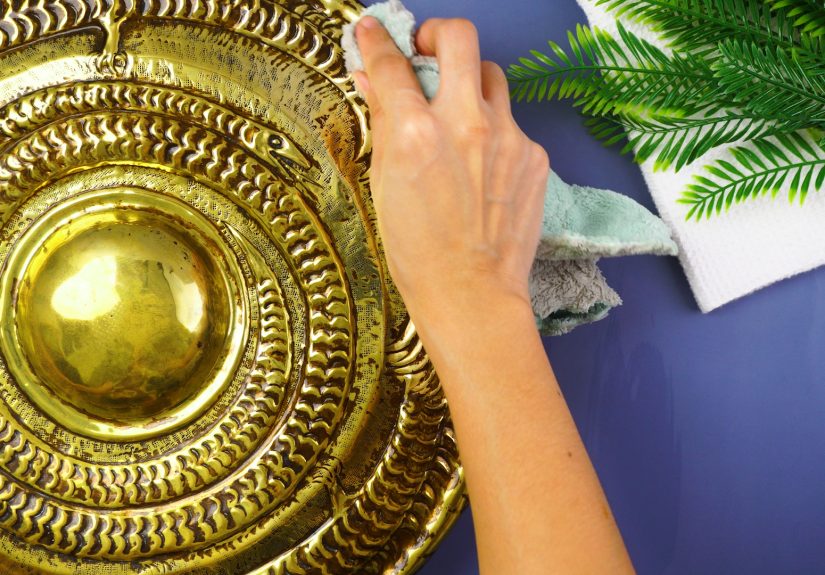
After the waiting time, use a soft cloth to rub the brass in small circular motions. The tarnish should begin to lift, and the cloth may show dark residue. That residue is normal. It is the brass saying goodbye to grime in the least glamorous way possible. Use gentle pressure, especially on plated or detailed pieces.
Step 8: Clean Crevices with a Cotton Swab or Soft Toothbrush
For ornate brass, use a cotton swab or a very soft toothbrush to reach carved lines, decorative edges, screw heads, and recessed patterns. Do not scrub like you are cleaning bathroom tile. The goal is to loosen ketchup and tarnish, not excavate the object.
Step 9: Rinse Thoroughly
Rinse the brass with warm water, or wipe it repeatedly with a clean damp cloth if the item should not be submerged. This step matters because dried ketchup residue can become sticky, streaky, or attract dust. For hardware attached to cabinets or doors, use a damp cloth rather than pouring water around wood or screws.
Step 10: Wash with Mild Soap Again
After rinsing, wash the piece lightly with mild dish soap and warm water. This removes any remaining acidity, sugar, salt, or tomato residue. Ketchup may be useful, but it is still ketchup. Your brass should not smell like a drive-through window when you are finished.
Step 11: Dry Immediately and Completely
Dry the brass right away with a clean microfiber cloth. Moisture can encourage water spots and new tarnish, especially on unlacquered brass. Pay attention to seams, hinges, engraved lines, and the undersides of handles where water likes to hide and cause trouble later.
Step 12: Buff to Bring Back the Shine
Use a dry lint-free cloth to buff the brass until it shines. Buffing is what takes the piece from “clean enough” to “look at me casually owning beautiful things.” Move with the shape of the item and use light, steady pressure. If you want a brighter shine on solid brass, repeat the process once more rather than scrubbing aggressively.
What Results Should You Expect?
Ketchup can make brass look cleaner, brighter, and less tarnished, especially when the discoloration is mild. It works well on small decorative objects, cabinet hardware, drawer pulls, knobs, trays, and candlesticks. However, it may not deliver a mirror-like finish on heavily tarnished brass. For deep oxidation, stubborn black spots, or years of neglect, a dedicated brass polish may be more effective.
That does not mean the ketchup method is useless. It is inexpensive, easy, widely available, and gentle enough for many routine cleaning jobs. It is especially helpful when you want to freshen brass without committing to strong-smelling products or a full restoration project.
Common Mistakes to Avoid
Leaving Ketchup on Too Long
Ketchup is mild, but it is still acidic. Leaving it on for hours can cause uneven color, dullness, or residue problems. Start with a short contact time and repeat if needed.
Using It on Lacquered Brass
If the brass has a protective coating, ketchup may not reach the metal underneath. Worse, it may affect damaged or chipped lacquer unevenly. Use soap and water for lacquered brass.
Scrubbing Plated Brass Too Hard
Brass plating is thin. Heavy scrubbing can wear it down. If you are unsure whether an item is plated, treat it like it is delicate.
Skipping the Final Wash
Rinsing alone may not remove all ketchup residue. A quick soapy wash helps prevent stickiness, streaks, and lingering smell.
Polishing Away Valuable Patina
Some aged brass is supposed to look darker. Before polishing, decide whether you want bright brass or preserved character. Once patina is removed, you cannot instantly put it back in the same authentic way.
Best Brass Items to Clean with Ketchup
The ketchup method is best for small to medium brass items that are easy to rinse and dry. Good candidates include brass cabinet knobs, drawer pulls, candlesticks, bells, trays, decorative bowls, lamp bases, napkin rings, and small hardware pieces removed from furniture.
Use extra caution with bathroom fixtures, faucets, antique handles, jewelry, musical instruments, religious objects, and anything with mixed materials such as wood, fabric, stone, or painted details. Ketchup can stain porous surfaces and creep into seams, so protect surrounding areas before applying it.
How Often Should You Polish Brass?
For frequently handled brass, such as doorknobs or drawer pulls, a light cleaning every month or two may help control fingerprints and dullness. Decorative brass may only need polishing a few times a year. If you love the aged look of unlacquered brass, clean it gently with soap and water and polish only when tarnish becomes uneven or unattractive.
The key is moderation. Over-polishing can wear surfaces, remove patina, and turn a simple cleaning routine into a never-ending shine competition. Brass does not need to look brand-new every day to look beautiful.
Extra Tips for Keeping Brass Shiny Longer
After cleaning, keep brass dry and dust-free. Moisture speeds tarnish, so dry brass hardware after splashes and avoid letting water sit around fixtures. Handle polished brass with clean hands, because skin oils can leave marks. For storage, wrap small brass items in soft cloth and keep them in a dry area.
If you want to slow tarnish on unlacquered brass, you can occasionally apply a very thin layer of mineral oil with a soft cloth, then buff away the excess. Use only a tiny amount. The goal is protection, not making the brass look like it has joined a bodybuilding competition.
Real-Life Experience: What Happens When You Actually Try It?
The first time you polish brass with ketchup, the whole process feels slightly ridiculous. There you are, standing at the sink, holding a candlestick or cabinet knob covered in a condiment usually reserved for fries. It looks wrong. It smells like lunch. And yet, after a few minutes, the tarnish begins to soften, the cloth turns dark, and the brass starts to glow again. That is the moment most people become believers.
In practice, the ketchup method is best when you approach it with patience. A small brass tray with light brown tarnish may brighten after 15 minutes. A darker candlestick may need 30 minutes and a second round. Detailed pieces are more work because ketchup settles into grooves. Cotton swabs become the unsung heroes of the operation. If the brass has engraved borders, raised floral patterns, or tiny corners, plan for a little extra time. The shine is satisfying, but the cleanup can be fussy.
One useful experience is to work in stages rather than covering every brass item in the house at once. Start with one object. Test it. Clean it. Dry it. See how the finish responds. Brass pieces can vary widely, especially vintage finds. Two items that look similar on a shelf may react differently because one is solid brass, one is plated, and one has a worn coating. The ketchup does not know this. It simply arrives with tomato confidence and does its best.
Another lesson: drying matters more than people expect. After rinsing, brass may look clean but slightly flat. Once you dry it thoroughly and buff it with a soft cloth, the warmth comes back. Buffing is where the real shine appears. It is also where you notice missed patches, especially near feet, rims, handles, and screw holes. Keep a damp cloth nearby for touch-ups, then dry again.
The ketchup method also teaches you the difference between “clean” and “restored.” If a brass item is lightly tarnished, ketchup can make it look dramatically better. If it is heavily oxidized, scratched, or neglected for decades, ketchup may improve it without fully transforming it. That is not failure. It simply means the item may need a stronger brass polish, professional care, or acceptance as a beautifully aged object.
For household use, ketchup is a practical first attempt because it is cheap, familiar, and easy to control. It is not magic, but it is surprisingly effective. The best part is that it makes brass cleaning feel less intimidating. Instead of buying specialty products immediately, you can experiment with a small, safe area and learn how the metal behaves. And if anyone walks in while you are rubbing ketchup on a doorknob, just nod confidently. Home maintenance sometimes looks strange before it looks brilliant.
Conclusion
Polishing brass with ketchup is one of those cleaning tricks that sounds silly until it works. Thanks to its mild acidity and thick texture, ketchup can help remove surface tarnish, brighten dull brass, and refresh small household pieces without expensive supplies. The safest approach is simple: identify the type of brass, test a hidden spot, apply a thin layer, wait briefly, rub gently, rinse well, wash with soap, dry completely, and buff until the shine returns.
Use this method for solid, unlacquered brass when you want an easy refresh. Be more careful with brass plating, lacquered finishes, antiques, and pieces with intentional patina. The goal is not to erase every sign of age, but to help brass look cared for, warm, and handsome again. Ketchup may not replace professional metal polish for every job, but as a beginner-friendly brass cleaning method, it earns its spot in the household hall of fameright between baking soda and that one microfiber cloth everyone fights over.
Note: This article is intended for general household cleaning guidance. Always test first, use gentle pressure, and seek professional advice for valuable antiques, delicate finishes, or collectible brass pieces.





 Close
Close