
Table of Contents >> Show >> Hide
- Why Make Homemade Glass Cleaner?
- The Best Homemade Glass Cleaner Recipe
- Why These Ingredients Work
- How to Use Homemade Glass Cleaner Without Streaks
- Where to Use Homemade Glass Cleaner
- Where Not to Use Vinegar-Based Glass Cleaner
- Important Safety Rules for DIY Glass Cleaner
- Common Homemade Glass Cleaner Mistakes
- Homemade Glass Cleaner Variations
- How Often Should You Clean Glass?
- Extra Experience: What I Learned From Making Homemade Glass Cleaner
- Conclusion
There is something oddly satisfying about clean glass. A freshly wiped mirror makes the bathroom look bigger, a sparkling window makes the whole room feel sunnier, and a streak-free patio door can make you wonder whether your dog has finally stopped pressing his nose against it. Spoiler: he has not.
The good news is that you do not need a cabinet full of expensive sprays to get clear, shiny glass. With a few simple household ingredients, you can make your own homemade glass cleaner that works well on windows, mirrors, glass tables, and many other smooth glass surfaces. It is budget-friendly, quick to mix, and refreshingly low-dramaas long as you follow a few basic safety rules.
This guide explains how to make a homemade glass cleaner, why each ingredient matters, how to use it without leaving streaks, what surfaces to avoid, and how to troubleshoot common glass-cleaning disasters. By the end, you will be ready to look at every fingerprint, water spot, and mystery smudge in your house and say, “Not today, tiny chaos.”
Why Make Homemade Glass Cleaner?
Homemade glass cleaner is popular for a simple reason: it is easy. Most recipes use ingredients many people already keep at home, such as distilled white vinegar, rubbing alcohol, dish soap, and water. Instead of buying a new bottle every time your mirror starts looking like a crime scene for toothpaste, you can refill a spray bottle in minutes.
A DIY glass cleaner also gives you more control. You can skip strong fragrances, avoid unnecessary dyes, and adjust the formula depending on whether you are cleaning greasy kitchen glass, bathroom mirrors, or dusty windows. It is not magic, but it is practicaland practical wins a lot of battles in home cleaning.
That said, homemade cleaner is not automatically better than every commercial product. Store-bought glass cleaners are formulated and tested for performance, safety, and shelf stability. A homemade window cleaner is best viewed as a smart routine-cleaning option, not a miracle potion brewed by a wizard with a microfiber cloth.
The Best Homemade Glass Cleaner Recipe
This simple recipe is designed for everyday glass cleaning. It helps cut light grease, loosen fingerprints, and reduce streaking when used with the right wiping method.
Ingredients
- 1 cup distilled water
- 1 cup distilled white vinegar
- 1/4 cup 70% rubbing alcohol
- 1 to 2 drops mild dish soap
- Optional: 1 teaspoon cornstarch for extra polishing power
Directions
- Pour the distilled water into a clean spray bottle.
- Add the white vinegar.
- Add the rubbing alcohol.
- Add 1 to 2 drops of dish soap. Do not overdo it; too much soap can leave residue.
- If using cornstarch, add it last and shake well before every use.
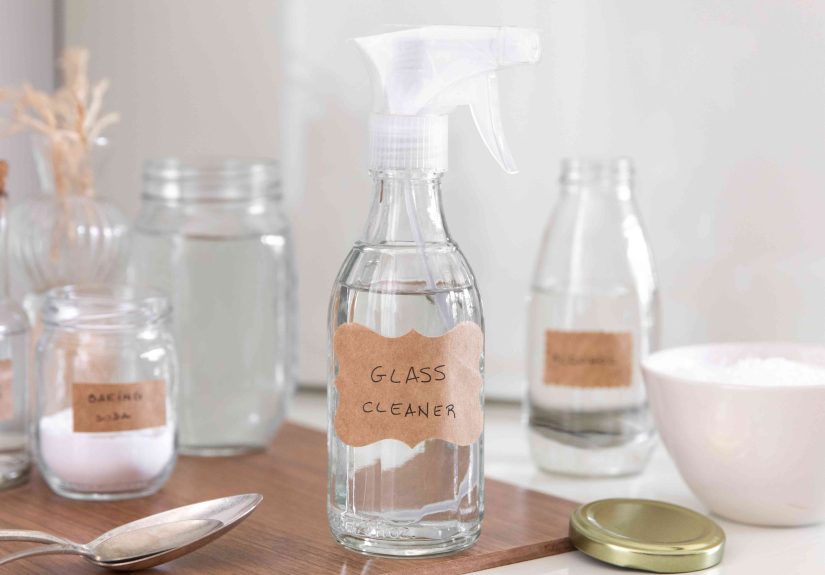
- Label the bottle clearly: “Homemade Glass Cleaner.”
This recipe makes a strong everyday DIY glass cleaner for windows, mirrors, and glass tabletops. The vinegar helps dissolve mineral deposits and light grime. The rubbing alcohol helps the cleaner evaporate faster, which can reduce streaks. The dish soap helps lift oily fingerprints. Distilled water is preferred because tap water may contain minerals that can dry into spots.
Why These Ingredients Work
Distilled White Vinegar
White vinegar is acidic, which makes it useful for breaking down mineral spots, water marks, and some light buildup on glass. It is especially helpful on bathroom mirrors and shower glass where hard-water residue likes to show off. Vinegar is also inexpensive and widely available, which is why it appears in so many homemade window cleaner recipes.
However, vinegar is not friendly to every surface. Avoid using vinegar-based cleaner on natural stone such as marble, granite, travertine, or limestone. Acid can dull or damage those materials. Also avoid spraying it directly on electronics, screens, or specialty coated glass unless the manufacturer says it is safe.
Rubbing Alcohol
Rubbing alcohol helps homemade glass cleaner dry quickly. That matters because streaks often happen when cleaner sits too long on the surface or dries unevenly. Alcohol also helps cut through some oily smudges, which is useful if your glass is decorated with fingerprints from humans, pets, or snack-related investigations.
Use rubbing alcohol carefully. It is flammable, so keep it away from flames, heat, and sparks. Store the cleaner safely and do not use it near open fire or hot surfaces.
Dish Soap
A tiny amount of mild dish soap helps break up grease and grime. The keyword here is tiny. If you pour in a dramatic squirt, your glass may look clean at first and then develop a hazy film. One or two drops is enough for most spray bottles.
Cornstarch
Cornstarch is optional, but many DIY cleaners like it because it can provide a gentle polishing effect. It may help loosen grime and improve shine, especially on older windows. The catch is that it settles, so you must shake the bottle before and during use. Otherwise, you may end up spraying mostly liquid at first and a cloudy science project at the end.
How to Use Homemade Glass Cleaner Without Streaks
The recipe matters, but the method matters more. A great homemade glass cleaner can still streak if you use the wrong cloth, clean in direct sun, or spray half the bottle like you are putting out a kitchen fire.
Step 1: Dust First
Before spraying, remove loose dust, cobwebs, and grit from the glass and frame. If you skip this step, wet dust can turn into muddy streaks. Use a dry microfiber cloth, duster, or soft brush.
Step 2: Spray Lightly
Spray the cleaner lightly onto the glass or directly onto your cloth. More cleaner does not mean more shine. It often means more wiping, more residue, and more muttering under your breath.
Step 3: Wipe in a Pattern
Use a clean microfiber cloth and wipe from top to bottom or side to side. Pick one direction and stay consistent. Random circular wiping can move cleaner around without fully removing it, which is how streaks sneak back in like uninvited guests.
Step 4: Buff With a Dry Cloth
Use a second dry microfiber cloth to buff the glass. This final dry pass is one of the best tricks for a streak-free finish. For large windows, a squeegee can also help remove liquid evenly.
Step 5: Avoid Direct Sunlight
Clean windows when the glass is cool and shaded. Direct sun can make cleaner dry too quickly, leaving streaks before you have time to wipe it away. Early morning, late afternoon, or cloudy days are usually better for window cleaning.
Where to Use Homemade Glass Cleaner
This homemade glass cleaner works well on many common household surfaces, including:
- Interior windows
- Bathroom mirrors
- Glass tabletops
- Glass cabinet doors
- Patio doors
- Shower glass, if the surrounding materials are vinegar-safe
For exterior windows, you may need to rinse heavy dirt first. Outdoor glass collects pollen, dust, bird evidence, and other tiny reminders that nature is beautiful but messy. If the window is very dirty, wash it first with water and a small amount of mild dish soap, rinse, then finish with homemade glass cleaner.
Where Not to Use Vinegar-Based Glass Cleaner
Homemade does not mean universal. Do not use vinegar-based glass cleaner on:
- Natural stone countertops or tile
- Electronic screens, including TVs, laptops, phones, and tablets
- Eyeglasses with special coatings
- Car windows with aftermarket tint unless the tint manufacturer says it is safe
- Wood frames or painted surfaces that may be sensitive to moisture or acid
- Shower glass surrounded by marble, limestone, or other acid-sensitive stone
When in doubt, test a small hidden area first. It is much easier to test a corner than to explain to yourself why the expensive stone vanity now has a dull patch shaped like your cleaning confidence.
Important Safety Rules for DIY Glass Cleaner
The most important rule is simple: do not mix cleaners. Never combine homemade glass cleaner with bleach, ammonia, toilet bowl cleaner, drain cleaner, disinfectants, or other household chemicals. Mixing products can create dangerous fumes.
Also remember that this homemade glass cleaner is for cleaning, not disinfecting. Cleaning removes dirt and grime from surfaces. Disinfecting requires products designed and labeled to kill germs when used correctly. If you need to disinfect a surface, use an appropriate EPA-registered disinfectant and follow the label directions.
Label your homemade cleaner clearly, store it away from children and pets, and avoid spraying it into the air. Use it in a ventilated area, especially if you are sensitive to vinegar smell or alcohol fumes. A clean window is nice. Breathing comfortably is nicer.
Common Homemade Glass Cleaner Mistakes
Using Too Much Soap
Soap is helpful in tiny amounts, but too much leaves a film. If your glass looks cloudy after cleaning, remake the solution with less dish soap or skip the soap for mirrors and lightly soiled windows.
Using Dirty Cloths
A cloth that has been used with furniture polish, fabric softener, or oily cleaners can smear residue across glass. Use clean microfiber cloths and wash them without fabric softener.
Cleaning Hot Glass
Hot glass makes cleaner evaporate too quickly. That is a recipe for streaks. Clean shaded glass whenever possible.
Skipping the Dry Buff
The dry buff is not optional if you want that “invisible glass” look. It removes leftover moisture and tiny streaks that the first cloth may leave behind.
Using Tap Water in Hard-Water Areas
If your tap water is high in minerals, it may leave spots. Distilled water is a small upgrade that can make a big difference.
Homemade Glass Cleaner Variations
Simple Vinegar Glass Cleaner
For light cleaning, mix equal parts distilled water and white vinegar. This two-ingredient homemade window cleaner is ideal for quick mirror touch-ups and lightly dusty glass.
Alcohol-Free Glass Cleaner
If you prefer to avoid rubbing alcohol, mix 1 cup distilled water, 1 cup white vinegar, and 1 drop mild dish soap. It may dry more slowly, so buff carefully with a dry cloth.
Heavy Smudge Formula
For greasy fingerprints, use the main recipe with the dish soap included. Spray lightly, let it sit for a few seconds, wipe with microfiber, then buff dry.
How Often Should You Clean Glass?
Mirrors in busy bathrooms may need cleaning once or twice a week, especially if toothpaste droplets are living their best life. Interior windows can usually be cleaned every few weeks or monthly, depending on dust, pets, and fingerprints. Exterior windows may need seasonal cleaning, especially after pollen season, storms, or construction nearby.
Glass shower doors are different. A quick squeegee after each shower helps prevent water spots and soap scum from building up. That one tiny habit can save you from scrubbing later with the energy of a person trying to erase history.
Extra Experience: What I Learned From Making Homemade Glass Cleaner
The first thing you learn when making homemade glass cleaner is that streaks are not always the cleaner’s fault. Sometimes the real villain is the cloth. A fresh microfiber cloth can make a basic vinegar-and-water solution look professional. A dirty cloth, on the other hand, can turn even a good recipe into a foggy little tragedy. If your glass looks worse after cleaning, check your towel before blaming the bottle.
The second lesson is that less spray usually works better. Many people attack mirrors like they are watering a garden. The surface gets too wet, the cleaner runs into the frame, and then you spend more time chasing drips than removing smudges. A light mist is enough for most mirrors and indoor windows. For larger panes, spray in sections so the cleaner does not dry before you wipe it.
Another useful experience is to keep two cloths in your hand: one damp cleaning cloth and one dry finishing cloth. This simple habit changes everything. The first cloth lifts the mess; the second cloth polishes the glass. If you use only one cloth, it eventually becomes too damp and starts spreading moisture around. That is when streaks appear and your reflection begins judging your choices.
Bathroom mirrors are usually the easiest place to test a homemade glass cleaner. They collect toothpaste specks, fingerprints, and steam marks, but they are small enough that you can see results quickly. Kitchen glass is trickier because it often has grease. For kitchen windows or glass cabinet doors, add the tiny drop of dish soap. Do not add five drops. Do not add a cheerful squeeze. One or two drops is plenty.
Shower glass teaches another lesson: maintenance beats rescue missions. If you wait until hard-water spots and soap scum have built up for weeks, a homemade glass cleaner may help, but it will not feel effortless. A quick wipe or squeegee after showering keeps minerals from drying on the surface. Then, when you use your DIY cleaner, it is polishing instead of excavating.
Outdoor windows are where expectations need a reality check. If the outside of the window is covered in pollen, dirt, or bug marks, do not expect a fine mist of homemade cleaner to do all the work. Rinse or wash the heavy grime first, then use the glass cleaner as the finishing step. Think of it like brushing your teeth before smiling for a photo. Preparation matters.
One more practical tip: label the bottle. A clear homemade cleaner in a random spray bottle can easily be confused with water, plant spray, or something stronger. Write the ingredients and date on the bottle. It takes ten seconds and prevents household confusion. Also, store it somewhere cool and away from kids, pets, and heat.
The biggest takeaway is that homemade glass cleaner works best when paired with good technique. The recipe is only half the story. Distilled water, white vinegar, rubbing alcohol, and a whisper of dish soap can absolutely deliver clean, shiny glass. But the real magic is using a light spray, wiping with clean microfiber, buffing dry, and not cleaning in hot direct sunlight. Do that, and your windows may look so clear you will briefly forget they existuntil the dog finds them again.
Conclusion
Making your own homemade glass cleaner is one of the easiest DIY cleaning upgrades you can try. It is affordable, simple, and effective for routine glass cleaning when used correctly. The best formula combines distilled water, white vinegar, rubbing alcohol, and a tiny amount of dish soap. For extra polishing, cornstarch can be added, as long as you remember to shake the bottle.
For the best results, clean with microfiber cloths, avoid direct sunlight, use less spray than you think you need, and finish with a dry buff. Most importantly, never mix cleaners and do not treat homemade glass cleaner as a disinfectant. Keep it simple, keep it safe, and enjoy the strangely powerful joy of glass so clean it looks like it packed up and left.





 Close
Close