
Table of Contents >> Show >> Hide
- Why Foam Rolling Works in the First Place
- Before You Start Rolling Like a Human Burrito
- 9 Foam Rolling Moves for Head-to-Toe Tension Relief
- 1. Quads: For When Sitting All Day Somehow Makes the Front of Your Thighs Angry
- 2. Hip Flexors: The Desk-Job Emergency Exit
- 3. Calves: Small Muscles, Big Opinions
- 4. Hamstrings: The Back-of-the-Leg Wake-Up Call
- 5. Glutes and Piriformis: Because Stress Loves to Hide in Your Butt
- 6. Adductors: The Inner-Thigh Move Nobody Thinks About Until They Need It
- 7. Outer Hip and Side Thigh: The “I Sit, I Run, I Need Help” Zone
- 8. Upper Back and Thoracic Spine: Posture’s Best Friend
- 9. Lats: The Underappreciated Fix for Tight Shoulders and Grumpy Reach
- Common Foam Rolling Mistakes That Make Everything Worse
- How Often Should You Foam Roll?
- What Foam Rolling Actually Feels Like in Real Life
- Final Takeaway
- SEO Tags
If your body feels like it has been shrink-wrapped by stress, poor posture, hard workouts, or the deeply suspicious ergonomics of your desk chair, a foam roller can help. Think of it as the budget-friendly massage therapist that lives under your bed, never cancels, and does not expect a tip.
Foam rolling, often called self-myofascial release, is a simple way to work on muscle tightness and those grumpy “knots” that make walking upstairs feel like a personal attack. Used the right way, it can help reduce soreness, improve range of motion, increase circulation, and make your muscles feel less like overcooked spaghetti that dried out overnight.
But let’s clear something up before we start pretending a cylinder of foam is wizardry: foam rolling is helpful, not magical. It will not replace strength training, mobility work, sleep, hydration, or sensible recovery. What it can do is help your body move more comfortably, especially before workouts, after workouts, or after a full day of sitting like a human paperclip.
Why Foam Rolling Works in the First Place
Your muscles are wrapped in fascia, a connective tissue network that helps everything glide, support, and cooperate. When you train hard, sit too long, move too little, or repeat the same motions over and over, muscles and fascia can start feeling stiff, tender, and less cooperative. Foam rolling applies pressure to those tight areas, which may temporarily improve tissue tolerance, reduce soreness, and help you move with a little more freedom.
That is why foam rolling is popular both in warm-ups and recovery routines. Before exercise, it may help you feel looser and more prepared to move. After exercise, it may help calm down sore areas and make the next day feel less dramatic. The research is still evolving, but the practical takeaway is refreshingly simple: if it helps you move better and feel better, it has earned its place on the floor.
Before You Start Rolling Like a Human Burrito
Use a smooth, medium-density roller if you are new to this. Firmer is not automatically better. In fact, going too hard too soon is the fastest way to turn “recovery session” into “why did I do this to myself?”
Foam Rolling Rules That Keep It Helpful
- Roll slowly, not like you are trying to start a lawn mower.
- Spend about 30 to 90 seconds on a move, or roughly 1 to 2 minutes per muscle group.
- If you find a tender spot, pause and breathe instead of attacking it with speed.
- Stay on soft tissue. Do not roll directly over bones or joints.
- Avoid rolling an actively injured area, such as a torn muscle, significant bruise, or fracture.
- Stop if you feel sharp pain, tingling, numbness, or symptoms that seem wrong rather than merely intense.
Now for the good part: the nine moves that can help unglue your body from itself.
9 Foam Rolling Moves for Head-to-Toe Tension Relief
1. Quads: For When Sitting All Day Somehow Makes the Front of Your Thighs Angry
Start face down with the roller under the front of your thighs. Support yourself on your forearms, brace your core, and slowly roll from the top of the thigh down toward the area just above your knees. Shift slightly side to side so you hit the full quadriceps instead of one lonely strip of muscle.
Why it helps: Tight quads can make squats, stairs, running, and even standing feel less friendly. Rolling them can improve circulation and help the front of the hips and knees feel less restricted.
Pro tip: If both legs at once feels easy, do one quad at a time for more focused pressure. If both legs at once feels horrifying, congratulations, you found your starting point.
2. Hip Flexors: The Desk-Job Emergency Exit
Lie face down with the roller just below the front of one hip. Bend the opposite leg out to the side for support. Roll slowly through the front crease of the hip and upper thigh, making small passes instead of giant dramatic ones.
Why it helps: Hip flexors often tighten up when you spend long hours sitting. When these muscles get cranky, your hips may feel stiff, your stride can shorten, and your lower back may start filing complaints.
Pro tip: This area can be intense. Use less body weight at first and breathe like you mean it.
3. Calves: Small Muscles, Big Opinions
Sit on the floor with your legs extended and the roller under one calf. Place your hands behind you, lift your hips, and roll from above the ankle toward the back of the knee. Turn your foot inward and outward slightly to catch the full calf.
Why it helps: Calves work constantly when you walk, run, climb, jump, or wear shoes that are less helpful than advertised. Rolling can reduce that stiff, ropey feeling and may improve ankle mobility.
Pro tip: Cross one leg over the other for more pressure, but only if your calf has not already begun negotiating a peace treaty.
4. Hamstrings: The Back-of-the-Leg Wake-Up Call
Sit with the roller under the backs of your thighs. Lift your body with your hands and slowly roll from the area just above the knees toward the glutes. Rotate your legs a little in and out so the roller does not miss the outer and inner portions of the hamstrings.
Why it helps: Hamstrings can get tight from running, lifting, cycling, or simply existing in modern adulthood. A little targeted work here can make hinging, bending, and walking feel less rusty.
Pro tip: Do not rush this one. Slow rolling gives your body time to stop acting like every inch is an emergency.
5. Glutes and Piriformis: Because Stress Loves to Hide in Your Butt
Sit on the roller and lean slightly to one side. Cross the ankle of that same side over the opposite knee, creating a figure-four shape. Roll slowly around the back of the hip and glute area until you find the tender spots that make you say, “Ah, there it is.”
Why it helps: The glutes and piriformis often get tight in runners, lifters, commuters, and basically anyone who spends time in a chair. Releasing tension here may help the hips feel freer and less compressed.
Pro tip: Aim for the muscular area of the buttock, not your tailbone. Your tailbone did nothing wrong.
6. Adductors: The Inner-Thigh Move Nobody Thinks About Until They Need It
Lie face down and place one inner thigh over the roller with the knee bent outward. Slowly move your body forward and backward so the roller travels through the inner thigh from near the knee toward the groin area, staying on the muscle.
Why it helps: Tight inner thighs can restrict hip movement and make squats, lunges, and lateral motion feel awkward. Rolling them can restore a little breathing room in the hips.
Pro tip: This move is underrated and weirdly effective. It is also an excellent reminder that flexibility is not just about hamstrings.
7. Outer Hip and Side Thigh: The “I Sit, I Run, I Need Help” Zone
Lie on one side with the roller positioned just below the outer hip. Support yourself with your forearm and the opposite leg placed in front for balance. Roll slowly down the side of the thigh, but keep the pressure controlled and do not grind directly into the knee.
Why it helps: This region often feels tight in runners and active people, especially around the tensor fasciae latae and nearby tissues. Working the surrounding muscles may ease that “my outer leg is made of cable wire” sensation.
Pro tip: Be gentle. This area can be spicy. You are looking for relief, not revenge.
8. Upper Back and Thoracic Spine: Posture’s Best Friend
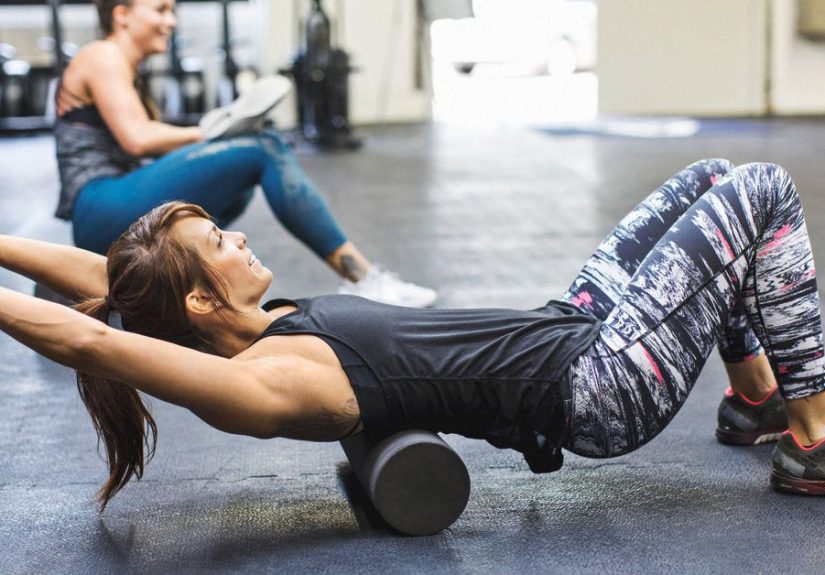
Lie on your back with the roller across your upper back, knees bent, and feet planted. Support your head lightly with your hands or cross your arms over your chest. Lift your hips slightly and roll from the mid-back up toward the base of the neck.
Why it helps: If you work at a laptop, drive a lot, or scroll with the posture of a wilted fern, the upper back often gets stiff. Rolling this area may improve thoracic mobility and help you feel more upright.
Pro tip: Stay on the upper and mid-back. Do not roll directly over the lower back.
9. Lats: The Underappreciated Fix for Tight Shoulders and Grumpy Reach
Lie slightly on one side with the roller tucked under the side of your upper back, just below the armpit. Extend the lower arm overhead if comfortable and slowly roll through the side of the ribcage and upper back area.
Why it helps: Tight lats can limit overhead movement, contribute to shoulder stiffness, and mess with posture. If reaching overhead feels like a negotiation, this move deserves a place in your routine.
Pro tip: Small movements work better than huge sweeps. This is precision work, not floor-based interpretive dance.
Common Foam Rolling Mistakes That Make Everything Worse
Going Too Hard
Pain is not proof of progress. A moderate, tolerable intensity works better than gritting your teeth like you are auditioning for an action movie.
Rolling Too Fast
Fast rolling usually turns the exercise into random friction. Slow passes give your muscles time to relax and let you actually notice where tension lives.
Targeting Bones and Joints
Foam rollers belong on muscle and soft tissue, not directly on knees, elbows, pelvis, shoulder blades, or the lower spine.
Expecting a Miracle in One Session
Foam rolling works best when it is consistent. One heroic session after six months of stiffness is better than nothing, but regular short sessions usually beat occasional dramatic ones.
How Often Should You Foam Roll?
You can use a foam roller daily, a few times a week, or just on training days. For most people, five to ten minutes is enough. You do not need a 45-minute date night with a foam cylinder. Pick two to four tight areas, roll with intention, and move on with your life.
A good starter plan looks like this:
- Before workouts: 20 to 30 seconds on each major tight area to help warm up.
- After workouts: 30 to 60 seconds on sore areas to unwind.
- Desk-job recovery days: calves, quads, hips, upper back, and lats.
What Foam Rolling Actually Feels Like in Real Life
Here is the part many articles skip: the real-life experience of foam rolling is not always graceful, elegant, or immediately blissful. Sometimes it feels amazing. Sometimes it feels like your muscles are tattling on your life choices.
For beginners, the first session is often surprisingly revealing. You might start with your quads because they seem harmless, only to discover that the front of your thighs have been quietly collecting stress from every walk, squat, stair, and seated workday. The sensation is often described as “hurt so good,” which is basically fitness language for “I do not enjoy this, but I understand why I need it.”
After a few sessions, many people notice a pattern: the areas that feel the most tender are usually the places that take the biggest hit from daily habits. Runners often feel it in the calves, side hips, and glutes. Lifters notice it in the quads, lats, and upper back. Office workers discover that simply existing at a keyboard can turn the upper back and hip flexors into cardboard.
One of the most common experiences is that foam rolling feels better after the first 10 to 15 seconds. That is why slow rolling matters. If you blast through a tight spot, your body often responds by tensing up even more. If you pause, breathe, and let the pressure settle, the area may begin to soften. It is less about conquering the tissue and more about convincing it to stop behaving like a clenched fist.
Another real-world surprise is how quickly small improvements can show up. People often report that after rolling their calves and upper back, walking feels smoother, squats feel deeper, or reaching overhead feels less restricted. Not because their body transformed overnight, but because a little less tension can create a lot more comfort.
There is also a mental side to the experience. Foam rolling can be oddly calming. Once you find a rhythm and pair it with slow breathing, it starts to feel less like punishment and more like maintenance. It becomes a short ritual that tells your nervous system, “You can unclench now. We are off duty.”
That said, some experiences are clear signs to back off. If an area feels sharply painful, causes tingling, or leaves you more irritated than relieved, that is not productive soreness. That is your cue to reduce pressure, avoid the area, or talk with a medical professional or physical therapist.
The most honest summary of foam rolling is this: it is rarely glamorous, often humbling, and surprisingly effective when done consistently. It will not solve every ache in your body. But for many people, it makes movement feel smoother, recovery feel faster, and the body feel a little less like it is carrying the emotional baggage of every workout and every workday. And really, that is a pretty solid return on investment for a chunk of foam.
Final Takeaway
If you want one recovery tool that is affordable, portable, and useful for everything from gym soreness to desk-job stiffness, foam rolling is hard to beat. These nine moves can help you target the spots where tension loves to settle: quads, hip flexors, calves, hamstrings, glutes, inner thighs, outer hips, upper back, and lats.
The key is to keep it simple. Roll slowly. Stay on the muscles. Breathe. Do a little bit consistently instead of doing too much once and then avoiding the roller like it owes you money.
Your body probably does not need more punishment. It probably needs better maintenance. Foam rolling is not magic, but on the right day, it can feel suspiciously close.






 Close
Close