
Table of Contents >> Show >> Hide
- Why the Stratocaster Still Matters
- The First Step: Choosing the Wood
- From Blank to Body: Cutting the Strat Shape
- The Famous Stratocaster Contours
- Sanding: Where the Guitar Starts to Feel Human
- Finishing: Color, Protection, and Personality
- The Neck: Maple, Frets, and the Feel of the Handshake
- The Bolt-On Neck: Practical Genius
- Pickups: Magnets, Wire, and That Strat Sparkle
- The Pickguard and Electronics Assembly
- The Tremolo System: Actually Vibrato, But Let’s Not Start a Fight
- Final Assembly: Hardware Meets Wood
- Why Human Craft Still Matters
- From Factory Floor to Stage Lights
- What Makes a Stratocaster Feel Like a Stratocaster?
- The Beauty of Turning Wood Into Sound
- Personal Experiences and Player Impressions: Living With a Stratocaster
- Conclusion
Some guitars walk into a room quietly. The Fender Stratocaster arrives like it owns the stage, knows the bartender, and already has a solo booked for 9:30. Since its debut in 1954, the Stratocaster has become one of the most recognizable electric guitars in the world, not just because it looks cool enough to make a plywood chair jealous, but because its design solved real problems for real players.
At its heart, the Stratocaster is a surprisingly practical object: a shaped piece of wood, a bolt-on neck, a handful of magnets wrapped in wire, a tremolo bridge, strings, screws, finish, and a lot of human judgment. Yet when Fender puts those parts together correctly, the result can be heard in blues, rock, funk, pop, surf, punk, country, and almost every genre that has ever asked a guitar to do more than sit politely in the corner.
This is the story of how Fender crafts its iconic Stratocaster from a block of wood: how the body is selected, cut, routed, sanded, finished, assembled, wired, adjusted, and turned into a playable instrument with that familiar glassy chime, snappy attack, and comfortable “I could play this all night” feel.
Why the Stratocaster Still Matters
Before looking at the sawdust, let’s talk about why the Stratocaster became such a big deal. Leo Fender and his team did not design the Strat as a museum object. They designed it as a working musician’s tool. The earlier Telecaster had already proved that a solid-body electric guitar could be reliable, loud, and road-ready. The Stratocaster pushed the idea further with a more sculpted body, three pickups, a new vibrato system, and a double-cutaway shape that made higher frets easier to reach.
That combination made the Stratocaster feel futuristic in the 1950s and oddly timeless today. Its silhouette is so familiar that even people who do not play guitar can usually recognize it. The long upper horn, the sweeping pickguard, the rounded contours, and the angled headstock create a shape that looks fast while standing still. It is part instrument, part industrial design, part California daydream.
More importantly, it works. The Stratocaster can sound bright and cutting, soft and bell-like, thin and funky, thick and bluesy, or wild and expressive with a flick of the pickup selector and a tug on the tremolo arm. That flexibility is one reason players from Jimi Hendrix and Eric Clapton to Bonnie Raitt, Stevie Ray Vaughan, Nile Rodgers, Buddy Guy, David Gilmour, Jeff Beck, and countless modern artists have made the Strat their musical home base.
The First Step: Choosing the Wood
A Stratocaster begins with wood, and Fender’s most famous body woods are alder and ash. In the earliest years, ash was widely used for Fender electric bodies. By the mid-1950s, alder became a major choice for many Stratocaster bodies because it was workable, consistent, and well suited to Fender’s production needs. Today, alder remains closely associated with the classic Strat sound, while ash still appears on certain models, especially where grain visibility and a particular visual character are desired.
Why does this matter? Because the body is not just a decorative slab. Even on a solid-body electric guitar, wood affects weight, resonance, feel, and the way the instrument responds in the player’s hands. Alder is often appreciated for a balanced voice, strong attack, and comfortable weight. Ash can offer a visually striking grain pattern and a lively response. Of course, pickups, hardware, strings, setup, and the player’s fingers all have plenty to say too. A guitar is a committee meeting where every part has an opinion.
At the factory level, wood selection is about more than tone mythology. Fender must consider moisture content, stability, weight, grain, availability, and how the wood will behave under cutting tools and finish. A beautiful piece of wood that twists like a pretzel after machining is not a guitar body; it is firewood with ambition.
From Blank to Body: Cutting the Strat Shape
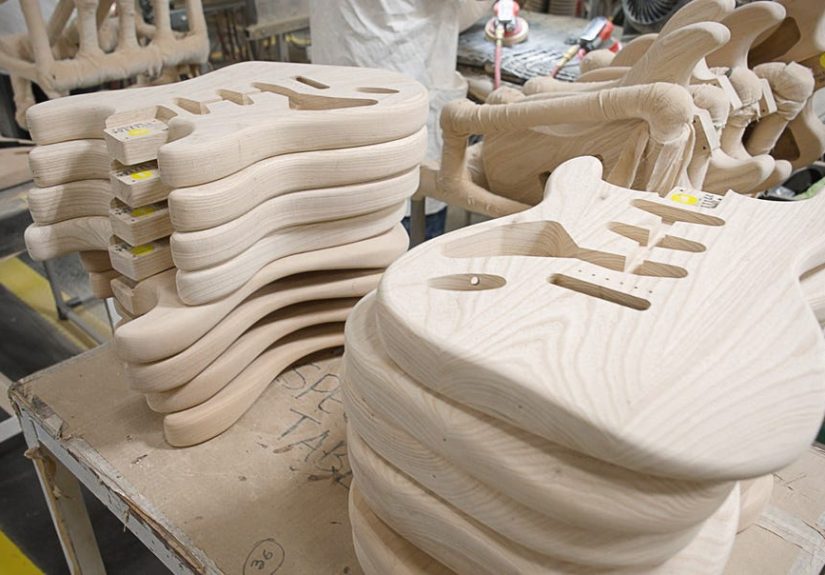
Once the body blank is ready, the Stratocaster shape begins to emerge. In modern production, precision machinery such as CNC equipment helps cut bodies with remarkable consistency. This does not mean the guitar is “made by robots” in some soulless sci-fi warehouse where tone is illegal. It means Fender uses machines for repeatable accuracy, especially on critical dimensions like neck pockets, pickup cavities, bridge placement, and body outlines.
The Stratocaster body is not a simple rectangle with strings attached. Its design includes a double cutaway, rounded edges, a belly contour on the back, and a forearm contour on the front. These curves are not just for beauty. They help the guitar sit comfortably against the body, whether the player is standing under stage lights or sitting on the edge of a bed trying to nail a riff for the 47th time.
Routing is another important step. The body needs cavities for pickups, wiring, controls, the output jack, the tremolo system, and the neck pocket. The routes must be clean and accurate because the guitar’s hardware has to fit correctly. A sloppy neck pocket can hurt sustain and stability. Misplaced bridge holes can create intonation headaches. A pickup cavity in the wrong place is the woodworking equivalent of putting your mailbox in the kitchen.
The Famous Stratocaster Contours
One of the Stratocaster’s great breakthroughs was comfort. Earlier solid-body guitars were often flatter and more squared off. The Stratocaster’s sculpted body made it feel more natural against the player. The front forearm contour softens the area where the picking arm rests. The back contour reduces the hard edge against the ribs and stomach. These details may sound small until you play a long rehearsal with a guitar that feels like a coffee table with strings.
Fender’s body shaping blends precision with handwork. Machines can establish the geometry, but sanding and edge work give the guitar its final feel. The difference between “technically correct” and “pleasant to hold” often lives in tiny transitions that a player may not consciously notice. The arm does not say, “Ah, yes, a finely feathered contour radius.” It simply says, “Thank you for not hurting me.”
Sanding: Where the Guitar Starts to Feel Human
After cutting and routing, sanding becomes essential. Sanding prepares the body for finish, removes tool marks, smooths edges, and refines the contours. This stage can be surprisingly labor-intensive because finish reveals everything. A tiny scratch, uneven curve, or missed edge can become obvious once color and clear coat are applied.
Good sanding is not glamorous. Nobody writes stadium rock anthems called “The 220-Grit Blues,” although perhaps someone should. But sanding is where the body starts to lose its raw block-of-wood identity and become an instrument. It is also where experienced hands matter. The goal is smoothness without flattening the personality of the shape. Too little sanding leaves roughness; too much can soften lines that should remain crisp.
Finishing: Color, Protection, and Personality
Few things make a Stratocaster more instantly recognizable than its finish. Sunburst, Olympic White, Black, Lake Placid Blue, Fiesta Red, Surf Green, Candy Apple Red, and other classic Fender colors have become part of guitar culture. Some finishes whisper vintage elegance. Others enter the room wearing sunglasses indoors.
Fender has used different finish types across its history, including nitrocellulose lacquer on many early instruments and modern urethane or polyester finishes on many contemporary models. Each finish type has its own look, feel, durability, and production requirements. Nitrocellulose is often associated with vintage-style instruments and aging character, while polyester and urethane finishes are valued for durability and consistency in modern manufacturing.
The finishing process usually involves sealing the wood, applying color, applying clear coats, and then allowing the finish to cure before polishing and buffing. This is not just cosmetic. Finish protects the wood from moisture, grime, sweat, and the general chaos of musician life. A guitar might spend one night in a climate-controlled studio and the next in a van next to a suspiciously warm burrito. Protection matters.
The Neck: Maple, Frets, and the Feel of the Handshake
The neck is the handshake of the guitar. Before a player analyzes pickups or bridge saddles, they feel the neck. The Stratocaster traditionally uses a maple neck, with either a maple fingerboard or a separate fingerboard such as rosewood on many models. Neck shape has varied over the decades, from rounded profiles to V-shaped vintage profiles to modern “C” shapes designed for broad comfort.
Manufacturing the neck involves shaping the maple, cutting the truss rod channel, installing the truss rod, preparing the fingerboard, slotting and installing frets, shaping the headstock, drilling tuner holes, sanding, finishing, and final fretwork. The truss rod is crucial because it allows adjustment of neck relief, helping the guitar play properly under string tension.
Frets are small metal strips, but they have a huge impact on playability. If the frets are uneven, the guitar may buzz, choke on bends, or feel rough. Leveling, crowning, polishing, and dressing fret ends help create a neck that feels comfortable and accurate. Rounded fingerboard edges, found on various modern Fender models, can give the neck a played-in feel, as if the guitar has already learned your favorite chords and forgiven your worst ones.
The Bolt-On Neck: Practical Genius
One of Leo Fender’s great ideas was the bolt-on neck. Traditional guitar construction often involved glued-in necks, which can be beautiful and effective but harder to repair or replace. The bolt-on design made production more efficient and service easier. If a neck was damaged or needed adjustment beyond normal setup, it could be removed. This modular thinking is part of Fender’s genius: build a great instrument, but make it practical enough for working musicians.
The neck pocket and neck heel must fit precisely. Too loose, and the connection may feel unstable. Too tight in the wrong way, and assembly becomes difficult or finish can crack. A well-fitted Strat neck contributes to tuning stability, sustain, and that solid feeling players expect when they dig into a chord.
Pickups: Magnets, Wire, and That Strat Sparkle
The classic Stratocaster pickup layout uses three single-coil pickups: neck, middle, and bridge. Each pickup contains magnets and a coil of wire. Many Fender-style pickups use alnico magnets, a material family named from aluminum, nickel, and cobalt. The details vary by model, but the goal is always musical: capture string vibration and turn it into an electrical signal that can be shaped by controls and amplified.
The neck pickup is often warm and rounded, excellent for bluesy lines and clean melodies. The middle pickup has a balanced, clear voice. The bridge pickup is brighter and sharper, useful for cutting rhythm parts, surf tones, country snap, and solos that need to politely kick the door open. The in-between selector positions, using two pickups together, produce the famous “quack” that has powered funk rhythms and glassy clean parts for decades.
Pickup height matters. Raise a pickup too close to the strings and it can sound harsh or even interfere with string vibration. Lower it too far and the signal may become weak. Fender setup work often involves balancing output and tone across all three pickups so switching positions feels musical rather than like changing radio stations during a thunderstorm.
The Pickguard and Electronics Assembly
One clever part of the Stratocaster design is that much of the electronics assembly is mounted to the pickguard. The pickups, volume control, tone controls, selector switch, and wiring can be prepared as a unit before installation. This makes production and service more efficient. It also helped create one of the most mod-friendly guitars ever built.
The control layout is familiar: one master volume knob, two tone knobs, and a blade selector switch. Different models wire these controls in slightly different ways, but the basic idea remains simple. The player can shift from warm neck tones to bright bridge attack quickly, without needing an engineering degree or a flashlight.
Once the electronics are installed, connections are checked, the output jack is mounted, and the pickguard is secured. A good wiring job should be reliable, quiet, and clean. The best electronics do their job without drama. Nobody wants their guitar to crackle during the emotional peak of a solo unless the song is literally about faulty solder joints.
The Tremolo System: Actually Vibrato, But Let’s Not Start a Fight
The Stratocaster’s bridge is famously called a synchronized tremolo, although technically it creates vibrato because it changes pitch, not volume. Guitarists have mostly agreed to keep calling it tremolo because tradition is powerful and musicians already have enough arguments about string gauges.
The bridge uses saddles, a bridge plate, a tremolo block, springs in the rear cavity, and an arm that lets the player raise or lower pitch. The system must balance string tension against spring tension. When adjusted well, it allows expressive dips, shimmers, and bends while returning close to pitch. When adjusted poorly, it can become a tuning gremlin with chrome hardware.
Modern Stratocaster models may use vintage-style six-screw bridges or two-point tremolo systems, depending on the series. Each has its fans. The six-screw design has vintage appeal and familiar feel, while two-point systems can offer smoother movement and modern tuning performance.
Final Assembly: Hardware Meets Wood
At final assembly, the Stratocaster becomes a complete instrument. Tuners are installed on the headstock. The neck is attached to the body. The bridge is mounted and adjusted. The pickguard and electronics go in. The output jack, strap buttons, back plate, string tree, knobs, switch tip, and other small parts are added. Every screw matters, because guitars are basically tiny cities held together by hardware and hope.
Strings are installed, and the instrument begins its first real conversation with tension. This is where setup work begins. The neck relief is checked and adjusted with the truss rod. String height, or action, is set at the bridge saddles. Intonation is adjusted so notes stay accurate up the neck. Pickup height is balanced. The nut slots are inspected. Tremolo spring tension is adjusted. The guitar is tuned, stretched, played, and checked again.
A great setup can make a good guitar feel excellent. A poor setup can make an excellent guitar feel like it is arguing with you. Fender’s final quality control focuses on playability, electronics, finish, and overall consistency. The goal is not just that the guitar looks like a Stratocaster, but that it behaves like one.
Why Human Craft Still Matters
Modern Fender manufacturing combines computer-guided precision with human craft. Machines can cut with accuracy, but experienced builders judge feel, finish, fretwork, and the subtle details that make an instrument inviting. The best guitars are not merely assembled; they are interpreted by people who understand what players expect when they pick one up.
This matters because the Stratocaster is both standardized and personal. Two Strats can share the same basic design yet feel different because of wood weight, neck shape, fret finish, pickup voicing, setup, and tiny manufacturing variations. Players often describe a great Strat as “alive,” meaning it responds immediately and encourages them to keep playing. That feeling is difficult to measure, but easy to recognize.
From Factory Floor to Stage Lights
Once complete, a Stratocaster may go to a music store, a touring guitarist, a bedroom player, a studio professional, a collector, or a beginner buying their first serious instrument. That range is part of the Strat’s magic. It can be a student guitar, a working tool, a custom shop showpiece, or a road-worn companion with buckle rash and stories.
The design has also proven endlessly adaptable. Fender and Squier offer Strat-style guitars across many price points, with variations in pickups, neck profiles, finishes, bridges, fret sizes, electronics, and tonewoods. Some players want vintage accuracy. Others want noiseless pickups, locking tuners, flatter fingerboards, humbuckers, or modern switching. The Stratocaster can handle all of it without losing its identity.
What Makes a Stratocaster Feel Like a Stratocaster?
The answer is not one part. It is the system. The contoured body changes how the guitar sits. The 25.5-inch scale length contributes to string tension and snap. The bolt-on maple neck gives a direct, lively feel. The three single-coil pickups provide a wide palette of tones. The tremolo bridge adds expressive movement. The control layout invites fast changes. The body shape makes high frets accessible. The finish gives personality. The setup determines whether all that potential becomes music or mild frustration.
That is why the Stratocaster has survived for more than seven decades. Fender did not simply make a guitar that looked interesting. It made a platform. A Strat can be clean and polite in a soul band, rude and overdriven in a garage, shimmering in surf music, elegant in blues, sharp in funk, atmospheric in rock, or experimental in a studio full of pedals. It is a blank canvas with a very strong accent.
The Beauty of Turning Wood Into Sound
The phrase “from a block of wood” makes the process sound simple, but it is really a transformation. A rectangular blank becomes a sculpted body. A strip of maple becomes a neck. Metal becomes frets, saddles, tuners, and strings. Magnets and wire become pickups. Finish becomes identity. Setup becomes feel. The final guitar is part engineering, part woodworking, part electronics, and part musical invitation.
The Stratocaster’s genius is that none of this feels precious when you play it. It does not demand white gloves or a museum badge. It wants to be plugged in. It wants a clean amp, a loud amp, a fuzz pedal, a practice room, a stage, a couch, a garage, or a song that barely exists yet. Fender crafts the Stratocaster carefully so the player can forget the construction and chase the music.
Personal Experiences and Player Impressions: Living With a Stratocaster
Spend time with a Stratocaster and you quickly learn that its reputation is not just history-book glitter. The first thing many players notice is the comfort. The body contours are not marketing poetry; they genuinely make long playing sessions easier. Sitting down, the guitar balances naturally. Standing with a strap, the upper horn helps keep the instrument stable. Compared with boxier solid-body designs, the Strat feels less like furniture and more like something designed by people who understood shoulders.
The second experience is the neck. A good Strat neck can make practice feel less like homework and more like exploration. Chords sit cleanly under the fingers, bends have a familiar resistance, and the longer scale length gives the strings a crisp response. Beginners may not know the technical reasons, but they often feel the result: the guitar reacts clearly. If you press too softly, it tells you. If you dig in, it answers back. It is honest, sometimes brutally so, like a music teacher who owns too many black T-shirts.
The pickup selector is where the real fun begins. On the neck pickup, a Strat can sound round, smooth, and vocal, perfect for slow blues lines or clean melodies. The bridge pickup can be bright enough to cut through a mix like a flashlight in a fog machine. The in-between positions are where many players fall in love. That hollow, glassy, slightly nasal “quack” is almost impossible to confuse with anything else. Play a tight funk rhythm there and suddenly your right hand thinks it has a record deal.
The tremolo system adds another layer of personality. Used gently, it creates a shimmer that can make simple chords sound cinematic. Used aggressively, it can dive, wobble, and scream. It also teaches players respect. If the bridge is not set up well, or if the strings are old, or if the nut slots are not smooth, tuning can become a tiny soap opera. But when everything is adjusted properly, the Strat tremolo is expressive in a way that feels connected to the hand rather than pasted onto the guitar.
Owning or playing a Strat also teaches you how much setup matters. Two guitars with similar specs can feel different depending on action, neck relief, fret condition, pickup height, and string gauge. A Strat with pickups too high may sound harsh or pull strangely on the strings. A Strat with action too low may buzz. A Strat with a well-cut nut and balanced bridge can feel effortless. This is why many experienced players recommend judging a Strat not only by the brand on the headstock, but by how it feels after a proper setup.
There is also an emotional side. A Stratocaster invites modification. Players swap pickups, change pickguards, adjust tremolo springs, block the bridge, add locking tuners, experiment with wiring, or leave everything stock and proudly do nothing. The guitar seems to say, “Make me yours.” That is a huge part of its long life. Fender crafted a design strong enough to remain recognizable and flexible enough to evolve with every generation.
In the end, the best Stratocaster experience is not about copying a famous player. It is about discovering how the guitar responds to your own hands. The same instrument that can whisper clean chords can snarl through overdrive, sparkle through reverb, or bark through a small tube amp turned up just enough to annoy the neighbors. From a simple block of wood, Fender creates a tool that becomes personal only when someone plays it. That is the real magic: the factory builds the Stratocaster, but the player finishes the story.
Conclusion
The Fender Stratocaster remains iconic because it combines smart engineering, comfortable woodworking, reliable production, musical electronics, and timeless style. From the selection of alder or ash to the shaping of the contours, from sanding and finishing to wiring and final setup, every stage contributes to the guitar’s identity. It is not just a famous shape. It is a carefully built system designed to serve the player.
More than 70 years after its debut, the Stratocaster still feels fresh because its core idea is simple and powerful: make a guitar that is comfortable, versatile, repairable, expressive, and ready for real music. Fender starts with wood, metal, magnets, wire, and finish. The player adds the dangerous ingredient: imagination.






 Close
Close