
Table of Contents >> Show >> Hide
- Start by Choosing the Right Kind of Waterfall
- Plan the Waterfall Like a Designer, Not a Demolition Crew
- Materials You Will Need
- How to Build a Waterfall Step by Step
- 1. Mark the shape on the ground
- 2. Excavate the basin and stream
- 3. Shape the berm if needed
- 4. Add underlayment and liner
- 5. Install the reservoir and pump
- 6. Build the waterfall structure with rocks
- 7. Use foam and gravel to control the water path
- 8. Test the flow before finishing the edges
- 9. Disguise the construction and blend the landscape
- How Big Should a Backyard Waterfall Be?
- Common Mistakes That Make Waterfalls Look Weird
- Waterfall Safety, Maintenance, and Long-Term Success
- Is It Better to DIY or Hire a Pro?
- Final Thoughts on Building a Backyard Waterfall
- Experience: What It Feels Like to Build and Live With a Backyard Waterfall
- SEO Tags
Want your backyard to sound like a peaceful mountain retreat instead of a place where the neighbor’s leaf blower wins every argument? Building a waterfall can do that. A well-made backyard waterfall adds movement, soft sound, and a focal point that makes even a modest garden feel intentional. The good news is that most homeowners are not building Niagara. They are building a recirculating water feature that looks natural, fits the yard, and does not require a full engineering degree or a sherpa team.
This guide walks through how to build a waterfall the smart way, with practical planning, realistic materials, and step-by-step advice for a DIY pondless waterfall or a waterfall that spills into a small pond. Along the way, you will learn what actually matters: slope, liner placement, pump setup, stone arrangement, safe electrical work, and maintenance that does not turn your dreamy stream into a slimy science project.
Start by Choosing the Right Kind of Waterfall
Before you dig a single shovel of dirt, decide what you are building. Most residential waterfalls fall into two categories:
Pondless waterfall
This style sends water down a short stream or rock spillway into a hidden underground reservoir. The water disappears into gravel, gets collected in the basin, and is pumped back to the top. A pondless waterfall is usually the easiest option for beginners because it takes less space, uses less exposed water, and tends to be simpler to maintain.
Waterfall with a pond
This version spills into an open pond at the bottom. It can look spectacular, especially if you want fish, lilies, or a fuller water garden feel. It also means more planning, more visible water, and usually more maintenance. Gorgeous? Yes. Slightly more dramatic? Also yes.
If your goal is soothing sound, a natural look, and a project that does not take over the entire backyard, a pondless waterfall is often the best place to start.
Plan the Waterfall Like a Designer, Not a Demolition Crew
The success of a backyard waterfall is decided long before the pump is plugged in. The best projects feel as if they belong in the landscape. The worst ones look like a pile of rocks arguing with a hose.
Pick a location with a natural advantage
A gentle slope is your best friend because waterfalls are happier when gravity helps. If your yard is flat, you can still build one by creating a berm or raised mound. The key is to make the elevation change look intentional rather than like someone buried a small car under a hill of mulch.
Think about where you will enjoy it
Place the waterfall where you can hear and see it from a patio, deck, kitchen window, or seating area. A water feature hidden behind a shed is like buying concert tickets and standing in the parking lot.
Check utilities and drainage first
Always have underground utilities marked before digging. Also pay attention to drainage and runoff. Water should stay inside the recirculating system, not wander toward your house foundation, a neighbor’s yard, or the place where your future self will absolutely regret it.
Avoid root-heavy trouble spots
Large tree roots can complicate excavation, puncture your patience, and steal the clean lines you need for a good liner installation. Build near trees only if you are prepared for extra digging and ongoing leaf cleanup.
Materials You Will Need
The exact shopping list depends on the size and style of your project, but most DIY backyard waterfalls need the following:
- Pond or waterfall pump sized for the height and desired water flow
- Flexible tubing or PVC pipe compatible with the pump
- EPDM pond liner or a comparable water-safe flexible liner
- Protective underlayment or landscape fabric beneath the liner
- Reservoir basin or vault for a pondless waterfall
- Large spill rocks, flat stones, cobbles, and gravel
- Pond foam to direct water over rocks instead of under them
- Shovel, level, wheelbarrow, gloves, and utility knife
- Filter components if your design includes an open pond
- Outdoor-rated, GFCI-protected electrical connection
You may also want edging plants, accent lighting, and extra gravel for a more finished look. Trust me, “I’ll make it pretty later” is how half of all landscaping projects become permanent work in progress.
How to Build a Waterfall Step by Step
1. Mark the shape on the ground
Use a garden hose, rope, or marking paint to outline the stream, waterfall drops, and basin area. Step back often and look at the shape from several angles. Curves usually look more natural than straight channels. A backyard waterfall should feel like it found its own route downhill.
2. Excavate the basin and stream
Dig the lower basin or reservoir first, then shape the stream and waterfall shelves moving uphill. Create stable ledges where spill rocks will sit. If you are building a pondless waterfall, your reservoir needs to be deep and wide enough to hold water, the pump vault, and supporting material above it. If you are building into a pond, dig plant shelves and vary the depth for a more natural edge.
Check your levels as you go. The top spillway should be level from side to side, or the water will favor one edge and make the whole feature look crooked. Water is very honest. It will expose bad grading faster than your most judgmental relative.
3. Shape the berm if needed
If the yard is flat, use excavated soil to build up the area behind the upper waterfall. Pack it well. Loose soil settles later, and settling turns your carefully planned cascade into a confused trickle. Think compact, stable, and blended into the surrounding grade.
4. Add underlayment and liner
Once the excavation is complete, remove sharp stones and roots. Lay down protective underlayment or landscape fabric, then install the liner over the entire water path and basin. Keep the liner in one continuous run whenever possible. Fewer seams mean fewer future headaches.
Leave extra liner at the edges. New builders often trim too early, then discover they needed that extra material after adjusting rocks. In landscaping, cutting late is wisdom. Cutting early is optimism.
5. Install the reservoir and pump
For a pondless waterfall, place the reservoir components, basin, or pump vault according to the product design. Set the pump where it can be accessed later for service. Run the tubing from the pump to the top of the waterfall, hiding it under the liner edge, within the berm, or beside the stream where it can be disguised with rock and gravel.
For a pond waterfall, set the pump in a protected area where debris is less likely to clog it. If your setup uses a mechanical or biological filter, install it where cleaning will not require acrobatics.
6. Build the waterfall structure with rocks
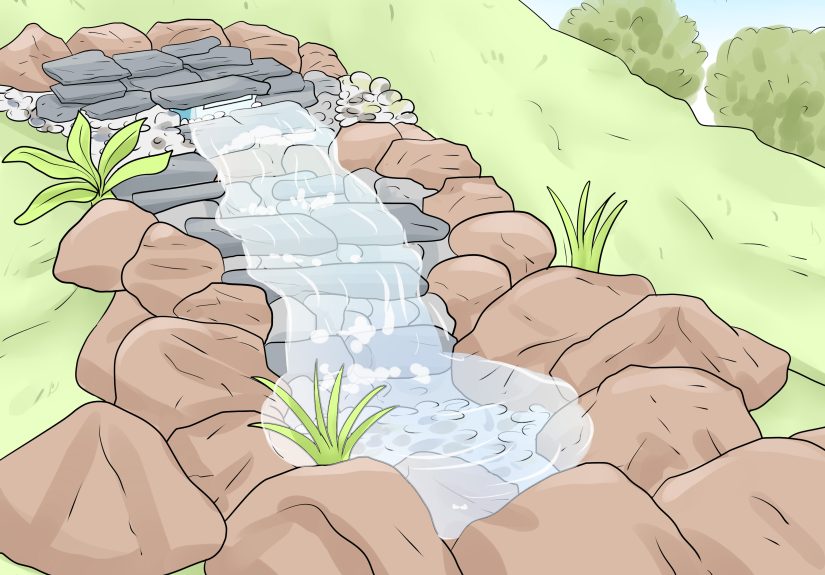
This is where the magic happens. Start with your largest structural stones first. Set the spill stones firmly on compacted soil, gravel, or supporting rock so they do not wobble. Use flat or gently angled stones to create visible lips where water can sheet over the edge.
Then stack supporting rocks at the sides and beneath the spill points. Aim for a mix of heights, widths, and textures. A natural waterfall usually has some broader, slower sections and some narrower, chattier drops. That variety creates better sound and a more authentic look.
Do not make every drop identical. Nature rarely builds in copy-paste mode.
7. Use foam and gravel to control the water path
One of the biggest secrets to a good-looking waterfall is making sure the water travels over the rocks, not behind them. Pond foam can be tucked into gaps under spill stones to block hidden escape routes. Gravel and smaller stones help brace larger rocks and hide the liner.
At the outer edges, make sure the liner rises higher than the water level so the stream does not leak sideways into the soil. This matters a lot. If your waterfall mysteriously loses water, the usual suspects are edge leaks, hidden low spots, or water sneaking behind stonework.
8. Test the flow before finishing the edges
Fill the basin, start the pump, and watch what the water does. This is your editing phase. You may need to adjust rock angles, add foam, shift gravel, or slightly raise one side of a spill stone. Small changes can dramatically improve the look and sound.
If the water gushes like a fire drill, dial it back. If it barely whispers, increase the flow or refine the channel. The goal is a balanced, convincing cascade, not a backyard emergency scene.
9. Disguise the construction and blend the landscape
Once the hydraulics are working, hide exposed liner with gravel, river rock, edging plants, or moss-friendly stones. Add plant material around the waterfall so it looks anchored into the garden. Ornamental grasses, ferns, creeping groundcovers, and moisture-loving perennials work especially well around water features.
This finishing phase is what separates “a pile of materials with water on it” from “wow, that looks like it belongs there.”
How Big Should a Backyard Waterfall Be?
The best size depends on your yard, budget, and patience. A compact waterfall beside a patio can be beautiful without taking over the whole landscape. A longer stream with multiple drops creates a stronger natural effect but requires more liner, more rock, and more time.
A smart beginner move is to build a smaller waterfall with room to expand later. It is far better to finish a modest project beautifully than to start a giant one and end up with an expensive archaeological dig in the backyard.
For example, a compact pondless waterfall can become the focal point of a side garden with just a few tiers of rock, a hidden basin, and planting around the edges. A larger yard might support a stream that bends around a seating area and ends near a fire pit or patio. The point is not size. The point is proportion.
Common Mistakes That Make Waterfalls Look Weird
- Using rocks that are too small: Tiny stones often make the feature look busy instead of natural.
- Ignoring the edges: Low liner edges are a classic cause of leaks.
- Making the stream too symmetrical: Perfectly even channels usually look artificial.
- Skipping access to the pump: Your future cleaning routine should not require removing half the waterfall.
- Overcomplicating the first build: One clean, believable drop beats five awkward ones.
- Forgetting electrical safety: Water and electricity are not a cute comedy duo.
Waterfall Safety, Maintenance, and Long-Term Success
A backyard waterfall is not hard to maintain, but it does like attention. Think of it as a stylish pet rock with a pump.
Electrical safety matters
Use outdoor-rated equipment and proper GFCI protection for the pump circuit. Keep connections dry and protected. If you are uncertain about wiring, hire a licensed electrician. Saving money is great. Becoming a cautionary tale is not.
Keep the pump clean
Leaves, sludge, and gravel bits can reduce flow and stress the pump. Check it regularly, especially in fall or after storms. A clogged pump can turn your dramatic cascade into a sad dribble.
Top off water as needed
Even recirculating systems lose water to evaporation and splash. Monitor levels, especially in hot weather. If the pump runs dry, it may burn out faster than your enthusiasm on a humid afternoon.
Manage algae naturally
If you have an open pond, too much sun and excess nutrients can encourage algae. More plants, less organic debris, and healthy circulation all help. Shade, filtration, and regular cleanup go a long way.
Winterize if your climate requires it
In colder regions, you may need to shut down the waterfall, remove the pump, or protect exposed plumbing from freezing. In milder climates, year-round operation is often possible with basic maintenance.
Is It Better to DIY or Hire a Pro?
DIY is a great option for a small to medium backyard waterfall, especially a pondless design. Many homeowners can handle excavation, liner installation, rock placement, and planting with patience and a decent weekend schedule.
Hire a professional if your design involves major grading, retaining walls, complex electrical work, heavy machinery, or a large formal pond with filtration and fish. Also call a pro if your yard has drainage issues, challenging slopes, or the kind of soil that laughs at shovels.
There is no shame in outsourcing the part that requires equipment, permits, or a chiropractor on standby.
Final Thoughts on Building a Backyard Waterfall
Learning how to build a waterfall is really about learning how water wants to move. The most successful backyard waterfalls are not the fanciest. They are the ones that are planned well, built with stable materials, and adjusted patiently until the flow looks and sounds right.
If you choose the right location, create a reliable basin, install the liner carefully, and shape the rocks with intention, you can build a water feature that looks custom and feels calming for years. A waterfall adds more than motion to a landscape. It changes the mood of the whole space. Suddenly the yard feels more private, more polished, and a lot more enjoyable.
And once it is finished, you get the deeply satisfying privilege of pretending you casually own a miniature mountain stream. That is a pretty solid upgrade for any backyard.
Experience: What It Feels Like to Build and Live With a Backyard Waterfall
There is a difference between reading about how to build a waterfall and actually spending a weekend shaping dirt, moving rocks, and trying to convince one stubborn spill stone to behave. On paper, the project sounds straightforward: dig the basin, lay the liner, place the pump, stack the rocks, turn on the water, enjoy instant serenity. In real life, it is a little more like a boot camp run by gravity.
The first experience most people have is surprise at how much the layout matters. A waterfall can look perfect in your head and completely wrong once it is outlined on the ground. What seemed generous in size might suddenly look tiny. What looked natural in a sketch might feel too straight once you see it beside a patio or fence. That is why one of the most valuable parts of the process is simply standing back and staring at the shape before you dig. Not glamorous, but extremely effective.
Then comes the excavation phase, which is usually where optimism meets physics. Digging is exciting for the first twenty minutes. After that, it becomes a negotiation between your plans, your soil, and your lower back. But it is also strangely satisfying. As the basin and stream start taking form, the feature becomes real. You can see where the water will move, where the sound will come from, and how the entire space will change once the waterfall is running.
Rock placement is the most creative part and, for many builders, the most rewarding. It feels less like construction and more like sculpture. A slight twist of a flat stone can turn a weak dribble into a beautiful sheet of water. A handful of gravel can brace a rock just enough to make the spill look effortless. This is also the stage where patience pays off. The best waterfalls are usually adjusted again and again until the flow feels natural. Nobody nails every stone on the first try, and that is normal.
Once the pump turns on for the first full test, the whole project changes personality. Suddenly it is no longer a landscape project. It is an experience. The movement catches the eye. The sound softens traffic noise, neighbor noise, and the endless soundtrack of modern life. Even a small waterfall can make a patio feel more private and more finished. That is one of the biggest surprises for first-time builders: the visual impact is great, but the sound is what really transforms the space.
Living with a backyard waterfall after the build is finished brings its own kind of pleasure. You start to notice small rituals. Morning coffee sounds better next to moving water. Evening light on wet stone looks more dramatic than it has any right to. Birds show up. The garden feels alive. Guests wander over and immediately ask how it was built, which gives you the chance to act humble while secretly hoping they appreciate the heroic amount of rock-moving involved.
Of course, there are lessons too. You learn quickly that splash pattern matters. You learn that leaves will collect in places you did not expect. You learn that pumps like to stay clean and that liner edges deserve respect. But these are manageable lessons, and they are part of the charm. A waterfall is not a static decoration. It is an active feature that asks for occasional attention and rewards it generously.
In the end, the experience of building a waterfall is part landscape design, part problem-solving, and part personal victory. It asks for effort, but it gives something back every day: movement, sound, atmosphere, and that rare home-improvement reward of making a space feel calmer than it did before. Few DIY projects manage to look impressive, feel peaceful, and make you proud every time you hear them working. A backyard waterfall does all three.






 Close
Close