
Table of Contents >> Show >> Hide
- Why Dog Urine Smell Is So Hard to Remove
- Before You Start: Common Cleanup Mistakes to Avoid
- Trick #1: Blot Fast and Rinse the Fresh Spot the Right Way
- Trick #2: Use an Enzymatic Cleaner Like You Mean It
- Trick #3: Use Baking Soda for Lingering Odor, and Reserve Stronger Helpers for Stubborn Cases
- Trick #4: Find Hidden Spots and Deal with the Padding if the Smell Keeps Coming Back
- How to Prevent Dog Urine Smell from Coming Back
- Real-World Experiences Dog Owners Commonly Have with Carpet Odor
- Final Thoughts
Dog urine in carpet has a special talent: it can vanish from sight while leaving behind a smell that barges into the room like it pays rent. One minute your carpet looks innocent. The next minute your living room smells like a very small, very determined wolf claimed it as a personal landmark.
The good news is that you do not need magic, a hazmat suit, or the world’s saddest scented candle collection. You need the right method. If you clean dog urine the wrong way, you can spread it deeper into the carpet, lock in the odor, or accidentally invite your dog back for a sequel. If you clean it the right way, though, you can remove both the stain and the smell without turning your home into a chemistry experiment.
This guide breaks down four easy tricks that actually help remove dog urine smell from carpet, plus a few smart prevention tips so you are not stuck repeating the same cleanup routine every weekend. Because once is an accident. Five times is your carpet filing a complaint.
Why Dog Urine Smell Is So Hard to Remove
Dog urine odor is stubborn because it is not just sitting on the surface. Fresh urine can soak past the carpet fibers, into the backing, and sometimes all the way into the padding underneath. That means the visible spot on top may be only part of the problem. If the deeper layers stay damp or contaminated, the smell can return on humid days, after vacuuming, or whenever the room warms up.
Another issue is that dogs do not experience odor the way humans do. If there is even a trace of the old accident left behind, your dog may still detect it and decide that the same spot is a perfectly reasonable bathroom choice. In other words, if your carpet still smells like a toilet to your dog, your dog may keep treating it like one.
That is why the best cleanup plan does two things: it removes the visible mess, and it neutralizes the odor deep enough that your dog loses interest in the area.
Before You Start: Common Cleanup Mistakes to Avoid
Before getting into the four tricks, let’s save your carpet from the usual “helpful” mistakes.
Do not rub the stain. Rubbing pushes urine deeper into the fibers and can spread the spot outward. Blotting is slower, but it is far more effective.
Do not use a steam cleaner on fresh urine odor. Heat can set the stain and make the smell more difficult to remove. Save the dramatic heat treatment for your leftovers, not your carpet.
Do not over-wet the area. Soaking the carpet with too much homemade solution can drive moisture deeper into the backing and padding.
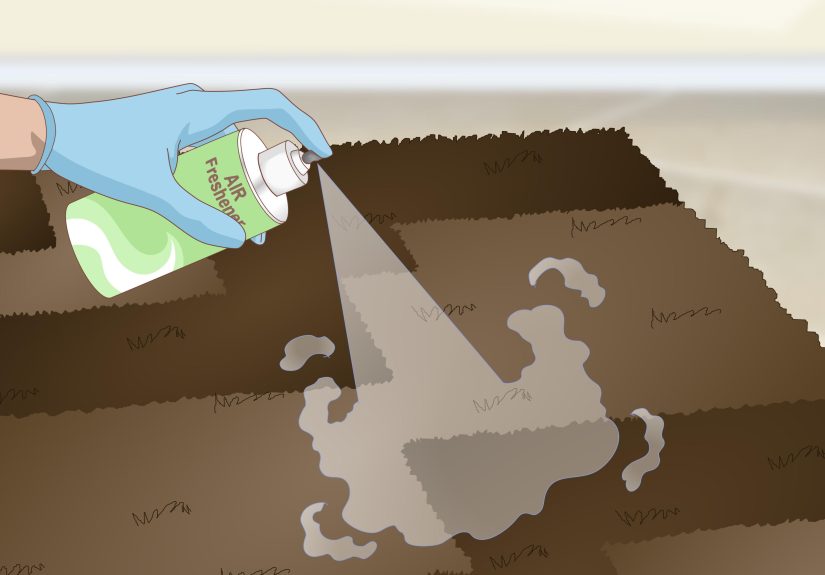
Do not rely only on perfume-heavy cleaners. If a product only masks odor instead of breaking down urine residue, the smell often comes back.
Do not ignore sudden accidents. If a previously house-trained dog suddenly starts peeing indoors, the problem may involve stress, marking, aging, or a medical issue such as a urinary problem. Clean the carpet, yes. But also pay attention to the dog.
Trick #1: Blot Fast and Rinse the Fresh Spot the Right Way
If the accident is still wet, speed matters. The faster you remove liquid, the less chance it has to soak into the padding and turn into a long-term odor problem.
What to do
Place paper towels or a clean white cloth over the wet area and press firmly. You can stand on the towels for extra pressure if needed. Replace them and repeat until the spot is only slightly damp. Think “press and lift,” not “scrub like you are trying to erase a crime scene.”
After that, lightly rinse the area with a small amount of cool water and blot again. This step helps dilute any remaining urine near the surface. Keep the rinse modest. The goal is to help lift residue, not to flood the carpet and create a swamp under the fibers.
If the accident happened on an area rug or a thin carpet, place towels underneath if possible so the moisture does not migrate farther down. And always work from the outside of the stain toward the center so you do not widen the mess.
Why it works
This first pass removes as much urine as possible before the smell has a chance to settle in. It also reduces how hard your next cleaning step has to work. A cleaner applied to a soaked carpet has to fight both the odor and the puddle. A cleaner applied after careful blotting can focus on the residue that actually matters.
Trick #2: Use an Enzymatic Cleaner Like You Mean It
If there is one step that deserves star billing, it is this one. An enzymatic cleaner for dog urine is the gold standard because it is designed to break down the organic compounds causing the smell, not just cover them with a floral fragrance and false confidence.
How to use it
Choose a pet-specific enzyme cleaner labeled for urine odor and carpet use. Follow the product directions exactly. That part matters. Some enzyme cleaners need the area to stay damp for a certain amount of time so the enzymes can keep working. Others are meant to be blotted after a short dwell time.
Apply enough cleaner to reach the same depth as the original urine. That sounds obvious, but it is where people often go wrong. If the urine soaked into the carpet backing and you only mist the surface, you are basically giving the odor a tiny, scented hat.
Let the product sit for the recommended time. Then blot with a clean cloth and allow the area to air-dry thoroughly. Keep pets away while it dries so curious paws, noses, or tongues do not interfere with the cleanup.
Why it works
Enzymatic cleaners target the compounds that keep pet urine odor hanging around. They are also useful because dogs may continue to mark or revisit spots that still carry even faint scent traces. A proper enzyme treatment helps remove that “come back here later” message from the carpet.
If the smell is strong or the stain is older, do not be surprised if you need a second application. Set-in urine is rarely a one-swipe fairy tale.
Trick #3: Use Baking Soda for Lingering Odor, and Reserve Stronger Helpers for Stubborn Cases
Once the main cleaning step is done and the carpet is nearly dry or fully dry, baking soda can help absorb leftover odor. This is the easiest trick in the bunch, and it is popular for a reason: it is inexpensive, simple, and less dramatic than going full “industrial carpet emergency.”
How to use baking soda
Sprinkle a thin, even layer over the affected area. Let it sit for several hours or overnight, then vacuum thoroughly. If the odor is mild, this may be enough to freshen the carpet after an enzyme treatment. If the odor is more stubborn, repeat the process once more before deciding the carpet hates you personally.
When to try a stronger follow-up
If odor still lingers after blotting, enzyme treatment, and baking soda, a hydrogen peroxide-based carpet-safe cleaner may help. These products can reduce stubborn odors, but they should be used carefully and always tested first on a small hidden area to check for discoloration.
This is also where DIY advice often gets noisy. Some homeowners use diluted vinegar solutions, and that can help in some situations. Still, enzyme cleaners are generally the better first choice for dog urine because they are designed for the job. If you experiment with any DIY solution, use it sparingly, avoid over-wetting the carpet, and make sure the area dries completely.
Why this trick matters
Sometimes the stain is gone but the room still smells faintly “off.” That is where absorbent deodorizers and careful follow-up treatments shine. They do not replace a real urine cleaner, but they can finish the job and keep your carpet from smelling like an apology.
Trick #4: Find Hidden Spots and Deal with the Padding if the Smell Keeps Coming Back
If you have cleaned one visible accident and the room still smells like dog pee, there are two likely reasons. Either you missed another spot, or the urine reached deeper than you thought.
How to find hidden urine spots
Use your nose first. Then use a black light or UV light in a dark room to check for dried urine stains you cannot see in normal lighting. These hidden spots are common in corners, near furniture, around table legs, and along the same paths your dog uses every day.
What to do about deep odor
If urine soaked into the carpet padding, surface cleaning may not be enough. You may need a portable extraction machine, a deeper carpet cleaning treatment, or professional help. In serious cases, parts of the padding may need to be replaced. That is not the glamorous answer, but it is often the honest one.
A persistent smell after repeated cleaning is a clue that the odor source is living below the fibers. If you only clean the top, you are treating the symptom, not the root problem.
How to Prevent Dog Urine Smell from Coming Back
Cleaning the carpet is only half the battle. Preventing repeat accidents is what keeps your home from becoming a rotating schedule of blotting, spraying, and pretending guests “probably don’t notice.” They notice.
Watch for the reason behind the accident
Puppies may simply be learning. Senior dogs may need more frequent bathroom breaks. Some dogs mark when they are stressed, excited, or reacting to changes in the home. Others may have a medical reason for the accidents.
If your dog was reliably house-trained and suddenly starts peeing indoors, schedule a veterinary visit. Carpet cleaner is great, but it is not qualified to diagnose a urinary tract problem.
Make the old accident zone less interesting
After the area is truly clean, rearrange the space a little if you can. Move a chair, place a washable rug over the spot, or use the area for a different activity. Dogs often return to familiar patterns, so changing the setup can help break the routine.
Reward the right bathroom behavior
Take your dog out on a consistent schedule and reward outdoor elimination right away with praise, treats, or both. The faster your dog connects the correct location with a positive result, the better your odds of keeping the carpet out of the conversation.
Real-World Experiences Dog Owners Commonly Have with Carpet Odor
One of the most relatable experiences with dog urine smell in carpet is thinking the problem is solved because the stain looks gone, only to have the odor reappear a day later. This happens all the time. A dog owner blots the mess, sprays a cleaner, opens a window, and feels victorious. Then the next afternoon, when the room warms up, the smell returns like a rude encore. Usually that means the urine reached deeper than expected or the first cleaner only masked the odor.
Another common experience happens with puppies. A new puppy has one accident in the corner of the family room, and the owner cleans it quickly. But a few days later, the puppy goes back to the same general area. The owner assumes the puppy is being stubborn. In reality, the dog may still smell trace residue that people cannot detect. Once the area gets a full enzyme treatment, the repeat offense often stops. It is not rebellion. It is just a much better nose than yours.
Owners of senior dogs often describe a different kind of frustration. Their older dog may have been perfectly house-trained for years, then suddenly start having occasional indoor accidents. The first instinct is usually to buy stronger cleaning products. But many people find that the bigger breakthrough comes after adjusting the dog’s routine: more frequent bathroom breaks, easier nighttime access outside, and a veterinary exam to rule out age-related health issues. The carpet cleanup still matters, but the long-term solution is often tied to the dog’s changing needs.
Multi-pet homes can be especially tricky. One dog has an accident, the area is only partly cleaned, and then another dog becomes interested in the same spot. Before long, one patch of carpet develops the reputation of an unofficial restroom. Owners in this situation often say the room seemed impossible to freshen until they treated every hidden spot, not just the obvious one. A black light can be surprisingly humbling in these cases. It turns a casual cleanup into a full detective episode.
There is also the classic “I used too much cleaner” experience. Many people assume that if a little spray is good, a flood of spray must be better. Unfortunately, over-wetting can push moisture into the carpet backing and padding, where it takes longer to dry and can leave the room smelling worse before it smells better. The lesson most owners learn is simple: targeted cleaning beats panic-soaking every time.
Then there are the households that try every DIY trick in the book before finally using an enzymatic cleaner. Baking soda, air freshener, vinegar mixes, scented powders, candle diplomacy, strategic denial. Sometimes those steps help a little, but owners often report the biggest difference once they switch to a pet-specific product designed to break down urine residue. It is not the most glamorous solution, but it is often the one that saves both the carpet and everyone’s patience.
The biggest shared experience, though, is relief. Real relief comes when the room smells normal again, the dog stops revisiting the area, and the carpet no longer announces old accidents every time humidity rises. That is the real win: not just covering the odor, but actually getting your house back.
Final Thoughts
If you are trying to figure out how to get dog urine smell out of carpets, the smartest plan is also the simplest one: blot fast, use an enzymatic cleaner, finish with an odor-absorbing follow-up like baking soda, and investigate hidden or deep-set spots if the smell keeps coming back.
Most carpet odor problems are fixable when you use the right process and a little patience. The secret is not using the strongest-smelling product on the shelf. It is removing the urine residue thoroughly enough that your carpet stops holding onto the smell and your dog stops treating the area like a bookmarked bathroom location.
In other words, do not fight dog urine smell with wishful thinking. Fight it with method, timing, and one very satisfying vacuum pass.






 Close
Close