
Table of Contents >> Show >> Hide
- Before You Start: What a Plaster Mold Actually Does
- Choose the Right Method First
- Tools and Materials You Will Need
- How to Mix Plaster the Right Way
- Method 1: How to Make a One-Part Open-Face Plaster Mold
- Method 2: How to Make a Two-Part Plaster Mold
- Best for
- Step 1: Study the Shape Before You Touch the Plaster
- Step 2: Embed Half the Model in Clay
- Step 3: Build the First Mold Wall
- Step 4: Add Registration Keys
- Step 5: Pour the First Half
- Step 6: Flip and Clean
- Step 7: Apply Release Between Plaster Surfaces
- Step 8: Rebuild the Mold Box and Pour the Second Half
- Step 9: Separate the Halves and Remove the Original
- Step 10: Dry the Mold Thoroughly
- Common Mistakes That Ruin Otherwise Good Molds
- Safety Tips You Should Not Skip
- Which Method Should You Use?
- Final Thoughts
- Experience Section: What Making Your First Plaster Mold Usually Feels Like
- SEO Tags
If you have ever looked at a handmade ornament, ceramic dish, candle topper, soap shape, or decorative tile and thought, “I could make ten of those if I had the right mold,” welcome to the dusty little club. Plaster mold making is one of those wonderfully practical skills that feels part art class, part kitchen science, and part tiny home-improvement project you absolutely should not do in your nicest sweater.
The good news is that making a plaster mold is not nearly as intimidating as it sounds. The better news is that you do not need a professional studio to get started. For many beginners, two approaches cover almost everything: a one-part open-face mold for flat or shallow designs, and a two-part mold for simple three-dimensional objects. Once you understand which method matches your project, the whole process becomes much less mysterious and far less likely to turn into a bucket-shaped regret.
In this guide, you will learn exactly how to make a plaster mold using two easy methods, which materials work best, how to mix plaster correctly, what mistakes to avoid, and how to keep your mold usable instead of crumbly, bubbly, or heartbreakingly fused to the original model.
Before You Start: What a Plaster Mold Actually Does
A plaster mold is a rigid negative form that captures the shape of an original object, often called a model, master, or prototype. Once the plaster hardens, you can use the mold to reproduce the same form again and again. Depending on the project, that might mean pressing soft clay into the mold, pouring slip into it, or casting another material after the mold has dried thoroughly.
Plaster is popular for mold making because it records detail well, sets fairly quickly, and, in pottery applications, remains porous enough to pull moisture from clay slip. That porosity is what makes plaster especially useful for ceramic press molds and slip-casting molds. For hobby craft projects, standard plaster of Paris can work for simple molds, but pottery plaster is often stronger and longer-lasting for repeated studio use.
Choose the Right Method First
Method 1: One-Part Open-Face Mold
This is the easiest option and the best place to start. A one-part mold works well for shallow shapes, relief designs, sprig molds, test tiles, medallions, coasters, decorative plaques, and objects with a flat back. If your piece can be pressed into or laid onto the mold without getting trapped by the shape, this method is your friend.
Method 2: Two-Part Plaster Mold
This method is better for simple three-dimensional objects such as eggs, small figurines, rounded ornaments, soap shapes, or ceramic forms that need a front and back half. A two-part mold allows you to capture more of the object, but it also asks for more patience, more planning, and a little respect for alignment. In other words, it is still beginner-friendly, but it is no longer “wing it and hope” territory.
Tools and Materials You Will Need
- Plaster of Paris or pottery plaster
- Clean water
- A mixing bucket or disposable mixing container
- A second container for measuring plaster
- Digital scale or measuring cups
- Stir stick or mixing tool
- Model or original object
- Clay for sealing edges and building parting walls
- Mold box materials, cottle boards, or a simple container
- Mold release, if needed
- Sandpaper or a craft knife for cleanup
- Dust mask or respirator, gloves, and eye protection
- Drop cloth or plastic-covered work surface
How to Mix Plaster the Right Way
Before we get into the two methods, let’s talk about the step that makes or breaks the mold: mixing. A surprising number of plaster disasters begin with one sentence: “I thought I could eyeball it.” No. No, you could not.
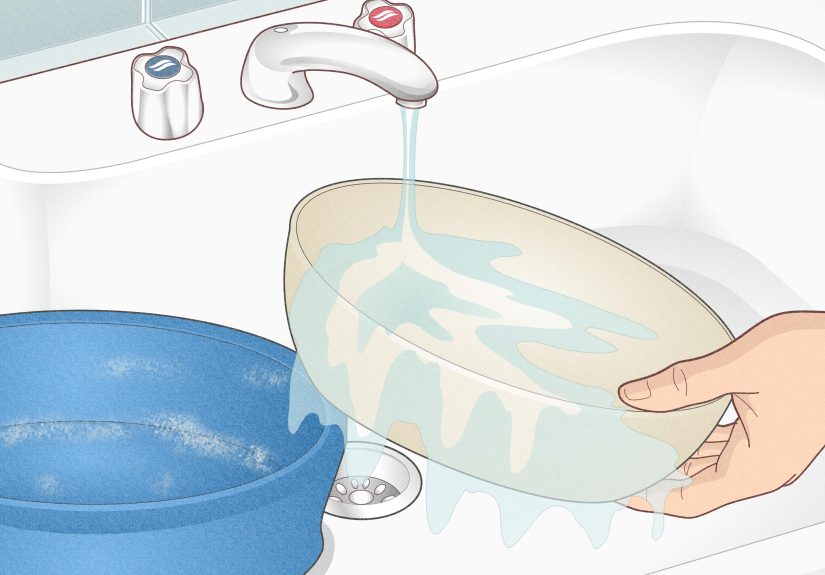
The most important rule is simple: add plaster to water, not water to plaster. Put your measured water into a clean bucket first. Then slowly sift or sprinkle the plaster into the water. This helps the powder wet evenly and reduces lumps. Let it soak, or slake, for a minute or two if you are working with a small batch, or a little longer for some products. After that, mix until the plaster becomes smooth and creamy.
For simple plaster of Paris crafts, many makers use a rough ratio of about two parts plaster to one part water by volume. For pottery plaster, ratios are usually measured by weight and vary by product. A common studio guideline is around 70 parts water to 100 parts pottery plaster by weight. Always check the manufacturer’s instructions, because different plasters set at different speeds and strengths.
Keep the batch small enough that you can pour it quickly. Avoid whipping lots of air into the mix. Tap the container gently to help bubbles rise. If your plaster looks like cottage cheese, you mixed too slowly, waited too long, or had an unclean bucket with old plaster bits in it. Old residue acts like a rude houseguest: it shows up early and makes everything set faster than expected.
Method 1: How to Make a One-Part Open-Face Plaster Mold
Best for
Flat-backed objects, relief designs, stamps, decorative pieces, sprig molds, and shallow forms with no undercuts.
Step 1: Pick a Good Original
Your model should have a clear front and a flat or nearly flat back. Avoid shapes with deep hooks, hidden recesses, or dramatic undercuts. If the plaster locks around the form, you may not get the original out without breaking something. Usually that “something” is either the mold, your model, or your mood.
Step 2: Build a Simple Mold Box
Place the model inside a shallow container or surround it with cottle boards, cardboard strips, or a small box. Leave enough room around the object for plaster thickness. For a solid, durable mold, aim for generous walls rather than paper-thin edges. If you are using clay to anchor the model, press it firmly so the piece stays put while you pour.
Step 3: Apply Release if Necessary
Some originals release easily. Others behave like they were emotionally committed to the plaster from the beginning. If your original is porous, textured, or likely to stick, apply a very thin release agent suitable for your material. Use restraint. Too much release can blur detail and leave your mold surface greasy.
Step 4: Mix and Pour the Plaster
Mix your plaster, then pour it slowly into one corner of the mold box rather than dumping it directly over the object. Let the plaster flow across the surface and around the model on its own. This reduces trapped air bubbles. Tap the sides of the box lightly to encourage bubbles to rise.
Step 5: Let It Set Completely
Do not poke it every 90 seconds like a nervous baker. Plaster warms as it sets, then begins to cool. Once it has firmed up and lost that wet sheen, leave it alone a bit longer. Early demolding is the fast lane to chipped corners and soft details.
Step 6: Remove the Mold from the Box and Release the Original
Take off the mold box walls, then carefully remove the original. Trim ragged edges with a knife while the plaster is still slightly green, or sand lightly once it is dry. Then let the mold dry thoroughly before using it. If you are using it for clay or slip, patience matters. A damp mold will not perform like a fully dried one.
Why this method works
It is fast, simple, and forgiving. It is also excellent for beginners because you can see the entire surface while you work. If you want to make multiples of a relief tile, decorative applique, or press-molded clay element, this method is the easiest way to get there without a full studio setup.
Method 2: How to Make a Two-Part Plaster Mold
Best for
Rounded or fully three-dimensional objects with a clear centerline and minimal undercuts.
Step 1: Study the Shape Before You Touch the Plaster
Find the best parting line, which is where the mold halves will separate. Usually this runs around the widest part of the object. You want each half to release cleanly. If one side wraps too far around a curve, the mold may lock onto the model. That is how a “quick project” becomes a dramatic archaeological recovery.
Step 2: Embed Half the Model in Clay
Press your object halfway into a flat bed of clay on a board, following the parting line you planned. The clay should meet the object cleanly without gaps. Smooth the seam carefully. This clay bed forms the boundary for the first mold half.
Step 3: Build the First Mold Wall
Wrap cottle boards, cardboard, or another barrier around the setup. Leave enough distance around the model so the plaster will have sturdy walls. In more advanced ceramic mold making, a common rule is to leave about 1 1/2 to 2 inches around the form and pour the plaster to a similar thickness. For a small hobby mold, you can scale that down slightly, but do not make it flimsy.
Step 4: Add Registration Keys
Press a few shallow dents into the clay around the model using a rounded tool, spoon handle, or marble-sized object. These create registration keys so the two halves of the mold line up correctly later. Skip this step and your mold halves may shift like two puzzle pieces from entirely different boxes.
Step 5: Pour the First Half
Mix the plaster and pour it slowly into one corner of the mold box. Let it rise around the exposed half of the object. Tap gently to release bubbles. Wait for the plaster to set completely.
Step 6: Flip and Clean
Once the first half is firm, remove the box walls and flip the whole setup. Peel away the clay carefully. Clean any clay residue from the plaster and exposed object. Now you should see the first mold half holding one side of the model.
Step 7: Apply Release Between Plaster Surfaces
This step is crucial. Fresh plaster loves to bond to dry plaster unless you stop it. Apply a proper separator or soap-based mold release to the exposed plaster surface before pouring the second half. Wipe away excess so you do not lose detail.
Step 8: Rebuild the Mold Box and Pour the Second Half
Put the mold walls back around the first half. Mix a fresh batch of plaster and pour the second side the same way: slowly, steadily, and without splashing directly over the form. Let it set fully.
Step 9: Separate the Halves and Remove the Original
Once the second half has hardened, gently pry the mold apart. Do not attack it with a screwdriver like you are opening pirate treasure. Use gradual pressure. Remove the original, clean the seam lines, and trim any flash or rough edges.
Step 10: Dry the Mold Thoroughly
Before using the mold for press molding or slip casting, let both halves dry completely in a well-ventilated space. Depending on thickness and humidity, that can take a day or two or longer. A dry mold performs better, releases more cleanly, and lasts longer.
Common Mistakes That Ruin Otherwise Good Molds
Using the wrong object
If the model has undercuts, your mold may trap it. Start with simple shapes. Your first mold should not be an octopus wearing a crown. That is later-you’s problem.
Guessing the mix ratio
Too much water makes weak plaster. Too little water makes thick, rushed plaster that sets before it levels. Use the product directions and measure carefully.
Mixing in old buckets
Bits of old plaster speed up the set. Clean tools matter. Plaster is not forgiving about leftovers.
Pouring unused plaster down the drain
Never do this. Let leftover plaster harden in a container, then dispose of it properly in the trash according to local rules. Wet plaster in pipes is the kind of tiny mistake that grows into a very expensive adult problem.
Using the mold too soon
A mold may feel hard on the outside but still hold moisture inside. Give it adequate drying time. Especially for ceramic use, dryness is not optional.
Safety Tips You Should Not Skip
Plaster dust can irritate your eyes, skin, and respiratory tract, so wear eye protection, gloves, and a dust mask or respirator when handling dry powder. Use wet cleanup methods or a proper vacuum rather than dry sweeping, which just sends fine dust into the air for a little unauthorized indoor weather.
Also important: plaster releases heat as it sets. Do not make direct body casts with standard plaster products unless you are trained and using the right materials and procedures. What seems like a fun craft shortcut can cause serious burns.
Note: For hobby and ceramic projects, work in a ventilated area, keep mixing tools clean, and treat plaster like a material that deserves respect, not a pancake batter with a marketing problem.
Which Method Should You Use?
Choose Method 1 if your design is flat, shallow, or decorative. It is easier, faster, cheaper, and ideal for first-time mold makers.
Choose Method 2 if your object has real volume and you want to reproduce its full shape. It takes longer, but it opens the door to more interesting forms and more professional-looking results.
If you are unsure, start with a one-part mold. It teaches you how plaster behaves without asking you to solve alignment, separation, and registration all at once. Learn to walk before you cast tiny ceramic empires.
Final Thoughts
Making a plaster mold is one of those skills that feels technical at first and then suddenly becomes oddly addictive. The first time you pull a successful mold from the box, clean it up, and realize you can now reproduce that form whenever you want, you begin to understand why so many ceramic artists and crafters fall down this rabbit hole on purpose.
Start simple. Use clean tools. Measure carefully. Respect drying time. And choose the method that matches your object instead of forcing your object into the wrong mold plan. That one decision alone will save you a surprising amount of plaster, frustration, and dramatic muttering.
Once you get the basics down, you can branch out into sprig molds, press molds, slip-casting molds, textured forms, and multi-part setups. But even then, the essentials stay the same: a smart model, a proper mix, a careful pour, and enough patience to let the plaster do its thing.
Experience Section: What Making Your First Plaster Mold Usually Feels Like
The first time most people make a plaster mold, they are convinced they need either a full ceramics studio or the calm confidence of a person who casually uses words like “porosity profile” before lunch. In reality, the experience is much more human. It usually starts with a table covered in plastic, a bucket of water, a bag of plaster, and the vague feeling that you are either about to learn a valuable new skill or accidentally create a very heavy doorstop.
One of the most memorable parts of the experience is how fast the material changes personality. Dry plaster seems harmless enough, almost chalky and boring. Then you add it to water, let it soak, and stir. Suddenly it turns silky and dense, and now the clock is ticking. That shift teaches you something immediately: mold making rewards preparation. If your original object is not secured, your mold box is not sealed, or your tools are scattered across the room, plaster will expose your lack of planning with brutal efficiency.
Another common experience is learning the difference between “looks easy online” and “works well in real life.” A shallow one-part mold often goes better than expected. You pour, tap out a few bubbles, wait, and unmold something that actually looks useful. It is a small thrill. A two-part mold, on the other hand, tends to humble people just enough to make them pay attention. Alignment matters. Release matters. The shape of the original matters. That is usually the moment when beginners stop treating mold making like a casual side quest and start realizing it is a craft with its own logic.
People also remember the sensory details. The plaster gets warm as it sets. The room smells faintly mineral and dusty. Your hands end up looking as though you fought a bag of flour and lost. And yet there is something deeply satisfying about it. Unlike many creative hobbies that feel abstract in the beginning, plaster mold making gives you a solid, physical result very quickly. In a fairly short time, you go from loose powder to an object you can hold, inspect, sand, and use.
There is also a funny emotional arc to the process. At first, you worry about every bubble. Then you panic that the plaster is setting too fast. Then you wonder whether it is ever going to set at all. Then you touch the mold too soon, regret it instantly, and spend the next half hour pretending that tiny nick on the edge was “part of the rustic look.” This is normal. Every mold maker has a story like that. Experience mostly means you learn how to make better mistakes.
What surprises many beginners most is that the project does not end when the plaster hardens. The drying, trimming, testing, and first successful cast are part of the real experience too. You begin to see that a good mold is not just poured; it is planned, cleaned, dried, and understood. That learning curve is actually part of the appeal. Each mold teaches you something about shape, timing, and material behavior. So if your first attempt is imperfect, welcome. You are not failing. You are officially doing plaster mold making correctly.




 Close
Close