
Table of Contents >> Show >> Hide
- Why DIY Pine Cone Trees Work So Well for Winter Decor
- Supplies You’ll Need
- Step One: Choose the Right Pine Cones
- Step Two: Prep the Pine Cones Before Crafting
- How to Make DIY Pine Cone Trees: The Basic Method
- How to Create Different Pine Cone Tree Styles
- How to Make a Larger Pine Cone Tree Display
- Common Mistakes to Avoid
- Where to Use DIY Pine Cone Trees in Your Home
- What the Experience of Making Pine Cone Trees Is Really Like
- Conclusion
- SEO Tags
Some winter decorating projects are beautiful but wildly impractical. They require seventeen specialty tools, the patience of a museum conservator, and perhaps a minor emotional support snack. DIY pine cone trees are not that kind of project. They are affordable, charming, beginner-friendly, and just rustic enough to make your home look like it belongs in a cozy holiday movie where everyone somehow has perfect lighting and a kettle always simmering.
If you want winter decor that feels natural, lasts beyond a single party, and does not scream “I panic-bought glitter at 9 p.m.,” pine cone trees are a smart choice. They work on mantels, coffee tables, entryway consoles, bookshelves, holiday tablescapes, and even tucked into a kitchen corner that needs a little seasonal cheer. Best of all, you can make them look woodsy, elegant, snowy, minimalist, colorful, vintage, or playful depending on the finish you choose.
In this guide, you’ll learn how to make DIY pine cone trees for winter decor from start to finish, including how to prep the cones, what supplies to use, how to build a stable base, and how to customize the finished trees so they actually match your home. Because yes, there is a difference between “rustic winter decor” and “pile of pine cones that accidentally became a craft.” We are aiming for the first one.
Why DIY Pine Cone Trees Work So Well for Winter Decor
There is a reason pine cone decor shows up year after year in winter decorating ideas. Pine cones already have the texture, shape, and earthy color palette that fit the season. They feel festive without being overly themed, which means you can leave them out from late fall through the heart of winter without your decor feeling tired or too Christmas-specific.
DIY pine cone trees also hit a sweet spot between handmade and polished. A single cone on a base can become a mini tabletop tree. Several grouped together create a whole tiny forest. Add white paint, faux snow, or glitter, and suddenly they look like they came from a boutique holiday display. Keep them plain, and they still bring warmth and natural texture to a space.
That flexibility makes them ideal for anyone searching for budget-friendly winter decor, natural Christmas crafts, rustic holiday centerpieces, or simple handmade decorations that do not require advanced crafting skills.
Supplies You’ll Need
You can keep this project very basic or dress it up depending on your style. Here is a practical supply list that works for most versions.
Essential Supplies
- Pine cones in assorted sizes
- Hot glue gun and glue sticks
- Small bases such as wood rounds, wooden spools, mini jars, corks, or foam cones
- Pruners or sturdy scissors if trimming is needed
- Wax paper or kraft paper to protect your work surface
Optional Decorating Supplies
- White acrylic paint or chalk paint
- Craft glitter or mica-style shimmer
- Faux snow, snow paste, or a light frosted finish
- Mini pom-poms, beads, or faux berries
- Twine, ribbon, or velvet bows
- Tiny wooden stars for toppers
- Essential oil spray for scent
- Small sprigs of faux greenery
If you are making a single pine cone tree, one cone and one base may be all you need. If you are styling a mantel or centerpiece, make several in different heights so the arrangement feels layered instead of flat.
Step One: Choose the Right Pine Cones
Not every pine cone wants to be a tree, and honestly, that is okay. Some are too squat, too broken, too lopsided, or too dramatic for the role. For the best DIY pine cone trees, look for cones that are fairly symmetrical and open nicely. Medium and large cones usually create the most convincing tree shape, while mini cones are perfect for accents or grouped displays.
If you are foraging outdoors, gather more than you think you need so you can sort later. Pick cones with intact scales and avoid anything damp, moldy, or crumbling. Store-bought pine cones are convenient, but collected ones often have better character and cost exactly zero dollars, which is everyone’s favorite price.
Step Two: Prep the Pine Cones Before Crafting
This is the step people skip right before wondering why their “natural winter centerpiece” contains dirt, sap, or a surprise woodland roommate. Prep matters.
Clean Them
Shake off loose debris first. If the cones are especially dusty, you can rinse them quickly and let them dry thoroughly. Some crafters also like to soak or wash gathered cones before using them indoors. The goal is simple: start with clean, dry material.
Dry Them Completely
Pine cones often close up when damp and reopen as they dry. Let them air-dry fully before decorating. You want the scales open because that is what gives the finished tree its lovely texture. If cones are still moist, paint and glue may not adhere as well, and the project can end up looking a bit sad and floppy.
Optional: Scent Them
If you love the idea of winter decor that smells as good as it looks, lightly mist the cones with a diluted essential oil spray. Cinnamon, orange, and pine are classic choices. Let the scent settle before assembling the trees so the cones stay dry to the touch.
How to Make DIY Pine Cone Trees: The Basic Method
This is the easiest and most reliable way to make pine cone Christmas trees or winter tabletop trees.
- Sort your pine cones by size. Decide whether you want a single statement tree or a cluster in varying heights.
- Choose your base. Wood rounds create a natural look. Wooden spools give height. Small jars or candle cups can feel vintage. Foam cones work if you want to build a fuller, more sculpted tree from multiple pieces.
- Test the balance. Stand the pine cone upright on the base before gluing. Rotate it until it sits as evenly as possible.
- Apply hot glue. Add a generous amount to the bottom of the cone or the top of the base, then press firmly in place for several seconds.
- Let it set fully. Do not move it right away. This is where many crafters sabotage themselves with optimism.
- Add a topper if desired. A tiny wooden star, bead, bell, or bow can make the tree feel more finished.
- Decorate the scales. Use paint, glitter, faux snow, mini pom-poms, or tiny beads for a dressed-up look.
- Display in a group. Pine cone trees look best when styled in odd numbers or mixed heights.
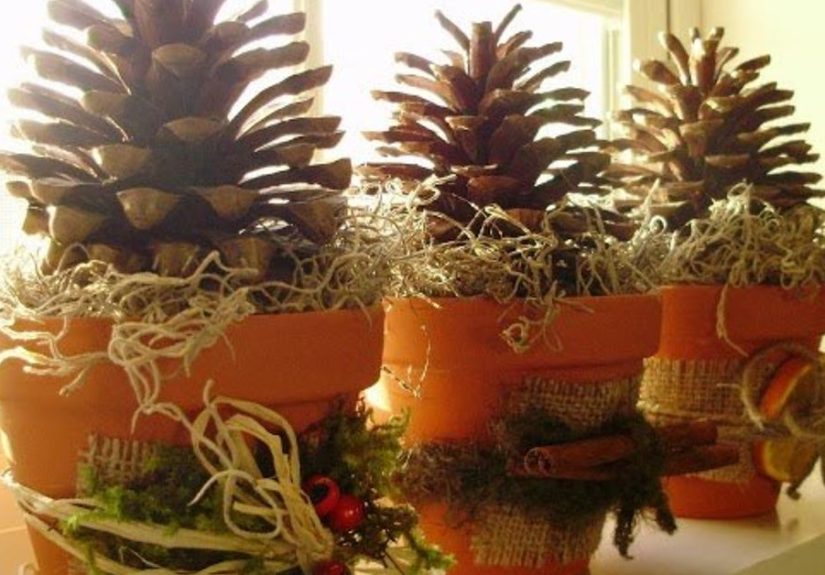
If you want a fuller tree silhouette, glue a pine cone onto a wider base and tuck a little greenery or moss around the bottom. That tiny finishing touch makes the project look much more intentional.
How to Create Different Pine Cone Tree Styles
1. Rustic Natural Pine Cone Trees
Leave the cone mostly untouched and mount it on a wood slice or unfinished spool. Wrap the base with twine or add a small jute bow. This version is ideal for farmhouse winter decor, cabin-inspired styling, and neutral holiday homes.
2. Snowy Pine Cone Trees
Brush white paint lightly onto the tips of the scales, or dab on faux snow for a frosted effect. The key is restraint. You want “freshly dusted” rather than “pine cone got lost in a flour explosion.” These look especially pretty on mantels, window ledges, and white or silver holiday tablescapes.
3. Glittered Pine Cone Trees
Add Mod Podge or craft glue to the scale edges and sprinkle with fine glitter. Gold and silver are classic, but champagne, icy blue, and soft pearl also work beautifully. Use this style if your winter decor leans elegant or glam.
4. Ornament-Style Pine Cone Trees
Glue on tiny pom-poms, beads, faux berries, or felt balls to mimic ornaments. This is a great option if you want playful DIY holiday decor for a family room, kid-friendly craft afternoon, or cheerful centerpiece.
5. Woodland Pine Cone Trees
Add tiny sprigs of faux cedar, mini bells, acorns, or ribbon. Style them with other natural elements like birch, evergreen clippings, dried orange slices, or candlelight for a cozy woodland look.
How to Make a Larger Pine Cone Tree Display
If one tree is cute, a whole little forest is irresistible. To create a more dramatic display, make at least three to seven pine cone trees in mixed sizes. Use different bases so the height variation feels natural. Then arrange them on a tray, mantel, or shelf with a few simple supporting elements:
- Battery-operated fairy lights
- Mini bottle brush trees
- Faux snow scattered lightly underneath
- A garland of greenery
- Candlesticks or hurricane vases
- Small houses or village accents
This works especially well for an entryway console or a dining table centerpiece. The pine cone trees add height and texture without blocking conversation, which is helpful if you would like your guests to see each other and not just your excellent glue work.
Common Mistakes to Avoid
Using Damp Pine Cones
Moist cones can close up, loosen glue, and make finishes look uneven. Always start dry.
Choosing the Wrong Base Size
If the base is too small, the tree may tip. If it is too large, the proportions look clunky. Aim for a base that supports the cone without overwhelming it.
Overdecorating
Pine cones already have a lot of texture. A little snow, paint, or sparkle goes a long way. When in doubt, stop before the tree starts looking like it lost a fight with the holiday aisle.
Ignoring Your Existing Decor
Match the finish to your room. White and silver suit a wintry palette. Gold and velvet feel more traditional. Natural brown and green fit rustic or Scandinavian-inspired spaces.
Where to Use DIY Pine Cone Trees in Your Home
One of the best things about DIY pine cone trees for winter decor is that they are incredibly versatile. They can move around your home as the season changes.
- Mantel: Group three to five trees with greenery and candles.
- Dining table: Use them as a low centerpiece with evergreen runners.
- Entryway: Add a pair on a tray for a quick seasonal welcome.
- Bookshelves: Tuck mini trees between books and frames.
- Bedroom: Add a snowy pair on a dresser for soft winter charm.
- Kitchen: Place one near a crock of wooden spoons or on an open shelf.
They are also lovely as handmade gifts, package toppers, or favors for winter gatherings. A small pine cone tree on a wood base tied with ribbon is charming, inexpensive, and far more memorable than another candle someone politely pretends they needed.
What the Experience of Making Pine Cone Trees Is Really Like
Now for the part that often gets left out of neat step-by-step tutorials: the actual experience of making pine cone trees. It is part craft project, part decorating ritual, and part gentle reminder that winter decorating does not need to be complicated to feel meaningful.
For many people, the project starts before the glue gun even comes out. It begins with spotting pine cones on a walk, tossing a few into a bag, and suddenly feeling like the kind of person who says things like “I’m gathering natural elements for my seasonal tablescape.” It is slightly dramatic, yes, but also delightful. There is something satisfying about using a material that already looks beautiful before you do anything to it.
Then comes the sorting phase, which is weirdly therapeutic. Big cones, small cones, straight cones, quirky little side-leaning cones that clearly have personality. You begin telling yourself that you are choosing by shape and scale, but somewhere along the way, you are also choosing favorites. This one is elegant. That one is stout but dependable. Another one looks like it absolutely cannot be trusted with glitter.
Once the crafting begins, pine cone trees offer a rare kind of low-pressure creativity. They are hard to ruin. Even the less perfect ones end up looking charming because natural materials already carry texture and visual interest. A cone that tilts slightly can look whimsical. A dusting of white paint can hide all sorts of tiny imperfections. A strategically placed ribbon can fix what the hot glue could not. It is the decorating equivalent of a forgiving camera angle.
There is also a cozy sensory quality to the process. The earthy look of the cones, the soft brush of paint across the tips, the tiny sparkle of glitter catching light, the scent of cinnamon or orange if you add fragrance, the warm glow of a lamp nearby while you work. It feels seasonal in a way that buying decor from a store sometimes does not. You are not just putting winter into a room. You are making it, piece by piece.
And when the trees are finished, the payoff is immediate. A single pine cone tree can make a shelf feel styled. Three on a tray can make a whole room feel ready for the season. That is part of the magic of this project: the effort is modest, but the visual reward is surprisingly big. Your home looks more thoughtful, more layered, and more welcoming without requiring a total decorating overhaul.
Perhaps the best experience of all is that pine cone trees invite repetition. After you make one, you almost always want to make more. A natural set for the mantel. A snowy set for the dining table. A glittered set for a friend. A tiny one because you found the perfect mini cone and suddenly your afternoon had a purpose. It becomes a tradition without much effort, and those are often the traditions people keep the longest.
So yes, DIY pine cone trees are adorable winter decor. But they are also the kind of project that slows you down in a good way. They ask for simple materials, a little imagination, and maybe a dustpan afterward. In return, they give you a handmade piece of the season that feels warm, personal, and a little magical. Not bad for something that started on the ground under a tree.
Conclusion
If you have been looking for a winter craft that is affordable, flexible, and genuinely pretty, DIY pine cone trees are an excellent place to start. They bring natural texture to your decor, work in almost any style of home, and can be customized from rustic to elegant with just a few extra touches. Whether you make one tree or a whole tabletop forest, the result feels thoughtful, seasonal, and easy to love.
The best part is that this project does not demand perfection. Pine cones already do most of the visual heavy lifting. Your job is simply to prep them well, pair them with the right base, and add just enough finishing detail to suit your space. That means you get a handmade winter decoration that looks high on charm and low on stress, which, frankly, is the best kind of holiday math.






 Close
Close