
Table of Contents >> Show >> Hide
- Why Learn Simple Fondant Roses?
- What You Need (Minimal Gear, Maximum Payoff)
- How to Make Simple Fondant Roses: 8 Steps
- Step 1: Prep your fondant (and your expectations)
- Step 2: Make a simple cone-shaped center bud
- Step 3: Create the first petal (the “hug” petal)
- Step 4: Add 2–3 petals to complete the inner bud
- Step 5: Build the first “open” ring with 3 larger petals
- Step 6: Add the second ring (5 petals for a fuller rose)
- Step 7: Shape, trim, and tidy the base
- Step 8: Let it set (a.k.a. “hands off, it’s drying”)
- Pro Tips for Roses That Look “Wow” (Not “Why?”)
- Troubleshooting: Fix Common Fondant Rose Problems
- Variations: Same Skills, Different Rose Vibes
- Storage and Make-Ahead: Keep Roses Pretty, Not Sticky
- Quick FAQ
- Conclusion
- Real-World Experiences: What I Learned Making Simple Fondant Roses (500+ Words)
Fondant roses are the “I totally have my life together” of cake decoratingyet they’re secretly more like
“I watched one video and decided chaos is a hobby.” The good news: you don’t need a suitcase of fancy tools,
a pastry degree, or a calming soundtrack of whales singing. With a small piece of fondant and a little patience,
you can make sweet, simple roses that look right at home on cupcakes, celebration cakes, and “I’m making this for myself”
sheet cakes (the most honest kind).
This guide walks you through an easy, beginner-friendly methodno special cutters required. You’ll also get smart tips for
realistic petals, make-ahead storage, and what to do when your rose starts looking more like a dumpling with feelings.
Why Learn Simple Fondant Roses?
Once you know the basics, fondant roses become a fast, repeatable decorating trick. You can make them ahead, match any color theme,
and scale them from tiny rosebuds to big statement blooms. They’re also forgiving: a slightly wonky petal reads as “handmade charm,”
not “failure.” (We love a growth mindset on a cake.)
What You Need (Minimal Gear, Maximum Payoff)
Edible materials
- Fondant (store-bought or homemade)
- Gel food coloring (optional, for custom colors)
- Powdered sugar or cornstarch (for dusting)
- Vegetable shortening (tiny amount, to prevent sticking)
- Water or edible glue (for attaching petals)
- Tylose/CMC powder (optional, helps petals firm up faster)
Tools (use what you have)
- Small rolling pin (or a clean smooth bottle)
- Knife or pizza cutter
- Toothpick or skewer (for curling edges)
- Spoon (yes, a spoonmulti-talented kitchen royalty)
- Foam pad (optional; a folded paper towel can work in a pinch)
Fondant choice matters: if your fondant cracks easily, knead longer and add a dab of shortening.
If it’s too soft and droopy, a pinch of tylose/CMC helps it hold shape and dry sturdierespecially in humid kitchens.
How to Make Simple Fondant Roses: 8 Steps
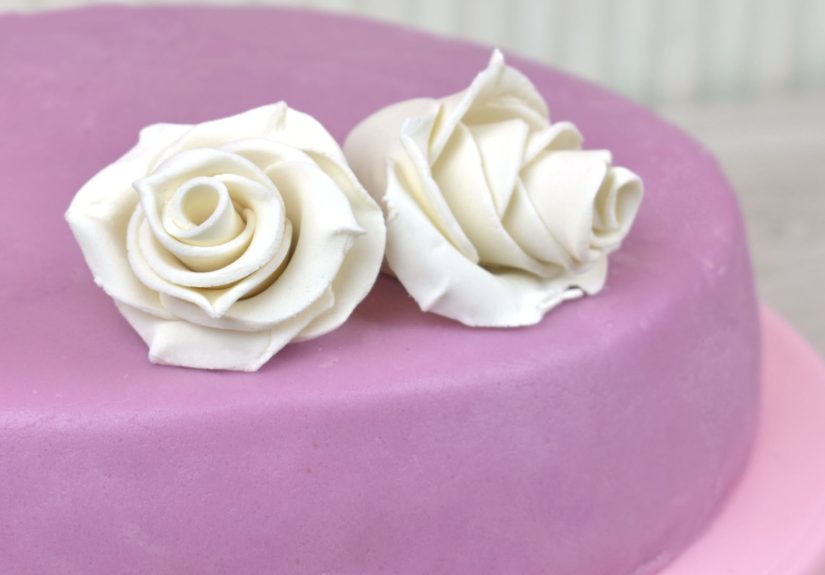
This method creates a classic rose with a small center bud and layered petals. The steps below are written for one medium rose
(about 1.5–2 inches wide). Once you make one, you’ll want to make twelvebecause fondant roses multiply when you’re not looking.
Step 1: Prep your fondant (and your expectations)
Knead a golf-ball-size piece of fondant until smooth and warm. If you’re coloring it, add gel color using a toothpick amount at a time
and knead until even. If your fondant is sticky, dust your surface lightly with powdered sugar or cornstarch.
If it’s dry or cracking, knead in a tiny smear of shortening.
Optional pro move: knead in a small pinch of tylose/CMC. This helps petals set faster and keeps your rose from slumping
like it just remembered tomorrow is Monday.
Step 2: Make a simple cone-shaped center bud
Roll a small piece of fondant into a smooth ball, then shape it into a short cone (about the size of a large blueberry).
This is your rose “core.” Set it upright on your work surface.
Step 3: Create the first petal (the “hug” petal)
Pinch off a small ball of fondant and flatten it into a thin circle (about the size of a quarter).
Thin edges make petals look realisticso press the outer rim thinner than the center.
Wrap this first petal around the cone so it hugs the bud. Overlap the petal slightly and pinch the base gently to secure it.
Congratulations: you’ve made something that already looks vaguely flower-ish. That’s huge.
Step 4: Add 2–3 petals to complete the inner bud
Make 2 or 3 more petals the same waythin edges, slightly thicker center. Place each petal around the bud, overlapping seams
so the bud looks closed and tidy. Keep the top edges roughly level.
Tip: Use a tiny brush of water only where petals attach. Too much water turns fondant into a sticky,
slippery situation that can’t be trusted.
Step 5: Build the first “open” ring with 3 larger petals
Make three slightly larger petals (think silver-dollar size). Thin the edges even more than before. Attach them around the bud,
spacing evenly. This is where your rose starts to open.
To give petals movement, gently curl the top edge back using a toothpick, skewer, or the rounded handle of a spoon.
You’re not tearing ityou’re giving it a dramatic hair flip.
Step 6: Add the second ring (5 petals for a fuller rose)
Now make five petals, a bit larger than the last ring. Attach them around the rose, again overlapping seams and spacing evenly.
Slightly stagger them so each new petal lands between the petals beneath itlike shingles, but prettier and less likely to leak.
Step 7: Shape, trim, and tidy the base
Most roses get bulky at the bottom. Pinch the base gently to compact it. If there’s excess fondant, trim it off with a small knife
or scissors. A neat base helps the rose sit flat on a cake or cupcake.
If you want a more open bloom, lightly flare outer petals outward. If you want a tighter rose, keep petals closer to the center.
You’re the boss of this flower.
Step 8: Let it set (a.k.a. “hands off, it’s drying”)
Place your rose on parchment and let it air-dry at room temperature. For a soft, fresh look, 1–2 hours is usually enough to handle gently.
For a firmer decoration that travels well, let it dry overnight (or longer, depending on humidity and whether you used tylose/CMC).
Pro Tips for Roses That Look “Wow” (Not “Why?”)
- Thin edges = realistic petals. Keep the center thicker so petals don’t tear when you lift them.
- Work small to large. Tiny petals first, bigger petals later. Your rose will naturally open as it grows.
- Rotate as you go. Turning the rose in your fingers helps keep petal spacing even.
- Less dusting is more. Too much powdered sugar can dull color and dry fondant out faster than you want.
- Use gel color. Liquid coloring can make fondant sticky and harder to control.
- Humidity changes everything. In humid climates, tylose/CMC helps a lot. A fan across the room can also speed drying.
Troubleshooting: Fix Common Fondant Rose Problems
My fondant is cracking
Knead longer and add a tiny amount of shortening. If it still cracks, your fondant may be too drywrap it and let it rest 10 minutes,
then knead again. Also make sure you’re not over-dusting with powdered sugar.
My petals are drooping
Petals may be too thick (heavy) or too warm/soft. Make edges thinner, chill your hands briefly, or knead in a pinch of tylose/CMC.
Let the rose set between rings for a few minutes if your kitchen is warm.
My rose looks like a cabbage
This usually means petals are too wide and placed too flat. Try narrower petals, overlap more, and curl the edges back.
Also: don’t panic. Many roses are basically fancy cabbages with better PR.
My petals won’t stick
Use a tiny brush of water or edible glue only at the base where petals attach. If you dusted heavily, brush off excess sugar/cornstarch
so the fondant can actually bond.
Variations: Same Skills, Different Rose Vibes
Super-fast “ribbon rose”
If you need lots of roses quickly, the ribbon rose is your friend. Roll fondant into a thin strip, ruffle one edge,
then roll the strip into a spiral. Pinch the base, trim, and boominstant rose. It’s less “botanical realism,” more “cute and confident.”
Ombre petals
Use two shades of the same color: darker for inner petals, lighter for outer petals. The gradient makes the rose look more dimensional
even if your petal shaping is simple.
Dusting for depth
Once roses are dry, you can add depth with edible dusts (like petal dust or luster dust). A little shading at the petal bases
and a soft highlight on the edges can take a rose from “nice” to “is that store-bought?”
Add leaves (the easiest upgrade)
Even a simple rose looks fancier with leaves. Roll green fondant, cut teardrop shapes, pinch the ends, and add a vein line with a toothpick.
Pairing roses with leaves also helps cover any “creative choices” at the base.
Storage and Make-Ahead: Keep Roses Pretty, Not Sticky
Fondant roses are excellent make-ahead decorations. Let them dry until firm, then store at room temperature in a clean, dry, airtight container.
Separate layers with parchment or paper towels so petals don’t get scuffed.
- Best environment: cool, dry room temperature (not the refrigerator)
- Avoid humidity: moisture can make fondant tacky or cause colors to bleed
- Protect from light: direct sunlight can fade deeper colors over time
If you live somewhere humid, adding a food-safe desiccant packet in the container can help keep decorations dry.
Just keep the packet away from direct contact with the roses.
Quick FAQ
Can I use gum paste instead of fondant?
Yes. Gum paste dries harder and faster and holds details beautifully. Fondant stays softer and is easier for beginners to shape.
A common compromise is fondant with a pinch of tylose/CMC for better structure.
How many roses do I need?
For cupcakes: 1 small rose each. For a 6-inch cake: 6–12 medium roses makes a full look. For an 8-inch cake: 12–20 depending on style
(clustered vs. scattered).
How do I attach fondant roses to a cake?
If the cake is fondant-covered, a dab of water or edible glue works. If it’s buttercream, you can use a small blob of buttercream as “cement.”
Place roses shortly before serving if your environment is very humid.
Conclusion
Making simple fondant roses is one of those skills that looks impressive but is mostly about repeating a few small motions:
shape a bud, add petals from small to large, thin the edges, and let the whole thing set. The first rose teaches you the moves.
The second rose teaches you confidence. By the third, you’re naming them and giving them backstories. (Totally normal. Probably.)
Keep your process simple, embrace small imperfections, and remember: even if your rose turns out a little quirky, it still counts as
edible artand that’s a win.
Real-World Experiences: What I Learned Making Simple Fondant Roses (500+ Words)
The first time I made a fondant rose, I had the pure optimism of someone who has never been humbled by sugar. I thought,
“How hard can it be? It’s just petals.” Fifteen minutes later, I was staring at a lumpy spiral that looked like a cinnamon roll
trying to cosplay as a flower. That moment taught me the first big lesson: fondant roses aren’t hardthey’re particular.
The difference between “rose” and “random edible object” is usually petal thickness and placement.
My second lesson came from color. I started with bright red because, obviously, romantic roses. Except red fondant is basically
a commitment. It stains your hands, your counter, and potentially your soul if you’re not careful. Switching to softer tones
(blush, ivory, pale peach) made everything easier because minor cracks and seams don’t scream for attention. If you’re brand-new,
start with a forgiving coloryour confidence will thank you.
Then there was humidity. I once tried making roses on a summer day with the windows open, because fresh air is “nice.”
My petals sagged like they were tired of participating. That’s when I learned the third lesson: your kitchen has a personality.
Dry climates make fondant crack; humid climates make it sticky. Adjusting with tiny amounts of shortening (for dryness)
or tylose/CMC (for humidity) felt like learning a secret handshake. Also: a small fan across the room is not cheatingit’s strategy.
The fourth lesson was speed. When you’re making one rose, you can fuss over every petal like it’s a museum piece.
When you’re making twenty for a birthday cake, you need a system. I started portioning fondant ahead of timelittle balls for petals,
one slightly bigger ball for the budand suddenly the whole process felt smooth. I’d make buds first, then petals in batches:
three small, three medium, five large. Assembly went from “forever” to “actually kind of fun.”
The fifth lesson was forgiveness. Sometimes a petal tears. Sometimes it sticks to your finger and pulls away like it’s breaking up with you.
Early on, I’d scrap the whole rose and start over. Later, I realized most fixes are simple: patch the tear with a tiny piece of fondant,
hide seams under the next petal, or add leaves to cover the base. Cake decorating is basically controlled illusion.
People don’t inspect your rose with a microscopethey see the overall effect and go, “Ooooh.”
The final lesson: fondant roses are better when you stop overthinking them. The more relaxed your hands are,
the thinner the petal edges get. The lighter your touch, the more natural the curl. If you’re tense, everything turns thick and stiff.
So I started treating rose-making like a short, sweet session: clear the counter, play a song, make a few roses, walk away.
And weirdly? That’s when they started looking the best.
If you’re learning, give yourself a “practice rose” you’re allowed to mess up. Once you remove the pressure to be perfect,
your roses get prettier fast. And if notwellthere’s always the ribbon rose method, which is the cake decorator’s equivalent of
sunglasses and confidence.






 Close
Close