
Table of Contents >> Show >> Hide
- Why Wood and White Trim Work So Well Together
- Start With Undertones Before You Start With Style
- Choose a Dominant Wood Tone
- Decide What Should Stay Wood and What Should Go White
- Use Contrast on Purpose
- Bring in Bridge Materials So the Room Feels Connected
- Room-by-Room Ideas for Mixing Wood and White Trim
- Common Mistakes That Ruin the Look
- How to Test Your Mix Before Committing
- Real-Life Design Formulas That Usually Work
- Experiences and Lessons From Mixing Wood and White Trim in Real Homes
- Conclusion
Wood and white trim are one of those pairings that seem deceptively simple. In theory, it sounds easy: keep the wood, paint the trim white, and bask in the glow of a beautifully balanced room. In real life, though, this combo can either look timeless and layered or like your house got dressed in the dark.
The good news is that mixing wood and white trim absolutely works when you do it with intention. The contrast between warm natural grain and crisp painted millwork gives a space depth, brightness, and character. White trim can sharpen architectural lines, while wood keeps the room from feeling sterile or showroom-stiff. Together, they create a look that feels collected instead of cookie-cutter.
If you are trying to figure out how to mix wood and white trim for a complementary look, the secret is not matching everything perfectly. It is balancing undertones, contrast, scale, and texture so the room feels cohesive. Think less “all the wood must match” and more “everything should look like it belongs to the same well-behaved design family.”
Why Wood and White Trim Work So Well Together
There is a reason this combination shows up in modern farmhouses, classic colonials, coastal homes, Scandinavian-inspired spaces, and updated traditional interiors. White trim acts like visual punctuation. It outlines doors, windows, baseboards, and molding so architectural details stand out. Wood, on the other hand, adds warmth, age, and natural variation.
When you put them together, you get the best of both worlds: freshness and soul. White keeps a room feeling clean and open, while wood tones prevent it from becoming cold or flat. That contrast is especially helpful in rooms with strong natural light, because white trim reflects brightness and wood grounds it.
This is also why the pairing feels so flexible. You can use pale oak for a soft, airy look, rich walnut for drama, reclaimed wood for texture, or medium-tone woods for a more traditional vibe. White trim helps all of those directions feel more finished and intentional.
Start With Undertones Before You Start With Style
If there is one rule that matters most, it is this: pay attention to undertones. Wood has undertones just like paint does. Some woods lean warm, with yellow, orange, red, or golden notes. Others read cooler, with gray, taupe, or muted brown undertones. White paint also varies. Some whites are creamy and soft, while others are bright, cool, and crisp.
Warm Woods Pair Best With Warmer Whites
If your floors, beams, cabinetry, or furniture have honey, caramel, chestnut, or reddish tones, a warm white trim usually looks more natural than a stark blue-white. Creamy whites soften the contrast and make the room feel inviting instead of harsh. This is especially helpful in older homes with original wood floors or warm-stained doors.
Cooler Woods Pair Better With Crisp Whites
If your wood leans ashy, weathered, pale, or gray-toned, a cleaner white trim tends to look sharper. This combination works beautifully in more contemporary or minimal spaces where you want crisp lines and a lighter overall mood.
The goal is not to make everything identical. It is to make sure the undertones do not actively fight each other. Warm wood with icy white can feel accidental. Cool wood with overly creamy trim can feel muddy. When undertones align, the mix looks calm and well considered.
Choose a Dominant Wood Tone
One of the biggest mistakes people make is treating every wood element like it has equal design authority. It does not. Usually, one wood tone leads the room. That dominant wood may be the flooring, exposed beams, built-ins, kitchen cabinetry, or a large statement piece like a dining table.
Once you identify the dominant wood tone, the rest of the room becomes easier to organize. White trim acts as the neutral framework, and other woods can play supporting roles.
Keep It to Two or Three Wood Tones
A complementary room usually has two or three wood tones, not seven. A light wood, a medium wood, and a darker accent can feel rich and layered. More than that, and the room may start to feel visually noisy unless you are extremely skilled or extremely lucky. And luck is not a design strategy.
For example:
- Light oak floors
- Warm white trim
- Medium walnut furniture
- A darker espresso or blackened wood accent in small doses
That mix feels balanced because each tone has a job. The floor sets the base, the trim brightens the architecture, the furniture adds depth, and the darker accent keeps everything from floating away.
Decide What Should Stay Wood and What Should Go White
Not every trim-adjacent surface has to make the same choice. Some homes look best when all trim is painted white and wood appears in floors and furniture only. Others benefit from keeping select architectural elements in wood.
Best Elements to Paint White
- Baseboards
- Casing around doors and windows
- Crown molding
- Wainscoting or picture-frame molding
- Built-in trim details that need visual definition
Best Elements to Keep Wood
- Hardwood floors
- Ceiling beams
- Interior doors when they have beautiful grain or historic value
- A statement island, vanity, mantel, or shelving
- Furniture and vintage pieces that bring warmth
A simple formula is this: let white outline the room, and let wood anchor it. That tends to produce a clean, layered look without turning the house into a lumberyard or a blank hospital corridor.
Use Contrast on Purpose
Contrast is what keeps mixed woods from looking accidental. If two woods are almost the same color but not quite, they can look like a near miss. That is one of the fastest ways to make a room feel awkward. It is usually better to go lighter or darker rather than “sort of similar.”
Say you have medium oak floors. Instead of choosing a coffee table in slightly different medium oak and hoping for the best, try one of these approaches:
- A much darker walnut or espresso table for depth
- A lighter bleached or natural wood table for contrast
- A painted or mixed-material table with wood accents
White trim helps separate these tones visually. It creates breathing room between the woods, which is why the whole mix can work even when the pieces are very different.
Bring in Bridge Materials So the Room Feels Connected
When mixing wood and white trim, the smartest move is often to include materials that bridge the gap. Rugs, metal, stone, linen, leather, cane, plaster, and glass all soften transitions and keep the eye moving.
A neutral rug can buffer a wood floor from wood furniture. Black metal hardware can add contrast that makes both white trim and wood feel more intentional. Linen drapes and upholstered pieces keep the space from becoming too hard or too shiny.
This is also where texture matters. If your room is mostly white, texture is what saves it from looking flat. Think woven shades, nubby throw pillows, matte ceramic lamps, aged brass, or a jute rug. If your room has a lot of wood, white trim and painted millwork can keep that texture from overwhelming the space.
Room-by-Room Ideas for Mixing Wood and White Trim
Living Room
Use white trim to frame windows and brighten the perimeter of the room. Let the wood come in through floors, a coffee table, shelving, or ceiling beams. If the room already has dark floors, choose lighter upholstery and keep the trim a clean white to prevent the space from feeling heavy.
Kitchen
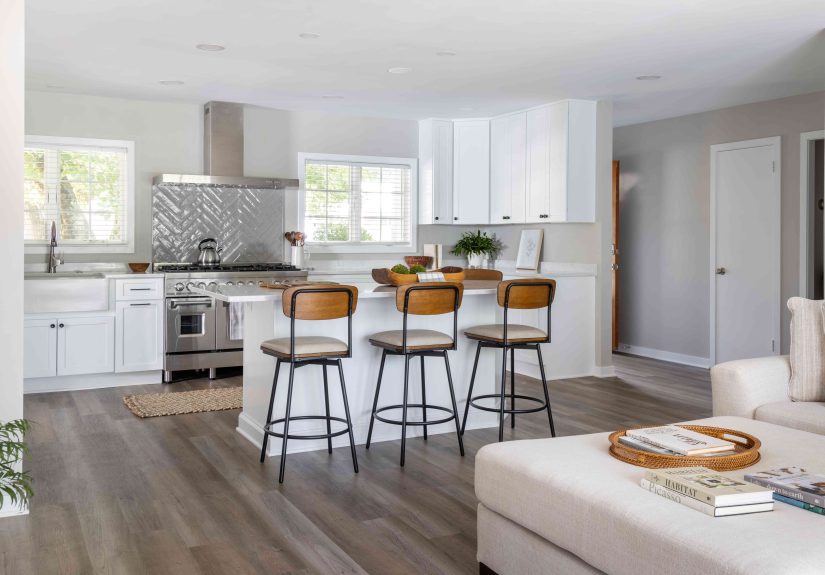
White trim works beautifully with wood cabinets, a wood island, floating shelves, or wood flooring. The best kitchens often balance painted and natural finishes instead of making every surface match. A white kitchen with wood accents feels warmer, while a wood kitchen with white trim feels fresher and more tailored.
Bedroom
Bedrooms benefit from softer contrast. White trim paired with wood nightstands, a wood bench, or a wood ceiling detail can make the room feel calm but not boring. This is a great place for warm whites, natural textiles, and medium wood tones that read cozy instead of stark.
Entryway
An entry is a perfect place to make the combo obvious. White trim and white walls can brighten the space, while a stained console, bench, or wood front door adds welcome warmth. Since entryways are often small, limiting the wood to one or two statement moments keeps it clean.
Older Homes With Original Trim
If your home has original stained trim, do not assume it all needs to be painted. Often, the best result comes from preserving the most beautiful wood elements and introducing white elsewhere through walls, millwork accents, or furniture. Original wood doors paired with white baseboards or white wall molding can look especially charming.
Common Mistakes That Ruin the Look
1. Ignoring Lighting
Morning light, afternoon light, and lamp light can all change how white and wood appear. A trim color that looks perfect at noon may read yellow at night or icy on a cloudy day. Always test samples in the actual room.
2. Choosing the Wrong White
Not all whites are innocent. Some are creamy, some are gray, some are stark, and some quietly go minty when you least expect it. Pick a white that supports your wood tones instead of competing with them.
3. Overdoing One Finish
If the whole room is one wood tone, it can look flat. If every architectural detail is brilliant white with no warmth, it can feel sterile. The sweet spot is balance.
4. Mixing Near-Matches
Two medium warm woods that are almost the same but slightly different often look worse than two clearly different woods. Stronger contrast usually feels more deliberate.
5. Forgetting Finish Sheen
Trim typically looks best in a durable semi-gloss or satin finish because it catches light and is easier to clean. Flat trim can look dull, while overly glossy trim can spotlight every flaw. For wood, matte and low-luster finishes often feel more natural and current than super-orange, high-gloss stains.
How to Test Your Mix Before Committing
Before painting or refinishing anything, make sample boards. Hold your white trim sample next to the floor, door, cabinetry, and any big wood furniture in the room. Then check it in daylight, evening light, and lamplight.
Ask yourself these questions:
- Does the white make the wood look richer or washed out?
- Do the undertones feel harmonious?
- Is there enough contrast?
- Does the room feel bright but still warm?
- Will this look good in all seasons, not just on a sunny afternoon?
That last question matters. The best wood-and-white combinations are not just trendy; they are resilient. They still look good in winter light, with holiday clutter, with muddy shoes by the door, and after you inevitably bring home one more vintage side table you “weren’t looking for.”
Real-Life Design Formulas That Usually Work
Formula 1: Light and Airy
Natural white oak floors + soft warm white trim + beige or ivory walls + walnut or black accents.
Formula 2: Classic Contrast
Dark stained floors + crisp white trim + medium-tone wood furniture + brass or black hardware.
Formula 3: Cozy Modern
Creamy white trim + greige walls + reclaimed wood beams + light upholstered furniture + stone or linen textures.
Formula 4: Fresh Traditional
White trim and molding + original wood doors or floors + antique wood case goods + layered rugs and soft lighting.
None of these formulas require every wood tone to match. They just require a sense of hierarchy and a little restraint.
Experiences and Lessons From Mixing Wood and White Trim in Real Homes
One of the most common experiences homeowners talk about is how nervous they feel before mixing painted trim with natural wood for the first time. Many people worry that the contrast will look unfinished, as if the house is stuck between renovation phases. Then the room comes together, and suddenly the white trim makes the wood floors look richer, the windows look sharper, and the entire space feels more expensive than it did when everything was the same tone. That is the funny thing about contrast: it can look risky right up until it looks brilliant.
Another very real experience is discovering that your wood is not the color you thought it was. A floor that looked neutral brown at the store might read orange in afternoon sun. A “simple white” trim sample can look creamy, gray, or almost blue depending on the room. This is why so many decorating regrets begin with confidence and end with a second trip to the paint store. Homeowners who are happiest with the final result are usually the ones who sampled patiently and looked at the room across several times of day.
There is also the experience of trying to save every wood piece in the room, which sounds noble and sentimental until the space starts looking like a historical society gift shop. In practice, the best rooms usually have one or two meaningful wood statements and let white trim do the quiet background work. A walnut dresser, oak floors, and painted trim can look sophisticated. Oak floors, pine shelves, cherry desk, mahogany table, maple chair, cedar chest, and a mystery bench from Facebook Marketplace? That takes a stronger design hand.
People also learn quickly that white trim is not just decorative; it is strategic. In small rooms, it can make windows and doors feel cleaner and more defined. In older homes, it can help updated furnishings coexist with original wood features. In open-concept homes, it can create a visual thread that keeps different spaces connected even when wood tones vary from room to room.
One especially useful lesson comes from homes that mix old and new. Imagine an older house with original wood floors, but newer white casing and baseboards. At first, that combination might feel mismatched. Once you add linen drapes, a woven rug, black sconces, and a medium-tone wood table, however, the room starts to make sense. The trim becomes the bright outline, the floor becomes the history, and the furniture becomes the bridge between the two. Instead of looking conflicted, the room looks layered.
And then there is the final, universal experience: realizing that perfection was never the point. The most inviting rooms rarely look like they were assembled from one page of a catalog. They look lived in, slightly evolved, and personal. Mixing wood and white trim successfully is less about obeying rigid rules and more about making choices that feel intentional. When the undertones are right, the contrast is clear, and the textures are varied, the room feels settled. Not stiff. Not chaotic. Just comfortably, convincingly pulled together.
Conclusion
Mixing wood and white trim for a complementary look is really about balance. Let white trim brighten and define the room. Let wood add warmth, character, and texture. Keep undertones in harmony, stick to a limited range of wood finishes, and use contrast to make the whole space feel curated instead of accidental.
When in doubt, start with what is not changing, usually the floor or the most prominent wood surface, and build from there. Sample everything in real light, give each material room to breathe, and remember that a beautiful home does not need every finish to match. It just needs them to get along. Ideally without passive-aggressive undertones.







 Close
Close