
Table of Contents >> Show >> Hide
- Why Softened Water Can Be a Problem for Plants
- Strategy 1: Use Unsoftened Water Whenever Possible
- Strategy 2: Use Reverse Osmosis or Distilled Water
- Strategy 3: Collect Rainwater and Dilute the Sodium Load
- Strategy 4: Flush Soil and Containers to Remove Salt Buildup
- What Not to Do When Trying to Remove Salt from Softened Water
- Which Plants Are Most Sensitive to Softened Water?
- Simple Watering Plan for Plant Owners
- Real-Life Experience: What Actually Works When Plants Hate Softened Water
- Conclusion
Softened water is wonderful for spotless glasses, happier shower doors, and fewer arguments with crusty faucets. Your plants, however, may not send a thank-you card. Many household water softeners replace calcium and magnesium with sodium, and that extra sodium can slowly build up in potting mix or garden soil. The result? Brown leaf tips, white crust on soil, sluggish growth, and plants that look offended even though you watered them like a responsible adult.
The tricky part is that sodium dissolved in water does not politely float to the top where you can scoop it out with a spoon. It is not like removing a lemon seed from iced tea. To make softened water safer for plants, you either need to avoid the softened supply, remove dissolved salts with the right treatment method, dilute the problem, or flush salts from the root zone before they become plant drama.
This guide explains how to remove salt from softened water for plants using four practical strategies. You will also learn what does not work, which plants are most sensitive, and how to recognize salt stress before your houseplant starts looking like it read bad news.
Why Softened Water Can Be a Problem for Plants
Most traditional water softeners use ion exchange. In simple terms, the softener captures hardness minerals such as calcium and magnesium and replaces them with sodium ions. That makes the water feel “soft,” but it can also make the water less friendly for plants, especially when used repeatedly in containers, raised beds, greenhouses, or indoor growing systems.
Plants need water to move through their roots. When salts build up around those roots, water becomes harder for the plant to absorb. This is why a plant can be sitting in moist soil and still behave as if it is thirsty. It is not being dramatic; it is dealing with osmotic stress. Excess sodium can also interfere with soil structure, especially in clay soils, where it may reduce water infiltration and root growth.
Common signs of salt stress in plants
- Brown or crispy leaf tips and edges
- White crust on potting soil, saucers, or clay pots
- Yellowing leaves even when watering seems correct
- Slow growth, wilting, or weak new leaves
- Soil that seems wet but the plant still looks thirsty
Some plants tolerate salty conditions better than others. Many succulents, established landscape shrubs, and certain coastal plants may handle modest mineral levels. But ferns, orchids, carnivorous plants, seedlings, blueberries, many tropical houseplants, and hydroponic crops can be much more sensitive. For these plants, softened water can be like serving soup when they asked for rain.
Strategy 1: Use Unsoftened Water Whenever Possible
The easiest way to remove salt from softened water for plants is to not use softened water in the first place. That sounds almost too simple, but it is often the most effective solution. Many homes have an outdoor spigot, garage tap, basement utility sink, or kitchen cold-water line that bypasses the softener. If you can access water before it enters the softener, your plants will usually be better off.
Where to find unsoftened water
Start by checking outdoor hose bibs. In many homes, exterior taps are connected before the water softener because lawns and gardens do not need softened water. If you are unsure, compare the feel of the water or use a simple test strip for hardness. Harder water from the outside tap often means it has not passed through the softener.
Another option is to ask a plumber to install a bypass line or dedicated plant-watering tap. This can be especially useful if you keep many houseplants, grow vegetables, or run a small greenhouse. A dedicated unsoftened line may sound fancy, but so does buying new plants every month because the old ones gave up.
Best uses for unsoftened water
- Vegetable gardens and herbs
- Indoor tropical plants
- Seedlings and young transplants
- Container plants that accumulate salts quickly
- Acid-loving plants such as blueberries and azaleas
Hard water is not perfect for every plant because it may contain calcium, magnesium, bicarbonates, or other minerals. However, moderate hardness is often less risky than sodium-softened water. Calcium and magnesium are plant nutrients; sodium is not usually a nutrient plants need in meaningful amounts. If your choice is between moderately hard water and sodium-softened water, most plants would vote for the hard water. Plants do not have ballots, but if they did, the campaign signs would be very leafy.
Strategy 2: Use Reverse Osmosis or Distilled Water
If you truly need to remove dissolved salt from softened water, use a method designed to remove dissolved ions. Reverse osmosis, often called RO, is one of the most practical home options. RO systems push water through a semipermeable membrane that reduces dissolved minerals, including sodium and chloride. Distilled water is another option because distillation separates water from many dissolved solids by evaporation and condensation.
Why regular filters are not enough
A common mistake is assuming that any filter will remove sodium. Pitcher filters, faucet carbon filters, sediment filters, and refrigerator filters may improve taste or reduce certain contaminants, but they typically do not remove enough dissolved sodium to solve the softened-water problem. Letting water sit overnight also does not remove sodium. It may help chlorine dissipate in some situations, but sodium is not sitting there checking its watch and preparing to leave.
How to use RO water for plants
RO water is excellent for salt-sensitive plants, seedlings, orchids, carnivorous plants, and hydroponic systems. Because RO water is low in minerals, it gives you more control over fertilizer and nutrient levels. For houseplants, you can water with RO water as-is, or blend it with a small amount of tap water if your plants benefit from some minerals.
For hydroponics, RO water is especially useful because softened water can start the system with excess sodium before nutrients are even added. That makes nutrient management more difficult. When you begin with cleaner water, your fertilizer recipe has fewer surprises. Nobody wants a nutrient solution with mystery seasoning.
Pros and cons of RO or distilled water
- Pros: Removes much of the sodium, reduces mineral buildup, and works well for sensitive plants.
- Cons: Requires equipment or store-bought water, may produce wastewater, and may need mineral supplementation for some plants.
If you only have a few plants, buying distilled water or RO water by the gallon may be simple. If you have a plant collection that is slowly taking over your living room, an under-sink RO system may become more practical. At that point, you are not just watering plants; you are managing a tiny botanical kingdom.
Strategy 3: Collect Rainwater and Dilute the Sodium Load
Rainwater is naturally low in dissolved minerals compared with many tap-water sources. For many gardeners, collecting rainwater is one of the most plant-friendly ways to avoid softened water. It is especially useful for outdoor containers, ornamental beds, fruit trees, and salt-sensitive houseplants.
How rainwater helps
Rainwater does not technically remove sodium from softened water, but it can replace or dilute it. If you alternate softened water with rainwater, or blend a small amount of softened water with a larger amount of rainwater, you reduce the total sodium your plant receives over time. Less sodium entering the soil means less sodium accumulating around roots.
Rain barrel tips for plant safety
Use a clean rain barrel with a lid or screen to keep out leaves, mosquitoes, and debris. Place the barrel under a downspout and use the collected water for ornamental plants, trees, shrubs, and non-leafy edible crops when applied carefully at the soil level. For edible plants, avoid splashing rain-barrel water onto parts you will eat raw. Drip irrigation, watering cans, and soaker hoses are better than overhead spraying.
If you live in an area with long dry spells, rainwater may not be available when plants need it most. In that case, use rainwater for your most sensitive plants first. Your cactus can probably wait. Your fern may already be writing a strongly worded letter.
Can you mix softened water with rainwater?
Yes, dilution can help when you have no better option. A practical approach is to use mostly rainwater, RO water, or unsoftened water and add only a small amount of softened water if necessary. Dilution does not eliminate sodium, but it lowers concentration. For container plants, dilution should still be paired with occasional flushing so salts do not quietly build up in the potting mix.
Strategy 4: Flush Soil and Containers to Remove Salt Buildup
Sometimes the problem is not only the water going in; it is the salt already sitting in the soil. Even if you switch to better water today, yesterday’s sodium may still be hanging around like an awkward guest at a party. Flushing helps move soluble salts out of the root zone.
How to flush a potted plant
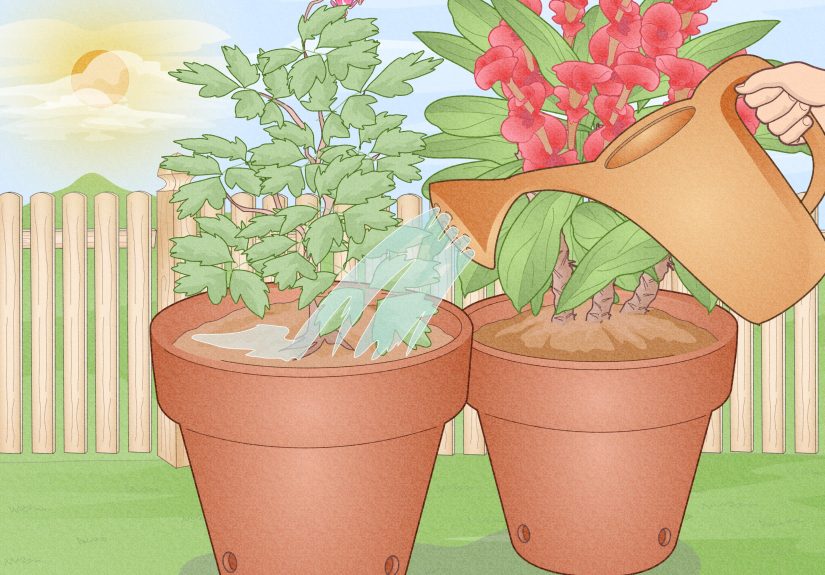
Take the plant to a sink, tub, or outdoor area where water can drain freely. Slowly pour unsoftened water, rainwater, RO water, or distilled water through the pot until water runs out the drainage holes. Use enough water to thoroughly rinse the potting mix. Let the pot drain completely before placing it back in its saucer. Never let the plant sit in salty drainage water because that simply invites the problem back in for coffee.
For many houseplants, flushing every few months can help prevent mineral buildup, especially if you fertilize regularly or use mineral-rich water. If you already see white crust on the soil surface, remove the crusty top layer and replace it with fresh potting mix before flushing.
How to manage salt in garden soil
In outdoor soil, improving drainage is essential. Salts can only move downward if water can move downward. Heavy clay soil, compacted beds, and poorly drained areas hold salts near the root zone. Adding organic matter, avoiding compaction, and using deep, infrequent irrigation with better-quality water can help.
Gypsum is sometimes used to help manage sodium-affected soils because calcium can replace sodium on soil particles. However, gypsum does not remove sodium by magic. It works best when paired with adequate leaching and drainage. Without water movement through the soil, sodium has nowhere to go. It just stays there, probably wearing sunglasses.
When to repot instead of flush
If a container plant has severe salt buildup, old compacted potting mix, or damaged roots, repotting may be better than flushing alone. Choose a fresh, well-draining potting mix and a container with drainage holes. After repotting, water with low-salt water and avoid heavy fertilizer until the plant shows new growth.
What Not to Do When Trying to Remove Salt from Softened Water
Some common “fixes” sound logical but do not solve the sodium problem. Before you spend money or accidentally turn your watering routine into a science fair project, avoid these mistakes.
Do not boil softened water
Boiling water does not remove sodium. In fact, as water evaporates, dissolved minerals can become more concentrated. Boiled softened water may be worse for plants if enough water evaporates before cooling.
Do not rely on basic carbon filters
Carbon filters can be useful for taste, odor, and some chemicals, but they are not designed to remove dissolved sodium. If the label does not specifically say the system reduces sodium or total dissolved solids, do not expect it to solve the issue.
Do not assume “soft” means “plant-safe”
Soft water feels gentle on skin and reduces scale in pipes, but plants care about root-zone chemistry, not shower luxury. For plants, the question is not whether water is soft. The question is what dissolved ions are in it and how often they are applied.
Do not over-fertilize stressed plants
Brown tips and weak growth can look like a nutrient problem, but adding fertilizer increases soluble salts. If salt buildup is already the issue, fertilizer may make things worse. Flush first, improve water quality, and fertilize only when the plant is actively growing.
Which Plants Are Most Sensitive to Softened Water?
While almost any plant can suffer from salt buildup over time, some are more likely to complain early. These include ferns, orchids, prayer plants, calatheas, spider plants, dracaenas, carnivorous plants, seedlings, blueberries, and many hydroponic crops. Indoor plants in small pots are especially vulnerable because salts have nowhere to go unless you flush them out.
Outdoor landscapes may tolerate occasional softened water better, especially if rainfall leaches salts from the soil. But repeated irrigation with sodium-softened water can create problems in containers, raised beds, greenhouse benches, and clay soils. The smaller the root zone, the faster the buildup.
Simple Watering Plan for Plant Owners
If you want a simple routine, use this plant-friendly plan:
- Use unsoftened water, rainwater, RO water, or distilled water as your main plant water.
- Reserve softened water only for tough plants or emergency use.
- Flush potted plants every few months with low-salt water.
- Watch for white crust, brown tips, and slow growth.
- Test irrigation water if you grow valuable plants, vegetables, or hydroponic crops.
For serious gardeners, a water test is worth it. Look for sodium, chloride, electrical conductivity, pH, alkalinity, and sodium adsorption ratio. These numbers tell you far more than guessing based on taste or appearance. Water can look crystal clear and still carry enough dissolved minerals to annoy your plants. Clear water is not always innocent.
Real-Life Experience: What Actually Works When Plants Hate Softened Water
Many plant owners discover the softened-water problem the slow way. At first, the plants look fine. Then a peace lily gets crispy tips. A spider plant develops brown edges. The fern, always the drama queen of the windowsill, begins dropping leaflets like tiny green confetti. The owner adjusts light, changes fertilizer, whispers encouragement, and maybe apologizes to the plant. Nothing works. Finally, they notice white crust on the soil or pot rim. That crust is the clue.
In practice, the fastest improvement usually comes from changing the water source and flushing the potting mix. For example, a houseplant watered for months with softened water may not bounce back after one drink of rainwater. The salts already in the pot need to be rinsed out. A deep flush with distilled, RO, rain, or unsoftened water can make the next few weeks of growth noticeably healthier. Damaged leaf tips will not turn green again, but new growth should look cleaner and stronger.
Another common experience is that plants in small decorative pots suffer first. A large outdoor planter may receive enough rain to dilute and wash away minerals, but a small indoor pot depends entirely on what you pour into it. If that pot has no drainage hole, the situation becomes even worse. Salt enters, water evaporates, and the minerals stay behind. This is why “cute pot, no hole” is a dangerous phrase in plant parenting. It may look stylish, but roots need drainage more than they need vibes.
Gardeners who switch to collected rainwater often notice that sensitive plants respond well. Ferns look softer, orchids avoid mineral spotting, and seedlings grow more evenly. The main challenge is storage. During rainy weeks, you may have more water than you need. During hot, dry weather, the barrel runs out exactly when every plant starts acting thirsty. A smart solution is to prioritize: use rainwater for sensitive plants, RO water for prized indoor plants, and unsoftened outdoor water for tougher garden beds.
Reverse osmosis is the most reliable option when consistency matters. People growing hydroponic herbs, rare houseplants, or seedlings often prefer RO water because it gives them a clean starting point. However, RO water is not a magical plant potion. Because it contains very few minerals, plants grown long-term in RO water still need appropriate fertilizer. Think of RO water as a blank canvas. That is great if you know what to paint, less great if you forget the nutrients entirely.
Some homeowners switch their water softener from sodium chloride to potassium chloride. This can reduce sodium added to the water, but it does not make the water mineral-free, and excess potassium can still contribute to soluble salts. It may be a helpful household adjustment, but it should not replace good watering habits for sensitive plants. If the plant is valuable, delicate, or already stressed, use rainwater, RO water, distilled water, or an unsoftened tap instead.
The biggest lesson is simple: salt problems are cumulative. One watering with softened water rarely destroys a healthy plant. Repeated watering in a pot with poor drainage is the real villain. Preventing buildup is much easier than rescuing a plant after months of stress. Give plants low-salt water, flush containers occasionally, avoid over-fertilizing, and make sure every pot drains well. Do that, and your plants will stop giving you crispy little warning flags.
Conclusion
Removing salt from softened water for plants requires the right approach. Sodium will not disappear because you boiled the water, let it sit overnight, or poured it through a basic carbon filter. The best strategies are to use unsoftened water, treat water with reverse osmosis or distillation, collect and dilute with rainwater, and flush salts from containers or soil before they damage roots.
For everyday plant care, prevention is the hero. Use the lowest-salt water you can reasonably access, especially for sensitive plants and containers. Watch for white crust, brown tips, and slow growth. When in doubt, flush the soil and upgrade the water source. Your plants do not need luxury water, but they do appreciate water that does not arrive with a hidden sodium side dish.






 Close
Close