
Table of Contents >> Show >> Hide
- Why dry combing can work (and when it’s not your best choice)
- What you’ll need
- How to Use a Lice Comb on Dry Hair: 12 Steps
- Cleanup and aftercare (so the lice don’t boomerang)
- Troubleshooting: what to do when things get messy
- When to call a clinician
- Real-world experiences: what people learn the hard way (about 500+ words)
- Wrap-up
- SEO Tags
Head lice are the uninvited guests that show up without bringing snacks, leave a mess, and somehow convince everyone at home that their scalp is itchy too. The good news: a proper lice comb can be wildly effective. The trick is doing it with a systembecause “randomly combing while panicking” is not a system.
This guide walks you through a practical, dry-hair comb-out in 12 clear steps, plus a repeat schedule, cleanup tips, and the real-life stuff people don’t tell you (like why a good lamp is basically your sidekick).
Quick note: Many clinicians prefer wet combing (hair damp + conditioner) because it can slow lice down and reduce snagging. Dry combing can still workespecially for quick checks, between washes, or when you’re pairing combing with a treatment productbut it requires extra control to avoid scattering lice.
Why dry combing can work (and when it’s not your best choice)
“Dry combing” simply means combing through hair that isn’t wet or coated in conditioner. People choose it because it’s convenient (no sink, no dripping), faster for quick detection, and easier to do anywherelike when your kid announces “my head feels funny” five minutes before you need to leave.
The trade-off: lice move fast, and dry hair has more friction, which can make combing uncomfortable and can increase the chance you’ll miss a quick crawler. If your child has very thick, curly, tightly coiled, or very long hairor if the scalp is irritatedswitching to wet combing is often kinder and more reliable.
The goal (so you don’t get trapped in nit purgatory)
Your mission is to find and remove live lice (the “crawlers”) and as many nits (eggs) as you reasonably can, then repeat on a schedule that outlasts the lice life cycle. Many over-the-counter treatments don’t kill every egg, so follow-up matters. The win condition is usually “no live lice found over repeated checks,” not “I stared at one hair strand for three hours and achieved spiritual enlightenment.”
What you’ll need
- A real lice comb (fine-toothed, ideally metal; skip the flimsy freebie combs that bend like a paperclip)
- Bright light (a desk lamp, ring light, or a window in daytime)
- Hair clips (4–8, depending on hair thickness)
- Wide-tooth comb or detangling brush (for gentle prep)
- White tissues/paper towels (so you can actually see what you caught)
- A bowl of soapy water (dish soap + water) to dunk the comb and trap live lice
- A cape/towel over shoulders + another towel or sheet under the chair (containment is everything)
- Optional: magnifying glass, disposable gloves, and a tiny amount of detangler/leave-in for slip if hair snags badly
How to Use a Lice Comb on Dry Hair: 12 Steps
-
Pick the right comb (this matters more than people admit).
Look for a comb labeled for lice/nits with very tight tooth spacing. Metal combs tend to be sturdier and keep consistent spacing. A good comb should glide close to the scalp and not flex when you hit thicker sections. -
Set up your “lice station” with bright light and containment.
Sit the person under a strong light. Put a towel around their shoulders and a sheet or towel under the chair. Keep tissues, clips, and your soapy-water bowl within arm’s reach so you don’t have to stand up mid-comb (that’s when lice go on tour). -
Gently detangle firstno aggressive brushing.
Dry hair tangles can make nit combing miserable. Use a wide-tooth comb or detangling brush to remove knots gently. Avoid vigorous brushing that can flick hair (and potentially lice) around the room. -
Divide hair into zones and clip them like you’re running a salon.
Split hair into 4–6 sections (more for thick/long hair). Clip each zone up. Working in zones keeps you from “re-combing the same three inches forever” and forgetting the rest of the head. -
Start where lice love to hide: behind ears and at the nape.
Begin at the back of the neck and behind the ears. Lice often cluster there because it’s warm and less disturbed. Work one zone at a time. -
Place the comb teeth at the scalp and pull through in one slow stroke.
Put the comb as close to the scalp as possible and pull from roots to ends. Go slowly. Speed is how you turn “lice removal” into “lice cardio training.” -
After every pass, wipe and inspect the comb.
Wipe the comb onto a white tissue or paper towel. Look for tiny moving specks (live lice) or small oval eggs stuck to hairs. If you find live lice, dip the comb into the soapy water before your next pass. -
Use thin “slices” of hairsmaller than you think.
Take a thin layer (about 1/4–1/2 inch). Comb it 2–3 times from scalp to ends before moving on. Thick chunks feel efficient, but they’re how lice slip through like tiny escape artists. -
Know what you’re looking at: lice vs. nits vs. “mystery lint.”
Live lice move (quickly) and are about the size of a sesame seed. Nits are stuck to the hair shaft and don’t brush off like dandruff. If it slides easily, it’s probably debris; if it’s glued on, treat it like a nit until proven otherwise. -
Remove nits you find as you go.
On dry hair, nits can be stubborn. If the comb doesn’t pull a nit off, pinch the hair strand and slide the nit down with your fingernails, or use the comb to “catch” the strand and pull firmly from root to tip. For very sticky nits, a tiny dab of detangler on that strand (not a full wetting) can add slip without turning the entire session into a rinse-and-repeat marathon. -
Finish every zone, then do a full-head “final sweep.”
Once all zones are combed, do a quicker second pass over common hot spots: crown, behind ears, and nape. This is your quality-control lap. -
Repeat on a schedule (this is how you actually win).
Comb-outs aren’t usually one-and-done. Plan to re-check and comb every 2–3 days for 2–3 weeks, or as directed by your clinician/treatment label. If you used a lice medicine, follow the product’s timing for a second treatment when recommended (often about a week to 10 days later) and keep combing between checks to catch newly hatched lice before they mature.
Cleanup and aftercare (so the lice don’t boomerang)
Lice spread mainly through head-to-head contact, but you should still clean the essentialswithout turning your home into a hazmat scene.
Do this
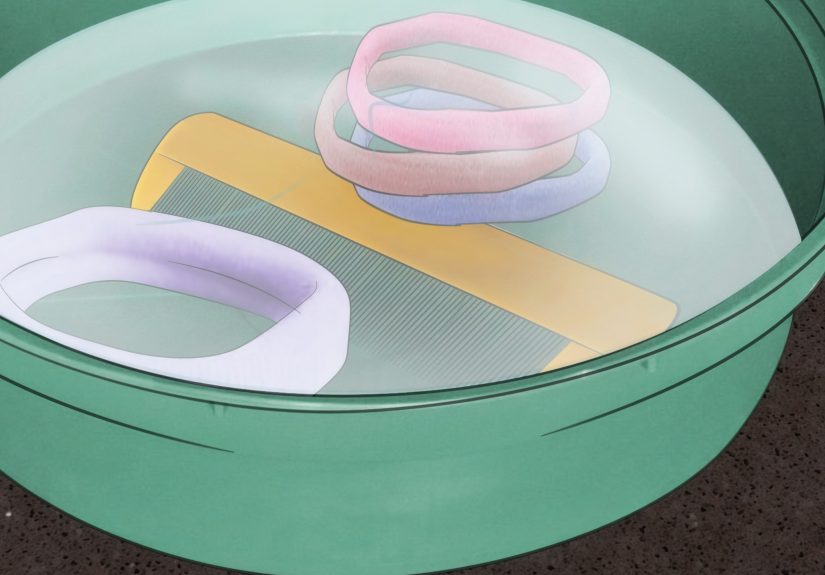
- Soak combs, brushes, and clips in hot water for 5–10 minutes (think: very hot tap water, not “lukewarm spa day”).
- Wash and dry clothing, bedding, and towels used in the last couple of days on hot settings when possible.
- Vacuum the spot where you combed, plus couches or car seats where heads rest often.
- Check close contacts in the household and treat only those with confirmed active infestation, unless your clinician advises otherwise.
Skip this
- Bug bombs or insecticide sprays in your house. They aren’t necessary and can add chemical exposure without real benefit.
- Flammable or irritating DIY remedies (anything you wouldn’t put on a baby’s skinso, most of the internet).
- Blow-dryer “heat treatments” at home. Besides being unreliable, moving air can blow lice around.
Troubleshooting: what to do when things get messy
If the comb snags constantly
- Make hair slices smaller.
- Detangle again with a wide-tooth comb.
- Use a tiny amount of detangler on the section you’re working on (not the whole head).
- If it’s still a battle, switch to wet combing with conditioner for that session.
If your child won’t sit still
- Set a timer: two 10-minute sessions can be easier than one 20-minute showdown.
- Let them watch a show, listen to a podcast, or hold a “special combing-only” fidget.
- Work the highest-yield areas first (behind ears + nape) in case you don’t finish.
If you keep finding nits but no live lice
Old nits and empty shells can linger even after successful treatment. If you’re not finding live lice across repeated checks, that’s reassuring. When in doubtespecially if itching continuesask a healthcare professional or school nurse to confirm what you’re seeing.
When to call a clinician
- If you’re unsure whether it’s lice (dandruff, product buildup, and lint can be convincing imposters).
- If there are open sores, crusting, or signs of infection from scratching.
- If lice persist after you used an over-the-counter product exactly as directed and you’re confident there’s no reinfestation.
- If the person is very young, pregnant, or has asthma/allergies and you’re considering medicated treatmentsget individualized guidance.
Real-world experiences: what people learn the hard way (about 500+ words)
If you’ve never dealt with head lice before, your first “comb-out” can feel like you accidentally enrolled in an advanced class called Microscopic Wildlife Management. What surprises most families isn’t just the workit’s the emotional whiplash. One minute you’re fine, the next minute you’re staring at a speck on a tissue like it’s a plot twist in a thriller. A lot of caregivers describe the initial discovery as the worst part: the moment when everyone’s scalp suddenly “itches,” even the dog (who, to be clear, is not the host for head lice).
The second surprise is how much the setup affects success. People who struggle often start by combing in a dim bathroom with one hand, while holding a phone flashlight with the other, and trying not to cry. People who succeed tend to create a simple routine: same chair, same bright lamp, same towel over shoulders, tissues ready, and hair clipped into sections like a neat little grid. Once you make it repeatable, it becomes less stressfulalmost like a household chore you can finish with a checklist.
Another common lesson: “dry hair” is not one texture. Straight, fine hair may comb smoothly with a good metal lice comb, while thick curly hair can turn dry combing into a tug-of-war. Families often adapt by doing “mostly dry” sessionsstarting dry for quick checks, then using the tiniest bit of detangler on just the snaggy section. Others switch entirely to wet combing for comfort and accuracy, then return to dry checks later to confirm results. The key takeaway is that you’re not failing if you change methods; you’re optimizing.
Parents also report that the fastest way to lose your mind is chasing perfection on day one. Instead of aiming to remove every nit in a single session, many people do better with a realistic rhythm: a thorough comb-out, then a scheduled follow-up every couple of days. It’s psychologically easier to think, “I’m going to outlast the life cycle,” rather than “I must win a nit-by-nit duel tonight.” This mindset helps because even after effective treatment, some empty shells can cling to hair and look alarming. Getting a second set of eyesanother caregiver, a relative, or a school nursecan save hours of second-guessing.
One more real-life detail: kids are more cooperative when they feel involved, not trapped. Some caregivers let the child pick the “combing movie,” hold the timer, or choose the clips. Others give a small reward after each section (“two clips donehigh fivenext zone”). It sounds silly until you realize you’re trying to do a meticulous task on a moving target who would rather be building a pillow fort.
Finally, many families say the biggest relief comes from learning what matters most: lice spread mainly through head-to-head contact, not because your home is “dirty,” and not because you missed one stuffed animal. Once people stop over-cleaning and focus on consistent checks, proper combing, and smart prevention (no sharing brushes, hair accessories, hats; minimizing head-to-head contact), they feel more in control. Lice are annoying, not a moral failingand with a calm routine and a good comb, they’re beatable.





 Close
Close