
Table of Contents >> Show >> Hide
- Table of Contents
- What an EpiPen Is (and When to Use It)
- How to Use an EpiPen: Step-by-Step Instructions
- What to Do Immediately After Using an EpiPen
- Common Mistakes (and How to Avoid Them)
- Using an EpiPen on a Child: Extra Tips
- Storage, Expiration, and Travel Tips
- FAQ: Quick Answers People Google in a Panic
- Real-World Experiences: What It’s Like in the Moment (and What People Wish They’d Known)
- Conclusion
Anaphylaxis is the kind of emergency that does not respect your calendar, your location, or your “I’ll just see if it gets better” optimism.
When a severe allergic reaction hits, epinephrine is the first-line treatmentand an EpiPen (an epinephrine auto-injector) is designed to help you deliver it fast.
This guide walks you through exactly how to use an EpiPen, what to do right after, and the practical “real life” tips people wish they’d learned before the moment got scary.
This article is for general education and does not replace medical advice. Always follow your clinician’s instructions and the directions that come with your specific device.
If you think someone is experiencing anaphylaxis, use epinephrine right away and get emergency medical help.
What an EpiPen Is (and When to Use It)
An EpiPen is a brand-name epinephrine auto-injector. Epinephrine (also called adrenaline) helps reverse the life-threatening symptoms of anaphylaxislike
airway swelling, trouble breathing, and dangerously low blood pressureby acting quickly on blood vessels and airways. In plain English: it buys time.
You still need emergency care, but epinephrine can keep the emergency from winning in the first few minutes.
Signs of anaphylaxis (think “fast and multi-system”)
Anaphylaxis can look different from person to person, and it can change quickly. You might see only a few symptoms at first, and thenbamthings escalate.
Common red flags include:
- Breathing/airway: wheezing, shortness of breath, repetitive cough, throat tightness, hoarse voice, trouble swallowing
- Skin: widespread hives, itching, flushing, swelling of lips/tongue/face
- Circulation: dizziness, fainting, pale/clammy skin, weak pulse, “I feel like I’m going to pass out”
- GI symptoms: severe belly pain, vomiting, diarrheaespecially if combined with breathing or circulation symptoms
- “Something is very wrong” feeling: sudden anxiety, confusion, or a sense of impending doom (your body’s dramatic but useful alarm)
When in doubt, use it
People often hesitate because they worry they’re “overreacting.” In anaphylaxis, delays are the real risk. Major medical organizations emphasize that
epinephrine should be given promptly when anaphylaxis is suspected. If you’re choosing between “maybe too soon” and “definitely too late,” pick soon.
Severe allergic reactions can be caused by foods (like peanuts, tree nuts, shellfish, milk, eggs), insect stings, medications, latex, and more.
If a known allergen exposure happens and symptoms start, treat it like the emergency it is.
How to Use an EpiPen: Step-by-Step Instructions
The goal is to inject epinephrine into the middle of the outer thigh (upper leg). It can be given through clothing if needed.
The EpiPen is designed for speedno assembly, no math, no time for a TED Talk.
The 15-second mental checklist (easy to memorize)
- Grab: EpiPen in your fist (orange tip down)
- Remove: pull the blue safety cap straight up
- Place: orange tip against the middle of the outer thigh
- Press & hold: push firmly until it activates, hold for 3 seconds
- Call 911: then monitor and be ready for a second dose if needed
Step-by-step EpiPen instructions
-
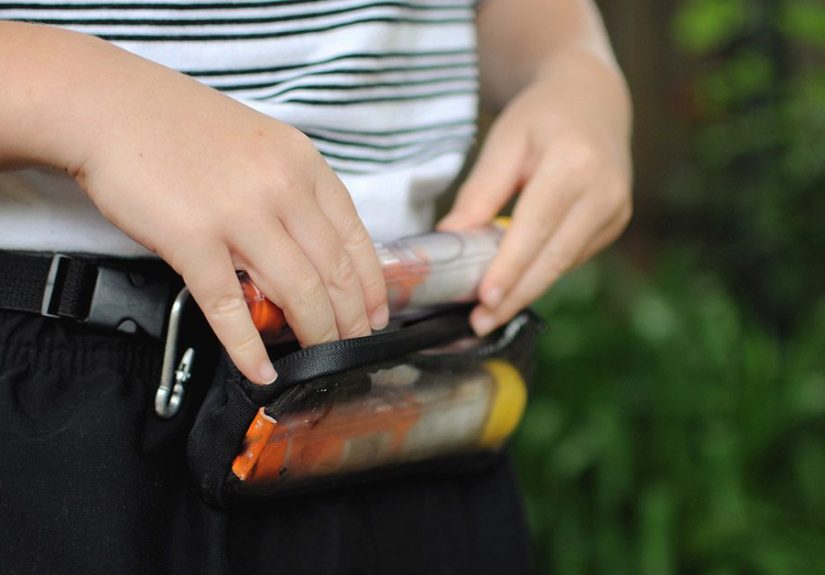
Remove the EpiPen from its carrier tube.
Don’t store it loose at the bottom of a bag with old receipts and a mystery granola bar. Keep it protected so it stays usable.
-
Hold it correctly: fist grip, orange tip down.
Keep fingers away from both ends. The needle comes out of the orange endso “orange end points to the thigh” is not just a catchy phrase; it’s injury prevention.
-
Remove the blue safety cap by pulling straight up.
Don’t bend, twist, or flick it off sideways. Pull it straight up so you don’t accidentally activate the device before it touches the thigh.
-
Place the orange tip against the middle of the outer thigh (upper leg).
Aim for the meaty outside part of the thighhalfway between hip and knee. You can inject through clothing if needed, but avoid thick seams or items in pockets.
-
Push firmly until it activates, then hold for 3 seconds.
You’ll usually hear/feel a click or pop. Keep it pressed firmly in place for 3 full seconds (count slowly: 1…2…3).
-
Remove the device and massage the injection site for about 10 seconds.
The orange needle end will extend to cover the needle after use. Don’t try to reuse it. If the needle is visible, keep the used device away from fingers.
Hold the child’s leg firmly in place before and during the injection. Kids + adrenaline + surprise “thigh poke” can equal sudden movement, and you want the dose delivered safely.
What to Do Immediately After Using an EpiPen
The injection is the first move, not the final scene. Epinephrine can wear off, symptoms can rebound, and some reactions come in waves.
Here’s what to do next:
1) Call 911 (or your local emergency number) and say “anaphylaxis”
Tell the dispatcher that epinephrine was given and the person may need additional doses and monitoring. Even if symptoms improve, emergency evaluation is still recommended.
2) Position matters: keep them safe from a sudden collapse
- If the person feels faint or looks pale/clammy, have them lie down (signs of shock).
- If breathing is severely difficult, they may need to sit up slightly to breathe more comfortably.
- If vomiting or unconscious, place them on their side (recovery position) while watching breathing.
3) Watch closely and note the time
Write down (or text yourself) the time the EpiPen was used and any symptom changes. EMS and ER teams will want this information.
Keep the used auto-injector to show responders.
4) Be ready for a second dose (many devices come in two-packs for a reason)
If symptoms don’t improve or they return, a second dose may be needed. Many medical references describe repeating epinephrine at roughly 5–15 minute
intervals when symptoms persist or recur while waiting for emergency care. Do not exceed your device’s instructions; if more than two doses are needed, that should be done by medical professionals.
Antihistamines can help itching or hives, but they are not a substitute for epinephrine in anaphylaxis. If there are breathing problems, throat swelling, fainting, or multi-system symptoms, epinephrine is the priority.
Common Mistakes (and How to Avoid Them)
Most EpiPen mistakes happen for the most relatable reason on earth: panic. The trick is to practice “calm muscle memory” before you ever need it.
Here are the big ones:
Mistake #1: Holding it upside down
Upside down can cause an accidental injection into the hand or thumb. Always remember:
orange tip = needle end = points to the thigh.
Mistake #2: Not holding long enough
Modern EpiPen instructions emphasize holding firmly in place for at least 3 seconds after activation. A rushed “tap” may not deliver the full dose.
Count it out loud if you have to.
Mistake #3: Picking the wrong injection site
The correct site is the middle of the outer thigh. Avoid injecting into a vein, buttocks, hands, feet, fingers, or toes.
The thigh is the best target for rapid absorption and safer administration.
Mistake #4: Waiting “just a little longer”
If anaphylaxis is suspected, delays can be dangerous. Don’t wait for symptoms to become unbearable or “more obvious.”
Treat early, call for help, and let emergency clinicians handle the rest.
Mistake #5: Not having two doses available
A second dose is sometimes needed if symptoms persist or come back. That’s why many guidelines and educational materials encourage patients to have access to two auto-injectors.
Consider keeping a backup in a known, accessible place (while still carrying one with you).
Using an EpiPen on a Child: Extra Tips
Using an EpiPen on a child is the same core process, with extra attention to preventing sudden movement and making sure caregivers at school or activities know the plan.
Practical tips for kids, schools, and caregivers
- Hold the leg firmly before pressing the device to the thigh.
- Keep it visible and accessiblenot locked in a drawer that requires a scavenger hunt during an emergency.
- Share an action plan with school staff, coaches, babysitters, and relatives (including when to use epinephrine and when to call 911).
- Practice with a trainer device so caregivers are familiar with the feel and steps.
Dose basics (why EpiPen vs. EpiPen Jr exists)
EpiPen and EpiPen Jr have different epinephrine doses. Prescribing is typically based on body weight (for example, the FDA label describes 0.3 mg for patients
around 30 kg/66 lb and above, and 0.15 mg for about 15–30 kg/33–66 lb). Always use the device prescribed for the patient.
Storage, Expiration, and Travel Tips
An EpiPen is only heroic if it works. Storage mistakes are commonand completely avoidable.
Storage essentials
- Keep at room temperature and protect from extreme heat or cold. Don’t leave it in a hot car or freezing glove compartment.
- Keep it in its protective case and store it in the outer carton to protect from light.
- Check the solution window periodically: it should look clear and colorless. If it’s discolored or contains particles, replace it.
- Track expiration dates like you track important birthdays. (Arguably more important than some birthdays.)
Travel and “everyday carry” tips
- Carry it with you, not in checked luggage.
- Tell travel companions where it is and how to use it. Your best friend can’t help if your EpiPen is hidden like a secret snack stash.
- Bring two when possible, especially for flights, road trips, hikes, and remote locations.
- Consider a medical ID and keep your emergency plan accessible on your phone.
FAQ: Quick Answers People Google in a Panic
Can you use an EpiPen through clothing?
Yes, many official instructions note it can be injected through clothing if necessary. Choose the outer thigh and avoid thick seams or pocket items.
Do you still need to call 911 if symptoms improve?
Yes. Educational materials and clinical guidance commonly recommend emergency evaluation after epinephrine because symptoms can return and additional treatment/observation may be needed.
How long does it take to work?
Epinephrine is designed to act quickly. You may see improvement within minutes, but timing varies based on the severity of the reaction and the person’s condition.
If symptoms persist or return, a second dose may be needed while awaiting emergency care.
What side effects might happen?
Common effects can include fast heartbeat, shakiness, anxiety, headache, or nausea. These can feel intense, but in anaphylaxis the risk of not giving epinephrine is far greater than the discomfort of typical side effects.
What if I’m not sure it’s anaphylaxis?
If a severe allergic reaction is suspectedespecially with breathing trouble, throat swelling, fainting, or multi-system symptomsdon’t wait.
Epinephrine is the first-line treatment, and major public health guidance notes there are no contraindications to giving epinephrine in anaphylaxis.
Real-World Experiences: What It’s Like in the Moment (and What People Wish They’d Known)
Let’s talk about the part that instruction diagrams don’t capture: the human experience. Most people don’t fail to use an EpiPen because they’re careless.
They hesitate because the moment feels surreallike your brain is trying to load an emergency update on slow Wi-Fi.
A common story from parents and caregivers goes like this: the reaction starts with something that seems “maybe mild.”
A few hives. A cough. A complaint that the throat feels “weird.” Then the clock speeds up. The child’s voice changes, breathing gets noisy, or they suddenly look
pale and frightened. Caregivers often describe a split-second of disbelief: “Is this really happening?” That pause is normalyour brain wants certainty.
But anaphylaxis doesn’t wait for certainty, and that’s why action plans emphasize giving epinephrine promptly.
Teachers and coaches often share a different challenge: responsibility. In a school or sports setting, you’re thinking about the student, the other kids, the policies,
the nurse’s office, the phone call to parents, and whether you’re “allowed” to do the injection. People who’ve been through it say the best preparation is clarity:
know where the auto-injector is stored, who is trained, and exactly what steps to take. The second-best preparation is practicing with a trainer device until your hands
can do the steps without your brain hosting a committee meeting.
Adults with food allergies describe the social side: restaurants, travel, and the pressure to “not make a fuss.” One person might notice itching and stomach cramps after a meal
and try to quietly ride it outuntil the breathing symptoms show up and the situation becomes unmistakable. Many say they wish they’d used epinephrine earlier instead of waiting,
and they wish they’d told friends where the EpiPen was before the moment they needed help. The simplest line“My EpiPen is in my right pocket/backpack side pouch”can be the difference
between a smooth response and a frantic search.
There’s also the physical sensation: epinephrine can feel like a sudden surgeshaky hands, pounding heart, adrenaline jitters. That can be alarming if you’re not expecting it.
People who’ve used an auto-injector often say the side effects were intense but manageable, and the improvement in breathing or dizziness was what mattered most.
The takeaway they repeat is blunt but useful: you might feel weird after epinephrine, but you can’t breathe through hesitation.
Finally, many people talk about the emotional aftershock. Even if the person recovers quickly, the experience can leave everyone shaken.
That’s why it helps to debrief later: replace the used device, review what happened, update the action plan, and practice again.
The goal isn’t to live in fearit’s to make sure, if lightning strikes twice, you already know where the umbrella is.
Conclusion
Knowing how to use an EpiPen is one of those life skills you hope you never needlike knowing where the fire extinguisher is.
But if anaphylaxis happens, fast epinephrine + emergency care can save a life. Memorize the core steps (blue cap off, orange to thigh, press and hold 3 seconds, call 911),
keep two doses available when possible, and practice before an emergency. Future-you will be grateful, even if present-you wishes the universe came with fewer allergens.






 Close
Close