
Table of Contents >> Show >> Hide
- What Happened at the Riyadh Comedy Festival?
- Why Human Rights Watch Objected
- The Free Speech Irony Was Hard to Miss
- Bill Burr, Dave Chappelle, and Kevin Hart Became the Faces of the Debate
- Supporters Say Engagement Can Create Change
- Critics Say the Festival Was Reputation Laundering
- The Money Question
- Why This Story Matters Beyond Comedy
- What Comedians Could Have Done Differently
- Experience Section: What This Controversy Teaches Performers, Fans, and Brands
- Conclusion
- SEO Tags
Comedy is supposed to punch up, poke holes in power, and make the room uncomfortable in the most useful way possible. So when some of the biggest names in stand-up comedy were announced for Saudi Arabia’s Riyadh Comedy Festival, the laughter came with a very serious question: can comedians who often defend free speech perform at a government-backed event in a country widely criticized for restricting it?
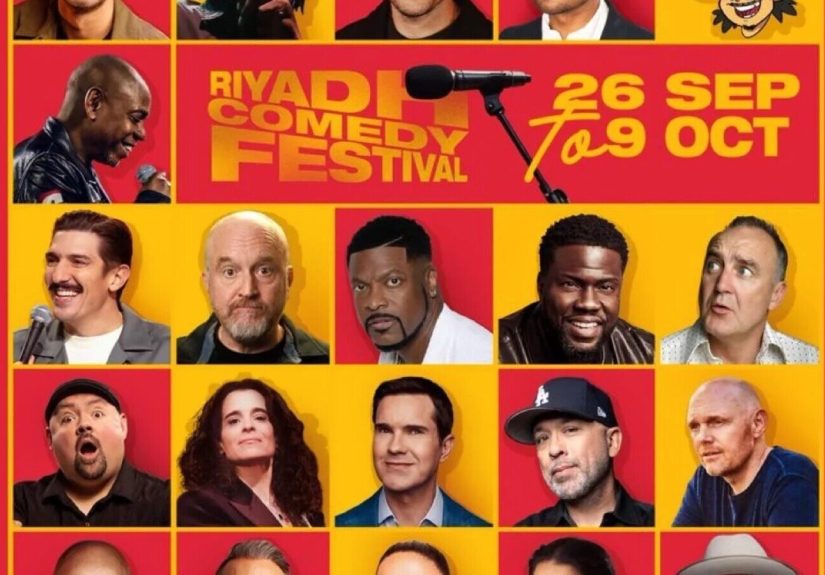
That question turned the Riyadh Comedy Festival into more than an entertainment story. It became a cultural ethics debate involving Human Rights Watch, Bill Burr, Dave Chappelle, Kevin Hart, Aziz Ansari, Pete Davidson, Louis C.K., and a long list of comedians, fans, activists, and critics. The festival promised a blockbuster comedy lineup. Human rights advocates saw something else: a polished international showcase that could help soften Saudi Arabia’s global image while activists, dissidents, journalists, and women’s rights defenders remained behind bars.
The headline may sound like a simple “perform or cancel” controversy, but the reality is more complicated. Human Rights Watch did not merely complain that comedians were telling jokes in Riyadh. The organization urged performers to avoid helping “whitewash” the Saudi government’s reputation and to use their high-profile stage to call for the release of detained activists. In other words, the central issue was not whether Saudi audiences deserve comedy. Of course they do. The issue was whether global stars were being used as decoration for a political rebrand.
What Happened at the Riyadh Comedy Festival?
The Riyadh Comedy Festival was promoted as a major international comedy event running from late September to early October 2025. Organizers billed it as one of the largest comedy festivals in the world, with more than 50 performers from the United States, the United Kingdom, Canada, and elsewhere. The list included major names such as Bill Burr, Dave Chappelle, Kevin Hart, Aziz Ansari, Pete Davidson, Louis C.K., Jimmy Carr, Chris Tucker, Hannibal Buress, Whitney Cummings, and others.
On paper, that sounds like a comedy fan’s dream lineup. In practice, it quickly became a public relations bonfire with a two-drink minimum. Human Rights Watch argued that the festival was part of a broader Saudi strategy to use entertainment, sports, tourism, and celebrity culture to improve the country’s international reputation. Critics often call this “sportswashing” or “artwashing,” depending on whether the guest of honor is a soccer star, a Hollywood actor, or a comedian holding a microphone.
Saudi Arabia’s Vision 2030 plan aims to diversify the country’s economy and position it as a global hub for entertainment and tourism. That strategy has brought major investments in sports, film, gaming, music, and live events. But human rights groups argue that cultural modernization should not distract from unresolved abuses, including restrictions on free expression, women’s rights activism, LGBTQ+ rights, and political dissent.
Why Human Rights Watch Objected
Human Rights Watch framed the festival as a reputational shield for the Saudi government. The group urged participating comedians to publicly call for the release of detained Saudi activists, including human rights lawyer Waleed Abu al-Khair and women’s rights activist Manahel al-Otaibi. HRW also noted the timing: the festival overlapped with the anniversary of the 2018 murder of journalist Jamal Khashoggi, a killing that remains central to criticism of Saudi leadership.
The organization’s message was blunt: comedians who build careers around free speech should not stay silent in a place where free speech is severely limited. That argument struck a nerve because several performers on the bill have often spoken about censorship, cancel culture, and the right to offend. Critics asked why those principles seemed loud in America but quiet in Riyadh.
To be fair, HRW later clarified that it was not simply demanding a boycott from every performer. The organization said it wanted comedians to use their visibility to support activists and defend free expression. That distinction matters. A cancellation makes a statement from outside the room. A public call from the stage would have made a statement inside the room. HRW wanted the second option at minimum.
The Free Speech Irony Was Hard to Miss
Stand-up comedy has always had an uneasy relationship with boundaries. A great comic can make an audience laugh at something they are nervous to discuss. But that only works when the comic is allowed to aim at the powerful. According to reporting around the festival, some performers were presented with content restrictions that appeared to prohibit jokes about Saudi Arabia, the royal family, the legal system, the government, or religion.
That is where the controversy turned from “Should comedians take foreign gigs?” into “Can you call yourself a free speech warrior while agreeing not to joke about the people paying you?” It is one thing to adjust a set for local culture. Every comedian does that. A joke about Costco may not soar in a country without Costco. But avoiding jokes about the government because the government is hosting the event is a different punchline entirely.
Comedian Atsuko Okatsuka, who said she turned down an invitation, publicly discussed proposed restrictions and criticized the contradiction. Other comedians, including Marc Maron, Shane Gillis, Zach Woods, Mike Birbiglia, and David Cross, also spoke out or said they declined offers. Some critics were sharp, some were sarcastic, and some were both. Comedy people rarely send a polite memo when a flamethrower is available.
Bill Burr, Dave Chappelle, and Kevin Hart Became the Faces of the Debate
Although many comedians were associated with the festival, Bill Burr, Dave Chappelle, and Kevin Hart became three of the most discussed names because of their status and public personas. Each represents a different corner of modern stand-up celebrity: Burr as the blunt everyman ranter, Chappelle as the provocative free speech icon, and Hart as the global entertainment brand who can sell out arenas and probably motivate a lamp to launch a podcast.
Burr defended his decision after performing, describing the experience positively and suggesting that cultural exchange could have value. His supporters argued that meeting audiences directly can humanize people across political divides. His critics countered that the issue was never the Saudi audience. It was the state-backed platform, the restrictions, and the money attached to the performance.
Chappelle drew attention for reportedly joking that it felt easier to speak in Saudi Arabia than in the United States. That comment landed awkwardly for critics because Saudi Arabia is widely criticized for imprisoning dissidents and limiting speech. To fans who already agree with Chappelle’s views on American cancel culture, the joke may have sounded like classic Chappelle provocation. To human rights advocates, it sounded like a free speech argument delivered in a venue where certain speech was off-limits.
Kevin Hart, meanwhile, received criticism less for specific comments and more for participation. Hart is one of the most commercially successful comedians in the world, and his presence gave the event enormous star power. When a performer of that size appears at a festival, it is not just a show. It is a signal that the event belongs on the global entertainment calendar.
Supporters Say Engagement Can Create Change
Not every argument in favor of performing was shallow. Some defenders said that cultural engagement can open doors, connect people, and expose local audiences to different perspectives. Comedy can travel where official diplomacy struggles. A room full of people laughing together is not nothing. It may not rewrite laws, but it can create small moments of connection.
Others argued that boycotts can isolate ordinary people while doing little to pressure governments. From that view, performing in Saudi Arabia is not automatically an endorsement of every Saudi policy. After all, artists perform in countries with flawed governments all the time. If moral purity were required for touring, most global concert calendars would collapse faster than a folding chair at a county fair.
Those points deserve consideration. The problem is that engagement becomes harder to defend when the event is organized as part of a state image campaign, when performers are paid huge sums, and when reported restrictions limit criticism of the host government. Engagement without honesty can become decoration. Dialogue without permission to criticize power can become branding.
Critics Say the Festival Was Reputation Laundering
Critics used the term “whitewashing” because they believed the festival helped Saudi Arabia present a friendlier global image without addressing serious human rights concerns. The country has invested heavily in high-profile entertainment and sports events, including boxing, golf, Formula 1, soccer, film, and now comedy. These events attract international audiences, generate positive headlines, and shift attention toward spectacle.
The concern is not that Saudi citizens should be denied entertainment. The concern is that celebrity culture can make political problems feel distant, boring, or impolite to mention. A slick festival poster featuring beloved comedians can do powerful image work. It says: look, the world’s funniest people are here; everything must be fine. Human rights advocates argue that everything is not fine.
That is why HRW urged comedians to mention detained activists by name. Names matter. A general statement about “human rights” can float away like smoke. A demand to release specific prisoners is harder to ignore. It gives the audience, the press, and the government something concrete to confront.
The Money Question
Money was another unavoidable part of the conversation. Reports suggested that some performers were offered very large fees, with figures ranging from hundreds of thousands of dollars to more than a million for top names. Comedy is work, and comedians deserve to be paid. But when the paycheck comes from a government-backed event with reputational stakes, the fee becomes part of the ethical equation.
Several comedians who declined the festival joked about losing a “bag,” meaning a major payday. That honesty made the debate more relatable. It is easy to be noble when nobody is offering you a life-changing check. It is harder when the number has enough zeros to make your accountant start speaking in tongues.
Still, critics argued that wealthy performers have more room to say no than nearly anyone else in entertainment. A struggling comic taking a questionable corporate gig is one thing. A superstar with Netflix specials, arena tours, production companies, and endorsement power is another. The bigger the platform, the bigger the responsibility.
Why This Story Matters Beyond Comedy
The Riyadh Comedy Festival controversy is not just about jokes. It is about how culture, money, politics, and reputation now work together. Governments understand that celebrity attention can shift global perception. A festival can do what a press release cannot. A famous comedian can make a country feel modern, open, and fun in the eyes of fans who may never read a human rights report.
This is why entertainers are increasingly asked to think like diplomats, whether they want the job or not. A comedian may say, “I’m just here to tell jokes.” But when the stage is built by a state trying to change its image, “just jokes” becomes a very small umbrella in a very large storm.
For audiences, the controversy raises another question: what do we expect from artists we admire? Do we want them to be morally consistent? Politically brave? Completely apolitical? Or just funny enough to distract us from the fact that our phones are ruining our attention spans and our group chats are legally unmanageable?
What Comedians Could Have Done Differently
There were several possible responses available to performers. They could have declined the invitation and publicly explained why. They could have accepted but negotiated the right to speak freely. They could have used press interviews to call for the release of detained activists. They could have donated fees to rights organizations while also naming specific cases. Or they could have taken the stage and made the contradiction part of the performance.
The least persuasive option was silence. Silence may protect the gig, but it rarely protects the principle. For comedians who regularly discuss free expression, silence in this context looked especially loud.
That does not mean every performer had to deliver a courtroom argument between jokes. Nobody expected a 45-minute set to turn into a United Nations hearing with crowd work. But a sentence matters. A name matters. A public statement matters. When a famous person speaks, reporters write it down. That is power, and HRW wanted that power used for people who do not have it.
Experience Section: What This Controversy Teaches Performers, Fans, and Brands
The most useful way to understand this controversy is to imagine the experience from several sides. For a performer, the invitation likely felt flattering at first. A huge international stage, a massive fee, luxury travel, and a crowd excited to see live stand-up can be hard to dismiss. Comedy careers are unpredictable. Even famous comics know that public taste changes quickly. When someone offers a major payday, the practical part of the brain starts doing cartwheels.
Then comes the second experience: reading the room before entering it. A comedian has to ask what the event is meant to accomplish. Is it simply a show for fans, or is it part of a larger campaign to project soft power? The answer changes the moral weight of the booking. A private theater gig is different from a state-backed festival promoted as proof that a country is modernizing. The same joke can have a different meaning depending on who built the stage.
For fans, the experience is also uncomfortable. People do not like discovering that artists they love made choices that clash with values they claim to hold. A fan of Bill Burr may admire his willingness to say unpopular things. A fan of Dave Chappelle may see him as a defender of artistic freedom. A fan of Kevin Hart may respect his relentless work ethic and global ambition. When those same performers appear at an event criticized for censorship and human rights concerns, fans have to decide whether admiration includes accountability.
For brands and event organizers, the lesson is even clearer: celebrity participation is never neutral when politics is already in the room. Hiring famous entertainers can bring attention, but attention invites scrutiny. If the goal is image repair, the performers may become part of the story in ways nobody can fully control. The bigger the name, the bigger the backlash when the public sees a contradiction.
For younger comedians watching from the sidelines, this moment becomes a case study in career ethics. Most comics will never face a multimillion-dollar festival offer from a foreign government. But many will face smaller versions of the same dilemma: a corporate gig with uncomfortable rules, a private event for a questionable client, or a contract that asks them to avoid certain truths. The Riyadh debate reminds performers to decide their boundaries before the check appears. Boundaries are easier to negotiate before your rent, ego, and manager are all staring at the same number.
The experience also teaches audiences to separate people from governments without pretending governments are irrelevant. Saudi audiences can love comedy and deserve cultural life. That does not erase the concerns raised by Human Rights Watch. Both ideas can be true at once. The people in the seats are not the same as the state that funds the spectacle, but the spectacle still serves a state purpose.
Ultimately, the controversy shows that comedy is not outside politics. It never has been. The court jester was funny because the king was in the room. The modern stand-up is powerful because the audience senses when truth is being smuggled through laughter. When certain truths are banned, the silence becomes part of the show. And sometimes, the joke everyone remembers is the one nobody was allowed to tell.
Conclusion
The Human Rights Watch plea involving Bill Burr, Dave Chappelle, Kevin Hart, and the Riyadh Comedy Festival became a flashpoint because it exposed a contradiction at the heart of modern entertainment. Comedy sells itself as fearless, but global celebrity often depends on sponsors, platforms, and governments with their own agendas. The Saudi Arabian Comedy Festival offered fame, money, and international reach. Human rights advocates asked whether those benefits came at the cost of silence.
The most balanced view is not that comedy should avoid Saudi Arabia forever or that every performer who went is beyond redemption. The sharper point is that artists who profit from free speech should recognize when their presence is being used to polish the image of power. If comedians want the right to offend, they should also defend the people punished for speaking before anyone handed them a microphone.





 Close
Close