
Table of Contents >> Show >> Hide
- Why This Story Hit So Many Readers Right In The Feelings
- The Difference Between Wanting Certainty And Making An Accusation
- Paternity Tests Are Scientifically Simple, But Emotionally Complicated
- Why The Wife’s Sacrifices Matter So Much
- Postpartum Stress Can Make The Timing Even More Painful
- What A Paternity Test Demand Can Reveal About A Marriage
- Should A Wife Agree To A Paternity Test?
- How Couples Can Handle A Paternity Test Conflict More Carefully
- The Online Debate: Is Asking For A Paternity Test Fair?
- Why Appreciation Could Have Changed Everything
- Experience-Based Reflections: What This Situation Teaches Real Couples
- Conclusion: The Test Was About DNA, But The Damage Was About Trust
There are marriage disagreements, and then there are emotional earthquakes disguised as “just one simple request.” A husband asking for a paternity test may sound, on paper, like a quick scientific errand: swab cheek, mail kit, wait for results, move on. But in real life, especially in a marriage built on years of sacrifice, debt-sharing, child-rearing, and emotional labor, that request can land like a brick through a stained-glass window.
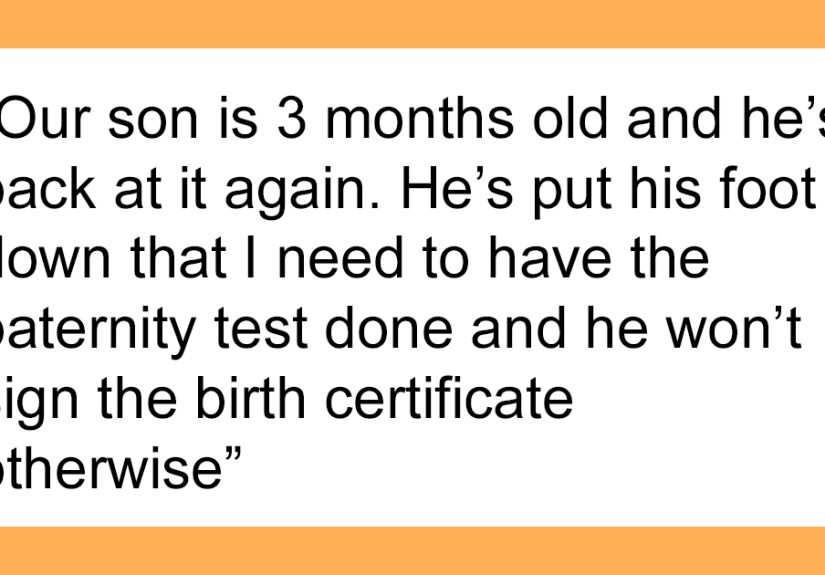
The viral story behind the title “Husband’s Paternity Test Demand Shatters Wife After Years Of Sacrifice Go Unnoticed” struck a nerve because it was never just about DNA. It was about trust. It was about a wife who felt that everything she had poured into the relationshipfinancial support, loyalty, emotional patience, and family-buildingwas suddenly treated as less convincing than a suspicion with no solid evidence. In other words, the husband did not merely ask, “Can we confirm something?” He accidentally asked, “Was everything you gave me a lie?”
Modern DNA paternity testing is highly advanced, and relationship DNA testing is widely available through labs, medical settings, and at-home kits. Cleveland Clinic notes that paternity testing commonly uses cheek swabs or blood samples and can help determine whether a man is a child’s biological father. AABB also explains that relationship testing standards matter, especially when results are used for legal purposes. Still, the emotional meaning of a paternity test inside a marriage is very different from its scientific definition. Science may answer a biological question, but it cannot automatically repair the emotional damage caused by how that question was asked.
Why This Story Hit So Many Readers Right In The Feelings
The reason this situation spread online is simple: people recognized the deeper wound. A paternity test demand often implies suspicion of infidelity. For a wife who has been faithful and supportive, especially after childbirth, the request can feel less like “peace of mind” and more like a character assassination wearing a lab coat.
In the reported story, the wife was stunned because the accusation seemed to appear suddenly. She had not only helped build their household but had also reportedly taken on major responsibilities that benefited her husband. That detail matters. When someone spends years carrying emotional and practical weight, being met with distrust can feel brutally unfair. It is like cooking dinner every night for five years and then being asked if you secretly poisoned the soup. Technically, it is a question. Emotionally, it is a disaster with garnish.
Readers were divided because paternity testing sits at the intersection of personal rights, parental certainty, trust, gender expectations, and emotional timing. Some people argue that fathers should have certainty. Others argue that asking for proof without evidence tells a faithful partner, “My fear matters more than your integrity.” Both concerns deserve careful discussion, but the way the request is made can determine whether the conversation becomes a bridge or a wrecking ball.
The Difference Between Wanting Certainty And Making An Accusation
There is a major difference between saying, “I am struggling with anxiety and need help understanding why,” and saying, “You tricked me.” One invites conversation. The other lights a match in a room full of gasoline.
In relationship conflicts, tone and context are not decorative extras. They are the whole building. A husband who calmly explains insecurity, acknowledges the pain his request may cause, and accepts responsibility for his emotions is having a difficult conversation. A husband who frames the mother of his child as deceptive without proof is making an accusation.
That distinction is crucial for SEO readers searching terms like “husband asks for paternity test,” “paternity test marriage conflict,” “wife hurt by paternity test request,” or “trust issues after baby.” The problem is rarely the DNA test alone. The problem is what the request communicates: suspicion, doubt, possible resentment, and a lack of recognition for the wife’s sacrifices.
Paternity Tests Are Scientifically Simple, But Emotionally Complicated
A DNA paternity test can be straightforward from a laboratory perspective. According to Cleveland Clinic, most paternity tests collect DNA through cheek cells, and results can often be available within days or weeks depending on the type of test. AABB-accredited testing may be important when results are intended for legal use, such as custody, child support, immigration, or official documentation.
But inside a marriage, the test is not just a test. It becomes a symbol. To one spouse, it may symbolize certainty. To the other, it may symbolize humiliation. One person may see it as a one-time answer. The other may hear, “I believe you may have betrayed me, lied to me, and passed off another person’s child as mine.” That is not a tiny emotional paper cut. That is a full-blown trust injury.
This is why many couples therapists emphasize communication before escalation. The Gottman Institute has written extensively about trust and betrayal, noting that rebuilding trust requires accountability, transparency, and consistent repair. Verywell Mind similarly explains that rebuilding trust can be possible, but it requires effort from both partners, not just a demand that one person “get over it.”
Why The Wife’s Sacrifices Matter So Much
The phrase “years of sacrifice go unnoticed” is the emotional engine of this story. Many marriages contain invisible labor: planning appointments, managing household details, supporting a partner through financial stress, carrying pregnancy, recovering from childbirth, feeding a baby at odd hours, remembering which cabinet holds the tiny socks, and somehow knowing when the wipes are down to the last three. This labor often becomes noticeable only when it stops.
When a wife has sacrificed for her family and then receives suspicion instead of appreciation, the pain cuts deeper. She is not merely upset about a test. She is grieving the realization that her loyalty may not have been seen. Her husband’s demand can feel like a receipt for years of effort stamped with “insufficient proof.”
In many households, women carry a disproportionate amount of emotional labor, even when both partners work. That includes anticipating needs, smoothing conflicts, organizing routines, and protecting the family’s emotional temperature. When that labor is ignored, resentment can build quietly. A paternity test demand can then become the moment everything hidden comes rushing to the surface.
Postpartum Stress Can Make The Timing Even More Painful
If the paternity test request comes during pregnancy or after birth, the emotional stakes are even higher. The postpartum period can involve physical recovery, sleep deprivation, hormone shifts, identity changes, feeding challenges, and anxiety. ACOG explains that postpartum depression can involve intense sadness, anxiety, or despair and is treatable with support, therapy, and sometimes medication. CDC also emphasizes that depression among women, including postpartum depression, is common and treatable.
Mayo Clinic notes that many new mothers experience “baby blues” after childbirth, including mood swings, crying spells, anxiety, and sleep problems, while postpartum depression is more severe and longer-lasting. In this fragile season, a partner’s support can feel like oxygen. A partner’s accusation can feel like someone opening a window during a snowstorm.
That does not mean a father’s anxiety is fake or irrelevant. New fathers can struggle too. But emotional distress does not give anyone a free pass to wound their partner carelessly. A healthier approach would be: “I am embarrassed to say this, but I am having intrusive fears. I know this may hurt you, and I want to talk with a counselor because I do not want my insecurity to damage our family.” That sentence may still be painful, but it is far less destructive than “You tricked me.”
What A Paternity Test Demand Can Reveal About A Marriage
Sometimes the paternity test is not the real issue. It is the flashlight that reveals the cracks already running through the foundation.
1. Unspoken Insecurity
A partner may feel financially behind, emotionally dependent, or afraid of abandonment. Instead of naming that insecurity, they may project it as suspicion. If the wife travels for work, earns more, has independence, or receives attention outside the home, an insecure husband may create a story that explains his fear: “She must be cheating.” The story feels easier than admitting, “I feel inadequate.”
2. Poor Conflict Skills
Some people only know how to express fear as accusation. They do not say, “I feel scared.” They say, “You did something wrong.” This turns a vulnerable conversation into a courtroom drama, except nobody asked for opening statements and the baby is probably chewing on a sock in the background.
3. Lack Of Appreciation
If one partner has repeatedly sacrificed and the other has failed to recognize it, resentment becomes highly flammable. The paternity test request may simply be the spark.
4. Broken Trust
Trust is not only broken by cheating. It can also be broken by baseless accusations, secrecy, contempt, repeated dismissal, and emotional abandonment. A spouse can be faithful and still feel betrayed by being treated as untrustworthy.
Should A Wife Agree To A Paternity Test?
There is no one-size-fits-all answer. Some wives may agree to the test but also set a boundary: “I will do it, but we are going to counseling because this accusation changed something between us.” Others may refuse unless there is a legal reason or a serious conversation first. Still others may agree simply to protect the child from ongoing tension.
The key is that consent should not mean emotional silence. If a wife agrees to a paternity test while feeling devastated, the husband does not get to declare the matter closed the moment the result confirms paternity. The result may answer biology, but it does not erase the accusation. Repair requires more than being proven wrong. It requires humility.
A sincere apology would include specific accountability: “I hurt you by accusing you without evidence. I understand that the test request suggested I doubted your loyalty and the life we built. I am sorry, and I want to understand why I let fear damage our trust.” That is very different from, “Well, now we know, so why are you still mad?” One is repair. The other is emotional duct tape, and duct tape is not marriage therapy.
How Couples Can Handle A Paternity Test Conflict More Carefully
If a couple faces this issue, the goal should be to protect the child, respect both parents, and address the emotional wound honestly. A few practical steps can help prevent the situation from turning into a permanent scar.
Start With The Real Feeling
The person asking for the test should explain the emotion underneath the request. Is it anxiety? Family pressure? A comment from someone else? Fear because the child does not resemble him? Past betrayal from a previous relationship? Naming the real issue does not erase the hurt, but it helps keep the conversation honest.
Avoid Accusatory Language
Words like “tricked,” “lied,” or “cheated” should not be thrown around casually. If there is no evidence, say that. A partner can admit insecurity without turning the other person into a defendant.
Consider Counseling
Couples counseling can help partners discuss painful topics without turning every sentence into a verbal dodgeball tournament. Therapy is not a punishment. It is a structured place to slow down, listen, and repair.
Protect The Child From Adult Conflict
No child should grow up feeling like a disputed invoice. Whatever the adults decide, the child’s emotional safety should remain the priority. Arguments about paternity, loyalty, or betrayal should stay away from little ears.
The Online Debate: Is Asking For A Paternity Test Fair?
Online reactions to stories like this usually split into two camps. One side argues that men deserve certainty because motherhood is biologically obvious while fatherhood often depends on trust. The other side argues that demanding a test inside a committed marriage without evidence is an accusation of cheating and reproductive deception.
Both sides are reacting to real fears. Some men fear being deceived. Some women fear being punished for someone else’s insecurity. The healthiest discussion acknowledges both concerns while refusing to flatten the wife’s pain into “just take the test.” A marriage is not a customer service counter where one person submits a request and the other must comply with a smile.
The real question is not only whether paternity testing should be available. It is how partners treat each other when fear enters the room. Do they reach for honesty, or do they reach for blame? Do they ask for reassurance, or do they issue accusations? Do they see each other’s sacrifices, or only their own panic?
Why Appreciation Could Have Changed Everything
Imagine a different version of the same story. The husband says, “You have done so much for this family. I know this is painful, and I hate that I am even struggling with this fear. I think I need help sorting it out.” That conversation would still sting. But it would at least begin with recognition.
Appreciation does not solve every problem, but it softens hard conversations. When people feel seen, they are more likely to stay open. When they feel used, ignored, or accused, they naturally protect themselves. In this case, the wife’s heartbreak was intensified by the sense that her years of support had not built credibility in her own marriage.
Trust is not built in one dramatic moment. It is built through thousands of ordinary ones: paying bills together, showing up when someone is sick, sharing burdens, choosing honesty, forgiving small annoyances, and not assuming the worst every time fear whispers something ugly. When a husband demands proof after years of loyalty, he risks telling his wife those moments did not count.
Experience-Based Reflections: What This Situation Teaches Real Couples
Many couples can learn from this story even if they never face a paternity test conflict. At its core, this is a lesson about emotional timing, gratitude, insecurity, and the danger of letting private fears become public accusations.
One common experience in long-term relationships is that sacrifice becomes background noise. At first, a partner notices every helpful gesture. Over time, the same gestures become expected. The wife who works long hours, manages household needs, supports her husband’s goals, carries pregnancy, and cares for a child may slowly become “the person who just handles things.” That phrase sounds efficient, but it can hide loneliness. Nobody wants to be loved only for being useful.
Another relatable experience is the shock of being misunderstood by the person closest to you. A stranger’s suspicion may annoy you, but a spouse’s suspicion can destabilize your identity. You think, “After all this time, is that really who you think I am?” That question can hurt more than the accusation itself. It suggests a gap between how one partner has lived and how the other partner has interpreted that life.
Couples also learn that insecurity does not stay neatly inside one person. If a husband feels inadequate, jealous, or afraid, those emotions can spill into the marriage unless he takes responsibility for them. The same is true for any partner. Unmanaged insecurity often disguises itself as control: checking phones, questioning schedules, demanding proof, or interpreting independence as betrayal. These behaviors may temporarily calm the anxious person, but they slowly exhaust the accused partner.
The paternity test demand also teaches that facts and feelings run on different clocks. A DNA result may arrive in a week or two, but emotional repair may take months. The husband may think, “The result proved everything is fine.” The wife may think, “The result proved I was telling the truth, but it also proved you doubted me.” Both things can be true. The lab report may close the biological question while opening a marital one.
In real relationships, repair usually begins with listening without defensiveness. The husband would need to hear the wife’s pain without rushing to explain himself. The wife would need space to decide what she needs next: an apology, therapy, time, changed behavior, or firmer boundaries. Repair cannot be forced by saying, “Can we just move on?” Moving on without repair is how resentment gets a guest room and starts receiving mail.
There is also a parenting lesson here. Children do not need perfect parents, but they do need emotionally responsible ones. If a conflict about paternity becomes a household war, the child may absorb tension they cannot understand. The adults must remember that the child is not evidence, not a bargaining chip, and not the cause of the conflict. The child is a person who deserves stability, affection, and protection from adult fear.
For readers who see themselves in this story, the takeaway is not simply “never ask for a paternity test” or “always agree to one.” The deeper takeaway is this: handle fear with care. If you are the person feeling doubt, do not weaponize it. If you are the person being doubted, your hurt is valid. If you both want the relationship to survive, the conversation must include truth, accountability, and respect.
A marriage can survive painful questions, but it rarely survives contempt. It can survive insecurity, but not if insecurity is treated as proof. It can survive a paternity test, but not if one partner uses science to avoid empathy. The strongest couples are not the ones who never feel fear. They are the ones who refuse to let fear speak in cruelty’s voice.
Conclusion: The Test Was About DNA, But The Damage Was About Trust
The story of a husband’s paternity test demand shattering his wife after years of sacrifice resonates because it exposes a painful truth: trust is not automatically protected by marriage vows, shared bills, or even parenthood. It must be maintained through appreciation, honest communication, and emotional responsibility.
A paternity test can answer whether a biological relationship exists. It cannot answer whether a partner feels valued. It cannot prove years of loyalty mattered. It cannot undo careless accusations. That work belongs to the people in the relationship.
For any couple facing this issue, the best path is not denial, mockery, or emotional shutdown. It is honest conversation, careful language, professional support when needed, and a clear commitment to protect the child from adult conflict. Because in the end, the most important result is not only what the test says. It is what the partners do after the trust has been tested.







 Close
Close