
Table of Contents >> Show >> Hide
- The Story Behind Rzewuski Palace
- Why Abandoned Palaces in Poland Feel So Powerful
- Walking Through the Palace With a Camera
- The Broken Piano: The Palace’s Most Haunting Detail
- How Light Turns Ruin Into Art
- Urban Exploration Ethics: Beauty Without Damage
- Why These 30 Photos Matter
- The Palace as a Character
- Photography Tips Inspired by the Palace
- Why Viewers Love Eerie Abandoned Places
- Experiences Related to Capturing the Eerie Beauty of an Abandoned Palace in Poland
- Conclusion
Some places ask politely to be photographed. Others practically grab your camera, clear their dusty throat, and say, “You may want to get my good side before the ceiling gives up.” Rzewuski Palace in Bratoszewice, Poland, belongs firmly in the second category. It is elegant, wounded, theatrical, and haunting in the way only a once-proud residence can be when time has moved in and redecorated without asking permission.
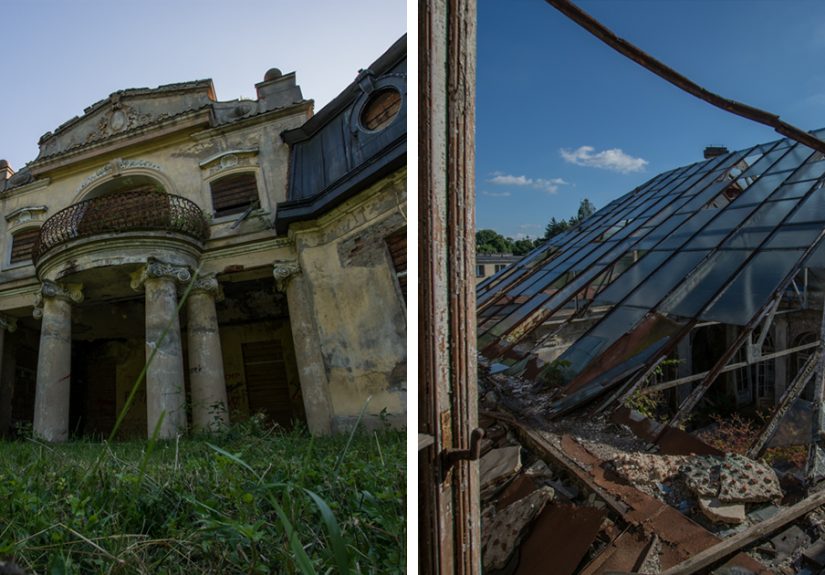
This abandoned palace in Poland is not just another spooky building with peeling paint and a dramatic staircase. It is a layered historical space: a summer residence built in the early 20th century, a postwar school, an office-and-housing complex, a fire-damaged ruin, and, for years, a magnet for urban explorers and photographers drawn to its broken piano, faded rooms, and quiet architectural dignity. In 30 photos, the palace becomes more than a ruin. It becomes a visual essay on memory, neglect, resilience, and the strange romance of places that refuse to disappear quietly.
The Story Behind Rzewuski Palace
Rzewuski Palace, located in the village of Bratoszewice in Łódź Voivodeship, was built between 1921 and 1922. It was commissioned by Count Kazimierz Rzewuski as a summer residence for a family that lived mainly in Warsaw. The project was designed by Juliusz Nagórski, a respected Warsaw architect whose work gave the palace a refined, aristocratic presence rather than the over-the-top “look, I bought every column in Europe” energy some mansions tend to have.
The palace had the kind of life many Polish residences experienced in the 20th century: glamorous beginnings, wartime disruption, postwar nationalization, practical reuse, and then decline. After World War II, the building became part of an agricultural school. Later, offices and apartments for school employees were placed inside. For a while, the palace was not a forgotten monument but a working building full of footsteps, paperwork, lessons, conversations, and probably someone complaining that the heating did not work properly.
Then came the disaster that changed everything. A fire in the mid-1980s damaged the palace and accelerated its deterioration. Renovation attempts were made, but they stalled. Over time, the rooms emptied, the roof suffered, the walls weakened, and nature began its slow, patient takeover. The building became a favorite subject for abandoned palace photography, especially because of one unforgettable detail: an old, damaged piano standing inside like the last musician at a very sad ball.
Why Abandoned Palaces in Poland Feel So Powerful
Poland has many abandoned mansions, castles, and palaces, and they are rarely simple stories of “rich people left, dust arrived, photographers followed.” Many were affected by war, shifting borders, nationalization, changing ownership, fires, lack of funds, legal disputes, and decades of uncertain responsibility. In regions like Lower Silesia, historic residences were especially vulnerable after 1945, when former estates changed hands and many buildings lacked careful long-term protection.
That larger context matters because it turns a photograph of a cracked wall into something deeper. A ruined palace is not only “creepy content.” It is evidence of political change, economic pressure, heritage loss, and the difficulty of preserving large buildings that no longer fit easily into modern life. A palace was designed to house privilege, ceremony, servants, guests, and gardens. The 21st century looks at all that square footage and says, “Beautiful. Also, who is paying for the roof?”
The eerie beauty comes from the collision between grandeur and fragility. You see the bones of elegance: tall windows, staircases, decorative fragments, room proportions, traces of craftsmanship. But you also see collapse, graffiti, water damage, missing plaster, and the awkward fact that time is the world’s most committed demolition crew. In Rzewuski Palace, that contrast is especially sharp because the building is not ancient. It is barely over a century old, which makes its decline feel close enough to touch.
Walking Through the Palace With a Camera
Photographing a place like this is not about rushing from room to room collecting “spooky” images like souvenirs. The best abandoned palace photography is slower. It pays attention to light, silence, texture, and the emotional rhythm of the building. A hallway is not just a hallway. It is a tunnel of former routines. A window is not just a frame. It is where someone once looked out at a park, a road, a storm, or maybe a delivery wagon carrying something more interesting than another sack of potatoes.
In a 30-picture series, the photographer has room to build atmosphere. Wide shots establish the scale of the palace. Interior frames reveal damage and detail. Close-ups of peeling paint, broken wood, and abandoned objects create intimacy. The piano becomes a character. The staircase becomes a spine. The windows become eyes. The silence becomes the soundtrack, which is convenient because ruins rarely pay for music licensing.
Good composition is crucial. In abandoned buildings, visual chaos is everywhere: fallen debris, uneven shadows, bright holes in the roof, random objects, damaged floors, and walls that seem to be competing in a “most dramatic texture” contest. A strong photographer uses lines, symmetry, negative space, and natural light to organize the scene. The goal is not to make decay look pretty in a shallow way. The goal is to help viewers understand why the place still matters.
The Broken Piano: The Palace’s Most Haunting Detail
Every abandoned landmark seems to have one object that becomes its unofficial mascot. In Rzewuski Palace, that object is the old broken piano. It is easy to understand why. A piano is never just furniture. It suggests music, gatherings, lessons, family evenings, formal events, and private practice sessions where someone played the same wrong note 47 times while everyone in the house pretended not to hear.
Placed inside a decaying palace, the piano becomes a visual metaphor almost too perfect to be real. Its damaged body echoes the damaged building. Its silence suggests lost voices. Its presence hints at refinement, education, and culture, even while the room around it falls apart. Viewers do not need a history lecture to feel something. The image does the emotional heavy lifting.
That is why the palace has circulated online under descriptions like “abandoned piano palace.” The name is memorable, searchable, and instantly atmospheric. For SEO, phrases such as abandoned palace in Poland, Rzewuski Palace, abandoned piano palace, urban exploration Poland, and eerie abandoned places all connect naturally to the subject. More importantly, they describe what people actually feel when they see the photos: curiosity, sadness, fascination, and a tiny inner voice saying, “Please tell me that floor is safe.”
How Light Turns Ruin Into Art
Light is the secret collaborator in abandoned palace photography. Artificial lighting can be useful, but natural light often tells the truth better. In old interiors, sunlight enters through broken windows, missing roof sections, and doorways that no longer close. It lands unevenly on dust, plaster, wood, and metal. That unevenness creates mood. A beam of light across a ruined floor can make the whole scene feel like a stage after the actors have left.
Morning light can soften the palace and bring out pale colors in plaster and stone. Afternoon light can sharpen shadows and emphasize cracks. Cloudy weather can be perfect because it reduces harsh contrast, giving the rooms a muted, painterly look. Rain adds reflection and darkness, though it also adds danger in a building already weakened by water and time. Snow, if present, can turn an abandoned palace exterior into something between a fairy tale and a warning label.
The most effective images are often not the darkest ones. Eerie does not always mean black shadows and horror-movie angles. Sometimes the eeriest image is bright, quiet, and almost gentle. A sunlit room with no people can feel more unsettling than a pitch-black cellar because it shows absence clearly. Nothing is hiding. Nothing jumps out. The emptiness itself becomes the subject.
Urban Exploration Ethics: Beauty Without Damage
Abandoned places attract photographers, historians, travelers, and curious locals. They also attract vandals, thieves, and people whose entire personality seems to be “I brought spray paint.” Responsible urban exploration is built on respect: do not break in, do not steal, do not damage, do not reveal sensitive access details, and do not treat fragile heritage like a personal playground.
There is a big difference between documenting decay and contributing to it. A camera can preserve a visual record. A careless visitor can speed up destruction. Historic buildings may contain unstable floors, weak staircases, exposed nails, mold, asbestos, broken glass, and loose masonry. Safety is not a boring footnote; it is the difference between a successful photo trip and becoming the cautionary tale people mention at workshops.
Ethical photography also means remembering that ruins have owners, histories, and communities around them. Even when a palace looks abandoned, it may be privately owned, protected as a monument, under renovation, or legally restricted. The best images are made with patience and responsibility, not trespassing bravado. A beautiful photograph should never cost a building another piece of itself.
Why These 30 Photos Matter
A 30-photo collection of Rzewuski Palace works because it gives viewers more than a single dramatic angle. One image might create a mood, but a series creates a journey. The viewer can move from exterior to interior, from architecture to object, from scale to detail. That movement is what makes the palace feel real rather than decorative.
Photo essays also help preserve memory. Buildings can change quickly once they reach a critical point of decay. A room that exists in one year may be inaccessible the next. A staircase may collapse. A piano may disappear. A roof may fail. Renovation may begin and erase the ruin stage completely, which is good for preservation but also changes the visual story forever.
That is the strange tension of photographing abandoned heritage. We want the building saved, but we are fascinated by its ruined state. We admire the cracked plaster, but we know the cracks are symptoms of loss. We love the atmosphere, but we should not romanticize neglect. The best response is not “leave it ruined because it looks cool.” The better response is “document it honestly, value it deeply, and support the idea that historic places deserve a future.”
The Palace as a Character
In writing and photography, setting can become character. Rzewuski Palace does exactly that. It has a past, a mood, wounds, and a presence that changes depending on how you approach it. From outside, it may look like a damaged aristocratic shell. Inside, it becomes more intimate: a place of rooms, corners, surfaces, and remnants.
The palace is not frightening in a cheap way. It is eerie because it feels interrupted. The building seems to be holding its breath between former life and possible renewal. It is not fully gone, but it is not fully alive either. That in-between state is what makes abandoned architecture so compelling. It gives viewers space to imagine what happened before and what might happen next.
There is also a particular sadness in seeing a place built for summer leisure become a roofless, weather-beaten shell. Summer residences are supposed to suggest ease: long afternoons, open windows, garden walks, polished floors, guests arriving in good shoes. Ruin turns that ease into irony. The palace still has elegance, but it now wears it like an old coat with torn lining.
Photography Tips Inspired by the Palace
1. Look for the main emotional anchor
In Rzewuski Palace, the broken piano is the anchor. In another abandoned building, it may be a staircase, a chapel, a mural, or a single chair under a window. Find the object or space that best expresses the story, then build your series around it.
2. Use wide shots and details together
Wide shots show scale and architecture. Detail shots show touch, age, and texture. A strong photo essay needs both. Without wide shots, the viewer gets lost. Without details, the viewer never gets close enough to care.
3. Let natural light guide the mood
Instead of fighting the light, follow it. If one room glows and another is flat, photograph the room that glows. Ruins reward patience. Sometimes the best shot appears when the sun moves a few inches and suddenly a wall looks like it has been waiting all day for its portrait.
4. Avoid over-editing the decay
Abandoned places already have drama. Heavy filters, extreme contrast, and fake gloom can make the images feel less believable. Texture, dust, and shadow are powerful enough on their own. Let the palace speak. It has been rehearsing for decades.
5. Put safety before the shot
No photograph is worth stepping onto a rotten floor, climbing unstable stairs, or entering a restricted structure. The most professional decision is often knowing when not to take the picture.
Why Viewers Love Eerie Abandoned Places
People are drawn to abandoned palaces because they combine beauty, mystery, and history in one package. They invite questions: Who lived here? Why was it left behind? What happened in this room? Can it be saved? Also, why does every abandoned hallway look like it knows a secret?
These places satisfy curiosity without needing fictional monsters. The real story is usually more powerful. War, social change, failed renovation, family loss, bureaucracy, and economics all leave marks. A palace becomes a physical archive, even when its documents are gone. Every crack is not a fact, of course, but every crack points to time, weather, and human decisions.
There is also an emotional comfort in seeing beauty survive damage. The palace may be broken, but it is not visually defeated. It still holds symmetry, proportion, atmosphere, and dignity. That survival gives the photos their quiet force. They are not only pictures of decay. They are pictures of endurance.
Experiences Related to Capturing the Eerie Beauty of an Abandoned Palace in Poland
Photographing an abandoned palace like Rzewuski Palace is not the same as visiting a museum. A museum tells you where to stand, what to read, and which direction to walk so you do not accidentally wander into a broom closet and call it an exhibit. A ruined palace gives you fewer instructions. It asks you to pay attention. The first experience is usually silence. Not peaceful silence exactly, but a dense, layered quiet that seems to contain old noise: footsteps, lessons, music, doors, rain, repairs, conversations, and the occasional sound of plaster deciding retirement is overdue.
The second experience is scale. Photographs can make abandoned places look smaller or more controlled than they feel in person. Standing near a damaged palace, you sense the labor that created it and the labor required to save it. The walls are not just walls; they are expensive historical problems standing upright. Every decorative detail whispers about craftsmanship, while every hole in the roof shouts about funding. It is beautiful, yes, but it is also a giant architectural invoice.
The third experience is restraint. A photographer may feel tempted to make every frame dramatic, but the palace rewards quieter observation. A cracked window, a warped door, or a patch of light on the floor may say more than the grandest room. The broken piano is powerful not because it screams for attention, but because it sits there with tragic patience. It looks less like an object and more like a witness. You do not need to pose it, move it, or turn the scene into theater. The theater already happened; you arrived after the final curtain.
The fourth experience is discomfort, and that discomfort is useful. Abandoned palace photography can easily slide into ruin romanticism, where decay becomes a pretty backdrop stripped of responsibility. But standing in a place like this reminds you that beauty and loss are tangled. You can admire the textures while still wishing the building had been protected sooner. You can love the photographs while hoping the palace gets restored. In fact, the best images often strengthen the argument for preservation because they show viewers what is at stake.
The fifth experience is humility. A photographer does not “own” the story of a place after spending a few hours there. The palace existed before the camera arrived and will continue changing after the camera leaves. The job is to document carefully, honestly, and respectfully. That means not exaggerating facts, not staging damage, not revealing dangerous access points, and not treating cultural heritage like a spooky theme park. The goal is to leave with images, not trophies.
Finally, there is the experience of looking back at the photos later. On location, you may focus on exposure, composition, safety, and whether that noise was a pigeon or your imagination wearing tap shoes. Later, when reviewing the images, the emotional weight settles in. You notice small details: leaves gathered in corners, paint curling like paper, the tired elegance of a doorway, the way sunlight touches the piano keys. The palace becomes less eerie and more human. It stops being only an abandoned building in Poland and becomes a reminder that places, like people, carry their histories in visible and invisible ways.
Conclusion
Rzewuski Palace in Bratoszewice is compelling because it refuses to be just one thing. It is a historic residence, a postwar school, a damaged monument, a beloved subject for urban explorers, and a symbol of how fragile architectural heritage can be when money, ownership, weather, and time all start pulling in different directions. The 30 photos associated with its eerie beauty do more than showcase decay; they invite viewers to slow down and see the palace as a living memory.
The broken piano, the empty rooms, the damaged roof, and the fading walls all tell a story about what remains after people leave. Yet the palace is not only sad. It is strangely alive in the imagination. Its beauty survives in fragments, and those fragments matter. They remind us that abandoned places are not empty of meaning. Sometimes they are overflowing with it.
Note: This article is based on publicly available information about Rzewuski Palace in Bratoszewice, Polish abandoned-palace heritage, urban exploration photography, and preservation concerns. It is written as an original SEO article for web publication.





 Close
Close