
Table of Contents >> Show >> Hide
- Why Black Cats Got the “Spooky” Reputation (and Why It Won’t Quit)
- The Real-World Cost of a Silly Myth
- What “Magical” Actually Means (Spoiler: No Cauldrons Required)
- How to Photograph a Black Cat So They Don’t Look Like a Cute Shadow Blob
- Storytelling That Gets a “Yes”
- Halloween, Safety Myths, and What Shelters Actually Do
- The Science-y Bits That Make Black Cats Even Cooler
- If You’re Thinking of Adopting a Black Cat
- Ways to Make Black Cats “Magical” in Your Community (Without Being Weird About It)
- Final Thoughts: The Only “Spell” That Works Is Attention
- Experiences: Making Black Cats Magical (Field Notes From the Real World)
Let’s get one thing straight: black cats are not “spooky.” They’re not “bad luck.” They’re not tiny, furry harbingers of doom.
They arescientifically speakingprofessional nap-takers with excellent eyeliner and a suspicious talent for appearing exactly
where you were about to step.
And yet, every year, perfectly wonderful black cats get saddled with the same tired script: witches, Halloween, ominous vibes,
and “my aunt’s cousin’s neighbor’s mailbox exploded right after a black cat looked at it.” (Sure, Jan.)
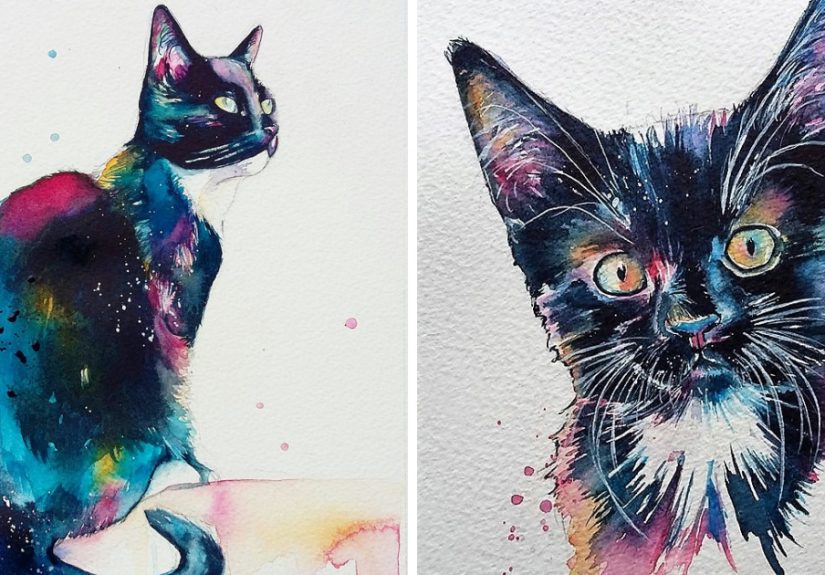
That’s why I take black cats and make them magicalnot with fake spells, but with better stories, better photos, and a little
strategic hype so the world sees what’s actually there: charisma in a velvet coat.
Why Black Cats Got the “Spooky” Reputation (and Why It Won’t Quit)
The black-cat-as-bad-omen thing didn’t pop out of nowhere. A lot of it traces back to European folklore and periods of intense
fear around witchcraft, where black animalsespecially catswere sometimes cast as “familiars,” demons in disguise, or basically
the unofficial mascot of everything people couldn’t explain.
Fast-forward a few centuries and Halloween marketing did what Halloween marketing does: it grabbed the “mysterious black cat”
imagery and never let go. The result is a pop-culture shortcut where “black cat” gets filed under “spooky decor,” even though
the cat did not consent to being seasonal merchandise.
The Real-World Cost of a Silly Myth
Here’s where it stops being “harmless superstition” and starts affecting real animals. In shelters, myths and bias can shape
what people click, who they ask to meet, and which cat gets the “aww” versus the “eh.”
Do black cats actually struggle to get adopted?
The honest answer: it depends on the shelter, the community, and how the data is collected. Some research and shelter reports
have found black cats can be adopted at lower rates in certain settings, while other recent analyses show black cats can have
strong adoption outcomes overallespecially when shelters actively feature them and when seasonal campaigns boost visibility.
Translation: the “black cats are doomed” narrative is too simplistic. But the “black cats need better visibility” part?
That one holds up in the real world.
What “Magical” Actually Means (Spoiler: No Cauldrons Required)
When I say I make black cats magical, I’m talking about three things:
- Visibility: Helping them photograph well and stand out in a scroll-heavy world.
- Story: Giving people a reason to care in one sentencenot one thousand.
- Trust: Replacing myths with reality, and fear with familiarity.
“Magic” is just what it looks like when the presentation finally matches the personality.
How to Photograph a Black Cat So They Don’t Look Like a Cute Shadow Blob
The internet is full of black cat photos that are basically: two glowing eyeballs + darkness + someone yelling “enhance!”
We can do better. Black cat photography is a skill, and once you learn it, your “void” becomes a superstar.
1) Give them light, but not interrogation-room light
Soft daylight near a window is your best friend. Overhead lighting can flatten features and create harsh shadows that turn your
cat into a living silhouette. Aim for gentle side-lighting that reveals the shape of the face and the texture of the coat.
2) Contrast is kindness
If you photograph a black cat on a black blanket, the camera will shrug and say, “Cool, so… nothing?”
Use lighter backgrounds (cream, pastel, warm wood tones) or colorful blankets that separate the cat from the environment.
This isn’t “staging.” It’s basic visual justice.
3) Catchlights: the sparkle that sells the soul
Those tiny reflections in the eyescatchlightsmake a huge difference. Position your cat so a window or soft lamp reflects in
their eyes. Suddenly you’re not photographing darkness. You’re photographing intelligence, curiosity, and the fact that they’re
judging you (lovingly).
4) Don’t let your camera underexpose the cat
Many phones and cameras see all that dark fur and decide to brighten the entire scene… which can wash out the background while
still leaving the cat too dark. Tap to focus on the cat’s face, then slightly increase exposure. The goal is detail in the coat,
not a blown-out background that looks like heaven opened up for a lint-covered angel.
5) Photograph the personality, not the pose
A black cat mid-pounce, mid-blep, or mid-stretch is more compelling than a perfectly posed statue. People fall in love with
quirks: the sideways sit, the dramatic yawn, the “I’m innocent” face while sitting next to a shredded paper towel roll.
Storytelling That Gets a “Yes”
If photography is how you stop the scroll, the story is how you start the bond. A good adoption bio doesn’t read like a resume.
It reads like a friend setting you up on a datewith a cat.
Write bios like mini movie trailers
Instead of: “Black cat, 2 years old, friendly,” try:
“Meet Salem: a two-year-old cuddle strategist who believes laps are public property.”
Add specifics people can picture:
- What does the cat do when you sit downinvestigate, snuggle, or supervise?
- Are they a toy athlete or a calm couch philosopher?
- Do they greet you at the door like a tiny, silent butler?
Give them a “hook” that isn’t superstition
Black cats already have a cultural storyline. Your job is to replace it with a better one:
“Velvet panther.” “Midnight librarian.” “Pocket-sized house guardian.”
The point isn’t to invent a fantasyit’s to make people feel something real.
Halloween, Safety Myths, and What Shelters Actually Do
Around Halloween, black cats get extra attentionsome of it helpful, some of it… suspicious. You might hear that shelters “shouldn’t”
adopt out black cats in October because of ritual harm. In practice, many animal welfare groups emphasize screening adopters and
using common-sense adoption policies year-round.
Here’s the balanced approach that actually protects cats:
- Solid screening: normal questions, normal process, no “impulse decor adoption.”
- Education: myths debunked calmly, not combatively.
- Visibility with responsibility: promotions that highlight the cat as a long-term companion, not a seasonal vibe.
The Science-y Bits That Make Black Cats Even Cooler
Black fur is primarily about pigmentationspecifically eumelanin (the dark pigment) and the genetics that control how much of it
gets deposited in each hair. Coat color genetics in cats is its own fascinating rabbit hole (cat hole?), involving multiple genes
that affect base color, patterns, dilution, and more.
Also: black cats aren’t always “one shade.” Some have faint tabby striping you can see in bright light. Some “rust” a bit in the sun,
showing warmer tones. Some are tuxedos with stylish white accents, as if they’re headed to a formal event where the dress code is
“mice optional.”
If You’re Thinking of Adopting a Black Cat
If you’re on the fence, here’s the truth: adopting a black cat is like adopting any catexcept you get the added benefit of a sleek,
elegant roommate who looks good in every season and matches all furniture (even the furniture you regret buying).
Practical tips that make life easier
- Use a reflective collar or tag (especially if the cat ever goes into a yard or enclosed patio).
- Microchip and ID like you would with any catbecause “my cat is basically a ninja” is not a recovery plan.
- Choose personality over color: meet the cat, learn their energy level, and match your lifestyle.
- Keep them enriched indoors: climbing, scratching options, play sessions, and window perches.
Ways to Make Black Cats “Magical” in Your Community (Without Being Weird About It)
If you volunteer, foster, run a rescue page, or just have a camera and a soft spot for under-hyped animals, here are simple
black-cat advocacy moves that work:
1) Run a “Meet the Voids” feature series
Post one black cat at a time. One great photo. One specific story. One clear call-to-action. People connect better with a single
character than a collage of fifteen cats labeled “URGENT.”
2) Tie in real awareness days (and keep it positive)
Use days like Black Cat Appreciation Day or National Black Cat Day as a reason to spotlight cats,
share myth-busting facts, and make adoption feel joyfulnot guilt-driven.
3) Upgrade the names (gently)
Some cats show up with names like “Blackie” or “Spooky” (no shadeokay, a little shade). Creative names help people picture the cat
as a member of the family: Onyx, Bean, Nova, Eclipse, Jet, Pepper, Velvet, Wednesday.
4) Make “magical” mean “memorable”
A “magical” black cat campaign can be as simple as:
“Three things about this cat that will improve your life.” Humor + specificity + warmth beats superstition every time.
Final Thoughts: The Only “Spell” That Works Is Attention
Black cats don’t need rescuing from imaginary curses. They need the world to see them clearlyon camera, in stories, and in real life.
When you give them light, context, and a fair shot, they do the rest.
Because the truth is: black cats were never bad luck. The bad luck was us missing out on them.
Experiences: Making Black Cats Magical (Field Notes From the Real World)
The first time you try to photograph a black cat for adoption, you learn humility. You walk in confident, armed with a phone camera
and the belief that “how hard can it be?” Then the cat jumps onto a dark blanket, curls into a perfect cinnamon roll, and becomes
indistinguishable from the fabric. Your camera focuses on the background, your exposure collapses, and the resulting photo looks like
a blurry shadow that owes you money.
That’s usually the moment I start laughingbecause the cat, of course, is thriving. They’re purring. They’re comfortable. They are
having a wonderful day being a mysterious little void. It’s the human (me, you, all of us) who has to level up.
One of my favorite “magic moments” is when a shy black cat decides you’re not a threat. It doesn’t happen with dramatic fanfare.
It’s subtle: a blink that lingers, a shoulder that stops tensing, a slow step forward. You keep your voice low, you don’t rush the
space, and you let curiosity do the work. And thenboomyour camera catches it: the soft eyes, the relaxed whiskers, the tiny head
tilt that says, “Fine. You may exist near me.”
The “confident” black cats are a different kind of magic. They march into the room like they pay rent. They flop down in the best
patch of light like they scheduled it. They rub their face on the camera lens because they have opinions about your framing.
Those cats practically write their own bios: “Professional greeter. Amateur comedian. Full-time lap occupant.”
Then there’s the senior black catthe one who doesn’t do flashy. They do quiet. They do calm. They do the kind of companionship
that feels like a warm cup of tea on a rough day. The “magic” there is not making them look like a kitten. It’s showing dignity.
A clean photo in soft light. A short story about how they choose a spot near you, not on you, like a respectful roommate who
understands boundaries (and still wants snacks).
Over time, you start noticing patterns in what helps black cats connect with people:
- One great photo beats ten okay ones. Especially a face shot with catchlights.
- Specific habits beat generic labels. “Loves chin scratches” is better than “friendly.”
- Play is a shortcut to personality. Wand toys reveal confidence, curiosity, and charm.
- Humor lowers defenses. People share what makes them smile.
My favorite part is what happens after the “magic” works. Someone shows up, meets the cat, and says something like,
“I don’t know why, but I feel like this one is mine.” That’s not superstition. That’s connection. And if you ask me,
that’s the best kind of magic there isno spells, no nonsense, just a black cat finally being seen.






 Close
Close