
Table of Contents >> Show >> Hide
- Why Stewart’s Argument Hit So Hard
- The Kind of TV Trump Likes, According to Stewart
- Late-Night TV’s Real Crisis Is Not Just Politics
- The Corporate Oatmeal Problem
- Why the Audience Is on Stewart’s Side
- What Watching This Era of TV Actually Feels Like
- Conclusion: Stewart’s Joke Was Really a Business Plan
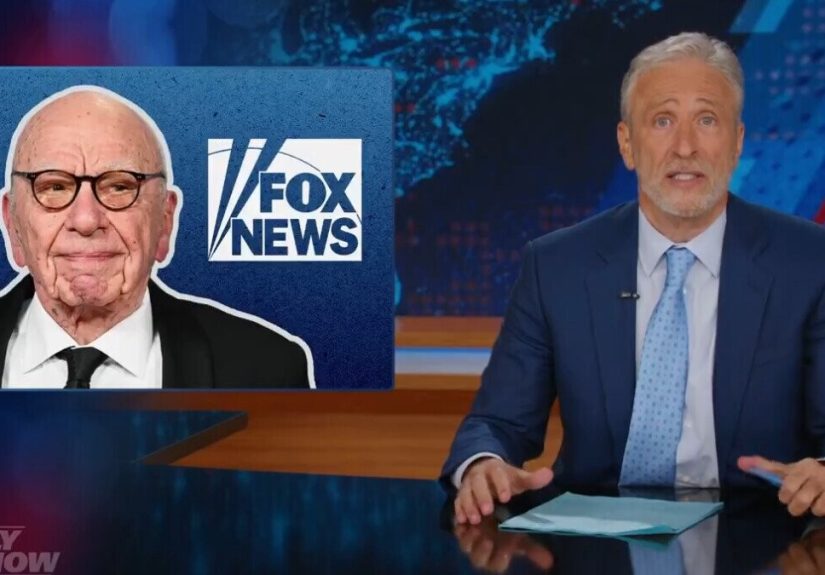
Television has always had two great temptations: flattery and fear. One tells powerful people exactly what they want to hear. The other whispers to executives, producers, and advertisers that survival depends on saying as little as possible. Jon Stewart, in a blistering and funny monologue that ricocheted across the media world, argued that both temptations lead to the same sad destination: boring TV. Not just bad politics. Bad television. And that is why his line about nobody watching the kind of TV Donald Trump likes landed with such force.
Stewart’s point was not merely that Trump prefers praise. Plenty of politicians do. His deeper argument was that Trump-friendly television, or television terrified of Trump, becomes creatively useless. It turns into programming designed for one audience of one. That may be useful as a political shield, but it is terrible as entertainment. Viewers do not gather around the screen hoping for carefully pasteurized thoughts, pre-sanitized jokes, or a host who looks like he is reading legal advice off the teleprompter. People show up for energy, personality, friction, and the delicious possibility that somebody on TV might actually mean what they are saying.
Why Stewart’s Argument Hit So Hard
The context matters. Stewart was reacting during the uproar over CBS’s decision to end The Late Show with Stephen Colbert, a move the company described as financial while critics immediately wondered whether larger corporate and political pressures were involved. Stewart, never one to wrap a brick in gift paper, pushed the bigger idea: when media companies start censoring themselves, sanding down every sharp edge, and serving “gruel so flavorless” that nobody notices it, they are not protecting television. They are suffocating it.
That argument resonates because it slices through a modern media myth. Executives often behave as if “inoffensive” automatically means “appealing.” Stewart basically said: absolutely not. In a fractured media environment where viewers can watch podcasts, YouTube monologues, livestreams, TikToks, documentaries, clips, memes, and ten-hour breakdowns by a guy in a hoodie with suspiciously intense lighting, blandness is not safety. Blandness is surrender. If a network decides to become the audiovisual equivalent of unbuttered toast, the audience will simply leave and find seasoning elsewhere.
Trump sits right at the center of that contradiction. He thrives on attention, conflict, grievance, and spectacle. He does not merely want favorable coverage; he wants loyalty. Stewart’s jab works because he notes the absurdity of trying to satisfy someone whose appetite for flattering media can never truly be filled. Even outlets that have been overwhelmingly supportive have still found themselves in Trump’s blast radius. Stewart’s message was clear: if even nonstop devotion is not enough, then building your programming strategy around appeasing him is not just cowardly. It is commercially ridiculous.
The Kind of TV Trump Likes, According to Stewart
Stewart never needed a PowerPoint deck to explain the genre, but you can sketch it out pretty quickly. The kind of TV Trump likes is television that treats him less like a public figure and more like a fragile king with Wi-Fi. It is TV that flatters his instincts, repeats his language, avoids inconvenient facts, and confuses loyalty with journalism. It may also be TV that is not explicitly pro-Trump, but is so nervous about provoking him that it becomes timid, empty, and weirdly apologetic about having a point of view at all.
That second category is especially important. Stewart was not only mocking overt cheerleading. He was warning against the corporate instinct to go soft, go vague, and go limp. In that version of television, nobody says anything memorable because every sentence has been stripped of risk. Nobody makes a real joke because the joke might offend someone important. Nobody takes a clear stand because the legal team is hovering nearby like a flock of anxious geese. The final product is not balanced. It is lifeless.
And viewers can smell lifelessness. They may not describe it in executive jargon. They just call it boring. They change the channel. Or more likely in 2026, they do not even bother with the channel. They see a clip, shrug, and move on to something sharper, faster, stranger, or more honest. Stewart’s line cuts because it reframes the whole issue. This is not only a free-speech question or a media-politics question. It is a quality-control question. Who wants to watch television made by people trying not to get yelled at?
Late-Night TV’s Real Crisis Is Not Just Politics
Stewart’s argument also lands because late-night television is already living through an identity crisis. The old model depended on habit. You finished your day, brushed your teeth, wandered toward the couch, and let a host monologue at you before bed. That ecosystem was built for a world of fewer choices, fatter ad dollars, and a national audience willing to gather at the same time in the same place. That world is gone. The internet did not just knock on late night’s door. It stole the sofa, the audience, and half the jokes before the opening band hit its first note.
Today, viewers consume late-night content in fragments. A monologue becomes a two-minute clip. An interview becomes a reaction post. A joke becomes a screenshot. Even successful shows now live partly off-platform, broken into digital pieces and tossed into the endless buffet of online content. That makes voice and distinctiveness even more important. If your show is going to compete with every podcast host, every internet comedian, every amateur rant with a ring light and confidence, you cannot survive by being polite mush.
That is one reason Stewart’s warning felt bigger than a defense of Colbert. He was arguing that the future of TV belongs to people who still say something. Not recklessly. Not dishonestly. But recognizably. If a host sounds like a host. If a show sounds like it believes in itself. If a network trusts talent enough to let them have a spine. Then viewers might still care. But once everything is filtered through fear, compliance, and the hope that nobody in power gets mad, the show starts to resemble a hostage video with better lighting.
Opinion Still Matters in an Overcrowded Media World
There is a funny paradox here. For years, critics argued that late-night TV became too political. But politics was not what made those shows relevant. Personality did. Conviction did. Timing did. A joke that feels alive usually comes from a point of view. It has rhythm because it has intent. Whether viewers agree or disagree, they respond to a voice that sounds human. Stewart knows that. Colbert knows that. So do viewers who no longer have patience for television that behaves like it is afraid of its own audience.
Trump himself, ironically, is proof of the same rule. He understands performance. He understands spectacle. He understands the emotional mechanics of attention. What Stewart mocks is Trump’s preference for a media environment that praises him while also being too intimidated to challenge him. That might be useful for power, but it is not how compelling television works. Television works when something is at stake. When the host sounds awake. When the material has teeth. When you feel a pulse under the jokes.
The Corporate Oatmeal Problem
One of the smartest things about Stewart’s criticism is that it extends far beyond one politician. Trump simply dramatizes a problem that has been creeping through television for years. Big media companies increasingly want scalable, low-risk, controversy-resistant content. They want programming that offends no regulator, startles no advertiser, and requires no executive to explain themselves at a board meeting. In theory, that sounds prudent. In practice, it often produces corporate oatmeal: warm, beige, technically edible, and impossible to get excited about.
Viewers have been living through this for a while. They have seen beloved shows flattened by executive panic. They have watched interviews become safer, monologues become softer, and commentary become so hedged it practically arrives wearing a bicycle helmet. They know the difference between a host speaking freely and a host navigating an obstacle course made of legal memos, merger anxieties, and billionaire nerves. Stewart was putting a name to that sensation. He was saying the quiet part loudly: if networks keep reducing TV to cautious mush, audiences will abandon them without leaving a forwarding address.
That matters even outside late night. News panels, political specials, prestige interviews, and even entertainment coverage all face the same pressure. Do you challenge power and risk the backlash, or do you fold yourself into a shape so agreeable that nobody notices you exist? Stewart’s answer was brutal but simple. If you go flavorless, why would anyone watch? That question hangs over the entire industry like a studio light that no one can switch off.
Why the Audience Is on Stewart’s Side
Audiences are not saints. They like gossip, spectacle, tribal drama, and a good on-air meltdown just like everybody else. But they still want authenticity, or at least the performance of authenticity. They want a host who appears to mean it. They want jokes that feel chosen, not processed. They want criticism that sounds like criticism, not like a memo approved by seven vice presidents and one person from Standards & Practices who dreams in disclaimers.
That is why Stewart’s line keeps echoing. It captures a real consumer truth. The public may be fragmented, exhausted, and chronically online, but it still knows when television has become cowardly. And nothing ages faster than cowardly TV. It looks stale the minute it airs. It has no replay value because it never had any real life in it. You do not clip it. You do not quote it. You do not send it to your friend with the message, “You have to see this.” You forget it before the commercial break.
Stewart, by contrast, produced exactly the thing he was defending: a moment people wanted to watch, repeat, and argue about. Love him or hate him, he made television that felt dangerous enough to matter and funny enough to travel. That is the whole case in miniature. The TV Trump likes may flatter power. The TV viewers remember usually needles it.
What Watching This Era of TV Actually Feels Like
If you want to understand why Stewart’s criticism feels so true, think about the actual experience of being a modern viewer. You turn on a channel hoping for energy and get a panel discussion that sounds like four people auditioning to be someone’s future spokesperson. You click a clip that promises fireworks and discover a host carefully circling the obvious point like it might explode. You watch a network promo celebrating “bold conversations,” then see a segment so timid it could be used to lull a squirrel to sleep. At some point, you stop feeling informed and start feeling mildly insulted.
Then, almost by accident, you stumble across something with a pulse. Maybe it is Stewart. Maybe it is Colbert on a good night. Maybe it is a podcaster recording from a room with terrible acoustics but excellent instincts. Suddenly the difference is obvious. The words come faster. The joke lands harder. The point is sharper. Even the silence after the punchline feels more alive. You realize that what you have been missing is not ideology. It is vitality. It is the thrill of hearing someone sound unscripted in a culture that increasingly feels overmanaged.
There is also a strangely personal frustration that comes with watered-down television. Viewers are not stupid. They can tell when a host is swallowing a thought. They can tell when a network is trying to glide past a topic without leaving fingerprints. That creates a kind of secondhand embarrassment. You sit there thinking, “Come on, say it. Everybody knows what this is.” When the person on screen refuses to do that, the show starts to feel less like entertainment and more like an office meeting that accidentally wandered onto your television.
Older viewers often describe missing appointment television, but what they really miss is not the clock. It is the confidence. It is the feeling that a show knew what it was and trusted the audience to keep up. Younger viewers, meanwhile, are used to digital creators who live or die by distinctiveness. They may disagree wildly with the people they watch, but they rarely reward blandness. In that sense, Stewart’s argument bridges generations. Nobody, whether they grew up on Carson, Letterman, YouTube, or TikTok, gets excited about content that tastes like it has already been pre-chewed by corporate caution.
And there is one more experience that matters: fatigue. The public is tired of political spectacle, but it is equally tired of fake neutrality that exists only to protect institutions. That is why sharp satire still works. It cuts through the fog. It says, “Yes, this is absurd, and no, you are not crazy for noticing.” Stewart’s success comes partly from giving that exhausted recognition back to viewers. He turns the private eye-roll into a public laugh. He transforms media frustration into comedy with a pulse.
So when Stewart says no one will watch the kind of TV Trump likes, the line sticks because it matches the lived reality of watching modern media. Viewers do not want propaganda. They do not want panic. They do not want antiseptic content engineered to survive the next merger. They want television that sounds like a person made it. They want risk, wit, and a little glorious mess. In other words, they want something worth staying awake for.
Conclusion: Stewart’s Joke Was Really a Business Plan
At first glance, Stewart’s line sounds like a roast aimed at Trump. And yes, it absolutely is. But it is also a diagnosis of the television business. Media companies cannot save themselves by becoming more frightened, more deferential, or more flavorless. In a world overflowing with options, safe TV is often the riskiest choice of all. If a show exists only to avoid offending power, it forgets the audience. And once television forgets the audience, the audience returns the favor.
That is the brilliance of Stewart’s argument. He wrapped a serious media warning inside a brutally efficient punchline. No one will watch the kind of TV Trump likes because television built on obedience is not television people love. It is television people endure, if they notice it at all. The future belongs to sharper voices, bolder formats, and programs willing to sound like they are alive. Stewart was not just defending late night. He was defending the ancient, stubborn, still-profitable idea that viewers prefer a little fire over a whole lot of beige.







 Close
Close