
Table of Contents >> Show >> Hide
- Kam Patterson Joins the SNL Season 51 Cast List: The Big Announcement
- Why a Kill Tony Regular on SNL Feels Like a Cultural Plot Twist
- Who Is Kam Patterson? A Quick, Useful Background
- How Kam Patterson Fits into SNL Season 51’s Bigger Cast Reset
- What Kam Patterson Brings: Stand-Up Instincts in a Sketch World
- The Timing Is Perfect: From Podcast Spotlight to Netflix to Network TV
- What This Says About Comedy in 2025–2026
- FAQ: Quick Answers People Are Googling
- Conclusion: A Big Swing That Could Pay Off for Both Worlds
- Real-World Experience: What This Kind of Career Jump Feels Like (500+ Words)
There are comedy career moves, and then there are comedy career teleportations. One minute you’re a rising stand-up grinding sets, the next you’re
walking into Studio 8H like, “So… where do I put my emotional support water bottle?”
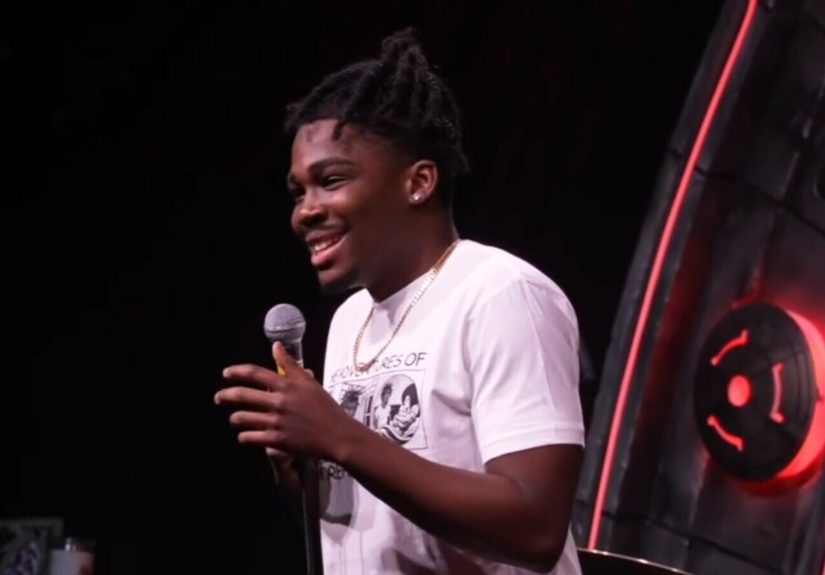
That’s the vibe around Kam Patterson, a breakout from the live stand-up podcast phenomenon Kill Tony, who officially landed on the
Saturday Night Live Season 51 cast list as a featured player. Translation: he’s in the building, in the sketches, and suddenly
your group chat is full of “Wait, THAT guy is on SNL now?!”
In this deep dive, we’ll unpack what the casting means, why the Kill Tony-to-SNL pipeline is suddenly a real sentence, and what Patterson’s comedic style brings
to one of TV’s most notoriously high-pressure stagesall with enough context to satisfy comedy nerds and enough fun to keep the non-nerds from sprinting away.
Kam Patterson Joins the SNL Season 51 Cast List: The Big Announcement
The headline is simple: Kam Patterson joined the Season 51 cast as one of five new featured players. The broader context is the kind of cast
reshuffling that happens when a show is 50+ years old and still trying to feel like it just discovered electricity.
Alongside Patterson, the Season 51 featured-player additions include:
- Tommy Brennan
- Jeremy Culhane
- Ben Marshall (from the Please Don’t Destroy universe)
- Veronika Slowikowska
The new season premiered in early October 2025 on NBC and Peacock, and the cast additions arrived amid a very visible wave of departures. That matters because
SNL doesn’t just add peopleit adds people for a reason: shifting comedic sensibilities, changing audience tastes, and the ongoing mission to find
the next big recurring character who will live rent-free in everyone’s brain.
What is a “featured player,” exactly?
On SNL, featured player is the “new kid” tierstill on camera, still in sketches, still expected to deliver, but not yet part of the repertory
cast (the long-haul core group). Featured players often spend about a couple seasons proving they can handle live TV, fast rewrites, and the unique art of looking
calm while reading cue cards that were updated approximately 11 seconds ago.
Why a Kill Tony Regular on SNL Feels Like a Cultural Plot Twist
If you’ve never seen Kill Tony, here’s the most useful way to understand it: it’s stand-up’s high-wire act with a stopwatch and an audience that
loves the thrill of discovery. Comedians get a short set, then they’re interviewedoften in a way that’s part mentorship, part roast, part “welcome to the thunderdome.”
The show has become a modern talent incubator, especially connected to the broader Austin comedy scene, where live comedy, podcast culture, and
touring circuits cross-pollinate aggressively. For some comics, being a Kill Tony “regular” is like earning a highly chaotic merit badge: it signals you can
deliver punchlines under pressure, handle crowd energy, and keep your footing when things get weird (because, yes, sometimes things get weird).
So when an SNL hiring cycle includes a Kill Tony standout, it’s notablenot because SNL has never pulled from stand-up (it has), but because it shows how
podcast-first comedy ecosystems now function as real pipelines into legacy TV institutions.
Who Is Kam Patterson? A Quick, Useful Background
Kam Patterson is a stand-up comedian who rose quickly through the comedy ranks with a style that leans into sharp observations, confident stage presence, and
a conversational rhythm that feels built for both rooms and clips. He’s originally from Orlando, Florida, and like a lot of modern comics, he
leveled up by going where the momentum waseventually landing in Austin, where Kill Tony and the surrounding comedy infrastructure helped
amplify his visibility.
A key part of Patterson’s story is that he didn’t emerge through a single “traditional” pathway. Instead, he’s a product of a newer model:
- Live performance reps (learning how to win over real crowds)
- Podcast ecosystem visibility (being seen by comedy fans who track rising talent)
- Touring and showcase credibility (proving it isn’t just one good set)
- Internet-era momentum (where clips, buzz, and narrative stack fast)
Yes, the “30 Rock” jump is realand it’s not just one job
Getting on SNL is not like getting hired at a normal workplace where you receive an onboarding email and a tasteful company mug. It’s more like:
you are hired into a live weekly production machine that rewards adaptability, speed, and emotional durability.
For a stand-up, the adjustment can be massive. Stand-up is you + mic + the truth as you see it. SNL is:
you + 12 people in a sketch + blocking + wardrobe + last-minute rewrites + camera angles + the sound of your own heartbeat.
How Kam Patterson Fits into SNL Season 51’s Bigger Cast Reset
The Season 51 cast conversation wasn’t just “who’s new,” but also “who’s gone” and “what does the show want to be now?” Multiple cast members exited heading into
the season, which opened opportunities for new comedic voices to fill fresh lanes.
This kind of turnover tends to create a few immediate needs:
- New point-of-view energy (so the show doesn’t feel like it’s doing impressions of itself)
- New sketch textures (different rhythms, different character instincts)
- New audience bridges (people who pull in fans from other comedy “worlds”)
Patterson checks that third box especially hard. Kill Tony fans are not casual. They are the kind of audience that knows a comic’s “best minute” the way sports
fans know a player’s rookie highlights. Bringing that fanbase into the SNL orbit is not just a casting moveit’s a distribution move in human form.
What Kam Patterson Brings: Stand-Up Instincts in a Sketch World
A useful way to predict whether a stand-up will pop on SNL is to ask:
Do they have a point of view that survives costume changes?
Patterson’s stage personadirect, energetic, and quicktranslates well into certain SNL lanes:
1) Weekend Update commentary energy
Weekend Update often works as a stand-up-adjacent platform: short monologues, strong perspective, controlled chaos. When a newer cast member shows up there early,
it’s usually because the show believes they can hold the room with minimal scaffolding.
2) “Real person in a ridiculous situation” sketches
Many SNL sketches thrive on one grounded character reacting honestly while everything else spirals into absurdity. Stand-ups frequently excel here because they
understand timing, escalation, and how to land a reaction without overplaying it.
3) Crowd-work brain in scripted moments
Crowd work trains comics to read micro-signals: when the room is with you, when it’s drifting, when to speed up, when to let a beat breathe. That skill can make
live sketch performances feel more “alive” rather than overly rehearsed.
The Timing Is Perfect: From Podcast Spotlight to Netflix to Network TV
Patterson’s SNL casting landed during a career stretch that’s already moving fast. He’s also tied to a Netflix comedy film project
“72 Hours”, whichwithout overselling itsuggests that the industry sees him as more than a one-platform performer.
Here’s why that matters: SNL has always been a place where performers can become broadly recognizable, but modern fame is multi-lane. A comic who can exist across
live podcasts, stand-up stages, streaming films, and network sketch is basically designed for the current attention economy.
And from SNL’s perspective, hiring performers who already understand camera presence (and already bring an audience) is a strategic hedge in a fragmented media world.
What This Says About Comedy in 2025–2026
Kam Patterson joining SNL isn’t just “one comedian gets a big break.” It’s a sign of how comedy talent is sourced now:
- Podcasts are the new clubs (discovery happens weekly, not once a year)
- Clips are the new calling cards (the audience meets you before the industry does)
- Scenes matter again (Austin isn’t just a location; it’s a pipeline)
- Legacy platforms still convert (SNL remains a megaphone)
It also highlights a subtle shift in what “TV-ready” means. The modern comic often learns to perform for:
the room, the camera, and the algorithm. If you can do all three, you’re not just funnyyou’re scalable.
FAQ: Quick Answers People Are Googling
Is Kam Patterson officially part of the SNL Season 51 cast?
Yes. He joined as a featured player for Season 51, alongside four other new cast additions.
What is Kill Tony?
Kill Tony is a live stand-up comedy podcast and showcase format that features short sets and post-set interviews, often serving as a high-pressure discovery stage
for newer comedians.
Will Kam Patterson still do stand-up while on SNL?
Many SNL performers still do stand-up, but the schedule is intense. Touring often becomes more selective during the season, especially for newer cast members who
are trying to establish themselves on the show.
Why does SNL hire featured players?
Featured players are a way to refresh the cast and test new comedic voices without immediately reshaping the repertory core. It also gives new performers time to
find their footing in the SNL format.
Conclusion: A Big Swing That Could Pay Off for Both Worlds
Kam Patterson landing on the SNL Season 51 cast list is the kind of move that feels inevitable in hindsightpodcast-era comedy finally merging
with legacy sketch TV in a very public way. For Patterson, it’s a leap into the most intense weekly comedy lab on television. For SNL, it’s a bet on a performer
forged in a fast, fearless live format where you either deliver or you don’t.
If the story of modern comedy is “the audience finds you first,” then Patterson’s rise makes perfect sense. Kill Tony helped put him in front of the right crowds.
Now SNL puts him in front of every crowdcasual viewers, die-hards, and the people who still call it “the show with the cowbell guy,” bless their hearts.
And if nothing else, this is proof that comedy careers can still surprise usin the best way. Sometimes the open mic kid becomes the network sketch kid.
And sometimes that kid is Kam Patterson.
Real-World Experience: What This Kind of Career Jump Feels Like (500+ Words)
Even if you’ve never performed a single joke in your life (and honestly, that’s probably healthy), it’s easy to imagine why the jump from a live stand-up
environment like Kill Tony to Saturday Night Live feels like stepping onto a different planet with a similar atmosphere but wildly different gravity.
Based on how comedians and SNL performers often describe the process in interviews and behind-the-scenes anecdotes, the experience tends to be equal parts
thrilling, disorienting, and weirdly mundane.
For a comic coming from a stand-up-forward world, the first “whoa” moment is usually the pace. Stand-up sets are rehearsed and refined over timeyou stress-test
jokes, swap words, find your rhythm, and build confidence through repetition. SNL, meanwhile, is built on speed. The week’s creative sprint can feel like a
conveyor belt: table reads, rewrites, rehearsals, more rewrites, camera blocking, more rewrites, then live show. You may spend hours on a sketch that never airs,
and you have to learn not to take that personally. That’s not rejection; that’s Tuesday.
Then there’s the identity shift. On Kill Tony (and similar live comedy showcases), your job is to be unmistakably you. Your personality is the product.
Your voice, your cadence, your worldviewthat’s the thing people came for. On SNL, your job is to be you and also be a medieval peasant, a tech CEO,
a chaotic best friend, and a guy who definitely shouldn’t be operating heavy machinery. Some performers say that’s the fun part: discovering how many versions of
themselves exist when the costume department gets involved.
The pressure is also different. Stand-up pressure is immediate: if the audience isn’t laughing, you know right now, in your bones, with no buffering.
SNL pressure is layered: you’re performing live, but you’re also performing within a complex machinecamera cues, marks on the floor, timing with other cast
members, and the subtle art of not letting your face say, “Wait, what line is this?” when the cue card changes. Many SNL performers talk about cue cards as their
frenemy: lifesaver and chaos gremlin in the same piece of paper.
Another common experience is the social adjustment. The stand-up world can be solitarylots of travel, lots of “hi nice set” conversations, lots of late-night
diners where someone explains cryptocurrency unprompted. SNL is collaborative to the extreme. You’re writing, pitching, and performing with a big group of very
funny people who are all trying to get their best ideas on air. That can feel like a dream team or like group-project flashbacks, depending on the night.
The best-case version is that you find your peoplewriters and castmates who “get” your comedic voiceand you build recurring moments that audiences start to
anticipate.
And finally, there’s the “life outside the show” whiplash. A Kill Tony regular can become internet-famous quickly, but SNL adds a different kind of recognition.
It’s broader, more mainstream, and sometimes more surprisingsuddenly family members who never watched a comedy podcast in their lives are texting,
“I saw you on TV!!!” The experience can feel validating and surreal at the same time, like you’re still the same person, but your name now has a new gravity
attached to it.
Put it all together, and the most accurate description of this kind of leap might be: earned chaos. Patterson’s background in a pressure-cooker
live format suggests he’s not walking in cold. But SNL is its own beastone that rewards adaptability, stamina, and the ability to be funny while your brain is
doing five other tasks. If you love comedy, watching someone make that transition is part of the fun: you’re seeing a performer learn a new instrument while
still playing their signature melody.





 Close
Close