
Table of Contents >> Show >> Hide
- What is the Kohler Bannon wall-mount service sink?
- Key specs that matter (and why they matter)
- Wall-mount reality check: installation is half carpentry
- Choosing the right faucet and drain setup
- Where the Bannon shines: best use cases
- Cleaning and care: keep the enamel looking good
- How the Bannon compares to other utility sink materials
- Buying checklist: 9 questions to answer before you click “Add to Cart”
- Conclusion: the Bannon is a “forever sink” for the right space
- Real-world experiences: what using a Bannon-style service sink actually feels like
Some home upgrades are glamorous. Others are… gloriously practical. A service sink is the latter: the uncelebrated
hero that takes the mess you don’t want anywhere near your kitchen, bathroom, or sanity.
And if you’re shopping for a wall-mounted utility sink that feels like it could survive a small apocalypse,
Kohler’s Bannon wall-mount cast iron service sink deserves a spot on your shortlist.
This guide breaks down what the Bannon is, what you actually get in the box (and what you don’t), how installation
works in the real world, what makes enameled cast iron different from “regular utility sink” materials, and how to
keep it looking sharp even after the kind of jobs that require old clothes and bad decisions.
What is the Kohler Bannon wall-mount service sink?
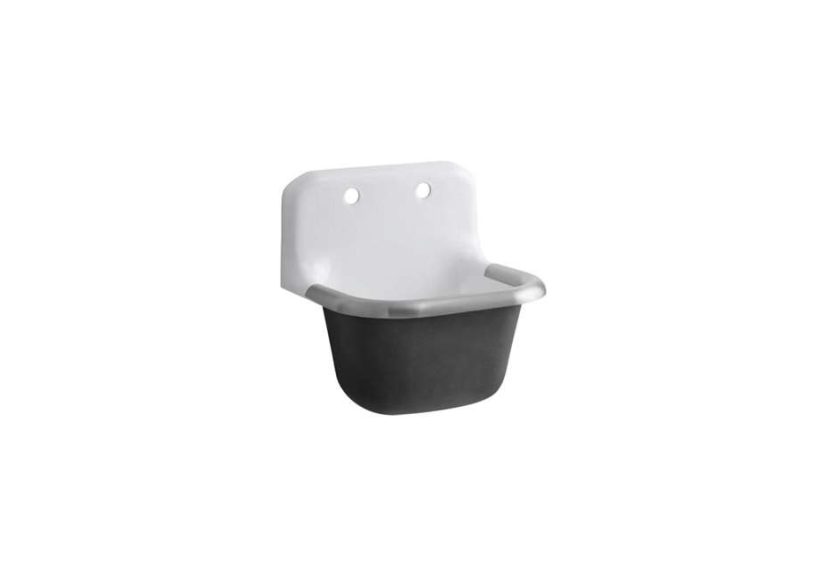
The Kohler Bannon is a commercial-style, wall-mounted service sink made from
KOHLER® enameled cast iron. It’s designed as a deep, single-basin work sink for environments that
demand durabilitythink janitorial closets, maintenance rooms, workshops, and utility spaces that see heavy use.
Common configurations include the K-6714 (22-1/4″ x 18-1/4″) and the slightly larger
K-6716 (24″ x 20-1/4″). Both are drilled for faucets with 8-inch centers.
One of the Bannon’s defining traits is its rim guarda protective piece designed to take abuse
where sinks tend to suffer most: along the edge where buckets, tools, and “I’ll be careful” meet reality.
(More on that later, including one very important handling note.)
Key specs that matter (and why they matter)
Size and depth: the “will my bucket fit?” test
If you’re considering the Bannon, you’re probably not washing delicate crystal goblets. You’re washing paint trays,
mop heads, garden tools, and whatever that sticky mystery is on the bottom of the recycling bin.
- K-6714 overall size: 22-1/4″ x 18-1/4″
- Bowl area (K-6714): 18″ (L) x 14″ (W)
- Water depth (K-6714): 12″
- Drain hole (K-6714): 3-1/8″
- Faucet drilling: two holes, 1-1/2″ each, spaced for 8″ centers
That 12-inch depth is the quiet MVP: it helps contain splashes, lets you soak bigger items, and
gives you a fighting chance against the tidal wave that happens when you “just rinse this one thing quickly.”
Material: why enameled cast iron is a different vibe
Cast iron sinks are heavy, rigid, and extremely stable. The Bannon’s working surface is finished in
enamel, which is intended to resist corrosion and stand up to demanding utility use.
Many spec references for the Bannon line describe an acid-resistant enamel finish, which is one
reason these sinks show up in commercial and maintenance settings.
Practical takeaway: compared with lightweight plastic or thin stainless utility sinks, cast iron tends to feel
quieter, sturdier, and less prone to flexing when you drop something heavy inside.
The tradeoff is obvious the moment you try to lift it: you’ll want real wall support and (usually) a second set
of hands.
What’s included vs. what you still need to buy
The Bannon is typically sold as the sink body plus mounting componentsnot a complete “everything included”
package. Expect the sink to include hangers and a stainless steel rim guard.
However, the drain/strainer is commonly sold separately, and so is the faucet.
If you’re budgeting the project, build in the cost of:
- Service sink strainer/drain assembly (model compatibility matters)
- P-trap and any adapters needed for your existing drain line
- 8-inch centers service sink faucet (often with a higher arc and stronger flow)
- Supply lines, shutoffs, and any wall escutcheons you prefer for a cleaner look
- Fasteners (lag bolts are commonly specified for wall-mounted hanger brackets)
Wall-mount reality check: installation is half carpentry
Step one: respect the wall (and the laws of physics)
A wall-mounted cast iron sink doesn’t “hang on drywall.” It anchors into structuretypically studs plus
additional backing/blockingso the load is transferred safely to the framing.
Kohler’s wall-hung sink installation guidance commonly calls for sufficient backing behind the finished wall
to securely fasten hanger brackets, using lag bolts (not provided) fastened into that backing.
Translation: if your wall isn’t already prepared, you may need to open it up or choose a location where framing
can be reinforced.
Rough-in planning: set yourself up to avoid “surprise plumbing”
Before the sink goes on the wall, confirm your rough-in matches the sink’s faucet and drain layout. The Bannon
family has published rough-in references for supply and drain placement that help you plan where water supplies
and the drain outlet should land.
Also check your local plumbing requirementsmany jurisdictions reference national standards for fixtures and
connections, and your installer may need to follow local code for drain sizing, trap configuration, and backflow
prevention depending on how the sink is used.
Handle the rim guard carefully (seriously)
Here’s your friendly reminder that “durable” doesn’t always mean “cuddly.” The Bannon spec sheet includes a
warning that the rim guard can have sharp edges and should be handled with caution.
Gloves are cheap. Emergency room copays are not.
Choosing the right faucet and drain setup
Faucet: stick to 8-inch centers, and think utility-first
The Bannon models commonly discussed (like K-6714 and K-6716) are drilled for faucets with 8-inch centers.
That means you’re typically choosing a wall-mount or deck-mount style service faucet designed for two-hole,
8″ center applications.
For utility work, the best faucet is usually:
- High-arc (better clearance for buckets and awkward items)
- Easy to grip (lever handles or robust knobs you can use with wet hands)
- Durable finish that won’t cry when you clean around it
- Code-appropriate for your use (some installs require specific backflow protection)
Drain and trap: don’t improvise the “gross stuff” pathway
Service sinks often see debrispaint flakes, mop fuzz, soil, and the occasional “how did that even get in here?”
That’s why a compatible strainer matters. Kohler and major retailers commonly list compatible service sink strainers
and trap options as recommended accessories for the Bannon line.
If your sink will see anything chunky or clog-prone, consider:
- A strainer designed for service sinks (not a dainty bathroom drain)
- Easy access for cleaning the trap (because you will eventually need to)
- Drain treatments that are safe for your plumbing and your sink finish
Where the Bannon shines: best use cases
The Bannon is at its best when you want a sink that behaves like a tool, not a decorative accessory.
Some popular (and genuinely useful) applications include:
1) Laundry room power-up
Pre-soak stained clothes, rinse muddy shoes, scrub a paint-smudged shirt you swore you’d never wear again (but
somehow always do), and fill mop buckets without wrecking your nicest sink.
2) Workshop and garage command center
Rinse parts, wash hands without tracking grease through the house, and clean up after projects that involve
solvents, adhesives, or fine dust. The deep basin helps keep mess contained.
3) Gardening, potting, and outdoor gear
Soil-covered pots, root balls, and muddy tools are all fair game. The wall-mount format can also free up floor
space underneath for storage bins or a rolling cart.
4) Small business utility spaces
Think salons, studios, or service businesses where a durable rinse sink makes workflow faster and keeps cleanup
out of customer-facing areas.
Cleaning and care: keep the enamel looking good
Daily basics
The easiest “secret” to keeping enameled cast iron nice is consistency: rinse, wipe, and avoid turning the sink
into a chemistry experiment. In general, non-scratch cleaning tools and mild cleaners are the safest everyday
option for enamel finishes.
Scuff marks and metal marks
Utility sinks collect scuffsespecially if you’re washing tools or metal items. Kohler provides guidance for
addressing marks on enameled cast iron, including use of their cast iron cleaner and gentle rubbing with a soft
cloth (or similar non-scratch approach).
Chips happenhere’s what to do
Cast iron is tough, but enamel can chip if something heavy hits it just right. If that happens, addressing the
chip promptly helps protect the underlying material and improves appearance. DIY enamel repair kits exist, and
reputable home-improvement sources outline step-by-step approaches to making the repair blend in well.
How the Bannon compares to other utility sink materials
| Material | Strengths | Tradeoffs | Best for |
|---|---|---|---|
| Enameled cast iron (Bannon) | Very rigid, stable, “built like a tank,” deep basin options | Heavy; needs strong wall support; enamel can chip if abused | High-use utility spaces, workshops, commercial-style installs |
| Stainless steel | Lighter; easier wall mounting; modern look; no enamel to chip | Can dent; often louder; cheaper units may flex | Light-to-moderate utility use, quick installs |
| Thermoplastic/composite | Budget-friendly; lightweight; resistant to some chemicals | Can scratch; can discolor; may feel less “solid” | Basic laundry/garage use where cost and ease matter most |
Buying checklist: 9 questions to answer before you click “Add to Cart”
- Which size? K-6714 vs. K-6716 (and confirm your space and needs).
- Do you have structure behind the wall? Stud location + backing/blocking plan.
- Where will the drain line land? Confirm rough-in compatibility.
- What faucet are you using? Must match 8-inch centers drilling.
- Which strainer/drain assembly is compatible? Don’t assume a generic drain fits.
- Are you prepared for weight? Plan for help lifting and mounting.
- Do you need a certain finish/color? White is common, but verify availability.
- Will it be used in a residential setting? Note that some spec references flag it as not intended for residential installs.
- Do you need a pro? If wall reinforcement or plumbing changes are involved, a licensed plumber/contractor often saves money long-term.
Conclusion: the Bannon is a “forever sink” for the right space
If you want a wall-mounted service sink that feels genuinely commercial-gradedeep, rigid, and ready for messy
workKohler’s Bannon is a strong contender. The enameled cast iron build and protective rim guard are aimed at
longevity, not bargain-basement convenience. You’ll pay more than you would for a plastic utility tub, and you’ll
need to respect the installation requirements. But in return, you get a sink that’s meant to be used hard and
cleaned up fast.
The best part? Once it’s installed properly, you stop thinking about it. It just worksquietly taking the abuse
your nicer sinks don’t deserve.
Real-world experiences: what using a Bannon-style service sink actually feels like
Let’s talk about the part no spec sheet can fully capture: day-to-day life with a heavy-duty wall-mount service sink.
Not “posing for a showroom photo” lifereal life, where you’re juggling a mop bucket, a leaking paint tray, and a
dog that somehow found the only mud puddle within a five-mile radius.
The “garage upgrade” moment
People often describe the first big win as psychological: once you have a legitimate utility sink in the garage or
workshop, you stop dragging mess through the house. Cleaning brushes, rinsing dusty filters, washing hands after
changing oilsuddenly it’s all contained. The depth helps, too. You can drop in a bucket and rinse without water
bouncing back at you like it’s trying to start a feud.
The surprise: it feels like furniture, not a flimsy fixture
Lightweight utility sinks can be totally fine, but they often have a “wiggle” factor. A cast iron service sink has
the opposite energy. Once it’s anchored properly, it feels solidlike the sink is part of the building. That
stability is especially noticeable when you’re scrubbing something heavy (think grill grates or a toolbox drawer
full of “tiny parts you’ll regret dumping in there”).
That rim guard is both helpful and… a little spicy
The rim guard is one of those features you appreciate over time. When you’re hauling buckets, bumping the edge with
tools, or setting down something awkward, the protected rim takes the hit. The flip side is that you treat it with
respect during install and cleaning. Many people learn quickly: gloves during handling are not “extra,” they’re
smart.
The “I can finally soak this” benefit
A deep utility basin changes what you’re willing to clean at home. Garden sprayers. Oversized mop heads. Shop rags.
Even pet bowls that look innocent until you try to scrub them. With a deep basin, you can soak items without
committing your kitchen sink to the chaos. And because the Bannon is designed for this kind of work, you don’t feel
like you’re babying it every second.
Cleaning: easier when you don’t overthink it
Owners who stay happiest tend to keep care simple: rinse after the worst messes, wipe down regularly, and avoid
going full medieval with abrasive pads. The enamel finish can stay bright for a long time when it’s treated like an
enamel finish. If scuffs happen, they handle them promptly instead of letting marks build up into a “weekend
project” that never comes.
Bottom line: the Bannon experience is less about luxury and more about competence. It’s the sink you choose when you
want your utility space to behave like a utility spaceready for mess, ready for work, and ready again five minutes
later.






 Close
Close