
Table of Contents >> Show >> Hide
- Quick Answer: How to Make Campfire
- How to Make Campfire in Little Alchemy 1
- How to Make Campfire in Little Alchemy 2
- All Campfire Uses in Little Alchemy 1
- All Campfire Uses in Little Alchemy 2
- Little Alchemy 1 vs. Little Alchemy 2: What Changes?
- Best Tips for Using Campfire Efficiently
- Common Mistakes Players Make
- Why Campfire Is One of the Most Satisfying Elements in the Series
- Experience Section: Why Making Campfire Feels Bigger Than It Looks
- Final Thoughts
- SEO Tags
If there were an award for “small element with suspiciously big main-character energy,” campfire would win it, roast marshmallows over it, and then somehow turn into a flamethrower. In both Little Alchemy Classic and Little Alchemy 2, campfire is made the same way: Fire + Wood. Simple, clean, beautifully primitive. It is the digital equivalent of rubbing two sticks together, except nobody gets blisters and your mouse does all the cardio.
But while the recipe stays the same, the uses for campfire are not identical in the two games. In the original Little Alchemy 1, campfire is a useful mid-tier item that helps unlock story-like and survival-like creations such as BBQ, Marshmallows, and Smoke Signal. In Little Alchemy 2, campfire gets promoted. It suddenly becomes a social butterfly, helping create things like Cook, Dog, Bacon, Fireplace, and even Flamethrower. Yes, that escalation is very on-brand for Little Alchemy logic: first you toast sugar, then you arm chaos.
This guide breaks down how to make campfire in Little Alchemy 1 and 2, the easiest ways to get the ingredients, every known campfire combination in each version, and a few strategy tips so you can stop dragging random items together like an exhausted kitchen drawer. If you just came for the quick answer, here it is again: Campfire = Fire + Wood. If you came for everything else, pull up a virtual log and stay awhile.
Quick Answer: How to Make Campfire
Little Alchemy 1: Fire + Wood = Campfire
Little Alchemy 2: Fire + Wood = Campfire
That part is refreshingly straightforward. The real challenge is usually getting Wood if you are still early in the game.
How to Make Campfire in Little Alchemy 1
Fast Recipe
In Little Alchemy 1, combine Fire with Wood. Done. You now own a campfire and, spiritually, at least half of summer vacation.
A Beginner-Friendly Path to Wood
If you do not have Wood yet, a practical route is to work toward Tree and Tool, then combine them. One common progression looks like this:
- Earth + Water = Mud
- Air + Water = Rain
- Earth + Rain = Plant
- Plant + Time = Tree
- Fire + Stone = Metal
- Human + Metal = Tool
- Tool + Tree = Wood
- Fire + Wood = Campfire
That may sound like a lot of steps, but that is classic Little Alchemy: the final recipe is short, while the route to the ingredient feels like you accidentally enrolled in a tiny civilization course.
How to Make Campfire in Little Alchemy 2
Fast Recipe
In Little Alchemy 2, the recipe is exactly the same: Fire + Wood.
Easy Ways to Get Wood in Little Alchemy 2
Wood is the part that can slow new players down. A reliable path is to make Tree and combine it with a cutting tool. One of the easiest methods is:
- Make or unlock Tree
- Make Tool
- Tool + Tree = Wood
- Fire + Wood = Campfire
In Little Alchemy 2, Wood can also come from combinations like Axe + Tree, Sword + Tree, Chainsaw + Tree, or Lumberjack + Tree. So if your board already looks like a hardware store with emotional issues, you may be closer than you think.
Why Campfire Matters More in Little Alchemy 2
This is where the sequel gets interesting. Campfire is not just decorative warmth. It becomes a branching point for food, storytelling, survival, domestic life, and a few delightfully unhinged upgrades. It is also described with the gloriously practical vibe of an “outdoor communal heat dispenser and cooker,” which is basically the fanciest possible way to say, “fire, but friendlier.”
All Campfire Uses in Little Alchemy 1
Here are the core Little Alchemy 1 campfire combinations you can use once the element is on your board:
| Result | Combination | Why It Matters |
|---|---|---|
| BBQ | Campfire + Meat Campfire + Garden |
A fun early food item and one of the most intuitive campfire uses. |
| Cauldron | Campfire + Witch | Proof that Little Alchemy loves mixing folklore with household chaos. |
| Fireplace | House + Campfire Campfire + Brick Campfire + Wall |
A classic upgrade from outdoor fire to indoor comfort. |
| Marshmallows | Sugar + Campfire | Possibly the most emotionally correct campfire combo in the game. |
| Smoke Signal | Campfire + Fabric | An excellent reminder that communication technology used to be extremely dramatic. |
| Story | Human + Campfire | One of the smartest and funniest combinations in the original game. |
That is the full set of major campfire uses in Little Alchemy 1. It is not the longest list in the game, but it is surprisingly charming. Campfire pulls together food, shelter, folklore, communication, and storytelling, which is honestly a solid résumé for a pile of burning sticks.
All Campfire Uses in Little Alchemy 2
Now for the sequel, where campfire clearly got promoted, hydrated, and given a bigger office. These are the main Little Alchemy 2 campfire combinations:
| Result | Combination with Campfire | Notes |
|---|---|---|
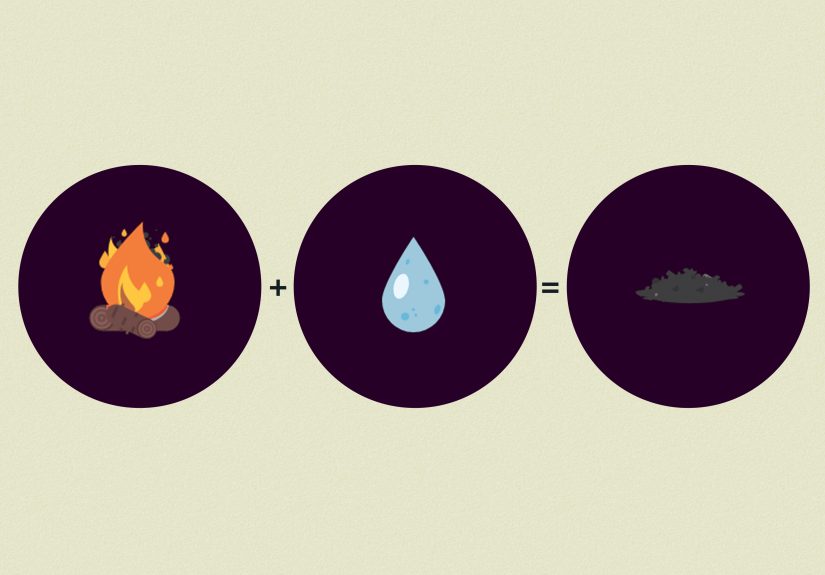
| Ash | Campfire + Water Campfire + Time Campfire + Rain Campfire + Paper |
One of the more realistic outcomes. Fire meets inconvenience, and everything gets dusty. |
| Bacon | Pig + Campfire Ham + Campfire |
Equal parts funny and slightly alarming. |
| BBQ | Campfire + Metal Campfire + Steel Campfire + Garden Campfire + House Campfire + Meat |
Little Alchemy 2 gives BBQ more ways to happen, because apparently grilling finds a way. |
| Cauldron | Witch + Campfire | Still spooky. Still iconic. |
| Cook | Human + Campfire | A smart progression from person near fire to person who suddenly owns recipes. |
| Dog | Wolf + Campfire | One of the cleverest “civilization” combinations in the sequel. |
| Fireplace | Campfire + House Campfire + Brick Campfire + Wall Campfire + Container |
A cleaner, more flexible set of fireplace recipes than the original game. |
| Flamethrower | Gun + Campfire | This game escalates from “cozy” to “please do not hand this to anyone” in one drag-and-drop move. |
| Marshmallows | Sugar + Campfire | Still undefeated as the campfire combination with the best vibes. |
| Smoke | Campfire + Water Campfire + Time Campfire + Storm |
Useful if you are working through signal, atmosphere, or weather-adjacent chains. |
| Smoke Signal | Fabric + Campfire | Old-school messaging, zero unread emails. |
| Story | Human + Campfire | Yes, the sequel keeps this one, because some combinations are simply too good to retire. |
That is the full campfire utility package in Little Alchemy 2. Compared with the original, it is broader and more playful. Campfire touches food, survival, home building, transformation, communication, and one very aggressive weapon. In other words, it behaves exactly like a Little Alchemy element should: half logic, half chaos, all entertainment.
Little Alchemy 1 vs. Little Alchemy 2: What Changes?
Same Recipe, Different Value
The most important thing to remember is this: Campfire uses the same recipe in both games. You do not need to relearn the base combo. But you do need to adjust your expectations about what happens after you make it.
Classic Keeps It Tight
Little Alchemy 1 treats campfire like a compact utility item. It is useful, memorable, and worth making, but it does not branch into a giant web of results. It mainly supports shelter, food, storytelling, and primitive communication.
The Sequel Makes It More Important
Little Alchemy 2 expands campfire into a better connector. It can help create Cook and Dog, which is the kind of progression that makes the game feel less like random crafting and more like a weird history speedrun. One minute you have fire and wood. Next minute you have cuisine, domestication, and a suspiciously efficient route to bacon.
Best Tips for Using Campfire Efficiently
1. Do Not Stop at the Recipe
A lot of players make campfire, smile politely, and move on. Do not do that. Campfire is one of those deceptively useful elements that can unlock multiple themes at once: food, home life, culture, and signaling.
2. Pair It with Human Early
If you are in Little Alchemy 2, try Human + Campfire sooner rather than later. It helps you discover Cook and Story, which both feel like meaningful “progress” items rather than random novelty creations.
3. Use It for Practical Chains
If you are trying to build out a household or outdoor survival set, campfire is a natural bridge to Fireplace, BBQ, and Smoke Signal. It is not just a dead-end collectible. It is a connector element.
4. Remember That Some Outputs Share Themes
If a combination feels like it belongs with a fire pit, test it. Sugar? Good idea. House? Reasonable. Fabric? Oddly historical. Gun? Well, that one went off the rails, but the sequel said yes anyway.
Common Mistakes Players Make
- Forgetting to build Wood first: Fire is easy. Wood is usually the bottleneck.
- Assuming the two games have identical uses: They do not. The recipe matches, but the downstream combinations grow in Little Alchemy 2.
- Treating campfire like a final result: It is much more valuable as a stepping stone.
- Ignoring the obvious pairings: Human, sugar, house, fabric, and meat are all strong campfire partners.
Why Campfire Is One of the Most Satisfying Elements in the Series
Campfire works so well because it feels instantly understandable. Even when Little Alchemy gets gloriously weird, campfire gives you a moment of real-world logic. Of course Fire + Wood makes sense. Of course a campfire leads to Marshmallows. Of course people tell Stories around it. The game builds satisfaction by mixing that familiar logic with slightly absurd payoffs.
That is also why campfire is memorable. It is not just a recipe you memorize for progress; it is a recipe you remember because it fits human experience. Fire cooks food. Fire gathers people. Fire becomes home when you add walls. Fire becomes signal when you add cloth. Fire becomes trouble when you add a gun. Honestly, that last one may also fit human experience a little too well.
Experience Section: Why Making Campfire Feels Bigger Than It Looks
For a lot of players, campfire is one of those surprisingly emotional little milestones. Not emotional in the “weep softly into your keyboard” sense, but emotional in the way puzzle games suddenly make you feel smart for connecting something ancient, obvious, and useful. You drag Fire onto Wood, and the result just feels right. It is one of those rare combinations where the game’s logic, your real-world intuition, and the joy of discovery all line up perfectly.
That is probably why campfire tends to stick in memory more than a lot of flashier elements. You may forget the exact path to make some bizarre late-game item with a dramatic name and a very questionable recipe, but campfire? Campfire stays with you. It feels like progress. It feels like survival. It feels like the moment the board stops being four starter elements and starts becoming something like a tiny civilization simulator with a mischievous sense of humor.
In the original game, the experience is especially satisfying because campfire opens the door to combinations that feel almost mythic. You move from raw ingredients to things people actually do around a fire: eat, gather, tell stories, send signals, experiment with magic, and try not to burn the house down while upgrading to a fireplace. There is a kind of primitive human story hidden in those combinations, and that makes campfire feel richer than its simple recipe suggests.
In Little Alchemy 2, that feeling grows even stronger. Campfire becomes one of those elements that quietly tells you the sequel has more imagination, more breadth, and more playful systems. It helps create Cook, which makes sense. It helps create Dog, which is clever and weirdly touching if you think about it as a tiny domestication timeline. It helps create Story, which remains one of the best combinations in the whole series because it captures something real: humans and fire naturally produce storytelling. That is a recipe with a brain and a soul.
And then, because the game refuses to stay poetic for too long, campfire also helps create Flamethrower. That jump from cozy cave-night vibes to “who let invention get this confident?” is exactly why the series works. It balances grounded logic with cartoon escalation. You never quite know whether your next combination will produce warmth, wisdom, dinner, or a safety violation.
There is also a practical pleasure in using campfire during regular play. It is one of those elements that rewards curiosity without punishing experimentation. Put it with sugar and you get something sweet. Put it with a house and you get something domestic. Put it with fabric and suddenly you are communicating across distance like a historical drama with excellent smoke effects. The game invites you to think in themes, not just in formulas, and campfire is one of the best examples of that design.
Maybe that is the real reason campfire is such a fan-favorite type of element. It feels human. It bridges nature and culture. It turns a basic physical reaction into food, shelter, story, and connection. Even inside a light puzzle game, that progression feels meaningful. It is small, but it is central. Cozy, but productive. Familiar, but still useful long after you make it.
So yes, campfire may look like a modest little icon on the board. But in terms of player experience, it punches way above its weight. It is one of the best examples of what Little Alchemy does right: take a simple combination, attach it to recognizable human ideas, and let one recipe ripple outward into a whole network of clever discoveries. Not bad for two ingredients and a little controlled chaos.
Final Thoughts
If you were searching for how to make campfire in Little Alchemy 1 and 2, the answer is mercifully easy: Fire + Wood. The real value comes after that. In the original game, campfire helps unlock memorable basics like BBQ, Fireplace, Marshmallows, and Story. In Little Alchemy 2, it becomes even more useful, branching into Ash, Bacon, Cook, Dog, Smoke, and Flamethrower.
If you like elements that feel logical, useful, and just a little funny, campfire is one of the best in the series. It is easy to make, satisfying to use, and surprisingly important once you start following all the paths it unlocks. In other words, it is not just a campfire. It is the warm, crackling center of several really good recipes and at least one terrible idea involving a gun.






 Close
Close