
Table of Contents >> Show >> Hide
- What Is the Propeller Backpack, Exactly?
- Why the Idea Is So Weirdly Appealing
- Where the Fantasy Crashes Into Reality
- What Ski Backpacks Are Actually Designed to Do
- Who Would Actually Want One?
- Smarter Alternatives for the So-Called Lazy Skier
- Should a Propeller Backpack Ever Become a Real Product?
- Experiences Related to the Topic: What a Propeller Backpack Seems to Feel Like on Snow
- Final Thoughts
Note: This article is informational, based on real reporting about a DIY propeller-backpack ski concept and current ski-gear safety guidance. It is not a how-to build guide.
Every skier has had the same dramatic thought at least once: “I love snow, I love speed, but do I really need to work this hard on the flat parts?” That tiny complaint is exactly what makes the idea of a propeller backpack so absurdly entertaining. The concept sounds like something brainstormed halfway through a ski trip and a thermos of questionable lodge coffee: strap a giant spinning prop to your back, hit the throttle, and let science drag you across the snow like a human snowmobile with better posture and worse judgment.
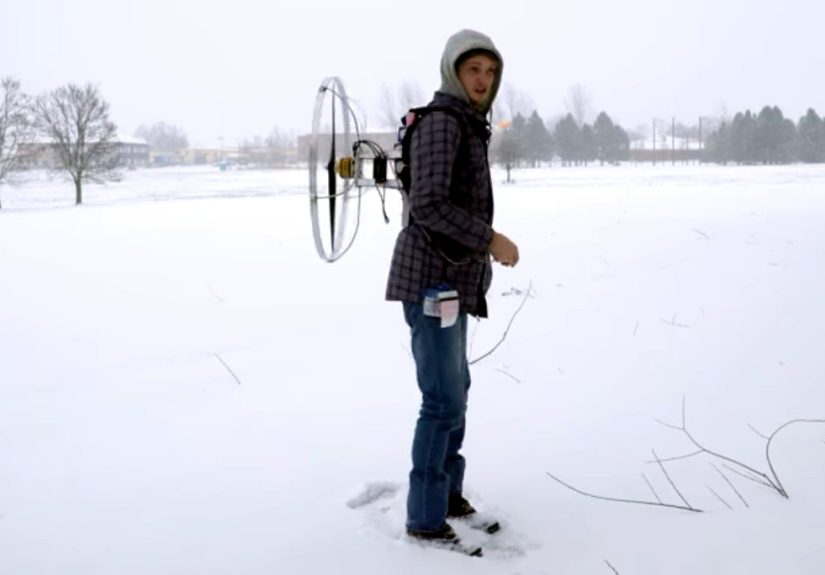
As ridiculous as it sounds, the idea is not purely fiction. A real DIY version made the rounds online after creator Samm Sheperd experimented with a backpack-style propulsion rig built from large multicopter parts. The internet, being the internet, immediately understood the assignment. Some viewers saw innovation. Others saw a wonderful new way to terrify ski patrol. Both reactions were fair.
That is what makes the “propeller backpack for lazy skiers” such a compelling topic. It sits at the intersection of maker culture, ski obsession, and the eternal human desire to avoid pushing through a long traverse. It is funny, clever, and undeniably memorable. But it also raises a serious question beneath the comedy: could a powered backpack ever make sense for skiing, or is this one of those ideas that is much better at getting clicks than getting you safely back to the lift?
What Is the Propeller Backpack, Exactly?
At its core, the propeller backpack is exactly what the name suggests: a wearable frame carrying motors, batteries, and an exposed propeller system that creates thrust behind the rider. Think drone technology scaled up, pointed backward, and attached to someone wearing skis. In the most famous version, the setup was a homemade experiment rather than a polished consumer product. That distinction matters. This was not a slick retail launch from a major snow-sports brand. It was a garage-built proof of concept with all the charm, risk, and chaos that phrase implies.
The fantasy is easy to understand. Skiers lose momentum on cat tracks, flat runouts, rolling terrain, and long exits. Snowboarders unstrap and curse. Skiers skate awkwardly and pretend they are still having fun. A motorized assist seems like the punchline to a very old mountain problem. Why huff your way across a flat when a backpack could do the work?
From a pure idea standpoint, it is genius. From an everyday skiing standpoint, it is a lot messier. Real ski backpacks are designed to stay compact, stable, and useful while you move through changing terrain. They are supposed to help you carry layers, water, safety gear, snacks, and maybe a little dignity. Bolting a high-thrust spinning propeller onto that same real estate changes the entire job description.
Why the Idea Is So Weirdly Appealing
It solves a problem skiers genuinely hate
Flat terrain is the sworn enemy of downhill momentum. That is especially true at resorts with long traverses, mellow exits, or winding connector trails. A propeller backpack promises a fantasy version of efficiency: no more skating, less leg burn, and the ability to cruise where gravity gives up and laziness takes over. For a certain kind of gearhead, that pitch is irresistible.
It scratches the “future sports” itch
There is something delightfully retro-futuristic about the whole thing. It feels like a 1960s vision of tomorrow, where every recreational inconvenience is solved with a motor and a dream. Skiing already has a long relationship with tech, from heated boots and avalanche airbags to advanced shell materials and high-performance bindings. A propeller backpack feels like the next ridiculous step in that lineage, even if it is more cartoon than category.
It looks spectacular on video
And let us be honest: spectacle is half the reason people care. A normal skier gliding along a flat is not exactly viral content. A skier roaring forward with a giant propeller buzzing behind them? That is internet gold. The visual is immediate, funny, and just dangerous-looking enough to keep people watching. In today’s attention economy, the propeller backpack may be more successful as a headline than as equipment.
Where the Fantasy Crashes Into Reality
Control is everything in skiing
Skiing is not just about moving. It is about managing speed, terrain, spacing, visibility, and other people. Resort safety guidance emphasizes staying in control, yielding to people downhill, and avoiding collisions or runaway equipment. That is already a lot to juggle with gravity alone. Add powered thrust to the equation, and things get spicy in the least relaxing way possible.
A propulsion system on your back changes acceleration patterns and body balance. Instead of simply reacting to snow conditions under your skis, you are now reacting to external thrust while also navigating uneven terrain, icy patches, traffic, and surprise turns. That might be manageable on a wide-open frozen field. On a crowded resort trail, it sounds like an excellent way to become the reason strangers exchange insurance information.
Exposed propellers are not exactly “ski friendly”
Real backcountry and resort packs are built to keep things close to the body. Narrow profiles, stable hipbelts, sternum straps, reinforced fabrics, and dedicated storage all exist for one reason: movement should feel clean, balanced, and predictable. A giant exposed propeller does the opposite. It widens the risk profile, creates snag hazards, complicates chairlift loading, and introduces a high-speed moving part where you really want none.
This is also where the joke stops being cute. Spinning propellers and people do not mix well. That is true in aviation, drones, and just about every situation where flesh meets rotating blades. Even if a future version used shrouded or enclosed fans instead of open props, the safety burden would still be enormous. Skiing already includes enough opportunities to fall into things without bringing your own airborne blender.
Batteries and winter are not best friends
Battery-powered gear is wonderful until winter reminds it who is boss. Cold temperatures can reduce lithium-ion battery performance, shorten useful output, and complicate high-demand use. In plain English: the exact environment where skiers want extra help is the one that can make battery systems grumpier, weaker, and less predictable. That is not ideal when your entire gimmick depends on reliable thrust.
There is also the broader safety issue. U.S. regulators have spent increasing attention on lithium-ion battery hazards because thermal runaway can lead to overheating, smoke, fire, and serious injury. Those concerns apply across many micromobility products, and they do not magically disappear because the product happens to be attached to somebody wearing ski goggles. A battery pack is not just a power source. It is a design responsibility.
Lift lines, rules, and common sense would all get involved
Even if a powered backpack worked beautifully on snow, it would run straight into operational reality. Ski areas set rules for inbounds safety, chairlift loading, traffic flow, and acceptable equipment. A loud propulsion system with moving parts would raise questions from lift ops, patrol, liability teams, and likely every parent within 200 feet. You might get admiration from the parking lot, but you would also probably get a very firm conversation before second chair.
What Ski Backpacks Are Actually Designed to Do
The funniest thing about the propeller backpack is that modern ski backpacks already do an impressive jobjust not the sci-fi job. A good ski pack is built for stability, streamlined movement, and smart organization. In the backcountry, that means quick access to avalanche essentials like a shovel and probe, along with room for water, layers, a first-aid kit, and repair items. Inbounds or sidecountry packs may prioritize a slim shape, chairlift-friendly design, and easy carry options for skis or boards.
That difference matters. Traditional ski backpacks are trying to disappear on your back. The best ones move with you instead of announcing themselves. They help you save energy by carrying gear efficiently, not by turning you into a wind-powered experiment from an alternate universe. When brands rethink ski packs, they usually focus on reducing bulk, improving load balance, and making rescue tools easier to accessnot adding thrust.
In other words, the real innovation in ski backpacks has been about less drama, not more. Better fit. Better access. Better safety. Better carrying comfort. None of that makes for a goofy viral headline, but it does make for a much better day in the mountains.
Who Would Actually Want One?
The honest answer is: not most skiers. The audience for a propeller backpack is not the average resort rider looking for a better Saturday. It is a tiny overlap group made up of tinkerers, drone enthusiasts, backyard inventors, and adrenaline hobbyists who look at exposed motors and think, “We can probably make this fun.” That is a real audience, but it is not a mass market.
The broader skiing public tends to want gear that is lighter, safer, warmer, quieter, and easier to carry. The propeller backpack is louder, stranger, more complex, and far more likely to create logistical headaches than solve them. It is less “must-have winter gear” and more “magnificent engineering side quest.”
Smarter Alternatives for the So-Called Lazy Skier
Improve your glide instead of adding thrust
Sometimes the unglamorous answer is the right one. Good ski maintenance, proper wax for conditions, and efficient technique on flats can make a bigger difference than people expect. A well-tuned ski has a much better chance of floating through runouts than a neglected pair dragging like two wet cinder blocks.
Choose terrain more strategically
Many “lazy skier” frustrations come from route choices, not fitness failures. Learning which lifts, connectors, and exits preserve speed can spare you a lot of awkward skating. Ask locals which traverses are worth carrying momentum into and which ones are slow-motion traps.
Use the right backpack
If your current pack feels bulky, swings around, or turns chairlifts into a wrestling match, the answer may simply be a better-designed ski pack. Slimmer profiles, better load transfer, snow-specific pockets, and improved organization can make skiing feel dramatically smoother without turning your torso into a propulsion test bench.
Accept that a little effort is part of the sport
This may be the least exciting advice in the article, but it is probably the most useful. Skiing has always included moments of push, skate, carry, wait, and adapt. That is part of the package. The mountain does not exist solely to flatter your efficiency goals, and that is one reason people keep coming back.
Should a Propeller Backpack Ever Become a Real Product?
As a mass-market ski product, probably not in its exposed-prop form. The barriers are obvious: safety, regulation, reliability, battery performance, resort acceptance, and practical use cases. Could some future personal snow-travel device borrow ideas from this concept? Maybe. Enclosed fans, limited assist modes, controlled terrain use, and much stronger safety engineering could eventually inspire niche mobility tools. But that would be a very different product from the viral “lazy skier” backpack people laugh about online.
So the answer is both boring and satisfying: the propeller backpack is a brilliant stunt concept, a fun engineering conversation, and a terrible candidate for mainstream ski culture in its current form. It succeeds as an idea because it highlights a real annoyance while pushing the solution to a hilariously unreasonable extreme.
Experiences Related to the Topic: What a Propeller Backpack Seems to Feel Like on Snow
The experience side of this topic is what keeps people fascinated. Even if most skiers would never wear one, almost everyone wants to know what it must feel like. Based on the footage, the reactions it inspired, and the way ski packs and battery-powered propulsion systems behave, the ride appears to be equal parts thrill, awkwardness, and comedy. It is not the smooth elegance of downhill skiing. It is more like trying to merge drone energy with winter gear and hoping your balance wins.
The first sensation would likely be anticipation mixed with healthy fear. A normal ski run begins with gravity. A propeller backpack begins with noise. Before you even move, the machine announces itself. There is the whir, the vibration, the awareness that something behind you is spinning fast enough to matter. That alone changes your mindset. Instead of quietly slipping into a snowy landscape, you become the main character in a much stranger movie.
Then comes thrust. On flat terrain, that must feel genuinely hilarious for the first few seconds. Places that usually demand skating suddenly start moving under you. There is a childish kind of delight in that moment, the same emotional flavor as finding out a ridiculous invention actually works. You are still on skis, still on snow, but the usual rules have been edited. The machine is doing some of the work, and your brain probably needs a second to catch up.
After that initial rush, though, the experience likely becomes more technical than magical. Skiers depend on subtle balance through ankles, hips, and torso. A backpack that pushes from behind changes that conversation. You are not just standing over your skis anymore; you are negotiating with a force trying to move you forward whether the terrain fully agrees or not. On smooth snow, that may feel manageable. On variable snow, chopped-up runouts, or terrain with hidden texture, it probably turns from “wow” to “okay, this is getting weird” very quickly.
There is also the social experience. A person wearing a propeller backpack on snow is not blending in. Kids would stare. Friends would laugh. Other skiers would either ask questions or quietly move farther away. The rider would become a traveling spectacle, part inventor, part cautionary tale. That attention is probably part of the appeal. Plenty of novelty gear lives not just on performance, but on the joy of making people say, “No way that thing actually works.”
And then there is the emotional rhythm of the ride. A normal ski day has long stretches of routine broken by moments of excitement. A propeller backpack seems like the reverse: high-alert novelty broken by brief proof that the concept is doing something useful. Every successful glide across a flat would feel like a tiny triumph. Every awkward transition, balance correction, or shutdown would remind the rider that they are operating far outside the boundaries of ordinary ski gear.
Most of all, the experience seems temporary by nature. This does not look like equipment you forget you are wearing. It looks like equipment you are constantly managingmonitoring battery life, feeling for changes in output, paying attention to noise, space, and the reactions of everyone nearby. That means the fun is likely intense but short-lived. It is the kind of thing that makes for a fantastic story, a memorable video, and a very specific type of day on the snow. It is probably not the kind of thing that makes a skier say, “Yes, this is how I want every Saturday to feel from now on.”
That may be the most honest takeaway of all. The propeller backpack experience is appealing because it turns a familiar mountain annoyance into a mechanical adventure. It offers a burst of speed, absurdity, and geeky satisfaction. But it also looks like an experience built around attention and experimentation rather than comfort and repeatability. In other words, it seems unforgettablewhich is not always the same thing as useful.
Final Thoughts
The propeller backpack for lazy skiers is the kind of idea people love because it feels both clever and slightly unhinged. It addresses a real complaint, uses real technology, and produces real movement on snow. That is enough to make it fascinating. But fascination and practicality are not the same thing. When you compare the concept to what ski backpacks are actually meant to docarry safety gear, stay stable, reduce hassle, and support good decisionsthe propeller version looks less like the future of skiing and more like a brilliant snow-day side quest.
So yes, the propeller backpack is funny. Yes, it is inventive. Yes, it taps into a deeply relatable skier fantasy. But if you are looking for the real lesson here, it is simple: the best ski gear usually helps you stay balanced, organized, and in control. The worst ski ideas usually start with the phrase, “Hear me out.” This one somehow manages to be both at the same time, which is exactly why people still cannot stop talking about it.





 Close
Close