
Table of Contents >> Show >> Hide
- Why This Story Lands So Hard
- What “Golden Child” Grandkid Favoritism Actually Looks Like
- Kids Notice More Than Adults Want To Believe
- The Ripple Effect On Siblings, Cousins, And Parents
- Why Some Grandparents Play Favorites
- What Moms Can Do When The Favoritism Becomes Unbearable
- What Not To Do
- When Distance Is The Healthiest Option
- The Bigger Truth Underneath The Drama
- Experiences Families Commonly Describe In “Golden Grandkid” Situations
Some family problems arrive wearing a nice cardigan and carrying cookies. That is what makes them so maddening. One minute, Grandma is pinching cheeks and calling herself “blessed.” The next, she is showering one grandchild with attention, gifts, praise, and emotional energy while the others are left standing there like they accidentally showed up to the wrong family.
And that is exactly why stories about a mother-in-law picking a “golden child” grandkid hit such a nerve. This is not just about who gets the biggest birthday present or who gets the longest FaceTime call. It is about what favoritism says without ever saying it out loud: You matter more. Children do not need subtitles to understand that message. They feel it in the extra hugs, the inside jokes, the eager invitations, the selective babysitting, and the way one child’s every sneeze becomes a family event while another child’s school play gets a polite shrug.
When a mom says she cannot handle the favoritism anymore, she is not being dramatic. She is usually responding to a pattern. And patterns are what make this kind of behavior so painful. One awkward comment can be brushed off. Ten, twenty, or fifty moments stitched together become a family wound.
Why This Story Lands So Hard
The “golden child” dynamic is not new. Families have been quietly running this dysfunctional subscription service for generations. What changes is the packaging. In some homes, the favored child is the one who gets straight A’s. In others, it is the child who is easiest to control, most similar to the adult, or most useful to the family image. In grandparent favoritism, the same logic often gets passed down like a bad heirloom.
Sometimes the favored grandchild is the child of the favored adult child. Sometimes it is the first grandbaby, the only boy, the only girl, the child with the “right” last name, or the one whose parent gives Grandma the most access. Sometimes the reasoning is so flimsy it could be knocked over by a strong breeze. But the effect is real either way.
That is why so many moms snap when the pattern becomes obvious. They are not just reacting to one rude visit. They are reacting to the dawning realization that their child is learning where they rank in the family pecking order. And no decent parent wants their kid growing up thinking love is something to compete for like concert tickets.
What “Golden Child” Grandkid Favoritism Actually Looks Like
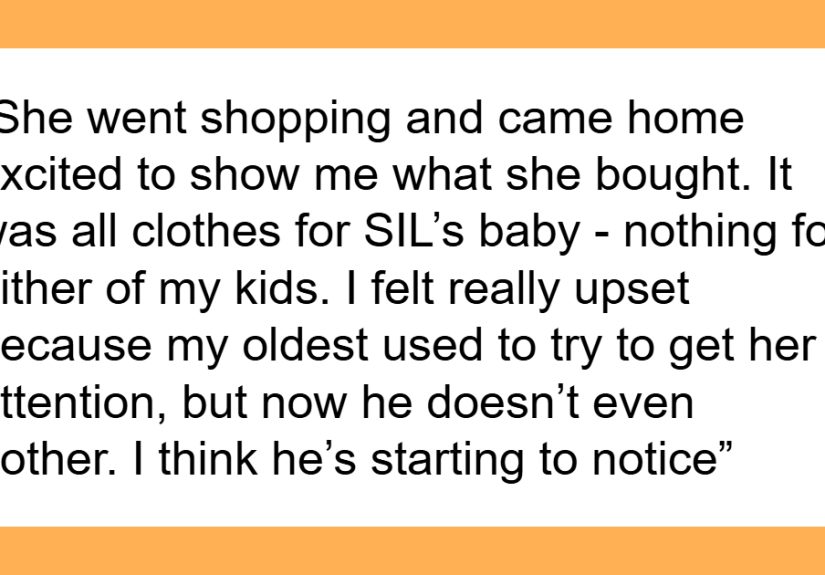
Favoritism is rarely announced with a drumroll. It usually shows up in sneaky, socially deniable ways. Grandma posts endless photos of one child but “forgets” the others. She offers to babysit one grandkid every weekend but is mysteriously “so tired” when asked about the others. She remembers every milestone for the favorite and blanks on birthdays, hobbies, and school events for everyone else. She buys one child lavish gifts and hands the others something that looks like it came from a panic-grab aisle near the pharmacy register.
Then there is the emotional favoritism, which can sting even more. One child gets the big smile, the animated voice, the special nickname, the “you’re my little angel” routine. The others get a distracted hello and the kind of small talk usually reserved for someone waiting behind you at the DMV.
Some grandparents try to excuse this by saying they just “click” more with one child. But children are not supposed to be managing the emotional preferences of grown adults. A grandparent does not need identical relationships with every grandchild, because every person is different. But a healthy difference is not the same as obvious unequal value.
Kids Notice More Than Adults Want To Believe
Adults often comfort themselves with the same fantasy: The kids are too young to notice. That fantasy deserves to be launched directly into the sun.
Children are startlingly good at reading social cues. They notice who gets more warmth, who gets interrupted less, who gets chosen first, and who gets spoken about like they are a tiny celebrity. Even when they cannot put it into polished language, they can feel the imbalance. A child may not say, “Grandmother is engaging in differential emotional investment.” They are more likely to say, “Why does Grandma like him better?” Same point. Fewer syllables. Much sadder.
And the consequences are not limited to the child being ignored. The favorite does not exactly win a free pony either. Being the golden child can create pressure, entitlement, confusion, guilt, and tension with siblings or cousins. The message to the favored child is often: Your value comes from staying special. That is not love. That is performance dressed up as affection.
The Ripple Effect On Siblings, Cousins, And Parents
When one grandchild is elevated, the family rarely stays calm and balanced. The overlooked kids may become clingier, angrier, quieter, or more competitive. Siblings can start turning on one another instead of naming the real problem. Cousins who should have sweet, chaotic, snack-fueled bonds suddenly inherit weird emotional politics they never signed up for.
Meanwhile, the parents are stuck doing emotional cleanup. The mom whose child is being sidelined often becomes part detective, part bodyguard, part crisis manager. She is watching her child’s face during holidays, decoding every passive-aggressive remark, and debating whether to say something now or save it for the inevitable argument in the car. It is exhausting.
Her partner may be in denial, especially if the favoritism is coming from his mother. That denial can sound like, “She doesn’t mean it,” or “That’s just how she is,” or the classic family nonsense phrase, “Let’s keep the peace.” But “keeping the peace” too often means asking the most hurt person in the room to swallow the most pain. That is not peace. That is organized avoidance.
Why Some Grandparents Play Favorites
There is no single explanation, but there are some repeat offenders. Some grandparents are deeply tied to old family roles and still treat their adult children unequally, which naturally spills over onto the grandchildren. If one son or daughter has always been the golden child, their kid may inherit that glow by association.
Others are drawn to whichever grandchild best reflects their preferences or ego. Maybe that child is more compliant, more cuddly, more similar to them, or attached to the parent they favor most. In more unhealthy cases, favoritism becomes a control tactic. The grandparent uses affection, money, attention, and access to reward loyalty and punish boundaries.
And yes, sometimes the issue is less “sweet but clueless grandma” and more “emotionally immature adult who still needs to be the center of gravity.” That kind of grandparent may not actually want a relationship built on consistency, empathy, and respect. They want adoration, access, and influence. If they cannot get all three, they may start dividing the family like they are drafting teams for a game no one wanted to play.
What Moms Can Do When The Favoritism Becomes Unbearable
First, trust your eyes. If the pattern is obvious to you, there is a good chance it is real. You do not need a signed confession, a pie chart, and a witness from the neighborhood watch to acknowledge what is happening.
Second, talk to your partner plainly. Not in the heat of a holiday meltdown. Not after three passive-aggressive comments and half a glass of wine. Calmly. Specifically. Use examples. “She took one child out for a special day and ignored the others.” “She bought one child gifts and forgot the others.” “Our oldest is starting to withdraw when she visits.” The goal is not to win a courtroom case. It is to get on the same parenting team.
Third, stop dressing a boundary up as a polite suggestion. If Grandma’s behavior is hurting the kids, the response cannot be vague. This is where parents often wobble because they fear conflict. But conflict is already here. The question is whether the children are going to be the ones absorbing it.
Useful Boundary Scripts
Try language that is clear and boring. Boring is good. Boring is powerful. Boring does not get dragged into a side quest.
“We will not allow favoritism between the kids.”
“If gifts or outings are not being handled fairly, we will decline them.”
“Please do not compare the children or single one out in front of the others.”
“If this continues, visits will need to be shorter and less frequent.”
Notice what these statements do not include: a ten-minute apology for having standards. Parents are allowed to protect the emotional climate around their children. That is the job description.
What Not To Do
Do not force the overlooked child to keep chasing affection from the grandparent who keeps moving the goalposts. Do not tell them, “That’s just Grandma.” Children should not be trained to normalize coldness from people who are supposed to love them. Do not make the favorite child responsible for fixing the imbalance either. This is an adult problem, and it belongs in adult hands.
Also, do not get seduced by flashy gestures after you confront the issue. A manipulative grandparent may respond with tears, gifts, guilt, martyrdom, or a sudden burst of over-the-top sweetness. If the long-term pattern does not change, the performance does not count.
When Distance Is The Healthiest Option
Not every family disagreement requires distance. But repeated favoritism, mocking of boundaries, ranking children, or making one child feel less lovable absolutely can justify a major reset. Reduced contact is not revenge. It is risk management for your child’s emotional well-being.
If visits always end with one child feeling invisible, that is not “family closeness.” That is family harm with a casserole dish.
Sometimes the healthiest move is limiting one-on-one access. Sometimes it means supervised visits only. Sometimes it means holidays are restructured, expectations are lowered, and the grandparent no longer gets prime access to the children. And sometimes, especially when the behavior is cruel and persistent, parents decide that less contact is the price of emotional safety.
That choice can feel brutal, especially when the grandparent plays the victim. But protecting children from repeated emotional injury is not cruelty. It is parenting.
The Bigger Truth Underneath The Drama
The most heartbreaking part of this kind of story is not that a mother-in-law has a favorite. Humans are messy, and feelings are not always evenly distributed. The real problem is what happens when a grown adult refuses to manage those feelings responsibly around children.
Good grandparents do not have to be identical robots handing out mathematically equal hugs. But they do need to be kind, intentional, and careful. They need to understand that children build their sense of belonging through repeated interactions. A grandparent who gushes over one child and cools off around the others is not just revealing a preference. They are shaping a family narrative.
And once children start hearing that narrative, parents are right to interrupt it.
So no, the mom in this situation is not overreacting. She is reacting at exactly the right moment: the moment she realizes this is no longer awkward adult behavior to laugh off, but a pattern her children may carry for years if nobody steps in.
Family favoritism has a way of pretending to be minor while leaving major damage behind. The fix is rarely magical. It is usually uncomfortable, firm, repetitive, and about as glamorous as folding laundry. But it matters.
Because children should never have to audition for grandma’s love.
Experiences Families Commonly Describe In “Golden Grandkid” Situations
Parents who deal with this kind of favoritism often describe the same sickening moment of clarity: it is not one incident anymore. It is a pattern. Maybe it starts at a birthday party when Grandma walks past two kids to squeal over the “special” one. Maybe it happens during the holidays, when one child gets a mountain of presents and the others get polite little token gifts that scream, “I remembered you existed five minutes ago.” Maybe it is more subtle, like the constant stream of photos, praise, babysitting offers, and social media posts about one child while the others are treated like background decor.
One common experience is the child who starts changing their behavior to earn love. Parents notice their overlooked kid becoming extra helpful, extra loud, extra clingy, or extra “perfect” around the grandparent. It is heartbreaking because the child is not acting out for fun. They are trying to solve a problem they should never have been handed. They are asking, in kid language, “What do I need to do to matter here?”
Another experience parents talk about is the partner who struggles to see it at first. That makes sense. If the grandparent is his mother, he may have spent his entire life adapting to her behavior. What looks shocking to an outsider can feel normal to the person who grew up swimming in it. Many moms say the hardest part was not just the MIL’s favoritism. It was feeling alone while trying to prove that something was wrong.
Then there is the weird family gaslighting. The mom brings up the issue, and suddenly everyone turns into an amateur PR team. “She loves them all.” “You’re reading too much into it.” “That’s just her personality.” “Don’t make it a bigger deal than it is.” Meanwhile, the actual children are already noticing the imbalance with the brutal clarity kids often have.
Some parents describe the favorite child feeling awkward too. That child may enjoy the attention at first, but over time the dynamic can become uncomfortable. They may feel pressure to perform, guilt around siblings or cousins, or confusion about why family gatherings feel tense. Being favored can look shiny from the outside, but it often comes with emotional strings attached.
Families who handle the situation well usually say the turning point was simple: they stopped debating whether the grandparent “meant” harm and started focusing on the effect the behavior had on the kids. That shift changes everything. It moves the conversation away from the grandparent’s intentions and toward the children’s well-being, which is exactly where it belongs.
Parents who set successful boundaries also tend to keep them simple. They do not deliver a dramatic speech worthy of an awards show. They say what will and will not happen. They watch behavior instead of promises. And they remember that protecting a child from repeated emotional hurt is not rude, excessive, or anti-family. It is one of the clearest acts of love a parent can offer.
In other words, families survive this best when they stop trying to preserve an image of harmony and start building the real thing.






 Close
Close