
Table of Contents >> Show >> Hide
- Why This Feels So Invasive (Even If She Swears It’s ‘Just Excitement’)
- Facebook Is Not a Family Living Room
- The Etiquette Rule People Keep Forgetting: “Not Your News”
- How to Handle a MIL Who Posted Your Pregnancy Image
- When Talking Doesn’t Work: Platform Options (Without Turning Into a Villain)
- Set a “Baby Content Policy” Now (Because This Is Usually a Preview)
- Privacy Isn’t Just EmotionalIt’s Practical
- How to Keep the Peace Without Becoming a Doormat
- Experiences People Share About This Exact Kind of Oversharing (And What They Learned)
- Conclusion: Your Body, Your Baby, Your Rules
There are a few universal truths in life: taxes happen, socks disappear in the dryer, and someone’s relative will eventually treat social media like a family group chat with a megaphone.
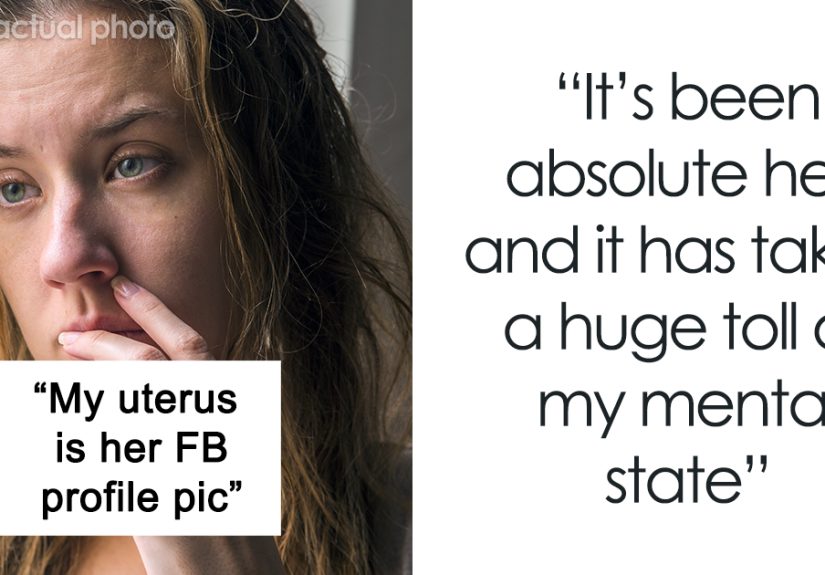
But even in the wild world of Facebook oversharing, one scenario has a special talent for making people choke on their coffee: a mother-in-law using a pregnancy image (like an ultrasound) as her profile picture.
Not a sweet “grandma-to-be” announcement. Not a cute caption. Just… your private medical moment turned into her personal brand.
If you’re thinking, “Isn’t that a little… intimate?” you’re not being dramatic. You’re being normal.
This kind of post can feel like a boundary stomp, a consent issue, and a public claim of something that isn’t hers to claimwrapped in a filter and served with a side of “But I’m just excited!”
Why This Feels So Invasive (Even If She Swears It’s ‘Just Excitement’)
Pregnancy can be joyful and public when you choose it. The problem isn’t happinessit’s ownership.
An ultrasound isn’t a generic holiday card. It’s connected to your body, your health care, your timeline, and your choices.
When someone posts it without permission (or makes it their profile photo), it can land like:
- A consent violation: “I didn’t agree to this being sharedespecially not as your identity badge.”
- A spotlight theft: “This was our news to share, in our way, when we’re ready.”
- A boundary warning flare: “If this is happening now, what happens when the baby arrives?”
- A digital footprint problem: “My child shouldn’t have an online presence before we’ve even made an announcement.”
Even if she genuinely means well, impact matters. And the impact here is: your privacy got drafted into her Facebook storyline.
Facebook Is Not a Family Living Room
A lot of older relatives treat social media like it’s a scrapbook that only “friends” can see. In reality, it’s closer to a stadium.
Posts can be screenshotted, reshared, or saved. Profile pictures are especially visiblethey show up in comments, tags, and algorithm-driven suggestions.
So what feels to her like a cute announcement can become something you never consented to being public.
And pregnancy information is uniquely sensitive. Due dates, hospital plans, medical details, and even your location can become easier to piece together when families post in real time.
You don’t need to be paranoid to want control; you just need to have met the internet.
The Etiquette Rule People Keep Forgetting: “Not Your News”
There’s a simple social media etiquette guideline that solves about 80% of pregnancy-post drama:
If you didn’t make the baby, you don’t make the announcement.
“But I’m the grandma!” is not a permission slip. Grandparent excitement is valid. Grandparent posting rights are negotiable.
The parents get the first say because they carry the risk, the medical reality, and the long-term consequences of what goes online.
What “Permission” Actually Looks Like
Permission isn’t “I told you I was going to post it, and you didn’t stop me fast enough.”
Permission is a clear yes:
- Yes, you can post.
- Yes, you can use that specific image.
- Yes, you can post it now (timing matters).
- Yes, you can include these details (or no details).
How to Handle a MIL Who Posted Your Pregnancy Image
If you’re dealing with this, you’re likely balancing two goals that feel incompatible:
protecting your boundaries and keeping family peace.
The good news is you can do bothif you treat it like a communication problem with a policy solution.
Step 1: Get Aligned With Your Partner (Before You Text Anyone)
The most effective approach is “we,” not “me.”
If your partner is the biological child of the MIL, it’s often best for them to deliver the messagekindly, clearly, and firmly.
Quick alignment questions:
- Are we okay with anyone posting pregnancy-related content at all?
- Which images are off-limits (ultrasounds, bump photos, hospital photos, anything medical)?
- Do we want a “no posts until we announce” rule?
- What happens if someone ignores the rule?
Step 2: Ask for RemovalClear, Calm, Non-Negotiable
You don’t need a courtroom-level argument. You need a clear boundary.
Script (short and direct):
“Hi [Name]. Please take down the ultrasound and change your profile picture. We’re keeping pregnancy images private and we didn’t give permission for that to be posted.”
Script (warm but firm):
“I know you’re excited, and we’re excited too. But that image is private to us, and we’re not comfortable with it onlineespecially as a profile picture. Please remove it today.”
Step 3: Offer a “Yes” Option (So She Doesn’t Feel Like She’s Being Exiled)
Some conflicts shrink when you replace “no” with “not that, but this.”
If you’re comfortable, offer an alternative:
- A generic “grandma-to-be” graphic (no names, no due date).
- A family photo that doesn’t include pregnancy details.
- A post after your official announcement, with your approved wording.
Script (redirect):
“We’d love for you to celebratejust not with medical images. If you want, we can send you a photo we’re comfortable sharing once we announce.”
Step 4: If She Argues, Repeat the BoundaryDon’t Debate It
Boundary conversations go off the rails when you try to win an argument instead of enforcing a rule.
If she says:
- “You’re overreacting.” → “I understand you feel that way. Please remove it.”
- “I’m family!” → “Yes, and that’s why we’re asking you directly. Please remove it.”
- “Everyone does this.” → “Our rule is different. Please remove it.”
You’re not asking her to understand your boundary perfectly. You’re asking her to respect it.
When Talking Doesn’t Work: Platform Options (Without Turning Into a Villain)
If she refuses to remove it, you still have options.
Most platformsincluding Facebookhave reporting pathways for privacy concerns, and they also provide ways to report content that uses your image without permission.
If the photo involves your medical information or your child’s privacy, you have a reasonable basis to escalate beyond family negotiation.
Practical move before reporting: take screenshots for your records (date, image, caption).
Then decide whether to:
- Report the photo for privacy reasons through the platform’s reporting tools.
- Request removal based on privacy or image misuse policies.
- Use copyright reporting if you own the image (for example, if it’s your photo).
This isn’t “starting drama.” It’s using the tools that exist for situations exactly like thiswhen consent is ignored.
Set a “Baby Content Policy” Now (Because This Is Usually a Preview)
If someone is willing to post pregnancy content without asking, it’s not a wild guess that they may also:
post hospital photos, share the birth announcement early, upload baby pictures to public albums, or tag your child’s name like it’s a brand partnership.
The fix is a simple, written rule setshared with key relativesbefore the baby arrives.
Think of it as a “Family Media Plan” for your child’s digital footprint.
Example Family Posting Rules (You Can Copy-Paste)
- No posts about pregnancy or baby until we announce.
- No ultrasound images, medical updates, or hospital detailsever.
- No full name + birthdate combinations online.
- No location tags (hospital, home, daycare, school).
- Ask before posting any photo that includes the baby.
- If we ask you to remove something, please remove it immediatelyno debate.
Make it boring. Make it clear. Make it enforceable.
The more “policy” it feels, the less personal it becomes.
Privacy Isn’t Just EmotionalIt’s Practical
People sometimes dismiss this issue as “hurt feelings.” But online privacy has real-world stakes:
information can spread beyond your intended audience, and personal data can be misused.
That’s why many child-safety and privacy experts encourage families to think carefully about what they share and how early they share it.
You don’t have to live in fear. You just have to act like your child deserves agency over their online presencebecause they do.
How to Keep the Peace Without Becoming a Doormat
Let’s be honest: some relatives don’t hear boundaries unless there are consequences.
If MIL “forgets” the rule repeatedly, you may need to reduce her access to content.
That can look like:
- Stopping photo sharing in family group chats.
- Switching to a private app or shared album with strict controls.
- Only sharing photos in person, not digitally.
- Delaying updates if trust is broken.
Consequences don’t need to be cruel. They just need to be real.
The message is: “We love you, and access depends on respect.”
Experiences People Share About This Exact Kind of Oversharing (And What They Learned)
Situations like “my MIL made the ultrasound her profile picture” aren’t rarethey’re just rare enough that each person who experiences it feels like they’ve been cast in a reality show they never auditioned for.
Across parenting communities, relationship advice columns, and social media discussions, a few patterns show up again and again.
Here are common experiences people describealong with the lessons they wish they’d known sooner.
The “Grandma Claim” Profile Picture
One of the most common stories is the “grandparent claim”: a relative posts an ultrasound, bump photo, or early pregnancy announcement as if it’s their personal milestone badge.
The pregnant person often describes feeling weirdly erasedlike the pregnancy has been rebranded into “Grandma’s Big News” instead of “our growing family.”
The lesson most people report learning is that you have to address it immediately, because silence gets interpreted as permission.
The fastest resolutions typically come from one clear sentence (“Please remove it today”) and a united front from both partners.
The “Stole Our Announcement” Moment
Another frequent experience: someone posts the pregnancy before the parents do, sometimes with details the parents weren’t ready to share (due dates, names, even medical complications).
People often say the emotional sting surprised them.
They expected to be annoyed; instead they felt griefbecause a once-in-a-lifetime moment got taken.
A practical takeaway many couples adopt afterward is an “announcement window” rule:
relatives can celebrate publicly only after the parents post first, and only using an approved photo or caption.
It sounds formal, but it prevents repeat offenses.
The “Private Album Isn’t Private” Lesson
Some families try a compromise: “We’ll share pictures in a private album, but don’t post them publicly.”
Then someone downloads the photos and posts them anywaysometimes because they misunderstand what “private” means, sometimes because they don’t think the rule applies to them.
People who’ve lived through this often tighten their system:
fewer digital shares, watermarking or lower-resolution images, and a strict rule that anyone who reposts loses access for a while.
It’s not punishment; it’s rebuilding trust.
The Partner Factor: When the ‘Linchip’ Spouse Steps Up
Many couples report that the real make-or-break isn’t the MIL’s postit’s the partner response.
When the spouse says, “That’s just how she is,” resentment tends to grow.
When the spouse says, “Mom, take it down. This isn’t okay,” the situation often de-escalates faster.
People describe feeling protected when their partner handles their own parent.
The lesson: the spouse who’s biologically connected to the boundary-stomper is often the most effective messenger.
It’s not about choosing sides; it’s about protecting the new family unit.
The Unexpected Win: Some Relatives Learn
Not every story ends in a feud.
Some relatives genuinely don’t understand how visible profile pictures are or how quickly content spreads.
When the boundary is explained as “privacy and safety” instead of “you’re embarrassing,” they adjust.
People who report the best outcomes often used a respectful tone, repeated the rule once, and followed through consistently.
The big takeaway is hopeful: clear boundaries can actually improve relationshipsbecause everyone knows what the expectations are.
Conclusion: Your Body, Your Baby, Your Rules
If your MIL turned your pregnancy image into her Facebook profile picture, you’re not “too sensitive.”
You’re reacting to a real boundary issueone that blends privacy, consent, family dynamics, and your child’s long-term digital footprint.
The healthiest path forward usually looks like: align with your partner, set a clear rule, ask for removal, offer a safe alternative, and enforce consequences if needed.
Excitement is welcome. Entitlement is not.
And if anyone tries to guilt you with “But I’m family,” remember: family is exactly where consent and respect should be strongest.





 Close
Close