
Table of Contents >> Show >> Hide
- What “Automotive as a Service” Really Means (And Why It’s Spreading)
- Where the Nickel-and-Diming Shows Up
- 1) Connectivity Subscriptions: Your Car’s “Data Plan”
- 2) Remote Commands: Remote Start, Lock/Unlock, and “Please Find My Car”
- 3) Hands-Free Driving and Advanced Driver Assist: Paywalls on the Highway
- 4) Performance “Upgrades”: Your Car’s Power… for a Monthly Fee
- 5) Comfort Features and “Functions on Demand”
- The Fine Print That Makes People Furious
- The Hidden Cost Nobody Budgeted For: Data
- Why Automakers Love AaaS (Even When Drivers Don’t)
- How to Shop Smarter (So You Don’t Get “Microtransactioned”)
- What Happens Next (And What Could Improve)
- Conclusion: Your Next Car Might Come With a Subscription Hangover
- Experiences: The AaaS Moments That Make Drivers Lose It (A 500-Word Reality Check)
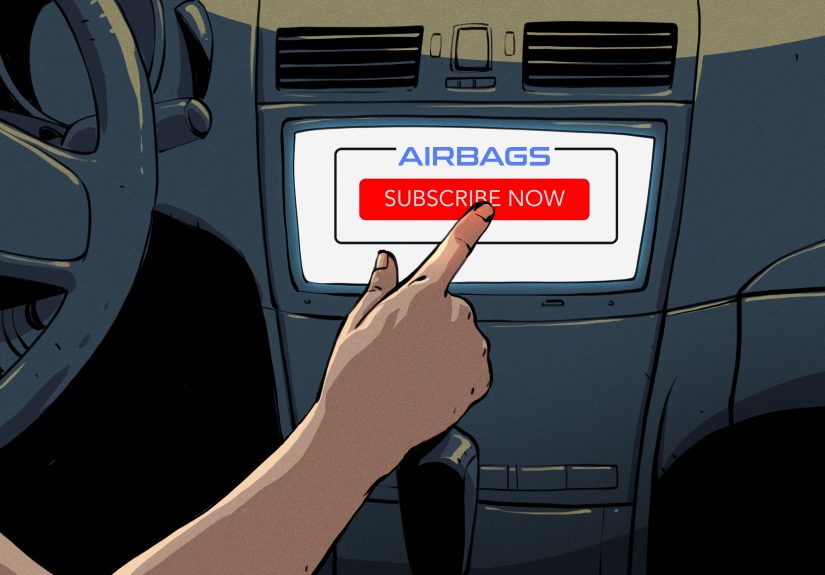
There was a time when buying a new car felt like a one-and-done deal: you paid a huge amount of money, got a big set of keys, and drove off into a future of fuel stops, oil changes, and occasional regret. Now, a growing number of new vehicles come with an extra “feature” you didn’t order: a recurring bill.
Welcome to Automotive as a Service (AaaS)the business model where your car starts acting less like a product you own and more like a phone you lease from the universe. Features become “packages.” Hardware becomes “capable.” And “included” often means “included… for 90 days.”
To be clear: not every subscription is a scam. Some connected services genuinely cost money to operate (cellular data, emergency response staffing, map updates, cloud servers). The problem is when automakers use subscriptions the way fast-food places use “limited time offers”: to turn everyday convenience into a monthly micro-transactionand to make the real cost of ownership fuzzier than a showroom finance pitch.
What “Automotive as a Service” Really Means (And Why It’s Spreading)
In plain English, Automotive as a Service is the shift from “pay once, use forever” to “pay again, keep using.” Automakers increasingly treat software, connectivity, and even some physical features as ongoing revenue streams.
It’s happening for a few big reasons:
- Software-defined vehicles: Cars are becoming rolling computers. Once features are controlled by software, they can be updated, bundled, sold, and resold.
- EV economics: The industry is spending heavily on batteries, platforms, and software stacks. Subscriptions offer recurring revenue that looks great in quarterly reports.
- Wall Street brainworms (affectionate): Investors love predictable monthly revenue. “One-time purchase” is emotionally stable, but “monthly active subscribers” is what gets the fancy charts.
- Data monetization: Connected services don’t just provide conveniencethey generate data, and data can be monetized (sometimes in ways consumers don’t expect).
If that feels familiar, it’s because it is: this is the same arc we’ve seen with phones, TVs, and apps. The difference is that when your streaming service buffers, you get annoyed. When your car decides “remote start has left the chat,” you get to scrape ice off your windshield like it’s 1987.
Where the Nickel-and-Diming Shows Up
Subscriptions in cars usually fall into a few buckets. Some are reasonable. Some are… let’s call them “bold.”
1) Connectivity Subscriptions: Your Car’s “Data Plan”
Many automakers charge for cellular-connected features once a free trial ends. Think real-time traffic, built-in streaming apps, hotspot capability, certain voice assistant features, and remote app control. Tesla’s Premium Connectivity, for example, is priced like a streaming subscriptionsmall monthly fee, cancel anytime. That makes sense: cellular data costs money.
The frustration starts when basic convenience gets bundled into higher tiers, or when services are marketed as “part of the car experience” but behave like optional DLC. Owners often discover the truth when a trial ends and the app suddenly becomes a very expensive digital paperweight.
2) Remote Commands: Remote Start, Lock/Unlock, and “Please Find My Car”
Remote start is a perfect example of subscription tension. The hardware is already on the vehicle. You bought the car. Your key fob exists. Yet in many ecosystems, the phone-app-based remote commands (and sometimes controversial variations of remote start behavior) are tied to a paid plan after the trial.
Some brands structure this as a “connected services” subscription: remote start, lock/unlock, vehicle status, and location are treated as a paid convenience bundle. On paper, you’re paying for the cloud and cellular link. In practice, it often feels like paying rent on your own door locks.
3) Hands-Free Driving and Advanced Driver Assist: Paywalls on the Highway
This is one of the fastest-growing categories. Systems like Ford’s BlueCruise and GM’s Super Cruise deliver genuine valuehands-free driving on mapped highways can reduce fatigue and make long trips easier. These systems also require ongoing map updates, software maintenance, and validation. That’s real cost.
But subscriptions can get pricey, and the psychology is rough: you pay a premium to get the hardware, then you pay again to keep it active. It’s the automotive version of buying a treadmill that only turns on if your credit card is up to date.
4) Performance “Upgrades”: Your Car’s Power… for a Monthly Fee
One of the most headline-grabbing examples of AaaS is performance on demand. Mercedes-Benz has offered an Acceleration Increase upgrade for certain EV models, available through different payment options (including subscription-style choices). Tesla’s approach to driver-assist monetization has also leaned heavily into subscription economics, with major attention on its Full Self-Driving (Supervised) subscription model.
From an engineering standpoint, this is possible because modern EVs can be tuned via software. From a consumer standpoint, it raises a spicy question: Did you buy the motor… or did you buy a permission slip to use it?
5) Comfort Features and “Functions on Demand”
The internet never forgets, and neither do drivers: BMW drew backlash for experimenting with subscription-based access to features like heated seats in some markets, then later reversed course on that specific approach. The bigger takeaway isn’t “BMW bad.” It’s that the industry tested a line: “Will customers pay monthly for a feature that’s physically installed?”
Even when the most controversial examples get pulled back, the direction remains: more features are treated as software toggles, and more toggles can be sold after purchaseespecially infotainment upgrades, navigation enhancements, and premium digital experiences.
The Fine Print That Makes People Furious
Subscriptions themselves aren’t new. What’s new is the design of the subscription experience in many vehiclesespecially how often it relies on confusion.
“Included” (A.K.A. “Included Until You Get Comfortable”)
Free trials are everywhere: 90 days, 6 months, 1 year, sometimes longer depending on brand and trim. That trial period is long enough for you to build a habit (“I love starting my car from bed”), and short enough to expire right after you stop thinking about it.
Bundles, Tiers, and the Fog of Pricing
Many brands don’t sell one clear service. They sell a ladder: basic, plus, premium, ultimate, platinum, diamond, space emperor. Each tier includes slightly different combinations, sometimes varying by model year, head unit, or region. The result is that consumers can’t easily compare total cost of ownership.
Used Cars and Feature Inheritance
Subscriptions also complicate resale. If a feature is tied to a subscription, does it transfer to the next owner? Does it reset? Does the car lose that capability when ownership changes? These questions matter more as vehicles become software platforms.
The Hidden Cost Nobody Budgeted For: Data
Nickel-and-diming isn’t always a literal fee. Sometimes the “price” is your data.
In recent years, regulators and journalists have highlighted cases where driving behavior and location-related data were collected and shared in ways that consumers didn’t expectsometimes with consequences like insurance pricing impacts. The regulatory scrutiny around automaker data practices has grown, with enforcement actions and settlements underscoring that “connected” can mean “tracked” unless privacy controls are real, obvious, and meaningful.
Meanwhile, privacy advocates have warned that modern cars can collect broad categories of personal information through connected systems, apps, and account ecosystems. Even if your car never “charges” you a monthly fee, it may still be monetizing ownership in ways that don’t show up on a bill.
Why Automakers Love AaaS (Even When Drivers Don’t)
If consumers hate this, why does it keep happening? Because it worksat least on the balance sheet.
- Recurring revenue is smoother than one-time sales, and it’s easier to forecast.
- Margins are often higher on software services than on hardware.
- It creates an “upsell engine”: buy the base car now, unlock features later (sometimes with a free trial as bait).
- It extends the money-making window across the vehicle’s life, not just at purchase time.
Industry analysts describe software-defined vehicles as a massive value shift across the automotive ecosystem, precisely because software enables continuous feature development, services, and monetization. From that lens, AaaS isn’t a gimmickit’s a strategy.
How to Shop Smarter (So You Don’t Get “Microtransactioned”)
You can’t always avoid subscriptions, but you can reduce surprise and protect your budget.
Ask These Questions Before You Buy
- Which features stop working when the trial ends? Get it in writing: remote start, navigation, hands-free driving, hotspot, etc.
- What’s the monthly/annual price? Don’t accept “we’ll send you an email later.” Make them show you.
- Can you buy it outright? Some brands offer one-time purchase options for certain features or longer-term plans.
- Does it transfer to a future owner? Especially important if you trade in often or plan to resell.
- What data is collected and how do you opt out? Ask to see the privacy settings in the app and the vehicle menus.
Make a “Subscription Budget” Like It’s a Utility
If you love hands-free driving and remote start and premium connectivity, finejust treat it like you treat internet service at home: it’s part of your ongoing cost. The problem is not paying. The problem is paying by surprise.
Decide What You’ll Never Subscribe To
A practical approach: pick one category you’re willing to pay for (often driver-assist or connectivity), and refuse the rest on principle. Not because you’re stingybecause you’re training your own purchasing behavior. Subscriptions thrive on “eh, it’s only $10.”
What Happens Next (And What Could Improve)
The likely future is not “subscriptions disappear.” It’s that subscriptions become more common, more personalized, and more aggressively bundled. You may see packages that combine infotainment, driver assist, warranty-like coverage, and even insurance-adjacent services into a single monthly “mobility membership.”
The best-case scenario is also plausible: clearer pricing, simpler tiers, meaningful opt-outs, and a stronger norm that safety and core functionality aren’t held hostage. Regulatory pressure on deceptive fee presentation (even outside automotive contexts) is already pushing companies toward more transparent “total price” disclosure. If automakers want the subscription future, they’ll need to earn it with honestyand with value that feels like a service, not a shakedown.
Conclusion: Your Next Car Might Come With a Subscription Hangover
Automotive as a Service isn’t inherently evil. A connected vehicle really does have ongoing costs: data, servers, cybersecurity updates, support staff, map validation. But the line between “service” and “nickel-and-dime” is crossed when automakers turn ordinary ownership into a maze of trials, tiers, and paywalls.
The good news: you’re not powerless. Ask uncomfortable questions in the dealership. Read the trial terms before you fall in love with the feature. And remember: if enough people refuse to pay monthly for a seat heater, the industry will hear the loudest language of allthe sound of churn.
Experiences: The AaaS Moments That Make Drivers Lose It (A 500-Word Reality Check)
Let’s talk about the part nobody puts on the Monroney sticker: the lived experience of realizing your new car has a subscription personality. If you’ve owned a new-ish vehicle lately, you’ve probably had at least one of these momentsor you’re about to.
Experience #1: The “Remote Start Breakup”
It’s January. You’ve been remote-starting your car from the kitchen like a modern wizard. You brag a little. You post a smug story. Then one morning, the app greets you with a message that translates to: “We’ve had an amazing time together. Unfortunately, we’re looking for someone who can commit financially.” Suddenly you’re outside, scraping ice, wondering how you got emotionally attached to a feature that apparently came with an expiration date.
Experience #2: The Highway Paywall
You test-drive a hands-free driving system and it feels like the future. The lane changes are smooth. Your shoulders relax. You picture road trips where you arrive without feeling like you wrestled an alligator for three hours. Then you learn the hardware isn’t the finish lineit’s the entry fee. After the trial, the car politely asks for a monthly payment to keep doing the thing you already paid extra to have installed. You start doing the math: “If I keep this car five years, that’s… wait… why is my steering wheel on a payment plan?”
Experience #3: The Feature That Exists But Doesn’t “Exist”
This one is pure psychological warfare: you know your car is capable of a feature because it’s literally in the menu. You can see it. You can tap it. It’s like a cookie in a glass jar labeled “premium.” Maybe it’s enhanced navigation, a performance mode, or a digital convenience package. The car isn’t broken. It’s just… waiting. The interface becomes a storefront, and you realize you’re driving a rolling upsell funnel with cupholders.
Experience #4: The Used Car Surprise
You buy a used car that seems loadedbig screen, fancy driver assist, premium features. Then you discover the previous owner paid for a package that doesn’t transfer, or the free trial already ran out years ago. The car still looks like the deluxe version, but it behaves like the base trim with good lighting. That’s when you learn the difference between “hardware equipped” and “software entitled.” It’s like buying a house and finding out the kitchen only works if you subscribe to “Stove+.”
Experience #5: The Data Hangover
Even if you never subscribe to anything, you start noticing how much the car wants you to create an account, accept terms, enable sharing, join a safe driver program, connect your phone, and “improve your experience.” It’s not always sinister, but it’s rarely neutral. Once you realize your car can be both a service platform and a data platform, you become the kind of person who reads privacy settings in a parking lotwhich is not how anyone pictured adulthood, but here we are.
The common thread in all these experiences is simple: ownership feels different when features are treated like subscriptions. The best AaaS offerings feel like genuine services. The worst feel like toll booths on stuff you already bought. And drivers can tell the difference instantlyusually right around the moment the trial ends.







 Close
Close