
Table of Contents >> Show >> Hide
- Why “Name the Emotion” Quizzes Feel Weirdly Hard
- The Science of Emotion Reading (Without the Hollywood Nonsense)
- So… What About the “FBI Can Pass This” Claim?
- How to Get Better at “Naming the Emotion” (Without Becoming a Human Polygraph)
- The Mini “Name the Emotion” Quiz
- Common Mistakes That Tank Your Score (Even If You’re Smart)
- Conclusion: The Real “People Reader” Move
- Real-Life Experiences That Feel Like a “Name the Emotion” Quiz (500+ Words)
- 1) The Meeting Where “Fine” Means “I’m at My Limit”
- 2) The Customer Service Voice That’s Smiling Through Teeth
- 3) The Friend Who Jokes at the Exact Wrong Time
- 4) The Dating Moment Where Excitement and Fear Share a Couch
- 5) The Family Conversation Where Anger is Actually Hurt
- 6) The Interview Myth: No, You Can’t “Spot Lies” Like a Superhero
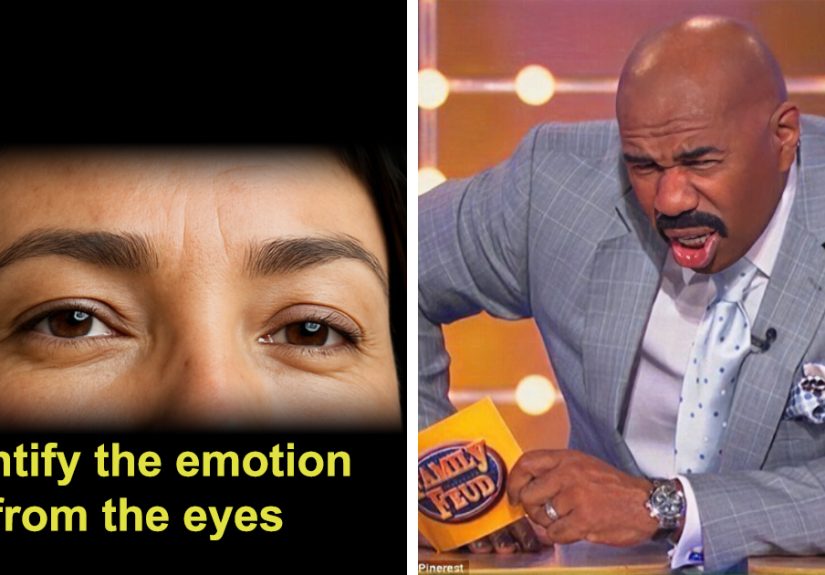
You’ve seen the headline. You’ve felt personally challenged by it. And now you’re here, trying to prove you can read a face faster than a teenager can
leave you on “Read.”
“Name the emotion” quizzes are catnip for the internet because they hit three buttons at once: curiosity, ego, and the deep human fear of missing an obvious
social cue. The “FBI” part? That’s the fun myth-flavoringlike adding a little hot sauce to a bland snack. Real investigators don’t magically “spot lies”
from one eyebrow twitch. Real people-readers don’t either. What they do have is pattern literacy: they notice clusters of signals, they ask better questions,
and they stay humble about being wrong.
This article breaks down what emotion recognition actually is, why these quizzes feel harder than they should, and how to get better without turning into
the annoying friend who says, “Interesting… your microexpression suggests contempt.” (Please don’t be that friend.)
Why “Name the Emotion” Quizzes Feel Weirdly Hard
If you think you’re “bad at reading people,” you might just be normal. Most quizzes force you to pick one label from a short list, even though real
feelings are often blended: anxious-excited, sad-but-relieved, angry-because-embarrassed, calm-on-the-outside while internally screaming.
There’s also the “camera problem.” A single frozen facial photo removes the stuff your brain usually uses to decode emotion: voice tone, timing, body posture,
context, and the relationship between the people involved. In real life, you don’t identify emotions like a biology flashcard. You infer them like a detective
solving a tiny mystery.
And then there’s the biggest trap: we assume emotions are obvious. But the face is not a billboard; it’s a status update written in tiny font, sometimes in
sarcasm.
The Science of Emotion Reading (Without the Hollywood Nonsense)
Emotion recognition is your ability to notice and interpret signalsfacial expressions, vocal cues, body language, and contextto estimate what someone
might be feeling. It’s connected to empathy and emotional intelligence, but it’s not mind-reading. It’s educated guessing with feedback.
1) Faces: More Than “Smile = Happy”
Researchers often describe a set of commonly recognized facial expressions (like happiness, sadness, anger, fear, disgust, surprise), but the real world is
full of “social edits.” People follow display rules: they soften anger at work, mask disappointment at parties, or paste on a polite smile when they
would rather be anywhere elseincluding the DMV.
One reason “name the emotion” quizzes focus on faces is that facial movements can be categorized in detail. The Facial Action Coding System (FACS) breaks
expressions into specific muscle movements (action units) rather than vague vibes. That’s part of why certain training tools can improve emotion-spotting:
you learn what to look for, not what to “feel.”
A classic example is the so-called Duchenne smileoften described as a smile that engages both the mouth and the muscles around the eyes. It’s a useful idea,
but it’s not a magic lie detector. People can smile for many reasons (politeness, embarrassment, nervousness, persuasion), and context matters more than any
single facial cue.
2) Voices: Your Tone Is Doing Push-Ups Even When Your Face Isn’t
If faces are the “headline,” voices are the “full article.” Tone, pacing, volume, pitch, and pauses can reveal stress, enthusiasm, uncertainty, irritation,
or warmthsometimes more reliably than a still photo. That’s why emotion recognition gets harder over text (where tone is missing) and easier when you can
hear someone speak.
Translation: if you’re trying to name someone’s emotion from a silent image, you’re basically trying to judge a movie using one screenshot. Good luck, brave
hero.
3) Bodies and Context: The “Missing Half” of the Quiz
Bodies leak information: shoulder tension, protective arm-crossing, restless hands, leaning in or away, freezing, fidgeting, or mirroring. Butthis matters
the same movement can mean different things depending on the situation. Crossed arms could be defensiveness… or it could be cold in the room. (And yes, some
offices are emotionally freezing and physically freezing.)
Context also rescues you from embarrassing misreads. Tears could mean grief, joy, relief, overwhelm, or “my contact lens just declared war.” The right answer
is often: it depends.
So… What About the “FBI Can Pass This” Claim?
Here’s the grounded version: professionals who interview people for a living train to notice behavioral and communication patterns, but they don’t rely on one
“tell.” Even law enforcement writing acknowledges the myth of a single behavior that proves deception. Instead, skilled interviewing focuses on gathering
accurate information, noticing inconsistencies, and evaluating clusters of verbal and nonverbal indicatorsalways with the understanding that humans are
complicated.
In other words: the best “people readers” aren’t supernatural. They’re systematic. And they ask better follow-up questions than the rest of us.
How to Get Better at “Naming the Emotion” (Without Becoming a Human Polygraph)
Tip #1: Use “Affect Labeling” to Slow Your Brain Down
One of the simplest upgrades is also the least dramatic: put a word to what you think you’re seeing. “That looks like worry.” “That sounds like
frustration.” This practice is sometimes called affect labeling, and research suggests that labeling feelings can reduce emotional reactivitybasically
turning down the brain’s alarm system.
For quizzes, affect labeling helps because it forces precision. “Bad” isn’t an emotion. “Annoyed,” “ashamed,” “hurt,” “anxious,” and “disappointed” are
different emotional weather patterns.
Tip #2: Run the Three-Channel Check
- Face: What are the eyebrows, eyes, mouth, and tension doing?
- Voice: What’s the tone, speed, and volume doing?
- Context: What just happened, and what’s at stake for them?
In a quiz, you usually get only the face. So you compensate by imagining plausible contexts, then choosing the emotion that best fits the expressionnot the
emotion you personally would feel in that situation.
Tip #3: Look for “Emotion Families,” Not One Perfect Label
Many quizzes include subtle options like “skeptical,” “concerned,” “confused,” “contemptuous,” “relieved,” or “embarrassed.” If you freeze, zoom out:
- Threat family: fear, anxiety, worry, alarm
- Anger family: irritation, frustration, indignation
- Sadness family: disappointment, grief, regret
- Joy family: delight, pride, amusement
- Social exposure family: embarrassment, shame, awkwardness
Pick the closest family first, then refine. That alone can jump your score.
Tip #4: Practice Ethically (Yes, That’s a Real Tip)
Emotion recognition is a relationship tool, not a manipulation tool. The goal is to respond bettermore patience, more clarity, fewer accidental emotional
bulldozersrather than “win” interactions. If you’re using these skills to corner people, they’ll feel it, and your “people reading” will suddenly stop
working. Weird how that happens.
The Mini “Name the Emotion” Quiz
No photos here, so we’re going text-basedbecause emotions show up in situations, not just cheekbones. Choose the best answer, then check the explanation.
(And yes, you can argue with me in your head. That’s part of the tradition.)
-
Scenario: Someone says, “Ohwow. That’s… interesting,” with a tight smile and a slightly raised upper lip.
A) Joy B) Disgust C) Surprise D) Gratitude
-
Scenario: A person avoids eye contact, rubs the back of their neck, and laughs softly after a mistake.
A) Embarrassment B) Anger C) Pride D) Contempt
-
Scenario: You share good news. They smile, but it’s delayed and their eyebrows pull together.
A) Relief B) Conflicted happiness C) Fear D) Boredom
-
Scenario: Someone’s voice gets faster, pitch slightly higher, and they keep asking, “Are you sure?”
A) Curiosity B) Anxiety C) Disgust D) Pride
-
Scenario: They look down, shoulders drop, and they say, “It’s fine,” but the words land like a thud.
A) Contentment B) Disappointment C) Surprise D) Amusement
-
Scenario: Their eyes widen, mouth opens slightly, then they freeze before speaking.
A) Surprise B) Disgust C) Calm D) Gratitude
-
Scenario: They keep their face neutral, but their foot taps rapidly and their answers get shorter.
A) Relaxation B) Impatience/Irritation C) Joy D) Relief
-
Scenario: They smile while exhaling through the nose, head tilts slightly back, and they say, “Sure.”
A) Contempt B) Gratitude C) Fear D) Sadness
-
Scenario: Their voice softens, they lean in, and their eyebrows lift in the middle.
A) Compassion/Concern B) Anger C) Contempt D) Pride
-
Scenario: They grin, but their eyes scan the room and their laughter sounds a little too loud.
A) Pure joy B) Nervous excitement C) Disgust D) Sadness
Answer Key (With the “Why”)
-
B) Disgust. The raised upper lip and tight smile often show aversionsometimes physical disgust, sometimes “social disgust” (disapproval).
-
A) Embarrassment. Self-touching, gaze shifts, and small laughs commonly show “I’m exposed and I know it.”
-
B) Conflicted happiness. The delayed smile plus knitted brows can signal mixed feelingshappy for you, but concerned or preoccupied.
-
B) Anxiety. Faster speech, higher pitch, and reassurance-seeking are classic stress cues.
-
B) Disappointment. Dropped posture and flat delivery often mark a letdown, even when the words claim “fine.”
-
A) Surprise. Widened eyes and a small open mouth are common surprise signalsfollowed by a “pause” while the brain catches up.
-
B) Impatience/Irritation. Restless movement and shortened answers often live in the anger-family neighborhood.
-
A) Contempt. The “sure” with a little lift-back and air-exhale can signal “I’m above this” or “I don’t respect the premise.”
-
A) Compassion/Concern. Soft voice, leaning in, and that middle-brow lift often show care and attention.
-
B) Nervous excitement. Big energy plus scanning and “louder-than-needed” laughter often indicates arousalexcited, but not fully settled.
Common Mistakes That Tank Your Score (Even If You’re Smart)
1) You Overtrust One Signal
The internet loves “one weird trick” body language. Real research and professional practice are messier. Single cues are unreliable; clusters are more useful.
A smile alone is not proof of happiness. A lack of eye contact is not proof of lying. Your brain wants shortcuts. Your accuracy wants patience.
2) You Ignore Culture and “Display Rules”
Some facial movements are widely recognized, but how people use and interpret expressions can vary across cultures and contexts. That’s one reason emotion
perception research includes ongoing debate: the face doesn’t “speak” in a vacuum; it speaks inside a culture, a situation, and a relationship.
3) You Confuse “Intensity” With “Truth”
A person can feel something strongly and still be wrong about the facts. A person can look calm and still be deeply stressed. Expressions reflect internal
states, social strategy, personality, and sometimes just bad lighting.
4) You Treat the Quiz Like a Personality Test
Getting a low score doesn’t mean you’re doomed. It means you were asked to do a narrow taskoften from limited informationunder artificial constraints.
The good news: like most perceptual skills, emotion recognition can improve with focused practice.
Conclusion: The Real “People Reader” Move
If you want to ace a “Name the Emotion” quiz, don’t chase mystical powers. Learn the patterns, respect context, and label what you see with a little more
precision than “vibes.” The real flex isn’t guessing perfectlyit’s noticing enough to respond kindly and effectively.
So yes: take the quiz. Compete with your friends. Pretend you’re on a spy show for three minutes. Then use the skill where it actually mattersin your
conversations, your relationships, and the moments when someone’s face says, “I’m fine,” but everything else says, “Please handle me gently right now.”
Real-Life Experiences That Feel Like a “Name the Emotion” Quiz (500+ Words)
Emotion-reading doesn’t usually happen in dramatic close-ups with suspenseful music. It happens in small momentseveryday scenes where you make a decision:
push forward, pause, joke, apologize, ask a question, or simply shut up (an underrated social superpower).
1) The Meeting Where “Fine” Means “I’m at My Limit”
Imagine a teammate says, “Yep, I can take that on,” but their shoulders are raised, their breathing looks shallow, and they don’t make their usual eye contact.
The quiz question is: what emotion is present? The best answer might be overwhelm or anxiety, not because they’re “lying,”
but because they’re trying to be capable in a room that rewards capability. A helpful response isn’t, “Aha! You’re stressed!” It’s something like,
“We can reprioritizewhat’s most urgent?” You named the emotion privately, then acted on it respectfully.
2) The Customer Service Voice That’s Smiling Through Teeth
You’ve heard it: the voice that is technically polite but emotionally doing push-ups. The words say, “No problem at all,” while the pace speeds up and the
consonants sharpen. That often points to irritation or fatigue. If you pick up on it, your next move is not to demand
moreit’s to be concise, appreciative, and human. “Thanks for helping mewhat’s the fastest way to fix this?” Your emotion recognition becomes social
friction reduction.
3) The Friend Who Jokes at the Exact Wrong Time
Sometimes people make jokes when they’re uncomfortableespecially after someone shares something heavy. If your friend laughs too quickly, changes the subject,
or makes a “light” comment, the underlying emotion might be awkwardness, uncertainty, or even empathic overload.
Naming that emotion helps you not take it personally. A gentle redirect (“It’s okay if you don’t know what to sayjust being here helps”) can turn a clumsy
moment into connection.
4) The Dating Moment Where Excitement and Fear Share a Couch
Early attraction often looks like mixed signals because it is mixed. Someone might lean in and smile, then glance away and fidget. That can be
nervous excitement, not rejection. If you mislabel it as disinterest, you might pull away too soon. If you mislabel it as guaranteed
enthusiasm, you might push too fast. The best move is a low-pressure check-in: “No rushare you comfortable?” Correct labeling leads to consent-friendly pacing.
5) The Family Conversation Where Anger is Actually Hurt
In close relationships, anger often covers softer emotions: hurt, fear, disappointment, shame. A raised voice and sharp words can be the surface emotion,
while the core is “I felt dismissed” or “I’m scared this won’t change.” Naming the underlying emotion doesn’t excuse bad behavior, but it changes how you
respond. Instead of counterattacking, you can set a boundary and still address the core: “I want to talk, but not like this. What’s the real worry here?”
That one question is basically the advanced level of the quiz.
6) The Interview Myth: No, You Can’t “Spot Lies” Like a Superhero
The internet loves the idea that one twitch, one scratch, one glance away reveals deception. Real-world interviewing is more cautious than that. People show
stress for countless reasonsfear of not being believed, trauma responses, cultural norms, or simply the pressure of being evaluated. The smarter skill is
noticing change over time, asking clear questions, and looking for inconsistencies in information rather than declaring victory over someone’s eyelids.
These experiences share a theme: the best “people readers” don’t weaponize perception. They use it to choose kinder timing, clearer questions, and better
boundaries. If that’s the kind of reader you’re becoming, congratulationsyou’re already passing the quiz that actually matters.






 Close
Close