
Table of Contents >> Show >> Hide
- Are Prawns and Shrimp the Same Thing?
- The Main Difference Between Prawns and Shrimp
- Prawns vs Shrimp: Habitat and Where They Live
- Are Prawns Bigger Than Shrimp?
- Do Prawns and Shrimp Taste Different?
- Prawns vs Shrimp Nutrition
- How to Buy Shrimp or Prawns Like You Know What You’re Doing
- Cooking Prawns and Shrimp: The Golden Rule
- Can You Substitute Prawns for Shrimp?
- Common Myths About Prawns and Shrimp
- Best Uses for Prawns
- Best Uses for Shrimp
- Quick Comparison: Prawns vs Shrimp
- Personal Kitchen Experiences: What Actually Matters When You Cook Them
- Conclusion: So, Should You Buy Prawns or Shrimp?
If you have ever stood in front of a seafood counter wondering whether prawns are just shrimp with a fancier passport, you are not alone. The words prawns and shrimp are tossed around so casually that they often feel interchangeable. In many grocery stores, restaurants, and recipes, they practically are. But biologically speaking, prawns and shrimp are not identical twins. They are more like cousins who show up to the same family reunion wearing very similar jackets.
The short answer is this: shrimp and prawns are both decapod crustaceans, meaning they have ten legs, hard outer shells, and a talent for becoming delicious in garlic butter. The longer answer involves anatomy, habitat, shell structure, egg-laying habits, size, taste, nutrition, and how the words are used differently around the world.
This guide breaks down the real difference between prawns and shrimp in plain American English, with enough science to make you sound smart at dinner and enough cooking advice to keep dinner from turning rubbery.
Are Prawns and Shrimp the Same Thing?
No, prawns and shrimp are not technically the same thing. In scientific classification, most true shrimp belong to the suborder Pleocyemata, while true prawns belong to Dendrobranchiata. That sounds like the name of two rival wizard schools, but it simply means they come from different branches of the crustacean family tree.
However, the culinary world does not always care about taxonomy. In the United States, the word “shrimp” is used for nearly everything that looks like a small curved shellfish with a tail. In the United Kingdom, Australia, and parts of Asia, “prawn” is more common. In restaurants, “prawn” is sometimes used to make large shrimp sound more elegant, because “jumbo shrimp” is already busy being one of the English language’s tastiest contradictions.
So, while prawns and shrimp are different animals in biology, the terms are often used loosely in shopping, cooking, and restaurant menus. That is why a package labeled “prawns” may cook exactly like shrimp, and a dish called “shrimp curry” may contain something a biologist would call a prawn.
The Main Difference Between Prawns and Shrimp
The biggest differences between prawns and shrimp are found in their bodies. They look similar at first glance, especially once peeled, cooked, and covered in lemon, but their anatomy tells a more detailed story.
1. Body Shape
Shrimp usually have a more curved body. Their second abdominal segment overlaps both the first and third segments, creating that familiar curled shape. Prawns tend to have a straighter body because their shell segments overlap in a more even front-to-back pattern.
In practical terms, if the shellfish looks like it is permanently doing a tiny sit-up, it is more likely to be shrimp. If it looks a little straighter and more elongated, it may be a prawn. This is not a perfect test, but it is a helpful clue.
2. Gills
One of the clearest biological differences is the gill structure. Shrimp have plate-like, or lamellar, gills. Prawns have branching gills, which is where the scientific name Dendrobranchiata comes from. “Dendro” refers to tree-like branching, which is charming until you remember we are discussing seafood lungs.
You probably will not inspect gills at the grocery store, and your dinner guests may become concerned if you do. Still, gill shape is one of the major scientific distinctions between shrimp and prawns.
3. Legs and Claws
Both shrimp and prawns have ten legs, but the claws are arranged differently. Prawns typically have claws on three pairs of legs. Shrimp commonly have claws on two pairs of legs. Prawns also often have longer legs than shrimp.
Again, this is useful if you are identifying whole shellfish. It is less useful once they have been peeled, deveined, and tossed into tacos. At that point, the only important question is whether someone remembered the lime.
4. Egg-Laying Habits
Shrimp and prawns also handle eggs differently. Shrimp carry fertilized eggs on the underside of their bodies until they hatch. Prawns generally release eggs into the water. This reproductive difference is one reason they sit in different scientific groups.
For home cooks, this does not change how you prepare them. But for anyone asking, “What is the real difference between prawns and shrimp?” it is one of the strongest answers.
Prawns vs Shrimp: Habitat and Where They Live
Another common distinction is habitat. Shrimp are often associated with saltwater environments, especially coastal and ocean waters. Prawns are more commonly linked with freshwater or brackish water, though there are exceptions on both sides.
In the U.S., many popular shrimp varieties come from the Gulf Coast and South Atlantic regions. Brown shrimp, white shrimp, pink shrimp, rock shrimp, and royal red shrimp all appear in American seafood markets. Prawns, meanwhile, may be imported or farmed and may come from freshwater systems depending on the species.
Still, habitat alone is not foolproof. Seafood labels are shaped by trade habits, regional language, and marketing. A large saltwater shrimp may be sold as a prawn, and a true prawn may be treated like shrimp in a recipe. The seafood aisle enjoys keeping us humble.
Are Prawns Bigger Than Shrimp?
Usually, prawns are larger than shrimp in everyday market language. But size is not a reliable scientific rule. Some shrimp species grow large, and some prawns are modest in size. Calling every large shrimp a prawn is like calling every tall person a basketball player. Sometimes true, often lazy.
When buying shrimp or prawns, ignore vague words like “large,” “jumbo,” or “colossal” unless the package also gives a count per pound. Shrimp sizes are commonly labeled with numbers such as 16/20, 21/25, or 31/40. The smaller the number, the larger each piece. For example, 16/20 means there are about 16 to 20 shrimp per pound, while 31/40 means smaller shrimp.
This count-per-pound system is more useful than the shrimp-versus-prawn label when planning recipes. For shrimp cocktail, grilling, or skewers, larger sizes are easier to handle. For fried rice, pasta, salads, and tacos, medium shrimp often work beautifully.
Do Prawns and Shrimp Taste Different?
Prawns and shrimp taste very similar. Both are mild, slightly sweet, and tender when cooked correctly. Some people describe prawns as a little sweeter and meatier, while shrimp can taste slightly brinier, especially if they come from saltwater. But the difference is subtle.
Flavor depends more on species, freshness, diet, water quality, handling, and cooking method than on the name printed on the label. A well-handled frozen shrimp can taste better than a poorly stored “fresh” prawn. Seafood is not impressed by fancy terminology; it cares about temperature control.
If you are making shrimp scampi, gumbo, curry, stir-fry, ceviche-style dishes, tacos, pasta, or grilled skewers, prawns and shrimp can usually be used interchangeably. Just adjust cooking time based on size.
Prawns vs Shrimp Nutrition
Nutritionally, prawns and shrimp are very similar. Both are high in protein, low in carbohydrates, and relatively low in calories. A typical 3-ounce serving of cooked shrimp provides roughly 100 calories and close to 20 grams of protein, depending on the source and preparation.
They also provide nutrients such as selenium, vitamin B12, iodine, phosphorus, and small amounts of omega-3 fatty acids. Shrimp and prawns are naturally low in saturated fat, though they are higher in dietary cholesterol than some other proteins.
For most healthy adults, shrimp can fit into a balanced diet, especially when grilled, steamed, baked, poached, or sautéed instead of heavily breaded and deep-fried. Of course, if you have a shellfish allergy, both shrimp and prawns are firmly in the “do not eat” category. No garlic butter is persuasive enough to argue with an allergy.
How to Buy Shrimp or Prawns Like You Know What You’re Doing
Whether the label says shrimp or prawns, quality matters more than the name. Here are practical tips for shopping smarter.
Choose Frozen Unless You Live Near the Source
Most shrimp sold as “fresh” in grocery stores was previously frozen and thawed for display. That is not necessarily bad, but it does mean frozen shrimp can actually be the fresher choice. Individually quick frozen shrimp are often frozen soon after harvest, helping preserve texture and flavor.
Look for Clean, Mild Smell
Fresh shrimp or prawns should smell mild, clean, and slightly ocean-like. Avoid anything that smells sour, fishy, or like ammonia. Seafood should not smell as if it has been making bad decisions behind the counter.
Check Texture and Appearance
Raw shrimp flesh should look translucent to pearly, not slimy or dull. Avoid packages with excessive ice crystals, freezer burn, or liquid pooling inside. Black spots on shells can indicate age or oxidation, though they are not always unsafe. Still, fresher-looking seafood is usually the better bet.
Read the Label
Look for the species, country of origin, whether the product is farmed or wild-caught, and any certifications. Sustainability varies widely depending on fishing method, farming practices, location, and oversight. Certifications from reputable seafood programs can help consumers choose more responsibly sourced products.
Cooking Prawns and Shrimp: The Golden Rule
The golden rule is simple: do not overcook them. Shrimp and prawns cook quickly, often in just two to four minutes depending on size and heat. When done, they turn opaque and firm, with a gentle curl. If they curl into tight little rubber commas, they have gone too far.
For food safety, cook shrimp and prawns until the flesh is pearly and opaque. Many food safety guidelines recommend cooking seafood to 145°F. In everyday kitchen terms, that means the flesh should no longer look gray or translucent.
Here are a few easy cooking matches:
- Large prawns or jumbo shrimp: great for grilling, skewers, garlic butter, and broiling.
- Medium shrimp: ideal for pasta, tacos, fried rice, curries, and stir-fries.
- Small shrimp: useful for salads, dips, omelets, seafood cakes, and soups.
- Shell-on shrimp: more flavorful for boiling, roasting, and stock.
- Peeled shrimp: convenient for fast weeknight meals.
Can You Substitute Prawns for Shrimp?
Yes, in most recipes you can substitute prawns for shrimp and shrimp for prawns. The most important adjustment is cooking time. Larger prawns need slightly longer cooking than smaller shrimp. Smaller shrimp can become overcooked quickly, especially in high-heat recipes.
For example, if a recipe calls for medium shrimp and you use large prawns, add a little extra time and watch for opacity. If a recipe calls for large prawns and you use smaller shrimp, reduce cooking time and avoid wandering away to check your phone. Shrimp can go from perfect to pencil eraser in the time it takes to watch one short video.
Common Myths About Prawns and Shrimp
Myth 1: Prawns Are Always Bigger
Prawns are often larger in stores, but not always. Size depends on species and market grading, not just whether the animal is a prawn or shrimp.
Myth 2: Shrimp Are Cheap and Prawns Are Fancy
Price depends on size, origin, availability, farming method, wild-caught status, processing, and branding. A premium wild shrimp may cost more than a farmed prawn.
Myth 3: Prawns Taste Completely Different
The flavor difference is usually mild. Freshness, cooking method, and seasoning make a bigger impact than the name.
Myth 4: “Fresh” Is Always Better Than Frozen
Not always. High-quality frozen shrimp may be better than thawed seafood sitting in a display case. Frozen is not a downgrade; sometimes it is the responsible adult in the room.
Best Uses for Prawns
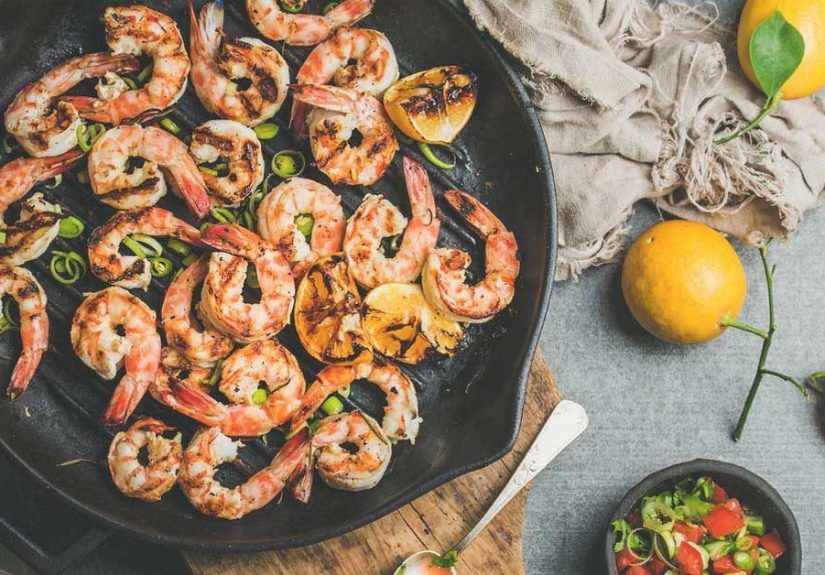
Prawns shine when their size and meaty texture can take center stage. Use them for grilled skewers, prawn curry, seafood paella, garlic prawns, broiled prawns, or spicy noodle bowls. Their larger size makes them dramatic on a plate, which is helpful if you want dinner to look like you tried harder than you did.
Because prawns can be slightly firmer, they hold up well to bold sauces, high heat, and recipes where the seafood is the main attraction. They are especially good with garlic, chili, ginger, coconut milk, lemon, parsley, smoked paprika, and butter.
Best Uses for Shrimp
Shrimp are incredibly versatile. They work in shrimp cocktail, shrimp scampi, gumbo, jambalaya, tacos, stir-fries, salads, pasta, soups, spring rolls, and fried rice. Smaller shrimp blend easily into dishes, while larger shrimp can be grilled or roasted.
Shrimp also offer more size variety in many American grocery stores, making them convenient for everyday cooking. Keep a bag of frozen shrimp in the freezer and you are never more than 15 minutes away from a respectable dinner. That is not meal prep; that is edible emergency planning.
Quick Comparison: Prawns vs Shrimp
| Feature | Prawns | Shrimp |
|---|---|---|
| Scientific group | Usually Dendrobranchiata | Usually Pleocyemata |
| Body shape | Straighter body | More curved body |
| Gills | Branching gills | Plate-like gills |
| Claws | Typically three clawed leg pairs | Typically two clawed leg pairs |
| Habitat | Often freshwater or brackish | Often saltwater |
| Flavor | Mild, sweet, sometimes meatier | Mild, sweet, sometimes brinier |
| Cooking use | Great for grilling and bold dishes | Great for nearly every seafood recipe |
Personal Kitchen Experiences: What Actually Matters When You Cook Them
After cooking both prawns and shrimp in weeknight dinners, party appetizers, seafood boils, curries, and the occasional “I forgot to thaw the chicken” emergency, the biggest lesson is this: the label matters less than the handling. A beautiful bag of frozen shrimp can outperform expensive prawns if the prawns were poorly stored. Likewise, large prawns can make a simple dinner feel restaurant-level when they are cooked gently and seasoned well.
One of the most common mistakes is assuming bigger seafood needs aggressive cooking. Large prawns look sturdy, so people blast them with heat until they become chewy. A better approach is hot-and-fast with attention. Pat them dry, season them simply, and cook just until opaque. If sautéing, remove them from the pan before the sauce reduces completely, then add them back at the end. This keeps them juicy instead of bouncy in the wrong way.
For shrimp, the best everyday trick is buying shell-on frozen shrimp. The shells protect texture, add flavor, and can be saved for stock. A quick shrimp stock made from shells, onion, garlic, and a little celery can turn risotto, gumbo, or seafood pasta from “nice” to “who taught you this?” It is one of those small kitchen habits that feels fancy but costs almost nothing.
Another experience-based tip: match the size to the dish. Tiny shrimp disappear in pasta but are perfect for shrimp salad. Jumbo shrimp look impressive in cocktail platters but can feel awkward in fried rice. Medium shrimp are the weeknight champions because they cook evenly, portion easily, and do not require guests to wrestle with dinner.
When making spicy dishes, prawns are especially satisfying because their meatier bite stands up to chili, curry paste, garlic, and ginger. For delicate dishes like shrimp cocktail or lemony pasta, sweet white or pink shrimp can be excellent. In a seafood boil, shell-on shrimp bring the most flavor, especially when cooked with corn, potatoes, sausage, lemon, and enough seasoning to make the kitchen smell like a coastal vacation.
The final practical lesson is to thaw carefully. Do not thaw shrimp or prawns on the counter. Place them in the refrigerator overnight or run them under cold water in a sealed bag when you need them quickly. Dry them well before cooking. Moisture is the enemy of browning, and browning is where flavor clocks in for work.
So, from real kitchen experience, the question is not only “prawns vs shrimp: what’s the difference?” The better question is, “Which one fits this dish, this budget, and this cooking method?” Choose good-quality seafood, avoid overcooking, season with confidence, and either one can deliver a meal worth hovering over the pan for.
Conclusion: So, Should You Buy Prawns or Shrimp?
When comparing prawns vs shrimp, the real difference comes down to biology, anatomy, and naming habits. Prawns usually have straighter bodies, branching gills, longer legs, and claws on three pairs of legs. Shrimp are usually more curved, have plate-like gills, and carry their eggs beneath their bodies. Prawns are often larger and may come from freshwater or brackish environments, while shrimp are commonly associated with saltwater.
But in the kitchen, the two are close enough that you can usually substitute one for the other. Focus on size, freshness, source, sustainability, and cooking time. If the seafood smells clean, looks good, and is cooked gently, you are already ahead of most dinner plans.
Buy prawns when you want a large, meaty centerpiece. Buy shrimp when you want versatility, value, and easy weeknight cooking. And if anyone at the table asks for the technical difference, you can calmly explain gills, claws, and shell segments while passing the garlic butter like a true seafood scholar.





 Close
Close