
Table of Contents >> Show >> Hide
- What Was the Commune Popup Shop in Los Angeles?
- Why Commune’s Design Point of View Hits So Hard
- What Shoppers Could Find Inside the Commune Popup Shop
- How the Popup Reflected Los Angeles Design Culture
- The Heath Connection and the Power of Partnership
- What Homeowners Can Learn From the Commune Popup Shop
- Why the Commune Popup Shop Still Feels Relevant
- The Experience of Refined Craft at Commune: Why a Visit Would Stay With You
- Conclusion
Some stores sell stuff. Some stores sell a mood. And then there are the rare ones that sell a way of looking at home itself. The Commune popup shop in Los Angeles belonged to that last category. It was not simply a place to grab a handsome bowl, admire a quilt, and suddenly convince yourself that your living room needs a brass object of mysterious purpose. It was a physical expression of a design philosophy: thoughtful, layered, handmade, a little bohemian, and deeply rooted in California.
Known for interiors, architecture, products, and branding, Commune has spent years building a reputation for spaces that feel worldly without becoming fussy and luxurious without turning stiff. So when the Los Angeles studio translated that sensibility into a pop-up retail experience, the result was more than a shopping stop. It became a case study in how refined craft can make a home feel personal, lived-in, and just a little more soulful.
This is what made the Commune popup shop in LA so compelling: its history, its design point of view, the artisan-made pieces it championed, and the bigger lesson it offered for anyone trying to create a home that feels collected rather than copied.
What Was the Commune Popup Shop in Los Angeles?
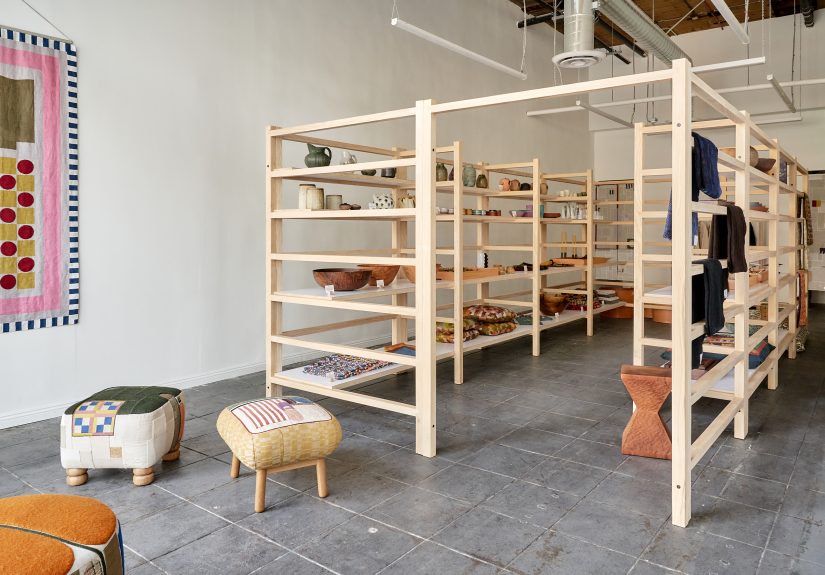
The retail concept arrived as The Great Commune Shop Experiment, a brick-and-mortar interpretation of Commune’s online store. The idea had roots stretching back to 2008, when the design studio, hit by a rough economy, pitched a tent inside its workspace and opened a shop to keep makers busy and spirits up. Years later, that shopkeeper instinct returned in a more deliberate form. Commune installed a modular structure inside the unfinished space of the 1924 Spanish Colonial building that houses its studio in MacArthur Park, turning the location into a temporary yet highly considered destination for home goods.
That origin story matters because it explains why the popup never felt like a random retail stunt. It grew out of Commune’s long relationship with makers, objects, and interiors. This was not a celebrity side quest. It was an extension of the studio’s daily design life. In fact, the shop was filled not only with existing online offerings, but also with new pieces created especially for the experiment by artists and artisans in Commune’s orbit.
And yes, “experiment” was the right word. The shop was designed around curated vignettes, shifting merchandise, and a spirit closer to discovery than to old-school showroom formality. Think less “warehouse of matching accessories,” more “beautifully edited apartment belonging to someone with excellent taste and zero interest in boring you.”
Why Commune’s Design Point of View Hits So Hard
To understand the popup, you have to understand Commune itself. Led by Roman Alonso and Steven Johanknecht, the Los Angeles studio is built on collaboration. Even the name “Commune” signals a collective approach. The firm has long emphasized working with artists, artisans, consultants, and builders, and that spirit of shared authorship shows up in everything it touches. Instead of forcing every project into one branded look, Commune tends to build rooms and objects through texture, history, material honesty, and conversation.
That philosophy has earned the studio serious design-world credibility, but what makes it interesting is that it never reads as self-important. Commune’s work often feels like California at its best: relaxed but not sloppy, eclectic but not chaotic, refined but not afraid of handwork, patina, and oddball charm. One minute you see rustic wood, tile, and linen; the next you spot bold color, pattern, and a slightly mischievous combination that should not work but absolutely does.
That balance is a big reason the popup shop mattered. In a market crowded with algorithm-approved neutrals and furniture that seems designed mainly to look expensive on social media, Commune’s approach reminds shoppers that character is not a design flaw. A home should not look like it came preloaded. It should look like somebody with eyes, hands, memories, and curiosity lives there.
What Shoppers Could Find Inside the Commune Popup Shop
The merchandise mix was part of the magic. Commune has described its shop as a platform for handcrafted goods for the home, and its categories stretch across art, bedding, blankets, brass, ceramics, decor, furniture, gifts, hardware, lighting, pantry items, pillows, scent, tabletop pieces, wood objects, and more. That range matters because it reflects a whole-home philosophy. Commune is not only interested in the big-ticket sofa moment. It cares just as much about the hook on the wall, the lamp beside the bed, the tea on the shelf, and the bowl you reach for every morning.
At the Los Angeles popup, the selection reportedly included a high-low mix of objects with strong material presence and clear maker identity. Among the standout examples were:
- Commune light sockets, classic porcelain fixtures reworked in vivid colorways.
- Scrap-fabric stools and hand-dyed linen quilts by Los Angeles textile artist Adam Pogue.
- Hand-stitched leather baskets by Andrew McAteer.
- Studio ceramics, including bowls, lanterns, and pet pieces.
- Textiles and dog beds that paired Commune’s signature patterns with artisan production.
The list tells you a lot about the store’s personality. This was not a pop-up focused only on pristine investment furniture or museum-like decor that begs not to be touched. It blended practical objects with expressive ones. You could find something architectural, something domestic, something playful, and something deeply tactile. The result was a store that encouraged shoppers to think about home in layers rather than in categories.
That is also where the phrase “refined craft for the home” really earns its keep. These were not rough-hewn objects presented as virtue signals. Nor were they slick luxury goods stripped of human touch. They sat in the sweet spot between utility and beauty, polish and personality.
How the Popup Reflected Los Angeles Design Culture
Los Angeles is uniquely suited to a shop like this. The city’s design culture is broad, neighborhood-driven, and gloriously resistant to a single aesthetic rulebook. Local design reporting has consistently described LA shopping as wildly creative, full of both tried-and-true resources and lesser-known gems. That openness gives a place like Commune room to thrive. In LA, a serious home store does not have to be cold, and a craft-forward shop does not have to feel quaint.
Commune’s style also feels especially Angeleno because it embraces contradiction. It is interested in history, but it is not nostalgic in a dusty way. It loves craftsmanship, but it avoids the museum gift shop trap. It works with global influences, yet still feels local. That is classic Southern California energy: Spanish, modern, bohemian, midcentury, handmade, sun-washed, and slightly unruly in the best possible way.
Los Angeles is also a city where making still matters. From pottery and block printing to woodworking and bookbinding, the region continues to support hands-on creative communities. Commune fits naturally into that ecosystem, but it elevates the conversation by showing how artisan-made work belongs not only in craft fairs or special commissions, but in daily domestic life.
The Heath Connection and the Power of Partnership
The popup’s story did not stop at MacArthur Park. In 2023, Heath Ceramics hosted a Commune outpost in its Los Angeles showroom to coincide with the launch of the Commune for Heath Dinnerware Collection. The collaboration made perfect sense. Both brands are deeply associated with California, craftsmanship, and the idea that well-made objects deserve everyday use rather than occasional pedestal treatment.
That partnership also reinforced one of Commune’s strongest habits: building a design world through relationships. The studio has long worked across interiors, graphics, products, and artist collaborations, and the Heath event showed how naturally its retail instinct extends into community-building. A tabletop installation, curated home pieces, and even a book signing helped position the outpost not as a pure sales floor, but as a cultural conversation around objects, making, and how people live with design.
In other words, the Commune popup shop in LA was never just about commerce. It was about context. When you understand who made something, what material it uses, and how it might live in a room, the object gains emotional weight. Suddenly the plate is not just a plate. The lamp is not just a lamp. The pillow is not just another pillow trying to audition for your sofa.
What Homeowners Can Learn From the Commune Popup Shop
You do not need a Hollywood budget or a design studio address to borrow ideas from Commune. The popup offers several practical lessons for real homes.
1. Mix utility with poetry
The best rooms are not built from statement pieces alone. Commune’s product mix shows the value of combining the useful and the evocative. A hook, a quilt, a bowl, a light socket, a leather basket, a tea tin: together they create atmosphere. Individually, they still pull their weight.
2. Let materials do some of the talking
Wood, linen, leather, clay, brass, and porcelain all age differently, and that is part of the charm. Commune’s design language favors materials that gain depth over time. That approach makes a home feel richer because it invites wear instead of panicking over it.
3. Buy fewer, better, stranger things
A curated home does not need endless filler. It needs a few memorable objects with shape, texture, or story. The popup’s appeal came from editing, not excess. Think conversation piece over clone army.
4. Honor place
Commune often speaks through California materials, local context, and original architecture. That is a smart reminder to make design choices that belong to where you live. A home in Los Angeles should not necessarily behave like a townhouse in Manhattan or a farmhouse in Vermont. Let your region have a vote.
5. Collaboration beats perfectionism
One reason Commune’s work feels alive is that it invites many voices into the process. At home, that can mean mixing vintage with contemporary, combining artisan work with inherited pieces, or letting a room evolve over time instead of ordering it all in one feverish weekend of online scrolling.
Why the Commune Popup Shop Still Feels Relevant
Pop-ups are often associated with urgency, trendiness, and the retail equivalent of a fireworks show: flashy, brief, and gone before you finish your coffee. The Commune popup shop in LA offered something more lasting. It suggested that temporary retail can still carry depth. It can be intimate, thoughtful, educational, and beautifully paced. It can help shoppers understand how a home is built object by object, decision by decision, mood by mood.
That message lands even harder now, when so much home shopping happens through thumbnails and filters. Digital convenience is great until every room starts looking like it was assembled by the same mildly overachieving robot. Commune’s popup pushed in the opposite direction. It emphasized texture over speed, curation over clutter, and human touch over frictionless sameness.
There is also a deeper cultural point here. In an era when many consumers say they want to shop better, more locally, and with greater care, Commune offered a real model. Its network of makers extends from Los Angeles outward, and the work spans function, beauty, and craft. That kind of ecosystem makes design feel less like a luxury monologue and more like a creative community.
The Experience of Refined Craft at Commune: Why a Visit Would Stay With You
Part of what makes the idea of the Commune popup shop so appealing is that it reframes shopping as an aesthetic experience instead of a transaction. You are not just moving through shelves. You are moving through a point of view. The setting alone does some heavy lifting: a modular shop placed inside a Spanish Colonial studio building in MacArthur Park. That contrast between the raw and the composed, the architectural shell and the curated interior, is exactly the kind of tension great design lives on.
A space like that slows you down. You notice how a quilt changes the mood of a stool. You notice the edge of a ceramic bowl, the finish on a light socket, the softness of linen, the stubborn charm of leather that will only get better with age. The experience is tactile even when you are trying very hard to behave like a civilized adult and not touch every single thing in sight.
There is also a kind of visual rhythm to shops built this way. Instead of shouting at you with bulk displays and discount logic, they guide the eye through vignettes. One object explains the next. A lamp makes sense beside a textile. A basket makes more sense with a quilt tucked inside it. A tabletop piece suddenly feels connected to the architecture around it. You begin to understand that decorating is not about buying isolated “nice things.” It is about relationships between things.
That is why the Commune popup shop reads almost like a live demonstration of how to build a home with personality. Not perfection. Personality. The distinction matters. Perfection is brittle. Personality is layered. Perfection worries about symmetry. Personality knows a room can be elegant and a little weird at the same time. Frankly, that is usually when a room gets interesting.
For visitors, the emotional takeaway would likely be just as important as the visual one. Handmade objects have a way of changing your sense of value. A ceramic bowl made by a studio potter does not feel interchangeable with a factory copy. A hand-dyed quilt asks you to think about labor, process, color, and time. Even a small hardware piece can feel charged with intention when it is selected for form as well as function. You leave seeing domestic life differently. The everyday starts looking less ordinary.
And then there is the Los Angeles factor. In LA, design often spills across disciplines: art, architecture, hospitality, fashion, landscape, food, craft. Commune understands that crossover instinct. So a visit to its popup would not feel siloed into “decor shopping.” It would feel connected to a broader cultural ecosystem, one where a beautifully made tea tin belongs in the same universe as a well-designed chair, a handmade tile, or a thoughtfully restored building. Home is not treated as a sealed category. It is treated as part of how you move through life.
That may be the popup’s most enduring contribution. It reminds us that refined craft is not about elitism. It is about attention. Attention to materials. Attention to makers. Attention to context. Attention to the way an object can shape a ritual, soften a room, or make a daily habit feel less mechanical. Once you start noticing that level of care, it is very hard to go back to buying things that look fine in a cart but say absolutely nothing in a room.
So yes, the Commune popup shop in LA was a place to shop. But more importantly, it was a place to sharpen your eye. And that may be the best souvenir any design store can offer.
Conclusion
The Commune popup shop in Los Angeles showed how a temporary retail space can deliver a lasting design lesson. By pairing California ease with serious craftsmanship, Commune created a home-focused environment that felt edited, tactile, and deeply human. Its mix of ceramics, textiles, lighting, furniture, and decorative objects proved that refined craft does not have to feel precious. It can be useful, relaxed, and full of humor and warmth.
For design lovers, the real takeaway is simple: build a home the way Commune builds a shop. Start with materials that age well, add pieces with maker identity, mix utility with beauty, and leave enough room for surprise. A home should feel collected, not processed. And if it includes one excellent basket, one soulful lamp, and one object that makes your guests ask, “Where on earth did you find that?” you are probably doing just fine.




 Close
Close