
Table of Contents >> Show >> Hide
- The Personal New Project: A Children’s Book With a Big Heart
- Why This Collaboration Works: It Started Long Before the Book Deal
- Meet Meredith Seacrest Leach: The “Behind-the-Scenes” Sister Who Actually Runs Things
- The Ryan Seacrest Foundation Connection: Imagination as a Form of Care
- Ryan’s “If I Could Fly” Momentand Why It Fits This Story
- What The Make-Believers Tries to Teach (Without Sounding Like a Lecture)
- How to Turn This Book Into a Moment (Not Just Another Bedtime Read)
- Why This Celebrity Project Feels Different
- Media Moments That Put the Project in the Spotlight
- What This Project Suggests About Ryan and Meredith’s “Why”
- Final Take: A Sibling Project That’s Personaland Purpose-Driven
- Experiences Related to Ryan & Meredith’s Project (A 500-Word Add-On)
Ryan Seacrest has built a career on being everywhere at once. Morning radio? Check. Prime-time TV? Check.
The kind of hosting gig where America yells answers at the screen like it’s cardio? Also check.
So when he “opens up” about a new personal project, it’s fair to assume it either involves (1) a microphone,
(2) a countdown clock, or (3) a suitcase permanently packed by someone with superhero patience.
This time, though, the headline-worthy project isn’t another show or a business launch with a logo that looks
great on a hoodie. It’s something softer, more nostalgic, andsurprisinglyvery on brand for someone whose
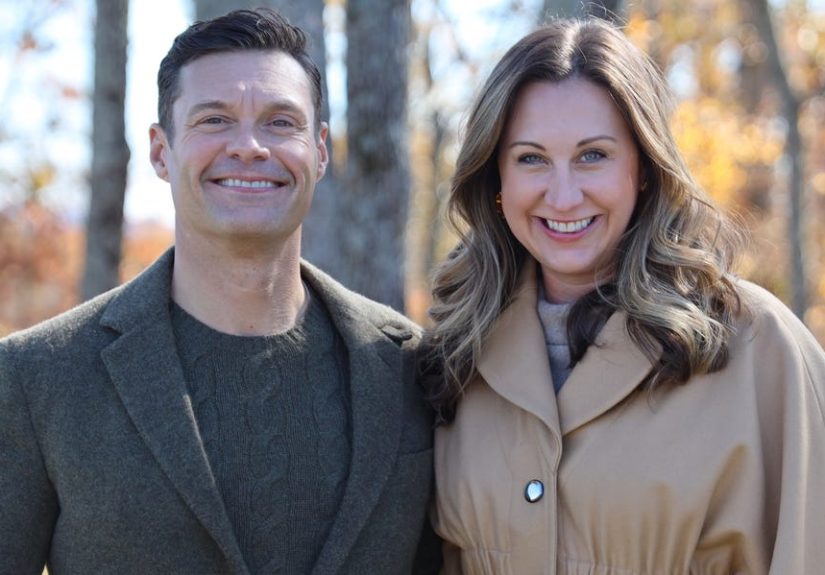
life has always orbited storytelling: a children’s picture book co-created with his younger sister,
Meredith Seacrest Leach, called The Make-Believers.
The project hits a sweet spot where family history, imagination, and purpose overlap. It’s also a rare peek
behind the curtain at a sibling partnership that has quietly shaped the Seacrest family’s biggest
philanthropic effort for years. If you’re wondering why a TV host known for polished timing would choose
a picture book as his next “personal” move, the answer is simple: the story is personaland the mission
is bigger than the book.
The Personal New Project: A Children’s Book With a Big Heart
Seacrest and Meredith’s project is a picture book titled The Make-Believers, published by
Simon & Schuster Books for Young Readers and illustrated by Bonnie Lui. Released in October 2024,
it’s built around a message that’s timeless but urgently needed: imagination isn’t fluffit’s fuel.
The book leans into the idea that “dreaming” isn’t only what happens at night. Kids can dream with their
eyes open by making believe, building worlds from cardboard, couch cushions, costumes, and sheer audacity.
The narrative encourages children to imagine big, dream far, and follow their heartslanguage that sounds
poetic until you watch a kid turn a blanket into a spaceship and convince you gravity is optional.
But what makes this book feel less like a celebrity side quest and more like a meaningful extension of
their lives is the context: Seacrest and his sister have spent years meeting children in pediatric
hospitals through their family’s nonprofit work. For them, imagination isn’t just “cute.” It’s a coping
tool. It’s joy on demand. It’s an escape hatch when real life gets heavy.
Why This Collaboration Works: It Started Long Before the Book Deal
Plenty of siblings are close. Some even share streaming passwords without a monthly argument, which is
basically a miracle. But Ryan and Meredith’s relationship has a creative origin story: they grew up
entertaining each other and their family with make-believe, pretend performances, and big “someday” energy.
In interviews around the book’s release, they described childhood days filled with imagining life beyond
their everyday surroundingsdreaming up adventures, characters, and futures that felt larger than their
neighborhood. Those early experiences became the spine of The Make-Believers: the belief that
creativity can expand a child’s world long before the world expands their zip code.
And here’s the part that makes this feel extra human: the idea for the book didn’t pop up overnight.
Conversations about it stretched over time, with the concept developing for a while before it became a
finished project. In at least one on-air conversation, Meredith noted the idea had been around since the
pandemic erameaning it simmered, matured, and waited until the timing was right.
Meet Meredith Seacrest Leach: The “Behind-the-Scenes” Sister Who Actually Runs Things
If you only know Meredith as “Ryan Seacrest’s sister,” you’re missing the headline. Meredith Seacrest Leach
is an executive and nonprofit leader with a creative backgroundsomeone who understands how to turn an
idea into a real-world machine that helps people.
She serves as Executive Director and COO of the Ryan Seacrest Foundation, helping steer strategy,
partnerships, sustainability, and growth. Before that, she worked in television development and creative
affairs at the production company Reveille (now Endemol Shine North America), with credits tied to major
entertainment properties. Translation: she speaks fluent “creative + operational,” which is exactly what
you want when you’re building both a charity and a book.
Meredith’s presence also explains the tone of the project: warm but focused, imaginative but structured.
The book isn’t only about whimsyit’s about what whimsy can do for kids when they need it most.
The Ryan Seacrest Foundation Connection: Imagination as a Form of Care
To understand why this book matters, you have to understand the ecosystem the Seacrest siblings have been
building for years. The Ryan Seacrest Foundation is known for creating “Seacrest Studios”broadcast media
centers inside pediatric hospitals where young patients can explore storytelling, music, hosting, and
creativity. These aren’t just playrooms with a shiny sign. They’re spaces designed to give kids a sense of
agency and joy during an experience that can otherwise feel like it’s all schedules, symptoms, and
medical jargon.
In coverage of a studio opening at Cohen Children’s Hospital in New York, Ryan described the work as
giving him real purpose, emphasizing how meaningful it is when children and families get a break from
the seriousness around them. Meredith, speaking from the leadership side, framed it as giving back to
families going through a hard timeusing their relationships, resources, and platform “for good.”
That’s the bridge to The Make-Believers. When you spend years watching kids turn hospital rooms
into stages and IV poles into props, you stop thinking of imagination as optional. You start treating it
like medicine’s best friend: not a replacement for care, but a powerful partner to it.
Ryan’s “If I Could Fly” Momentand Why It Fits This Story
In a Good Housekeeping interview tied to the book, Seacrest joked that he’d love the ability to flypurely
for efficiencybecause he could get even more done. It’s funny because it’s true: he’s famous for a
schedule that looks like it was designed by someone playing Tetris at expert speed.
But that comment also quietly explains why a children’s book makes sense in his world. If you’re always
moving, you start craving projects that mean something beyond the movement. A picture book is the opposite
of the hustle. It asks you to slow down, sit with a child, turn pages, and be present. It’s not a “content
drop.” It’s a pause button.
What The Make-Believers Tries to Teach (Without Sounding Like a Lecture)
The best children’s books don’t feel like a sermon in a cute font. They feel like an invitation. The core
ideas behind The Make-Believers are parent-friendly and kid-approved:
- Imagination is a skill, not a phase. You can practice it, grow it, and use it when life feels hard.
- Dreams get stronger when shared. Talking about hopes with family and friends helps kids feel supported.
- Play is powerful. Creativity isn’t wasted time; it’s how children build confidence and resilience.
- Storytelling can be a safe place. When reality is overwhelming, pretend worlds can offer relief and control.
There’s also a subtext that feels especially relevant in 2026: kids are growing up fast, and they’re
surrounded by noise. A book that champions imagination is a quiet protest against the idea that childhood
must be optimized, scheduled, and monetized. Sometimes a cardboard box really is the best technology.
How to Turn This Book Into a Moment (Not Just Another Bedtime Read)
If you’re a parent, teacher, aunt, uncle, older sibling, or proud neighborhood “book person,” you can use
The Make-Believers to spark the kind of conversations kids actually remember. Here are a few
low-effort, high-impact ideas:
1) Ask one question after reading
Try: “If you could make-believe anything today, what would you build?” The goal is not to correct them.
The goal is to let them drive.
2) Create a “Make-Believer” ritual
Five minutes. That’s it. A quick doodle, a mini story, a pretend news broadcast, a silly song. The habit
matters more than the polish.
3) Connect imagination to real-world courage
When kids imagine themselves brave, kind, or capable, they practice those identities. Make-believe can be
rehearsal for real lifeespecially for children facing anxiety, illness, or big transitions.
Why This Celebrity Project Feels Different
Let’s be honest: celebrity books can sometimes feel like a souvenir you buy on the way out of a museum
cute, harmless, and destined to live on a shelf. But Seacrest and Meredith’s book has a built-in reason to
exist beyond brand extension: it aligns with their long-running philanthropic focus on children, creativity,
and storytelling.
Publishers Weekly framed the collaboration as an extension of what they’ve seen in pediatric hospitals:
kids with “boundless, unlimited imaginations.” That detail matters. It’s one thing to say you believe in
imagination. It’s another to spend years watching it change the mood in a room.
The book also doubles as a family artifact. It’s not just “Ryan Seacrest, Author.” It’s “Ryan and Meredith,
siblings, translating their childhood language into something other families can share.”
Media Moments That Put the Project in the Spotlight
The book’s rollout included conversations across mainstream entertainment outlets and daytime TV.
Seacrest appeared with Meredith on Live with Kelly and Mark in early October 2024 to talk about the
picture book, and his radio platform also featured an on-air segment with the two discussing the project.
In that radio conversation, there was even mention of a public signing event at The Grove in Los Angeles,
the kind of detail that makes the project feel tangible and community-facingnot just internet-facing.
That matters for a children’s book, because picture books live in real life: in libraries, classrooms,
hospital waiting rooms, living room rugs, and bedtime routines where the reader is asked to do voices and
commit to the bit.
What This Project Suggests About Ryan and Meredith’s “Why”
Under the fun PR headlines, the Seacrest siblings are making a point: creativity belongs to kids, and it
belongs to families. Their foundation work is built around giving children tools to tell stories. Their
book is built around reminding children they already have that tool inside them.
If you strip away fame and focus on the pattern, you see something consistent: Ryan and Meredith keep
returning to the idea that entertainment can be more than distraction. It can be connection. It can be
relief. It can be a way for children to feel seen when the world is treating them like a patient chart
instead of a whole person.
Final Take: A Sibling Project That’s Personaland Purpose-Driven
“Ryan Seacrest opens up” can sometimes mean “Ryan Seacrest reveals what he ate for lunch and it’s somehow
trending.” This time, it’s deeper than that. His new project with his sister Meredith is rooted in family
memory and strengthened by years of working with children who use creativity as courage.
The Make-Believers isn’t trying to be the loudest book on the shelf. It’s trying to be the book
that makes a child look up and say, “Wait… I can do that?” And if it pulls more families into the orbit of
supporting kids through storytellingespecially kids navigating illness or tough seasonsthen it’s doing
exactly what the Seacrest siblings set out to do: turn imagination into impact.
Experiences Related to Ryan & Meredith’s Project (A 500-Word Add-On)
When a public figure teams up with a sibling on something personalespecially a children’s bookthe most
interesting part is often what happens off camera. Projects like The Make-Believers tend to come
with a predictable set of real-world experiences, the kind you’d recognize whether your last name is
Seacrest or you’re just trying to finish a shared Google Doc without starting a family group chat fire.
One of the first experiences is rediscovering your shared “family language.” Siblings have
a built-in archive: the games you played, the jokes that still land, the moments you remember differently
(and will argue about forever). Turning that into a book forces you to translate memory into something
clear enough for strangers to understandwithout losing the warmth that made it meaningful in the first
place. In Ryan and Meredith’s case, their childhood make-believe becomes a universal message: imagination
isn’t just entertainment; it’s identity-building.
Another common experience is splitting roles in a way that matches real life. Even if both
siblings are equally creative, one often becomes the “vision voice,” while the other becomes the “how do we
actually ship this?” person. Ryan’s career has trained him to communicate to millions with clarity and
charm; Meredith’s nonprofit leadership and entertainment background have trained her to build strategy,
partnerships, and execution. When those strengths combine, a project stops being an idea and becomes a
finished object you can hold, read, and share.
There’s also the experience of balancing sincerity with fun. A children’s book can’t sound
like a motivational poster that learned to rhyme. It has to feel playful and true. Siblings are uniquely
positioned to keep each other honest here. If one person gets too sentimental, the other can pull it back
toward humor and simplicity. If one gets too jokey, the other can protect the message. That push-and-pull
often makes the final product feel more human.
Projects tied to children and hospitals also tend to create a specific experience: your “why” becomes
unavoidable. When you meet kids who use creativity to deal with pain, boredom, fear, or isolation,
you stop treating imagination like a luxury. It becomes a form of emotional survival. That’s a powerful
lens for any author, celebrity or not. You begin writing for the child who needs the story, not the adult
who wants the story to be trendy.
Finally, there’s the experience of watching a personal story become communal. Once a book is
out, it doesn’t belong only to its authors. It belongs to the families reading it at bedtime, to teachers
building lessons around it, to kids who decide they’re “make-believers” too. That’s the quiet magic of
projects like this: a sibling memory becomes a shared tool for other people’s lives. And that’s a pretty
solid definition of impactno confetti cannon required.




 Close
Close