
Table of Contents >> Show >> Hide
- Why “Tangled” Is Still the Right Word
- Seeing Is Believing: What Visibility Really Means Now
- Where the Knots Show Up for U.S. Businesses
- A Practical Playbook for Untangling Without Pretending You Can “Fix” the World
- 1) Measure what matters: reliability beats average speed
- 2) Build “inventory with a purpose,” not “inventory with a panic”
- 3) Diversify intelligently: two suppliers, not twenty
- 4) Design for rerouting: ports, modes, and lanes
- 5) Turn visibility into action with exception workflows
- 6) Treat data as infrastructure
- 7) Secure the supply chain: cargo crime and cyber risk are operational risks
- 8) Plan around policy volatility, not after it
- 9) Make resilience measurable
- Conclusion: The Tangle Is RealSo Build for Reality
- Field Notes: 5 Real-World Experiences That Make the Tangle Obvious (500+ Words)
- 1) The dashboard says “on time,” your gut says “nice try”
- 2) The “small delay” that turns into a warehouse domino effect
- 3) The supplier says “we’re good,” but their supplier isn’t
- 4) The inventory paradox: too much and not enough at the same time
- 5) The moment you realize resilience is a customer experience
Remember when we all thought the “supply chain crisis” would end the way a bad haircut endsslowly, awkwardly,
and eventually with enough time and a hat? Yeah… about that.
In 2026, supply chains look better on the surface than the panic years, but they still behave like a drawer full of
charging cables: you can pull one out carefully, and somehow three more come with itplus a mystery knot you
swear wasn’t there yesterday. The twist is that the biggest lesson from the last few years wasn’t “stock more stuff.”
It was “see more stuff.”
Visibilityreal visibility, not the “we have a spreadsheet and optimism” kindhas become the difference between
a delay you manage and a delay that manages you.
Why “Tangled” Is Still the Right Word
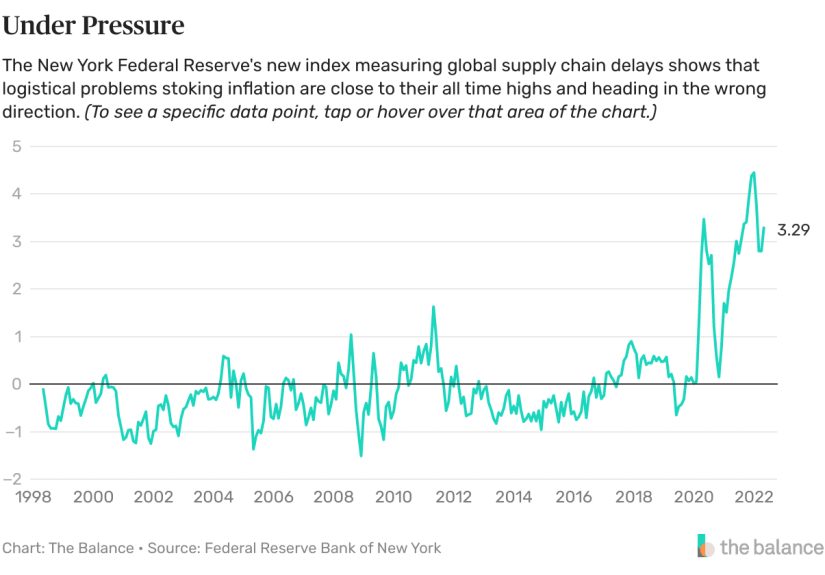
If you’re wondering why supply chains remain complicated even after capacity and lead times improved from the
worst peaks, here’s the reality: disruption didn’t leave. It diversified.
Instead of one giant bottleneck (hello, 2021), we now have a rotating cast of troublemakersgeopolitics, climate,
labor constraints, shifting trade policy, and the ever-present “surprise!” of demand swings. Think of it as whack-a-mole,
but the moles have LinkedIn profiles and weather radar.
Ocean routes: When the map changes, the math changes
Global ocean shipping is still one of the most efficient systems humans have ever builtuntil it isn’t. Recent years have
reminded shippers that chokepoints are great… right up until a chokepoint becomes a chokehold.
Rerouting around risky corridors can add daysor weeksdepending on lane, carrier network changes, and port congestion.
That doesn’t just affect “arrival date.” It changes inventory carrying costs, safety stock requirements, promotion timing,
and sometimes whether a product is even worth importing at all.
If you sell seasonal items (apparel, holiday décor, school supplies), you already know the cruel truth: a late shipment
doesn’t arrive “late.” It arrives “irrelevant.”
Panama Canal constraints: Climate turns into lead time
Climate-driven constraintsespecially droughthave been a not-so-gentle reminder that supply chains run through nature,
not around it. When canal capacity tightens, carriers and shippers juggle trade-offs: pay more, wait longer, or reroute.
Reroutes aren’t just “take the long way.” They ripple into inland transportation planning, warehouse labor scheduling,
and customer promises. If your business lives on tight replenishment cycles, a few extra days in transit can mean a whole new
approach to buffer stock.
Trade policy and tariffs: The whiplash nobody budgets for
When tariff policy becomes volatile, companies do what companies do: they front-load imports, reshuffle suppliers, or pause orders
to avoid getting caught holding the most expensive bag in history.
That creates a weird rhythmsurges, then slowdownswhere ports, trucking networks, and distribution centers experience
sudden pressure followed by sudden air pockets. Planning becomes less like chess and more like trying to catch a frisbee
in a wind tunnel.
Labor and capacity: Better than the worst, still not “easy”
Even when transportation capacity exists on paper, execution can stumble on real-world limits: driver availability, warehouse turnover,
equipment imbalances, or delays that start small but compound through multi-stop networks.
The modern supply chain doesn’t usually fail with a dramatic explosion. It fails with quiet friction: missed appointments,
partial shipments, “we’ll need to reschedule,” and the dreaded phrase: “We can’t confirm that until tomorrow.”
Seeing Is Believing: What Visibility Really Means Now
For a long time, supply chain “visibility” meant tracking a shipment from Port A to Port B. Helpful, surelike knowing your
pizza is “out for delivery” while your stomach files a formal complaint.
Today, visibility needs to answer tougher questions:
- What’s happening right now? (Location, condition, delay drivers, exceptions.)
- What will happen next? (ETA confidence, downstream constraints, capacity risk.)
- What should we do about it? (Rebook, expedite, reallocate inventory, change order quantities.)
The rise of the “control tower” (and why it’s not just a dashboard)
Many organizations now build some version of a supply chain control tower: a central view of orders, inventory, transportation,
and supplier signals. The good ones do more than display. They orchestrate.
That means your visibility layer should connect to decision ruleslike:
“If the ocean ETA slips past X date, shift replenishment from DC West to DC Central,”
or “If component lead time spikes, prioritize SKUs with the highest margin-to-cube ratio.”
In other words: visibility that doesn’t drive action is just a very expensive documentary.
Digital twins and scenario planning: Rehearsing the chaos
Digital twins (virtual representations of supply chain networks) are increasingly used to stress-test plans:
What happens if a port slows? If a supplier goes dark? If demand spikes in one region and drops in another?
The point isn’t predicting the future perfectly. It’s having “Plan B” and “Plan C” ready before the email subject line
becomes “URGENT: UPDATE NEEDED.”
AI and forecasting: Helpful… when you feed it reality
AI can improve demand forecasting, exception management, and even supplier risk monitoringespecially when paired with
clean master data and consistent processes. But AI can’t fix a supply chain that doesn’t agree on basic facts like:
“Is that item actually in stock, or is it spiritually in stock?”
The best results come when AI supports human planners with clear explanations and confidence rangesnot when it pretends
the world is neat and linear.
Where the Knots Show Up for U.S. Businesses
Tangled supply chains don’t impact every industry the same way. The pain points depend on product characteristics,
regulatory requirements, and how forgiving your customers are.
Retail and e-commerce: Timing is the product
Retailers live in the land of promotions, holidays, and short shelf lives (sometimes literally). When transit times stretch,
safety stock goes up, cash gets tied up, and markdown risk increases.
Many retailers now blend strategies: using ocean freight for the bulk, reserving air for truly time-sensitive items, and leaning on
smaller, more frequent shipments for flexibility when demand is uncertain.
Manufacturing: The hidden risk is in the deep tiers
Manufacturers often have decent visibility into Tier 1 suppliersuntil the real constraint lives in Tier 3 (or Tier 7), where a single
specialized subcomponent quietly controls your production schedule.
This is why supplier mapping has become a board-level topic. You can’t manage what you can’t see, and you definitely can’t expedite
a factory you didn’t know existed.
Healthcare and critical supplies: “Backorder” is not a care plan
Healthcare supply chains must balance cost discipline with service continuity. When shortages hit, substitution isn’t always allowed,
and lead time uncertainty isn’t just inconvenientit can be dangerous.
That’s why many health systems emphasize dual sourcing, tighter contract language around allocation, and clearer visibility into
distributor inventory and manufacturer constraints.
Big-ticket goods: When you reshore, you still need parts
More U.S. manufacturing investment and reshoring/nearshoring announcements are part of the long-term response to volatility.
But even when final assembly moves closer to customers, upstream components may still span continents.
The practical takeaway: reshoring can reduce certain risks (like ultra-long replenishment cycles), but it doesn’t eliminate the need
for robust inbound planning and supplier resilience.
A Practical Playbook for Untangling Without Pretending You Can “Fix” the World
You can’t eliminate disruption. You can, however, build a supply chain that absorbs hits without collapsing into a group chat meltdown.
Here are strategies that actually hold up in messy reality:
1) Measure what matters: reliability beats average speed
Average transit time is a nice statistic. Variability is what ruins your week. Track reliability metricsETA accuracy, on-time-in-full,
schedule adherenceand use them to choose carriers, routes, and policies.
2) Build “inventory with a purpose,” not “inventory with a panic”
Buffer stock isn’t a moral failing. It’s a tool. The trick is to place it intentionally: at the right nodes, for the right SKUs,
based on demand volatility and service goals.
Many companies now segment inventory policies: higher buffers for volatile or high-service items, leaner replenishment for stable demand,
and explicit rules for when to expedite versus when to wait.
3) Diversify intelligently: two suppliers, not twenty
“Multi-sourcing” doesn’t mean collecting suppliers like baseball cards. It means having at least one credible alternative for critical items,
with tested qualification, clear capacity assumptions, and contract terms that work when you actually need them.
4) Design for rerouting: ports, modes, and lanes
If your transportation strategy assumes one port, one route, and one plan, you don’t have a strategyyou have a hope.
Build routing options into your network design and contracts. Pre-negotiate contingencies. Test them in drills.
5) Turn visibility into action with exception workflows
A modern visibility platform should do three things fast:
detect exceptions, prioritize them, and trigger action. If planners spend all day hunting down what went wrong, they’ll have no time
to decide what to do next.
6) Treat data as infrastructure
Clean item masters, consistent location codes, supplier identifiers, and disciplined order processes aren’t glamorousbut they’re the foundation
for every fancy tool you want to work. If you’re investing in AI, invest in data governance too.
7) Secure the supply chain: cargo crime and cyber risk are operational risks
Cargo theft, fraud, and cyber intrusion aren’t just “security issues.” They are service issues. Build verification steps for carriers,
tighten access to freight systems, and establish playbooks for incident response.
8) Plan around policy volatility, not after it
If tariffs or trade restrictions can change your landed costs fast, build scenarios into procurement. What if costs jump? What if lead times stretch?
What if sourcing shifts? Align finance, procurement, and logistics so decisions happen before the surgeand not during it.
9) Make resilience measurable
Resilience shouldn’t live as a vibe. Track it: time-to-recover, supplier risk exposure, and the percentage of spend covered by alternatives.
Then review it the same way you review cost and service.
Conclusion: The Tangle Is RealSo Build for Reality
Supply chains are less “broken” than they were at peak chaos, but they’re not magically simple. The world is still delivering surprises,
and your network is still only as strong as its least-visible link.
The companies that win aren’t the ones with perfect forecasts. They’re the ones that see clearly, decide quickly, and adapt without drama.
Because when supply chains remain tangled, seeing isn’t just believingit’s budgeting, scheduling, pricing, and sleeping at night.
Field Notes: 5 Real-World Experiences That Make the Tangle Obvious (500+ Words)
If “supply chain complexity” sounds abstract, here are experiences many teams recognize immediatelythose moments when you can practically
feel the knot tighten.
1) The dashboard says “on time,” your gut says “nice try”
You’re looking at a shipment status update that claims everything is fine. Then you notice the ETA hasn’t changed in six days, despite
a route that usually updates every 24 hours. Suddenly you’re not tracking freightyou’re tracking the reliability of the tracking.
Someone pings you: “Can we confirm arrival for the promotion?” You answer like a responsible adult: “We have a projected ETA.”
What you mean is: “I’m one refresh away from a stress snack.”
2) The “small delay” that turns into a warehouse domino effect
A container misses its appointment window. No big dealuntil it means the inbound team has to reshuffle labor, the putaway plan slips,
and replenishment to pick faces doesn’t happen before the daily wave. Then orders back up, customer service sees the queue explode,
and someone suggests overtime like it’s a magical spell. The delay wasn’t catastrophic by itself. It was contagious.
This is where visibility matters most: not just “it’s late,” but “it’s late enough to break tomorrow’s plan.”
3) The supplier says “we’re good,” but their supplier isn’t
You’ve got a dependable Tier 1 supplier. They’re responsive. They hit most dates. Then one day you learn the problem isn’t themit’s a
sub-tier constraint: a specialty resin, a unique fastener, a niche electronic component. Your supplier is calm, because they can’t move
faster than their upstream reality. You’re not calm, because your production schedule just became a rumor.
You realize you weren’t managing a supply chainyou were managing a relationship. That’s a good start, but it’s not the same thing.
4) The inventory paradox: too much and not enough at the same time
You walk through a warehouse with pallets of slow movers and empty slots for the items customers actually want. Finance asks why inventory is high.
Sales asks why fill rates are low. You want to answer with interpretive dance, because words feel inadequate.
This is the classic mismatch between demand signals, replenishment policies, and lead time variability. The tangle isn’t “we need more inventory”
or “we need less.” The tangle is “we need the right inventory, in the right place, at the right time.”
5) The moment you realize resilience is a customer experience
A key product goes out of stock online. The marketing team has a campaign scheduled. Customers don’t care that a reroute added ten days,
or that a canal restriction tightened capacity, or that tariffs triggered a surge. They care that the “Buy Now” button betrayed them.
That’s when supply chain stops being a backstage function and becomes a brand function. Your visibility tools, contingency routes,
supplier options, and inventory strategy aren’t just operational decisionsthey’re how you protect trust.
And ironically, once teams internalize that, the tone changes. Instead of asking “Who messed up?” people start asking “What signal did we miss?”
That’s the cultural shift that untangles knots the fastest: accountability paired with curiosity.







 Close
Close