
Table of Contents >> Show >> Hide
- Why the Piet Hein Eek Pop-Up in London Mattered
- Who Is Piet Hein Eek?
- What Shoppers Would Have Seen at the Pop-Up
- Rabih Hage, London, and the Art of the Right Setting
- Why Piet Hein Eek Still Feels Relevant
- A Shopper’s Guide: What to Notice in Piet Hein Eek’s Work
- What the Pop-Up Says About Design Retail
- Extended Shopper Experience: A Longer Walk Through the Pop-Up
- Final Thoughts
Some stores want you to buy a chair. A Piet Hein Eek pop-up wants you to reconsider your entire relationship with wood, waste, craft, and that dangerous phrase known as “I’m just browsing.” That was exactly the magic behind the London pop-up spotlighting Dutch designer Piet Hein Eek during the tail end of the London Design Festival: it was part showroom, part lesson in materials, and part temptation disguised as cultural enrichment.
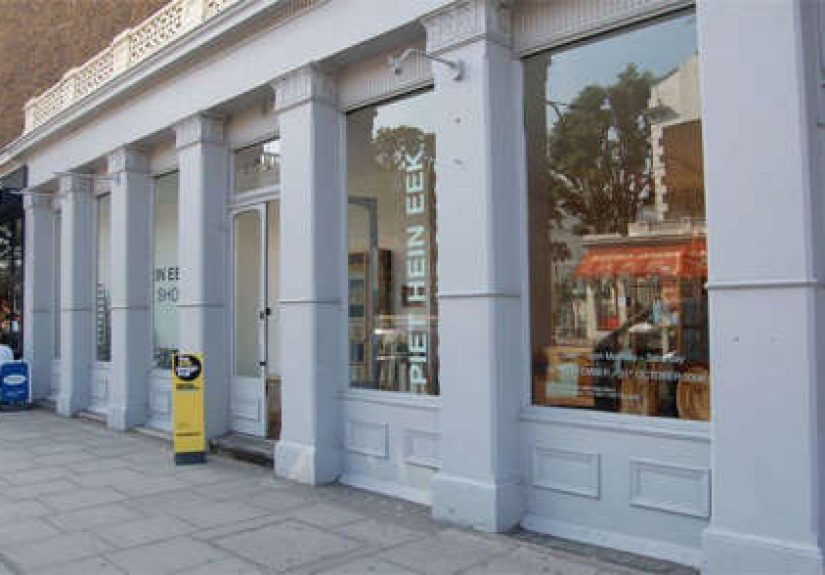
Set at Rabih Hage’s temporary space on Exhibition Road in South Kensington, the pop-up gave London shoppers a rare chance to see a broad selection of Eek’s work in one place. In an age when “pop-up” can mean anything from a tiny candle kiosk to a retail fever dream with DJ sets and oat milk, this one actually deserved the hype. It was framed as a major solo showcase, and that mattered, because Eek’s work has never been furniture you fully understand from a thumbnail image. You need to see the joins, the patched surfaces, the stubborn beauty of salvaged material turned into something unexpectedly elegant.
Why the Piet Hein Eek Pop-Up in London Mattered
The original appeal of the Piet Hein Eek pop-up in London was simple: access. Good design often lives behind a wall of distance, shipping costs, appointments, and intimidating gallery silence. This event brought Eek’s world into a high-traffic London design corridor and made it feel immediate. Visitors could wander in and encounter pieces that looked at once rough and refined, improvised and incredibly considered.
That tension is the whole point of Eek’s appeal. His best-known furniture is made from reclaimed and scrap wood, but it does not read like worthy eco-furniture trying very hard to be morally impressive. Instead, it reads like confident design with a backstory. The surfaces are imperfect, the composition is deliberate, and the final effect is warmer than minimalism and smarter than rustic nostalgia. In other words: this is not “barn chic.” This is design with a brain and splinters.
The London setting made the show even more interesting. South Kensington is a district long associated with museums, culture, and design-minded foot traffic. Putting Eek’s work there turned the pop-up into a conversation between Dutch experimentation and London sophistication. It also fit neatly into the growing pop-up culture of the late 2000s, when temporary retail started becoming a serious way to stage ideas, test markets, and create urgency without feeling cheap.
Who Is Piet Hein Eek?
From Design Academy Graduate to Scrapwood Icon
To understand the excitement around the London pop-up, you need to know why Piet Hein Eek became such a big name in contemporary design. Eek studied in Eindhoven and graduated in 1990, gaining early attention for work that used reclaimed wood in ways that felt neither preachy nor provisional. His graduation-era scrapwood cabinet helped establish the visual language that would follow him for decades: patched surfaces, visible history, strong geometry, and a belief that humble materials deserve serious design thinking.
He later founded his studio with Nob Ruijgrok and built a practice that was unusually self-contained, producing, distributing, and selling work with a strong emphasis on craft and material integrity. Over time, that practice expanded well beyond one-off furniture pieces. Eek’s universe eventually came to include lighting, ceramics, interiors, hospitality projects, wallpaper, collaborations with larger brands, and a large Eindhoven complex built around workshop culture. That broader story matters because the London pop-up was not just a nice little shopping event. It was a window into a designer who had already begun turning a material philosophy into an entire ecosystem.
Why Designers and Shoppers Keep Coming Back
Eek’s work lands with both design professionals and ordinary shoppers because it solves a tricky problem: it is conceptually rich without becoming emotionally cold. Many collectible design pieces ask for admiration from a safe distance. Eek’s work invites use. A scrapwood cabinet can look like art, but it still wants to hold dishes. A chair can look visually rebellious while still being something you actually sit in. That combination of usefulness and personality helps explain why his pieces show up not only in galleries and exhibitions, but in homes, curated interiors, and retail spaces that care deeply about atmosphere.
What Shoppers Would Have Seen at the Pop-Up
If you had walked into the Shopper’s Diary: Piet Hein Eek Pop-Up in London moment with even a casual interest in furniture, you would have met the designer’s signature themes immediately. There would have been scrapwood tables and cupboards, likely chairs with a rugged patchwork logic, and pieces that made reclaimed timber feel almost architectural. Eek’s genius lies in composition. He does not simply reuse material; he arranges it so that offcuts, color shifts, dents, and histories become part of the design language.
That is why his furniture can feel visually busy up close but calm from across the room. The surfaces are full of events, yet the forms are steady. He understands proportion well enough to let the material do the talking without letting it ramble. For shoppers, this creates a rare experience: you feel the hand of the maker, but you also feel the discipline of the designer.
Even beyond the scrapwood classics, Eek’s career shows how flexible that mindset can be. He has applied the same respect for tactile honesty to ceramics, wallpaper, lighting, and industrial materials. His FAT ceramics pushed back against the fetish for ultra-thin porcelain by celebrating thickness and handwork. His wallpaper collaborations translated the rough poetry of salvaged surfaces into trompe l’oeil wallcoverings. His later collections for brands like IKEA brought his preference for simplicity, utility, and visible material character to a broader audience. Seen in that context, the London pop-up becomes more than a snapshot. It becomes an early chapter in a much larger story about how a designer can move across categories without losing his voice.
Rabih Hage, London, and the Art of the Right Setting
The venue mattered. Rabih Hage was already known for combining architecture, interiors, furniture, and design curation in a way that blurred the lines between collectible design and livable space. His gallery context gave Eek’s pieces the right kind of stage: serious, but not sterile. That balance is crucial. Put Eek in too polished a setting and the work risks looking like a rebellion that has been over-ironed. Put it in too raw a setting and the refinement gets lost. A Hage setting offered the best of both worlds.
There is also a longer relationship between Hage and Eek worth noticing. Eek’s pieces appear in Rabih Hage’s interiors and collection context, which suggests more than a one-off sales partnership. It points to a shared appreciation for objects that carry texture, story, and a degree of productive tension. That shared sensibility would have made the pop-up feel curated rather than merely stocked.
And then there is London itself. London shoppers tend to appreciate design that mixes intellect with practicality. The city likes things with pedigree, but it also likes them to have edge. Eek’s furniture fits that brief beautifully. It is cerebral enough for design insiders, tactile enough for everyday living, and visually memorable enough to survive in a city where every restaurant, gallery, and townhouse is trying not to look boring.
Why Piet Hein Eek Still Feels Relevant
Sustainability Before It Became a Marketing Costume
One reason the London pop-up still feels interesting today is that Eek was working with reclaimed materials long before sustainability became every brand’s favorite adjective. His work did not begin with a trend forecast or a carbon-footprint slogan. It began with a designer’s eye, a practical relationship to materials, and a willingness to treat waste as the beginning of form rather than the end of usefulness.
That makes his work feel sturdier than much of today’s green branding. He is not decorating sustainability; he is designing from it. And because the result is beautiful, the message travels further. People may come for the patchwork wood and the sculptural silhouettes, but they leave with a slightly altered idea of what counts as value.
Imperfection as Luxury
There is another reason Eek resonates: he understood early that luxury was changing. For a long time, “luxury” meant rare materials, polished surfaces, and evidence that someone had spent an absurd amount of money avoiding visible flaws. Eek flipped that logic. In his work, irregularity becomes a sign of intelligence, labor, and authenticity. The marks are not defects to hide. They are proof that the material had a life before this one.
That is a powerful idea for shoppers, especially in an era of mass sameness. People are tired of objects that arrive looking perfect and age like yogurt. Eek’s pieces begin with character and often get better with use. They do not ask to remain untouched. They ask to remain interesting.
A Shopper’s Guide: What to Notice in Piet Hein Eek’s Work
If you ever encounter a Piet Hein Eek exhibition, showroom, or pop-up, look beyond the obvious scrapwood effect. First, study the rhythm of the surface. The arrangement of colors and fragments is rarely random. Second, step back and notice the silhouette. Eek often pairs expressive material with restrained form, which is why the work does not descend into chaos. Third, pay attention to the emotional temperature of the object. It almost always feels warmer than minimalism, but less sentimental than vintage revivalism.
Also notice how often the pieces hold two moods at once. A cabinet can feel playful and severe. A chair can feel industrial and handmade. A table can look assembled from leftovers and somehow still behave like a formal anchor in a room. That duality is what keeps the work from becoming gimmicky. It gives shoppers something more satisfying than novelty: it gives them depth.
What the Pop-Up Says About Design Retail
The Piet Hein Eek pop-up in London also offers a useful lesson in retail strategy. Great pop-ups do not just sell products; they stage a worldview. This one gave visitors a concentrated dose of Eek’s values: reclamation, craftsmanship, visual wit, and a refusal to separate beauty from use. That is why the event still reads as more than a footnote from design festival season. It shows how temporary retail can be culturally meaningful when the work has real substance.
In today’s market, where shoppers are overwhelmed by choice and suspicious of hype, that lesson feels current. A successful pop-up should not simply create urgency. It should create understanding. Eek’s London showcase did exactly that. It let visitors see how a designer’s philosophy could live inside furniture, objects, and atmosphere all at once.
Extended Shopper Experience: A Longer Walk Through the Pop-Up
Imagine arriving on Exhibition Road with the slightly overcaffeinated optimism that only a design festival can produce. The museums are nearby, the streets are busy, and everyone looks like they either own a sketchbook or know someone who does. You step into the pop-up and the mood changes immediately. The city noise drops away, replaced by that particular gallery hush that makes even a side table seem important. Then you see the furniture, and the hush makes sense.
At first glance, the room feels relaxed. Wood, texture, simple forms. Nothing is shouting. But after a few steps, the details start pulling you in. A cabinet is not just a cabinet; it is a mosaic of salvaged fragments, each panel carrying a slightly different tone, grain, or history. A chair has the straightforward geometry of something functional, yet the surface reads like a found poem in timber. You move closer, then closer again. This is the danger zone in good design: the moment when “interesting” turns into “I now need to rearrange my home and financial priorities.”
The smartest part of the experience is that the work never feels like a lecture. You are not being scolded into caring about sustainability. You are being seduced into it. The reclaimed material is not presented as compromise; it is presented as character. Every nick, patch, and tonal shift becomes part of the object’s charisma. The pieces feel honest, but not humble in the self-effacing sense. They have confidence. They know they look good.
And that is what would have made the London pop-up memorable for shoppers rather than only design insiders. You did not need a vocabulary full of “materiality” and “narrative surfaces” to get it. You just needed eyes and maybe a mild weakness for furniture with personality. Even if you walked in knowing nothing about Dutch design, the appeal was legible. These were objects with heft, wit, and a kind of emotional practicality. They could live in a gallery, yes, but you could also picture them in a home where people actually eat dinner, stack books, host friends, and occasionally spill things.
The final pleasure of a show like this is leaving with your standards slightly ruined. After seeing work that turns reclaimed scraps into pieces with presence and grace, ordinary furniture starts looking a little too obedient. The pop-up may have been temporary, but the effect was not. It lingered the way the best retail experiences do: not as a memory of shopping, but as a sharper idea of what good design can be.
Final Thoughts
Shopper’s Diary: Piet Hein Eek Pop-Up in London is more than a nostalgic design-week memory. It is a case study in why thoughtful retail still matters. The event brought a major Dutch designer’s work into a London context that understood texture, narrative, and visual intelligence. It gave shoppers access to furniture that challenged the false divide between sustainability and luxury, roughness and refinement, artfulness and use.
That is why the pop-up still deserves attention. Piet Hein Eek did not just make reclaimed wood fashionable. He made it convincing. And in London, for a brief moment on Exhibition Road, that conviction was available to anyone curious enough to step inside.






 Close
Close