
Table of Contents >> Show >> Hide
- Why the Falcon Heavy Pad Images Hit So Hard
- What the Images and Video Actually Showed
- Falcon Heavy by the Numbers
- Why Pad 39A Made the Moment Bigger
- The Real Test Came a Month Later
- Why SpaceX’s Media Strategy Was So Smart
- What Falcon Heavy Came to Represent
- So Why Did the Internet Care So Much?
- Experience: What It Felt Like When Falcon Heavy Finally Stood on the Pad
- Conclusion
- SEO Tags
Some news stories arrive politely. This one stomped in wearing rocket boots.
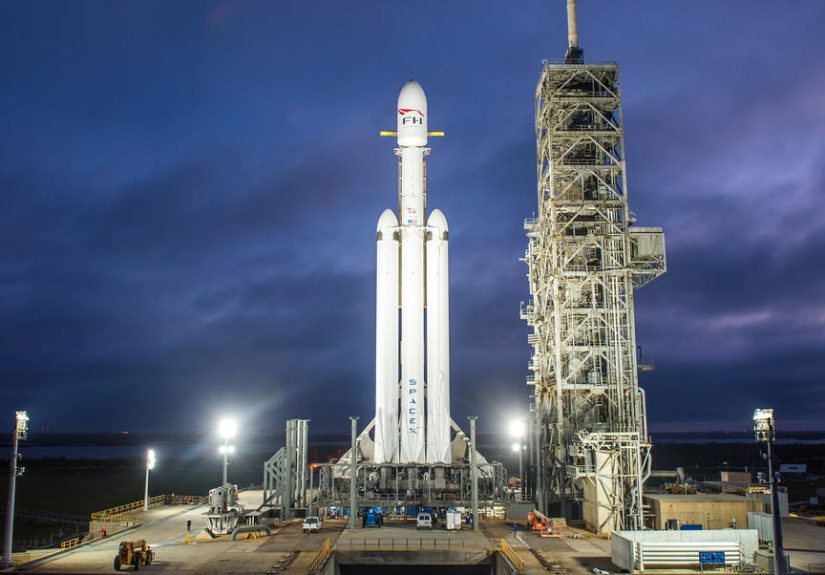
When SpaceX released images and video of Falcon Heavy standing on the pad, the company was not merely sharing pretty space pictures for the internet to gasp at between coffee refills. It was making a statement. After years of hype, delays, engineering headaches, and enough skepticism to fill a launch hangar, Falcon Heavy was finally there in plain sightfully assembled, upright, and parked at historic Launch Complex 39A like it had somewhere very important to be.
That visual moment mattered because rockets are easier to promise than to deliver. PowerPoint can say “heavy-lift.” Marketing copy can say “game-changer.” But photos of a triple-core rocket towering over the pad? That’s when a concept becomes a machine. And in the space business, a machine on the pad is basically the engineering version of saying, “Go ahead, doubt me now.”
For longtime space fans, the Falcon Heavy media drop felt like the trailer before a blockbuster premiereexcept this blockbuster could produce more than 5 million pounds of thrust, had 27 Merlin engines, and was standing on the same launch complex tied to Apollo moon missions and the space shuttle era. Suddenly, Falcon Heavy was not just another ambitious SpaceX project floating around in future-tense language. It was real, vertical, and photogenic in the most intimidating way possible.
Why the Falcon Heavy Pad Images Hit So Hard
The simplest reason is this: scale. Falcon Heavy was built to look enormous because it was enormous. The rocket combined three Falcon 9-derived first-stage cores, creating a vehicle designed to lift nearly 64 metric tons to orbit. That made it, at the time of its debut, the most powerful operational rocket in the world. Those facts were already impressive on paper, but photos from the pad gave people something numbers alone could notperspective.
And perspective is everything in spaceflight. A spec sheet telling you a rocket is 230 feet tall is useful. A drone video showing it standing over the pad like a skyscraper with ambitions is unforgettable. The released imagery did what the best aerospace media always does: it translated engineering into emotion. The Falcon Heavy looked like excess with purpose. It looked like an answer to a question many people had been asking for years: could SpaceX actually move beyond Falcon 9 and build a true heavy-lift rocket that mattered?
The answer, at least visually, was yes. The vehicle looked serious. Clean. Symmetrical. Slightly absurd in the best possible way. It had the vibe of a machine that had read every comment section doubting it and saved receipts.
What the Images and Video Actually Showed
The release showcased Falcon Heavy fully assembled on Pad 39A at NASA’s Kennedy Space Center in Florida, the legendary site associated with Apollo and later the shuttle program. That setting was not a minor detail. SpaceX was effectively placing its newest rocket into one of the most symbolic frames in American space history. The message was subtle only if you ignore giant white rockets on historic launch pads, which is admittedly difficult.
The photos highlighted Falcon Heavy’s most eye-catching design feature: three booster cores strapped together in a configuration that looked both familiar and strangely futuristic. Since each side booster and the center core traced their lineage to Falcon 9 hardware, the rocket felt like an evolution rather than a wild, from-scratch gamble. That mattered to industry watchers because reuse and modularity were already core parts of SpaceX’s business logic. Falcon Heavy did not just promise power. It promised power built from a known, flown foundation.
The video added something still images could not: movement, depth, and mood. A rocket standing on a pad is already dramatic. A rocket filmed from sweeping angles with enough Florida sky behind it to make everyone feel tiny? That turns hardware into mythology. The visual language mattered. Falcon Heavy was being framed not just as a launch vehicle, but as an event.
Falcon Heavy by the Numbers
Three cores, one purpose
Falcon Heavy’s first stage is made up of three Falcon 9 first stages joined together: one center core and two side boosters. Each core carries nine Merlin 1D engines, giving the rocket 27 first-stage engines firing at liftoff.
More than 5 million pounds of thrust
SpaceX has long described Falcon Heavy as producing more than 5 million pounds of thrust at liftoff. That is one of those figures that sounds made up until you remember rockets are basically controlled explosions with an excellent publicist.
Heavy-lift capability that changed the conversation
For payload performance, Falcon Heavy was designed to lift nearly 64 metric tons, or 141,000 pounds, to orbit. That capability made it a serious contender for large national security payloads, deep-space missions, and commercial satellites that needed more muscle than a Falcon 9 could provide.
Reusability with ambition
Unlike older heavy-lift systems built around pure expendability, Falcon Heavy was designed around the reusability philosophy that made SpaceX disruptive in the first place. The side boosters were intended to return to land, and the center core could attempt recovery depending on the mission profile. That made Falcon Heavy strategically important, not just visually impressive.
Why Pad 39A Made the Moment Bigger
Put Falcon Heavy anywhere and people would have paid attention. Put it on Launch Complex 39A and suddenly the photos carried historical gravity as well as literal gravity. NASA had already documented how SpaceX modified Pad 39A for Falcon 9 and Falcon Heavy operations, including a horizontal integration facility near the pad perimeter. In other words, this was not just a borrowed stage. It was an actively reworked bridge between government launch history and commercial launch ambition.
That is why the media release landed so well. It was not only about a new rocket. It was about the transfer of symbolism. The pad that once launched Saturn V rockets and supported space shuttle missions was now hosting a privately developed heavy-lift vehicle aimed at commercial, military, and deep-space work. The photographs captured that passing of the torch without having to say a word.
It was space history with a software-era attitude.
The Real Test Came a Month Later
Of course, glamour shots do not put payloads into space. They buy attention. The real verdict arrived on February 6, 2018, when Falcon Heavy flew its first demonstration mission from the same pad at Kennedy Space Center. The launch succeeded, sending Elon Musk’s cherry-red Tesla Roadster into a solar orbit that reached as far as Mars. Two side boosters returned in a synchronized landing sequence that instantly became one of the most replayed moments in modern launch history.
The center core did not make a clean recovery, which was a reminder that even triumphant rocket stories usually keep one eyebrow raised. But the mission still validated the central point of the earlier imagery: the vehicle on the pad was not a mockup, a PR prop, or an over-polished engineering fever dream. It flew. It worked. It changed the commercial launch conversation.
That launch also proved that the original images and video had not oversold the machine. If anything, they had undersold the emotional effect of seeing the rocket in motion. The pad release made Falcon Heavy look important. The maiden flight confirmed that it was.
Why SpaceX’s Media Strategy Was So Smart
SpaceX has always understood that rockets live two lives. One is technical: thrust, trajectories, stage separation, guidance, margins, loads, performance. The other is cultural: awe, suspense, national pride, internet obsession, and the irresistible urge to share launch clips with the caption “LOOK AT THIS.”
By releasing crisp pad images and video before the first launch, SpaceX fused those two lives together. Engineers could appreciate the configuration, rollout milestone, and readiness signal. Everyone else could appreciate that the thing looked like science fiction had filed the proper paperwork and gone commercial.
That matters because spaceflight is partly funded by contracts, but it is sustained by public imagination. The Falcon Heavy release did not just help SpaceX market a rocket. It helped refresh the visual language of American launch culture. Suddenly, the heavy-lift future did not belong only to distant government programs and vague timelines. It had a name, a shape, and a drone shot.
What Falcon Heavy Came to Represent
In hindsight, those original pad visuals were a hinge moment. Falcon Heavy went on to support missions beyond its flashy debut. NASA’s own launch archives show the vehicle later carrying missions such as Psyche in 2023, GOES-U in June 2024, and Europa Clipper in October 2024 from the same launch site. That matters because it proves Falcon Heavy was not a one-hit wonder with a good camera angle. It matured into a real part of the U.S. launch toolkit.
That broader legacy changes how the original images should be read today. At the time, they were a tease for a first flight. Now they look more like the opening frame of a larger storyone in which commercial heavy-lift capability became normal enough to support major NASA science missions while still retaining some of its old thunder-and-flame theatrical magic.
And yes, the Tesla Roadster payload still steals headlines whenever people remember that SpaceX once launched a sports car as a test mass. But the deeper story is not the car. It is that Falcon Heavy arrived, delivered, and stuck around long enough to matter.
So Why Did the Internet Care So Much?
Because the images offered a rare combination: technical credibility and cinematic spectacle. Usually you get one or the other. A serious engineering milestone can be visually dull. A beautiful image can be substantively thin. Falcon Heavy on the pad was both meaningful and gorgeous. It carried the credibility of a vehicle built for real missions and the drama of a machine that looked ready to kick the sky open.
It also helped that the timing was perfect. The space industry was entering a new phase, with commercial launch competition heating up, government partnerships evolving, and public interest in deep-space missions rising again. Falcon Heavy felt like a signal flare from that future. The photos and video did not create that future on their own, but they gave it a face people could remember.
And honestly, some pictures just know they are about to become desktop wallpapers.
Experience: What It Felt Like When Falcon Heavy Finally Stood on the Pad
There is a very specific kind of excitement that only happens when a long-promised machine finally appears in the real world. Before that moment, it exists mostly as concept art, presentations, rumors, engineering updates, and hopeful timelines that tend to slide around on the calendar like socks on polished wood. Then one day, there it istowering over concrete and flame trench steel, no longer a promise but an object. That was the emotional charge behind the Falcon Heavy images and video.
For space enthusiasts, seeing Falcon Heavy on the pad felt like watching a future tense sentence become present tense. It had been discussed for so long that some people treated it like one of those projects that would always be “coming soon.” The images changed the tone overnight. Instead of asking whether Falcon Heavy would ever be real, people started arguing about what it would do, how loud it would be, whether all three cores would behave, and whether the landing attempts would work. That is a big psychological shift. Hardware earns a different kind of respect than plans do.
The release also delivered a visual experience that was oddly emotional, even for people who do not spend their free time comparing payload classes for fun. The rocket looked massive, clean, and strangely elegant. It had the charm of brute force organized with obsessive neatness. The side boosters gave it width and attitude. The white body against the blue Florida sky made it feel both classic and futuristic. It was engineering, yes, but it was also theater.
Another part of the experience was historical layering. Seeing Falcon Heavy at Pad 39A invited an almost automatic comparison with the giants that came before it. This was not nostalgia for nostalgia’s sake. The setting framed Falcon Heavy as part of a longer American launch story, one that moved from Apollo to shuttle to commercial heavy-lift capability. For many viewers, that combination of old pad and new rocket created a feeling that spaceflight history was not frozen in museums. It was still being written.
There was also tension baked into the excitement. Space veterans knew that first flights are risky. SpaceX itself had made no secret of the fact that a maiden launch can go wrong in dramatic fashion. So the beauty of the images came with an undercurrent of suspense. People were not just admiring Falcon Heavy. They were staring at a machine that might soon make historyor explode very publicly while trying. That uncertainty gave the release extra electricity.
In the end, the experience was bigger than one media drop. It was a cultural checkpoint. Falcon Heavy on the pad captured the feeling of standing at the edge of a new chapter in commercial spaceflight, when the impossible still looked a little improbable, but not impossible anymore. And that is why those photos and video landed so well: they did not merely show a rocket. They showed a threshold.
Conclusion
SpaceX’s release of Falcon Heavy pad images and video worked because it did more than show off a rocket. It marked the moment when years of buildup snapped into focus. The vehicle looked worthy of the hype, the setting amplified the significance, and the eventual first launch proved the visuals were not empty spectacle. Falcon Heavy on the pad was a statement about engineering confidence, commercial space ambition, and the continuing power of great imagery to make complex technology feel immediate and human.
In a field crowded with renderings, delays, and bold promises, Falcon Heavy standing at Pad 39A said something refreshingly simple: here it is.





 Close
Close