
Table of Contents >> Show >> Hide
- What Is the Army’s New Smart Rifle Scope?
- How Can a Scope “Predict” a Bullet’s Path?
- Key Technologies Inside the XM157/M157 Fire-Control Optic
- Why the Army Wants Smarter Optics
- How It Changes the Soldier’s Job
- Advantages of the Army’s Predictive Rifle Scope
- Challenges and Criticisms
- What This Means for the Future of Infantry Weapons
- Experience Notes: What This Technology Feels Like in the Real World
- Conclusion
The phrase sounds like something pulled from a science-fiction prop room: a rifle scope that can predict the path of a bullet. But the U.S. Army’s new smart optic is not a crystal ball, a cheat code, or a tiny wizard living inside a tube of glass. It is a sophisticated fire-control system designed to do what human marksmen have always done under pressureestimate distance, account for bullet drop, read environmental conditions, and place the aiming point where the round is likely to goonly faster, more consistently, and with fewer mental gymnastics.
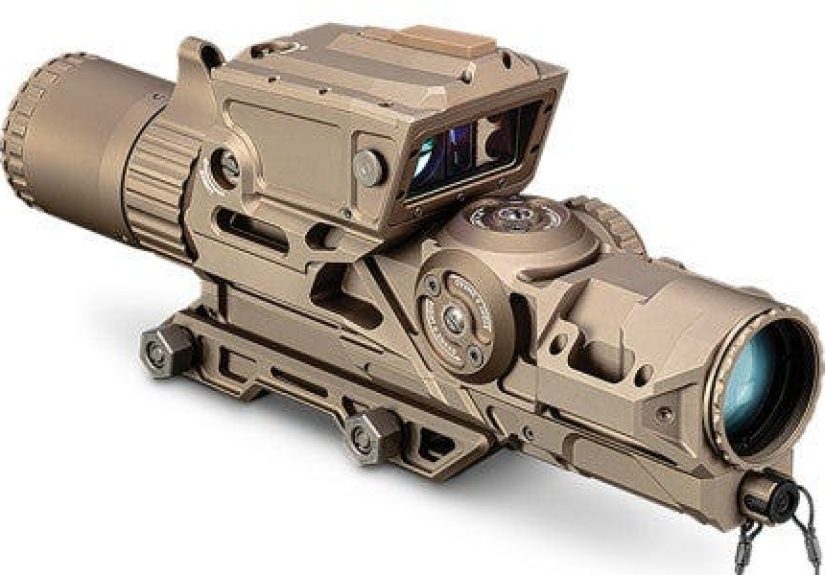
Known publicly as the XM157, and later referenced as the M157 Fire Control, this optic is part of the Army’s Next Generation Squad Weapon program. It was developed for the new 6.8mm rifle and automatic rifle family, including the XM7 rifle and XM250 automatic rifle. The basic idea is simple: give close-combat soldiers a smarter sighting system that helps them hit targets at longer distances, in more complex conditions, with less guesswork. The execution, of course, is anything but simple.
Traditional rifle scopes magnify the target and provide a reticle. Skilled shooters still need to judge range, wind, elevation, angle, temperature, ammunition behavior, and the way gravity begins bossing the bullet around the instant it leaves the muzzle. The XM157 adds digital tools to that old-school process. It combines a variable-power optic, laser rangefinder, ballistic computer, atmospheric sensors, compass, aiming lasers, wireless connectivity, and a digital display overlay. In plain English: it can measure, calculate, and show the shooter a better aiming solution before the shot breaks.
What Is the Army’s New Smart Rifle Scope?
The Army’s new rifle scope is best understood as a compact fire-control system rather than a simple optic. A normal scope helps the shooter see. A fire-control optic helps the shooter decide where to aim. That distinction matters because modern battlefield marksmanship is not only about eyesight or trigger control. It is about processing information quickly while carrying gear, moving over uneven ground, communicating with a team, and making decisions while the world is being deeply uncooperative.
The XM157/M157 was built for the Next Generation Squad Weapon platform, a major modernization effort intended to replace legacy weapons such as the M4 carbine and M249 Squad Automatic Weapon in close-combat formations. The new weapons fire a 6.8mm cartridge designed to deliver more energy and range than the 5.56mm rounds used by older systems. More range is useful only if soldiers can actually make effective shots at that range, and that is where the smart optic becomes the star of the show.
Instead of asking soldiers to estimate range by eye or dial corrections manually under stress, the optic uses its onboard systems to help produce a firing solution. A laser rangefinder measures distance. A ballistic calculator considers the bullet’s expected flight. Environmental sensors help account for conditions that can affect trajectory. A display overlay can then present adjusted aiming information inside the sight picture. The shooter still controls the weapon and makes the decision. The optic simply reduces the amount of math the shooter must do while wearing a helmet, body armor, gloves, and a look that says, “I did not sign up to solve trigonometry outdoors.”
How Can a Scope “Predict” a Bullet’s Path?
When people say the scope can predict the path of a bullet, they are talking about ballistic computation. A bullet does not fly in a perfectly straight line. Gravity pulls it downward. Air resistance slows it. Wind pushes it. Temperature, air pressure, humidity, altitude, angle to the target, and ammunition characteristics can all influence the round’s point of impact. Long-range shooters have accounted for these factors for generations, often using range cards, reticle holds, ballistic tables, and plenty of practice.
The XM157’s advantage is that it packages much of that logic into the optic itself. Once the system knows the distance to the target and the ballistic profile of the weapon and ammunition, it can calculate how much the bullet is expected to drop over that distance. With sensor input, it can refine the aiming recommendation. The result is not a guarantee. Bullets still obey physics, wind still enjoys being rude, and shooters still need fundamentals. But a fast digital firing solution can dramatically reduce uncertainty.
A Simple Example
Imagine a soldier aiming at a target several hundred meters away. With a basic optic, the shooter may need to estimate distance, remember the correct holdover, judge whether the target is uphill or downhill, and decide how much to compensate. With the smart fire-control optic, the shooter can range the target and see a corrected aiming point or useful ballistic information in the optic’s display. Instead of turning the moment into a pop quiz, the system gives the soldier a data-backed shortcut.
That is the real meaning of “predict.” The optic does not see the future. It uses known inputs to model the likely flight path of the bullet. In the same way a navigation app predicts your arrival time by combining distance, route, and traffic data, the XM157 predicts a bullet’s likely impact by combining range, ballistics, and environmental information. The difference is that a wrong turn on the highway may cost five minutes. A wrong shot in combat can cost far more.
Key Technologies Inside the XM157/M157 Fire-Control Optic
Laser Rangefinder
The laser rangefinder is one of the most important pieces of the system. Range estimation is a classic source of shooting error. If the shooter thinks a target is 300 meters away when it is actually 450 meters away, the bullet may land low. The laser rangefinder helps remove that guesswork by measuring distance quickly and feeding that value into the ballistic solution.
Ballistic Calculator
The ballistic calculator is the brain of the optic. It processes the weapon-and-ammunition profile, distance to target, and other data to determine where the shooter should aim. This is the feature that most directly supports the idea that the scope can predict the bullet’s path. In practical terms, it helps translate complicated external ballistics into a usable aiming reference.
Atmospheric Sensor Suite
Air is not empty. It has density, temperature, pressure, and sometimes an attitude problem. Atmospheric sensors help the optic account for environmental conditions that affect bullet flight. This matters more as distance increases. At close range, many variables are minor. At longer ranges, small factors can become the difference between a hit and a miss.
Digital Display Overlay
The display overlay allows information to appear inside the shooter’s view. That is a big deal because it reduces the need to look away, check another device, or mentally juggle numbers. A soldier can keep eyes on the target area while receiving aiming data through the optic. In a fast-moving environment, seconds matter, and attention is a limited resource.
Visible and Infrared Aiming Lasers
The optic also integrates visible and infrared aiming lasers, giving soldiers options for different lighting and operational conditions. Infrared aiming capabilities are especially relevant when paired with night-vision equipment. The point is not merely to make the rifle more futuristic; it is to consolidate multiple aiming and sensing tools into one system.
Compass and Wireless Connectivity
The compass and Intra-Soldier Wireless features point toward a broader future for soldier systems. The rifle optic is no longer just a tube on top of a weapon. It can become part of a networked kit, potentially sharing information across devices. That opens the door to better target reference, coordination, and battlefield awareness, though it also introduces questions about power, durability, cybersecurity, training, and complexity.
Why the Army Wants Smarter Optics
The Army’s interest in a smart scope is tied to a larger problem: modern soldiers may need to engage threats at longer distances and against better protection than previous generations faced. The Next Generation Squad Weapon program was designed around improved range, accuracy, and lethality. A more powerful cartridge helps, but the rifle and ammunition are only part of the equation. If soldiers cannot quickly calculate where to aim, extra ballistic performance is like owning a sports car and only driving it in first gear.
Smart optics help close the gap between weapon capability and human performance. Even a well-trained shooter can struggle under stress. Heart rate rises. Breathing changes. Time compresses. Range estimation gets messy. The XM157 is meant to make the shot process more efficient by automating some of the technical workload. That does not replace training. It makes training more productive by giving soldiers better tools.
There is also a standardization benefit. Elite marksmen may already know how to work with complex ballistic data. The Army, however, must equip large numbers of soldiers with varying levels of experience. A smart optic can help raise baseline performance across units, especially when the system is integrated into formal training programs. Think of it as giving every soldier a tiny ballistics coachone that does not yell, drink bad coffee, or say “back in my day” every six minutes.
How It Changes the Soldier’s Job
The smart scope does not turn every soldier into a sniper, and it does not make marksmanship automatic. Fundamentals still matter: stable position, sight picture, trigger control, breathing, recoil management, and judgment. The shooter still has to identify the target, understand the situation, and decide whether to fire. The optic assists; it does not command.
What changes is the amount of mental calculation required before the shot. In older systems, the shooter may need to interpret a reticle, estimate range, remember holds, and adjust for conditions manually. With a fire-control optic, much of that information can be processed and displayed faster. That may allow soldiers to engage more confidently at distances where ordinary optics become less forgiving.
The effect is especially important for moving units. A soldier in a supported firing position on a calm range has time to think. A soldier in a tactical environment may be tired, wet, cold, overheated, or carrying enough equipment to make a backpacking influencer faint. Reducing cognitive load can be as valuable as increasing magnification.
Advantages of the Army’s Predictive Rifle Scope
Better First-Round Hit Probability
The most obvious advantage is improved first-round hit probability. Missing the first shot can reveal position, waste ammunition, and give the target time to move or respond. By helping soldiers range targets and calculate holdovers faster, the optic supports more accurate initial engagements.
Faster Engagements at Distance
Speed matters. A system that compresses the time between spotting, ranging, aiming, and firing can give soldiers an edge. Traditional long-range calculations take training and time. A digital fire-control optic can streamline that process, especially when targets appear briefly.
Reduced Gear Clutter
Combining a scope, rangefinder, ballistic solver, aiming lasers, and sensors into one unit can reduce the need for separate accessories. Fewer separate devices may mean fewer batteries, mounts, cables, and opportunities for something to be attached backward in the dark. Anyone who has ever packed gear at 4 a.m. understands the appeal.
Improved Training Feedback
Smart optics may also help trainers identify where shooters struggle. If the optic provides consistent aiming solutions, instructors can focus on fundamentals, target identification, communication, and decision-making. The technology does not eliminate the human element; it can make the human element easier to evaluate.
Challenges and Criticisms
No advanced military technology arrives without trade-offs. The XM157/M157 adds capability, but it also adds weight, complexity, cost, and training requirements. A basic optic is comparatively simple. A smart fire-control system needs power, software, rugged electronics, calibration, maintenance, and user confidence. Soldiers must trust the system, but they must also know what to do if it fails.
Weight is a recurring concern with modern infantry equipment. The new rifle, suppressor, optic, ammunition, armor, radios, night-vision devices, water, batteries, and other gear all compete for space on the same human body. A brilliant optic that feels heavy after twelve miles of movement will receive reviews that are, shall we say, emotionally honest.
There is also the issue of information overload. A digital overlay is useful only if it gives the right information at the right time. Too much data can clutter the sight picture. Too many modes can slow the shooter down. The best military technology often succeeds not because it does everything, but because it does the necessary things quickly and reliably under awful conditions.
Durability is another test. A combat optic must survive recoil, weather, mud, dust, impacts, vibration, temperature swings, and the ancient infantry tradition of dropping expensive equipment onto rocks. The Army’s evaluation process is designed to expose these weaknesses before wide fielding, but real-world use always teaches lessons that lab testing cannot fully predict.
What This Means for the Future of Infantry Weapons
The Army’s predictive rifle scope represents a broader shift in small arms: the rifle is becoming a sensor platform. For much of history, infantry weapons evolved through better barrels, actions, cartridges, magazines, and sights. Now, digital fire control is becoming part of the weapon’s value. The question is no longer only “How far can the rifle shoot?” but also “How quickly can the soldier understand the shot?”
This trend mirrors what happened in tanks, aircraft, artillery, and naval systems. Fire control has long been central to larger weapons. Computers, sensors, and stabilized sights changed how crews engaged targets. The XM157 brings a smaller version of that logic to the individual soldier. It is not the same as a tank’s fire-control system, obviously. A rifle still rests on a human shoulder, not a 70-ton armored vehicle. But the principle is similar: measure the environment, calculate the solution, and help the operator aim more effectively.
Over time, these optics could become more connected with helmet displays, navigation tools, unmanned systems, and command networks. A soldier may eventually look through an optic that not only calculates bullet drop but also helps mark targets, share coordinates, or integrate with augmented-reality displays. That future sounds exciting, but it must be handled carefully. More connectivity can bring more capability, but also more vulnerability and training burden.
Experience Notes: What This Technology Feels Like in the Real World
Anyone who has spent time around precision shooting, military training ranges, or advanced optics understands the emotional arc of long-range marksmanship. At first, it feels simple: put the crosshair on the target and press the trigger. Then reality enters the chat. The target is farther away than it looks. The wind is doing interpretive dance. The sun is glaring. Your breathing sounds like a leaf blower. Suddenly, the bullet’s path is not a line; it is a negotiation.
The most relatable experience connected to the Army’s new smart scope is the moment a shooter realizes that distance changes everything. At 25 meters, a basic sight picture may feel forgiving. At 300 meters and beyond, small mistakes become dramatic. A slight error in range estimation, a poor hold, or a rushed trigger press can send the round somewhere disappointing. This is where a fire-control optic becomes more than a fancy gadget. It helps organize the chaos.
In training environments, smart optics can change the rhythm of a range session. With older systems, shooters may spend significant time discussing estimated distance, holdovers, and reticle references before firing. That process is valuable because it teaches fundamentals, but it is slow. A system like the XM157 can speed up the technical side, allowing more time for practical decision-making: target recognition, communication, movement, and follow-up shots. The experience becomes less about solving a math problem and more about applying a tactical solution.
There is also a confidence factor. When shooters trust their equipment and understand what it is telling them, they tend to work more calmly. The optic’s ballistic solution can reduce hesitation, especially for intermediate-range shots where the target is not close enough for a simple point-and-shoot approach but not so far that specialized sniper procedures are expected. The shooter still has to do the physical work, but the mental fog thins out.
At the same time, experienced shooters know that electronics can become a crutch if training is lazy. A smart optic should not replace basic marksmanship education. Soldiers still need to understand trajectory, wind, mechanical offset, zeroing, and what a reticle means when batteries die or the display is unavailable. The best experience with this technology is not blind dependence. It is partnership. The soldier understands the fundamentals, and the optic accelerates the calculation.
Another practical experience is gear management. A smart optic sounds amazing at a desk. In the field, every ounce matters. Soldiers judge equipment by whether it works when dirty, wet, cold, hot, bumped, rushed, and handled by tired humans with gloves on. A digital fire-control system must earn trust by being intuitive. If the user interface feels like programming a microwave from 1998, enthusiasm will fade fast. If the optic gives clear information without slowing the shooter down, it becomes a force multiplier.
The most important takeaway from real-world shooting experience is that technology helps most when it disappears into the task. The shooter should not feel like they are operating a tiny computer that happens to sit on a rifle. They should feel like they are looking through a clear optic that quietly provides the right answer at the right moment. That is the promise of the Army’s new rifle scope: not to make shooting effortless, but to make the hard parts faster, cleaner, and less vulnerable to human error under stress.
Conclusion
The Army’s new rifle scope can “predict” the path of a bullet because it combines modern sensors, laser rangefinding, ballistic software, and a digital display into one rugged fire-control optic. The XM157/M157 is not magic, and it does not replace the soldier behind the weapon. Instead, it gives that soldier better information at the exact moment information matters most.
As part of the Next Generation Squad Weapon program, the optic is a sign of where infantry technology is heading. Rifles are no longer judged only by caliber, barrel length, or magazine capacity. They are increasingly judged by how well they connect the shooter to data. In that world, the smartest scope is not the one with the most features. It is the one that helps a tired soldier make a difficult shot quickly, safely, and accurately when the pressure is real.
The future of small arms may not look like lasers blasting across a movie battlefield. It may look like a familiar rifle topped with an optic that quietly performs complex calculations in the background. Less Hollywood, more high-speed homework. And if that homework helps soldiers hit what they aim at while reducing guesswork, the Army’s predictive rifle scope may become one of the most important upgrades in modern infantry marksmanship.






 Close
Close